Innerwick Castle
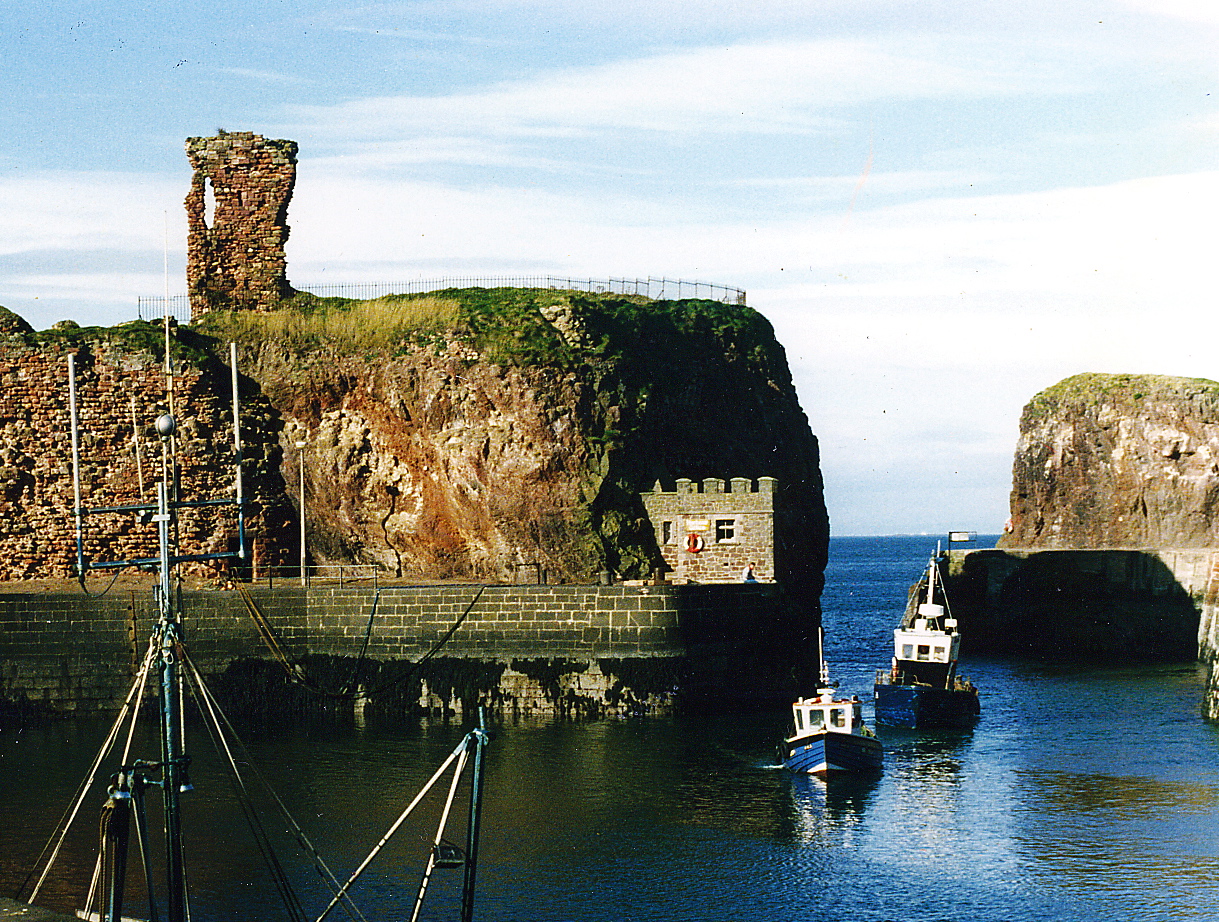
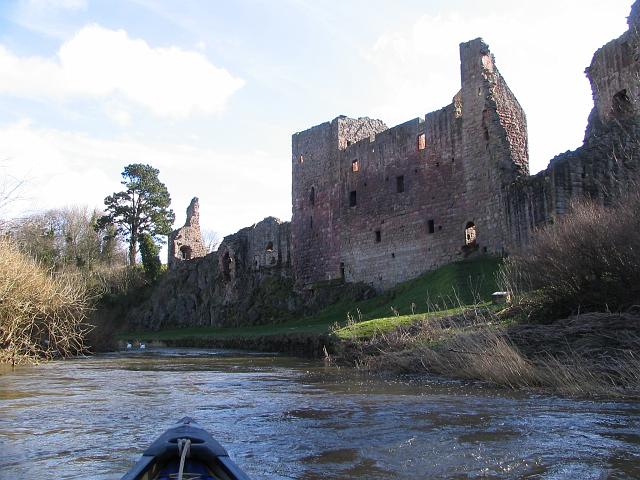
Innerwick Castle stands prominently near the town of Dunbar in East Lothian, Scotland, embodying the martial and domestic history of the region from the 14th century onwards. Constructed by the influential Stewart and Hamilton families, this hill castle was strategically positioned on a rocky outcrop overlooking Thornton Glen and the Thornton Burn, commanding the surrounding landscape and key southern routes. Its location on the edge of a steep glen made it a formidable defensive site, typical of medieval fortifications designed to exploit natural terrain for protection.
Architectural features and construction
The castle was primarily built of stone, a common material for fortifications of the period, providing robust defense against siege weaponry and assault. Although detailed architectural plans have not survived, the ruins indicate a complex multi-level structure that included a significant basement or cellar area. This lower chamber was strategically important, likely serving as storage or a secure refuge, but it also became a vulnerability during the 1547 siege when attackers accessed it and set fire to the interior.
Over time, Innerwick Castle underwent several expansions, reflecting the evolving needs of its occupants and the changing nature of warfare. These additions increased the castle's footprint, though no comprehensive descriptions of these extensions exist. The castle's defensive features would have included thick curtain walls, battlements, and possibly towers or fortified gatehouses typical of hill castles of the High to Late Medieval period.
Historical significance and notable events
Early history and sieges
Innerwick Castle's documented history begins in the 14th century, built by the Stewart and Hamilton noble families. One of its earliest recorded military events was the 1406 siege led by Robert Stewart, Duke of Albany, who sought to dislodge forces loyal to the English Earl of Northumberland. The siege preparations included the use of timber, possibly for siege engines or scaling devices, underscoring the castle's strategic importance during the turbulent Anglo-Scottish conflicts.
16th-century conflicts and the Rough Wooing
The castle played a significant role during the Rough Wooing, a series of aggressive campaigns by England to secure a marriage alliance with Scotland. In 1542, Innerwick served as a refuge for Henry Ray, a Berwick Pursuivant, after the killing of an English herald near Dunbar. The castle's laird, Sir James Hamilton of Innerwick, took responsibility for the burial of the slain herald Thomas Trahern and cared for his servant, reflecting the castle’s involvement in regional diplomacy and conflict.
Further conflict ensued when James Hamilton was captured and ransomed during the ongoing wars, with his son negotiating prisoner exchanges in 1545. The castle's military significance culminated in its capture and destruction in 1547 by forces under Edward Seymour, 1st Duke of Somerset. English troops breached the basement and set fire to the interior, effectively ending its role as a defensive fortress.
Political and social role in later centuries
Despite its partial destruction, Innerwick Castle remained a site of political importance in the late 16th century. It was mentioned by Mary of Guise during the 1560 siege of Leith, underscoring its strategic value. Alexander Hamilton of Innerwick was a notable supporter of Mary, Queen of Scots, signing a bond in 1568 and fighting at the Battle of Langside, where he was captured.
In 1584, the Scottish crown ordered the surrender of Innerwick Castle along with other key fortresses to consolidate royal authority. Records from this period also reveal domestic aspects of castle life, such as Alexander Hamilton employing a tailor for his family, indicating continued occupation and status.
The personal history of the castle’s residents took a darker turn when Margaret Whitelaw, Lady of Innerwick, divorced Alexander Hamilton and was subsequently accused of witchcraft, dying in 1627. Ownership later transferred to James Maxwell, Earl of Dirleton, before the estate was sold to the Nisbet family in 1663.
Role during the wars of the three kingdoms
In the 17th century, Innerwick Castle retained enough structural integrity to serve as a base for Covenanter forces during the Wars of the Three Kingdoms. From this position, the Covenanters disrupted the communications of Oliver Cromwell's army, highlighting the castle's continued military relevance in Scotland's civil conflicts despite its earlier damage.
Current state and preservation
Today, the ruins of Innerwick Castle remain a visible testament to its medieval origins and turbulent history. The castle occupies a commanding rocky outcrop that dominates the surrounding landscape, retaining the rugged character of a fortress built for defense. The surviving stonework, including remnants of walls and the basement area, provides insight into medieval castle construction in Scotland.
The site is protected as a Scheduled Monument, ensuring its preservation within the Crowhill Estate. The surrounding Thornton Glen is managed by the Scottish Wildlife Trust, combining natural beauty with cultural heritage. The castle's dramatic cliffside location has also made it a popular site for climbing enthusiasts, although no decorative architectural features such as carved inscriptions or altar fragments have been found.
Innerwick Castle remains an evocative symbol of Scotland's medieval past, reflecting the complex interplay of military strategy, noble lineage, and regional politics that shaped its history.
Frequently asked questions (FAQ)
- How do I get to Innerwick Castle?
- Innerwick Castle is located near Dunbar in East Lothian, Scotland. Visitors can reach the site by car or local transport, with parking available nearby. The castle is situated on a rocky outcrop overlooking Thornton Glen.
- What is the historical significance of Innerwick Castle?
- Innerwick Castle played a key role in Scottish history from the 14th to 17th centuries, witnessing sieges, political alliances, and military actions during the Rough Wooing and the Wars of the Three Kingdoms.
- Can I visit the ruins of Innerwick Castle?
- Yes, the ruins of Innerwick Castle are accessible to the public. As a Scheduled Monument, the site is preserved and offers a glimpse into medieval Scottish fortifications, though facilities may be limited due to its ruinous state.
- When was Innerwick Castle built?
- Innerwick Castle was constructed in the 14th century by the Stewart and Hamilton families, prominent Scottish noble houses of the time.
- Why was Innerwick Castle destroyed?
- The castle was destroyed in 1547 during a siege led by Edward Seymour, 1st Duke of Somerset, when English forces set fire to the basement after gaining entry, ending its defensive use.
Information
Current owner
Crowhill Estate
Loading map...
Visitor reviews
No reviews yet. Been here? Write the first review and help other travelers!
Write the first reviewVisited this castle? Share your experience
Your review helps other travelers and adds first-hand knowledge to our encyclopedia.