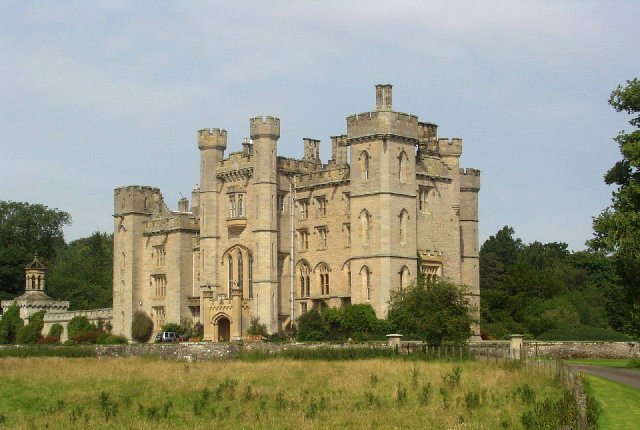
Fast Castle
Fast Castle stands as a dramatic example of a late medieval coastal fortress located in Berwickshire, south-east Scotland. Perched on a steep cliff overlooking the North Sea, the castle's strategic position made it a significant defensive site throughout its history. Although now in ruins, Fast Castle's remains offer insight into centuries of military and domestic architecture, as well as the turbulent history of the Anglo-Scottish border region.
Early habitation and location significance
The site of Fast Castle shows evidence of Iron Age habitation, indicating its long-standing importance as a defensive and lookout point. Situated within the territory of the ancient British kingdom of Bryneich, the location was likely chosen for its natural fortifications and commanding views over the sea and coastline. This early strategic value persisted well into the medieval period.
Medieval origins and historical context
Fast Castle is first documented in the 14th century, specifically in 1333, during a period of frequent conflict between England and Scotland. The castle was constructed as a coastal fortress to guard against seaborne invasions and raids. In 1346, the site was occupied by an English garrison which used it as a base to raid the surrounding countryside, reflecting the ongoing border conflicts of the era.
The Home family and 15th-century ownership
By the late 15th century, Fast Castle came under the control of the prominent Home family, a Scottish noble lineage deeply involved in the border wars. The castle's ownership by the Homes marked a period of rebuilding and fortification, adapting the structure to the evolving military needs of the time.
Destruction and rebuilding in the early 16th century
The castle was destroyed in 1515 amid the political chaos and factional fighting that characterized early 16th-century Scotland. Following this, Alexander Home, the then lord of the castle, was executed in 1516 and his lands were forfeited. Despite this setback, Fast Castle was rebuilt by 1522, demonstrating its continued strategic importance.
Military engagements and decline
Throughout the early 16th century, Fast Castle was captured multiple times by both English and Scottish armies, reflecting the volatile nature of the Anglo-Scottish border during this period. However, by the early 17th century, the castle was already in a state of ruin, no longer maintained as a military stronghold.
Architectural features and remains
Fast Castle was built as a coastal fortress incorporating typical defensive features of the late medieval period, including thick stone walls and a commanding position on a rocky promontory. The ruins today include remnants of the curtain walls and foundations of towers that once guarded the approaches. The natural cliff formations provided additional defense, making it difficult to assault from the sea or land.
Defensive advantages of the site
The castle's location atop steep cliffs gave it a significant defensive advantage, allowing defenders to spot incoming ships from a distance and repel attacks. The rugged terrain around the castle further complicated any siege efforts, contributing to its historical resilience despite repeated assaults.
Fast Castle in the context of border history
As a fortress on the Anglo-Scottish border, Fast Castle played a role in the ongoing conflicts and power struggles between England and Scotland from the medieval period through the early modern era. Its repeated captures and reconstructions illustrate the contested nature of this frontier region.
The Home family's role in border politics
The Home family, as lords of Fast Castle, were key players in the border wars, often switching allegiances and engaging in raids and skirmishes. Their stewardship of the castle reflects the complex loyalties and turbulent politics of the border nobility.
Current condition and heritage status
Today, Fast Castle is classified as ruins, with only partial structural remains visible. The site is accessible to visitors who can explore the atmospheric remnants and appreciate the castle's commanding views over the North Sea. Its dramatic cliffside setting and historical significance make it a notable heritage site within Berwickshire.
Visiting Fast Castle
Visitors should be prepared for a steep walk to reach the castle ruins, as the site is perched on a high coastal cliff. There are no visitor facilities on site, but the natural landscape and ruins provide a compelling glimpse into Scotland's medieval past. The castle's remote location adds to its allure for those interested in history and coastal scenery.
Frequently asked questions (FAQ)
- When was Fast Castle first recorded?
- Fast Castle was first recorded in the year 1333 during the late medieval period.
- What is the historical significance of Fast Castle?
- Fast Castle served as a strategic coastal fortress on the Anglo-Scottish border, playing a key role in border conflicts and raids between England and Scotland.
- Is Fast Castle accessible to visitors?
- Yes, visitors can access the ruins of Fast Castle, but should be prepared for a steep walk as the site is located on a cliff. There are no visitor facilities on site.
- Who controlled Fast Castle in the late 15th century?
- The Home family controlled Fast Castle in the late 15th century, a prominent Scottish noble family involved in border politics.
- What happened to Fast Castle in the early 16th century?
- Fast Castle was destroyed in 1515 during political chaos, rebuilt by 1522, but fell into ruin by the early 17th century after multiple military engagements.
Information
Loading map...
Visitor reviews
No reviews yet. Been here? Write the first review and help other travelers!
Write the first reviewVisited this castle? Share your experience
Your review helps other travelers and adds first-hand knowledge to our encyclopedia.