Ibiza Castle
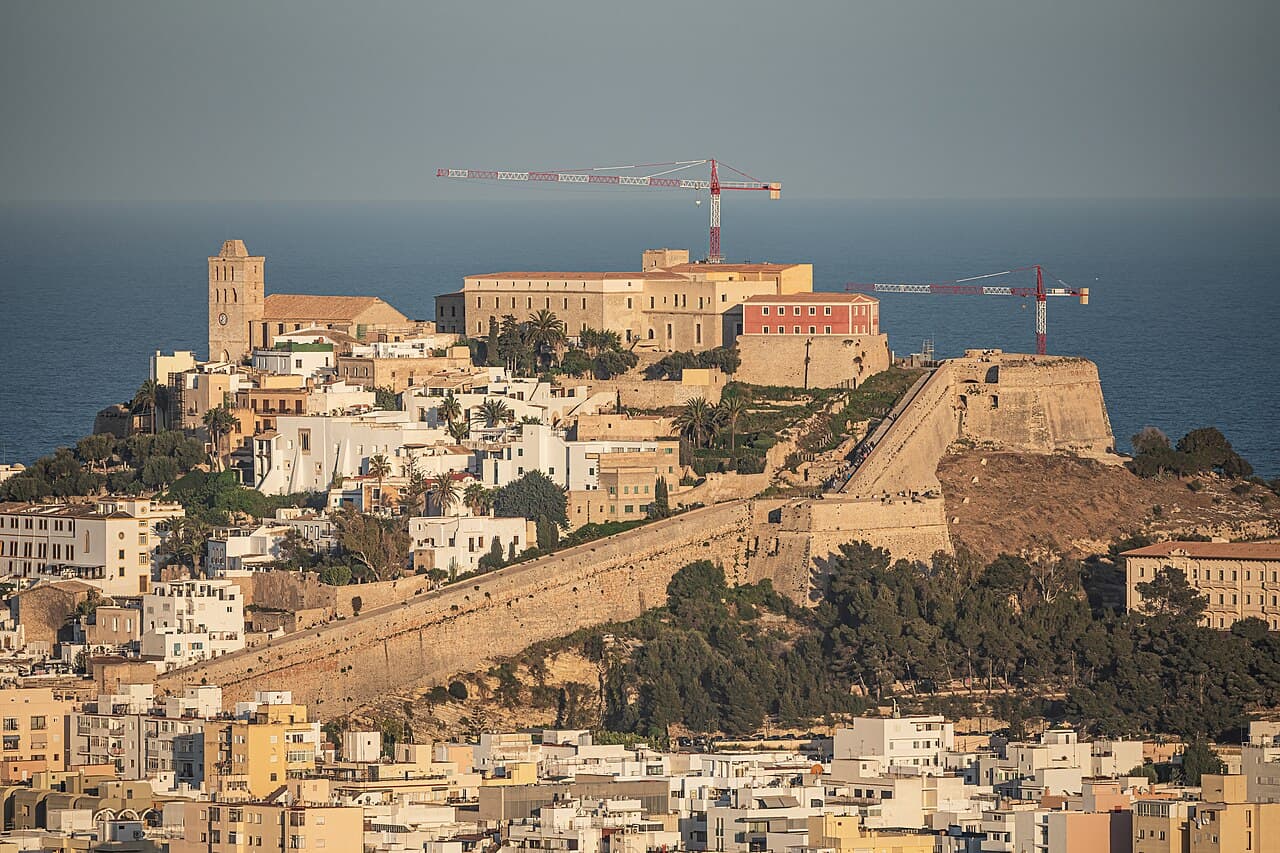
Ibiza Castle, also known as Castle d'Eivissa, is a prominent historical fortress located on the Puig de Vila hill in the Balearic Islands, Spain. Its origins trace back to the High Medieval period, with archaeological findings revealing structures from the 12th and 13th centuries. The castle's strategic position atop the hill provided a commanding view over the city and the surrounding sea, essential for defense during the turbulent medieval era.
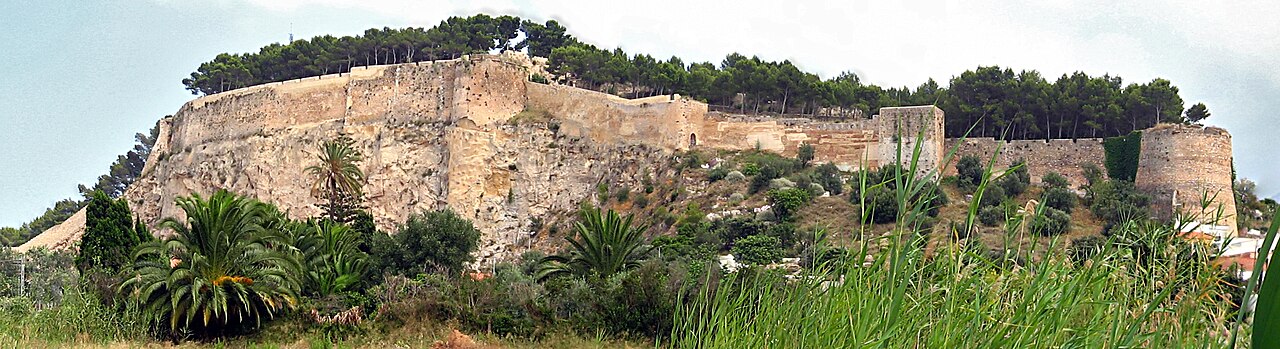
The castle's elongated plan is fortified by nine quadrangular towers that rise along its enclosure. These towers were integral to the castle's defensive system, allowing archers and artillery to cover all approaches. Excavations have unearthed remains of earlier buildings, but much of the visible structure dates from the 16th century Renaissance fortifications, a period marked by significant military architectural advancements to counter artillery threats.
Medieval origins and moorish influence
The site originally hosted a Muslim fortress known as the Almudaina, which served as the administrative and military headquarters of the Muslim wali (governor) during the Moorish occupation of Ibiza. This early fortress laid the groundwork for later expansions and fortifications. The Almudaina was later annexed to the castle after the collapse of the wall and tower that separated the two structures in the 18th century, symbolizing the integration of different historical layers within the complex.
Renaissance reconstruction and expansion
The most substantial phase of construction occurred under the reign of Philip II of Spain in the 16th century. During this period, the castle was transformed into a bastioned fortress designed to withstand cannon fire, reflecting the evolution of military architecture in response to gunpowder weaponry. Initially, the fortress comprised six bastions, with the San Jorge and Santiago bastions being particularly notable for their size and strategic importance.
The work was continued by the architect Antonio Jaime, who contributed to the ongoing enhancements of the fortifications. The Santa Lucía bastion was constructed during a later phase, further strengthening the castle's defenses. The final phase of construction was overseen by Alfonso Rubián, who completed the castle and the citadel, unifying the fortress into a cohesive defensive complex.
Ses voltes building and 18th-century additions
Within the castle grounds lies the Ses Voltes building, dating from the 16th century. Its entrance is adorned with the coats of arms of the Crown of Aragon and the governor Alonso de Zanoguera, highlighting the castle's connection to the Aragonese monarchy. The 18th century saw further developments, including the construction of infantry battalion barracks arranged around a parade ground, reflecting the castle's continued military use into the modern era.
Throughout the 19th and 20th centuries, the castle underwent several renovations to adapt to changing military and administrative needs, including the addition of kitchens and a gymnasium. These modifications illustrate the castle's evolution from a medieval fortress to a multifunctional military installation.
Defensive architecture and bastions
The castle's fortifications are characterized by thick walls and robust bastions designed for artillery defense. Two bastions remain particularly well preserved: the Baluarte de Sant Jaume and the Baluarte de Sant Pere. The Baluarte de Sant Jaume now hosts an exhibition of historical weapons used to defend Ibiza, offering visitors insight into the military technology of the period. The Baluarte de Sant Pere contains an exhibition dedicated to the castle's history and its architectural evolution, making it a key point of interest for understanding the fortress's strategic importance.
Architectural features and layout
The castle's layout reflects Renaissance military design principles, with angled bastions that allowed defenders to cover adjacent walls with crossfire, minimizing blind spots. The quadrangular towers provided elevated platforms for surveillance and defense. The integration of the Almudaina into the castle complex created a mixed architectural ensemble combining Islamic and Christian military styles.
Cultural significance and current status
Today, Ibiza Castle stands as a partially restored monument that embodies the island's layered history from the Moorish period through the Spanish Renaissance and into modern times. Its preservation offers valuable insights into the military architecture and historical transformations of the Balearic Islands. The castle is an emblematic cultural heritage site, attracting visitors interested in history, architecture, and the strategic maritime importance of Ibiza.
Visitors can explore the castle's bastions, towers, and exhibitions, gaining a comprehensive understanding of its defensive role and historical context. The castle's commanding position and well-preserved fortifications make it a significant landmark within the old town of Ibiza.
Frequently asked questions (FAQ)
- How do I get to Ibiza Castle?
- Ibiza Castle is located in the capital city, Ibiza Town, on the island of Ibiza in the Balearic Islands. You can reach the castle by walking from the town center, or by taking a taxi or local bus. The castle is well-signposted and is a popular destination for both tourists and locals.
- What is the historical significance of Ibiza Castle?
- Ibiza Castle, also known as Dalt Vila, is a UNESCO World Heritage site recognized for its rich history and cultural heritage. The castle has stood since the 16th century and is a testament to the island's strategic importance in the Mediterranean during the time of the Spanish Empire. It played a crucial role in defense against pirates and invaders.
- When was Ibiza Castle built?
- Construction of Ibiza Castle began in the late 16th century, specifically in 1561, under the orders of King Philip II of Spain. The castle was built to fortify the city against attacks and has been expanded and renovated over the years, showcasing a blend of architectural styles from different periods. Its historical layers provide insight into the island's turbulent past.
- Can I visit Ibiza Castle year-round?
- Yes, Ibiza Castle is open to visitors throughout the year, although specific opening hours may vary seasonally. It's advisable to check the official website or local tourist information for the most up-to-date hours of operation. Visiting during the off-peak season can offer a more tranquil experience.
- Why is Ibiza Castle a popular tourist attraction?
- Ibiza Castle is popular for its stunning panoramic views of the island and the Mediterranean Sea, as well as its rich history and architecture. The castle's walls and towers provide visitors with a glimpse into the past, while the charming cobblestone streets and surrounding areas are perfect for exploring. The combination of history and breathtaking scenery makes it a must-visit.
- Is it possible to explore the castle's interior?
- Yes, visitors can explore various parts of Ibiza Castle, including the impressive walls, towers, and the Cathedral of Santa Maria. Some areas may have guided tours available, which provide in-depth insight into the castle's history and architecture. Be sure to wear comfortable shoes as the terrain can be uneven.
- What are the ticket prices for Ibiza Castle?
- Entry to Ibiza Castle is generally free for the outer areas, but there may be a small fee for accessing some specific parts of the castle and museums inside. Prices can vary, so it's best to check the official website or on-site for the latest information. Discounts may be available for students or seniors.
- When is the best time to visit Ibiza Castle?
- The best time to visit Ibiza Castle is during the spring and fall months when the weather is mild and the tourist crowds are smaller. Visiting during these seasons allows for a more enjoyable experience while exploring the castle and its surroundings. Summer can be quite hot and crowded, which may detract from your visit.
- Are there nearby attractions to visit after Ibiza Castle?
- Yes, there are several attractions near Ibiza Castle, including the beautiful beaches of Ibiza Town, the vibrant markets, and the iconic Ibiza Cathedral. You can also explore the charming old town, with its shops, cafes, and restaurants, all within walking distance. This makes it easy to spend a full day enjoying the rich culture and natural beauty of the island.

Loading map...
Visitor reviews
No reviews yet. Been here? Write the first review and help other travelers!
Write the first reviewVisited this castle? Share your experience
Your review helps other travelers and adds first-hand knowledge to our encyclopedia.