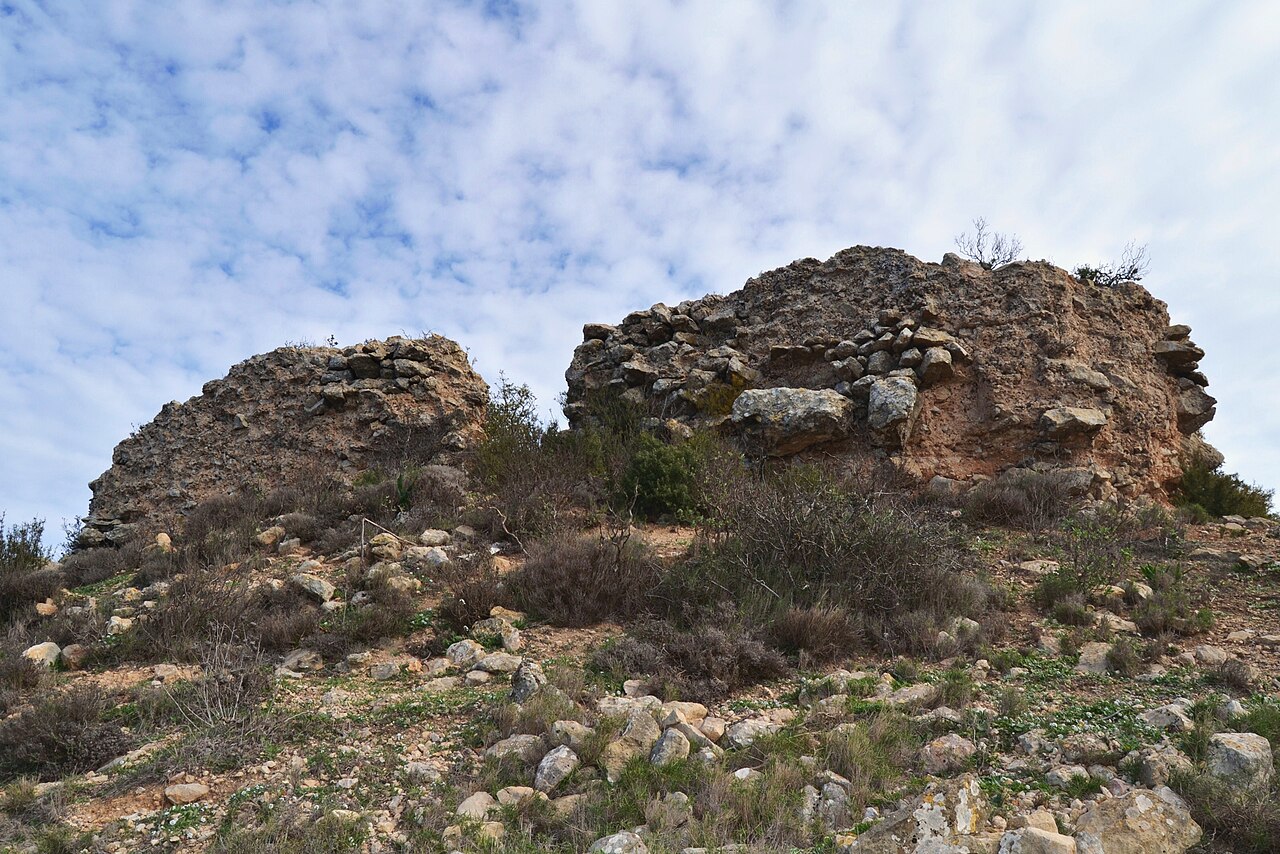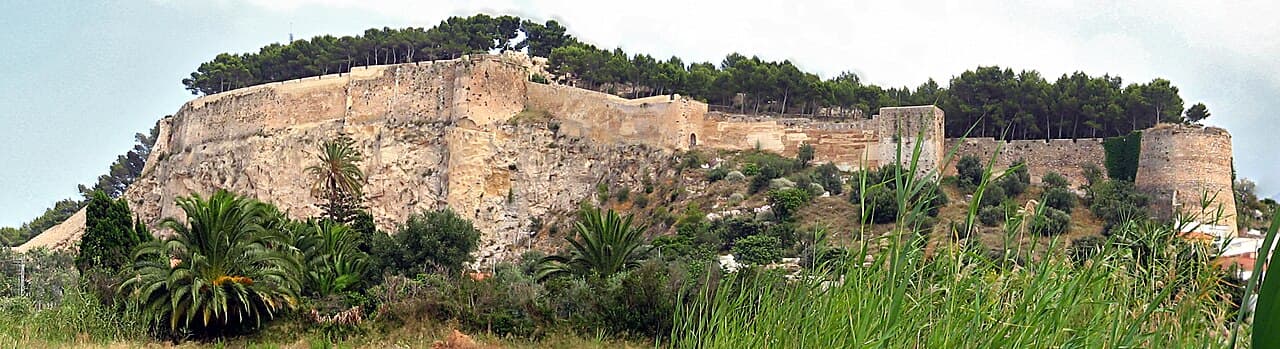
Dénia Castle
Dénia Castle, perched on a rocky crag overlooking the Mediterranean city of Dénia in Spain, is a remarkable example of a fortress whose history spans centuries and cultures. This hill castle showcases a complex architectural evolution from its Roman origins through the Islamic period and into the Christian Renaissance era. Its strategic location 48 meters above sea level allowed it to dominate the surrounding landscape, including views of the sea, the city, and nearby hills.
Originally established as a Roman settlement known as Diannium, the site’s earliest fortifications date back to antiquity. However, the castle as it is recognized today largely took shape during the High Medieval period, specifically in the 11th and 12th centuries, when the Moorish rulers constructed the initial defensive structures. These Islamic fortifications incorporated characteristic Almohad architectural elements, such as pointed arches and robust masonry, which remain visible in key features like the Portal de la Villa, the castle’s main entrance.
Historical development and significance
Roman foundations and early history
The origins of the Castell de Dénia trace back to Roman times when the area was known as Diannium. This early settlement laid the groundwork for the fortress’s strategic importance along the Mediterranean coast. Although little of the Roman fortifications survive today, archaeological evidence indicates continuous occupation and adaptation of the site through subsequent eras.
Islamic period and moorish architecture
During the 11th and 12th centuries, the castle was extensively developed under Islamic rule, becoming a formidable Moorish fortress. The Almohad dynasty influenced the construction of key defensive structures, including the Portal de la Villa with its pointed arches and barrel vault, and the Torre Roja, a 15th-century tower built with traditional Almohad masonry techniques. The Torre del Cos de Guardia, originally from the 12th century, was remodeled in later centuries to enhance the castle’s defenses.
Renaissance transformations and christian influence
The castle underwent significant changes during the late 16th and early 17th centuries, particularly under the patronage of the 1st Duke of Lerma, a prominent nobleman in the court of King Felipe III. The medieval Governor’s Palace was reconstructed with Renaissance architectural features, including elegant gardens, sea-facing royal quarters, and a grand staircase possibly designed by Francisco de Mora or Fray Alberto de la Madre de Dios. A marble statue of the Duke, sculpted by Giuseppe Carlone, once adorned the palace entrance but has since been lost.
Military history and later modifications
The castle’s military importance persisted into the 18th and 19th centuries. During the War of Spanish Succession, the Governor’s Palace and the adjacent old town, Vila Vella, suffered destruction. In the Peninsular War, French forces occupied the fortress from 1812 until Spanish troops reclaimed it in 1813 after a prolonged siege. The French made repairs and modifications during their occupation, reflecting the castle’s ongoing strategic value. By 1859, the fortress was abandoned for military use but remained a symbol of the city’s heritage.
Architectural features and layout
Defensive structures and towers
The castle complex presents a rich tapestry of architectural elements from various periods. The Portal de la Villa, dating to the 12th century, serves as the main entrance and is a prime example of Almohad military architecture. It features pointed arches and remnants of a barrel vault. Flanking the entrance are the Torre Roja and the Torre del Cos de Guardia, both integral to the castle’s defense. The Torre del Consell, built in the 15th century, functioned as a civic pavilion for city council meetings, highlighting the castle’s dual military and administrative roles.
Governor’s palace and royal quarters
The Governor’s Palace occupies a prominent esplanade within the fortress. Although partially in ruins, it reflects the Renaissance transformation of the castle into a royal residence. The palace included elaborate gardens and quarters oriented towards the sea, designed to accommodate royal visits. The grand staircase and other architectural details emphasize the palace’s importance as a symbol of noble power and refinement.
Bastions, cisterns, and access routes
Additional defensive features include the Torre del Baluart, an 18th-century bastion controlling access to the palace enclosure, and the Punta del Diamant, a distinctive diamond-shaped tower strengthening the outer fortifications. The Aljub, a 15th-century cistern, provided vital water storage for the castle’s occupants. Access to the fortress is primarily via the Camino Empedrado, a 14th-century cobbled street that served as the main vehicular route.
Cultural heritage and preservation
Today, Dénia Castle stands as a well-preserved cultural heritage site, embodying the layered history of the Mediterranean region. Its blend of Roman foundations, Moorish fortifications, and Renaissance enhancements offers valuable insights into the architectural and historical evolution of Spanish fortresses. The castle houses an archaeological museum within the Governor’s Palace, providing visitors with a rich educational experience.
Ongoing restoration efforts ensure the preservation of this historic monument, allowing the public to explore its towers, gates, halls, and courtyards. The castle’s commanding views and architectural diversity make it a significant attraction for those interested in medieval military architecture and Spanish history.
Visitor information and experience
Visitors to Dénia Castle can explore its extensive grounds, including the main entrance, defensive towers, the Governor’s Palace museum, and the bastions. The site’s elevated position offers panoramic views of the Mediterranean Sea and the city below. The castle is accessible via the historic Camino Empedrado, enhancing the sense of stepping back in time.
The castle’s preservation status allows for safe and informative tours, with interpretive signage detailing its historical phases and architectural features. It serves as a cultural landmark celebrating the diverse influences that shaped the region, from Roman times through Islamic rule and into the Christian Renaissance period.
Photo gallery

Photo by Panorama_del_Castillo_de_Denia_-cropped-.jpg: Constantin Groß This panoramic image was created with Autostitch (stitched images may differ from reality). derivative work: Emma7stern (talk)•CC BY-SA 2.0 de
Information
Website
Visit websiteSources & official resources
Verify the information above using these authoritative references.
Loading map...
Visitor reviews
No reviews yet. Been here? Write the first review and help other travelers!
Write the first reviewVisited this castle? Share your experience
Your review helps other travelers and adds first-hand knowledge to our encyclopedia.