Husum Castle
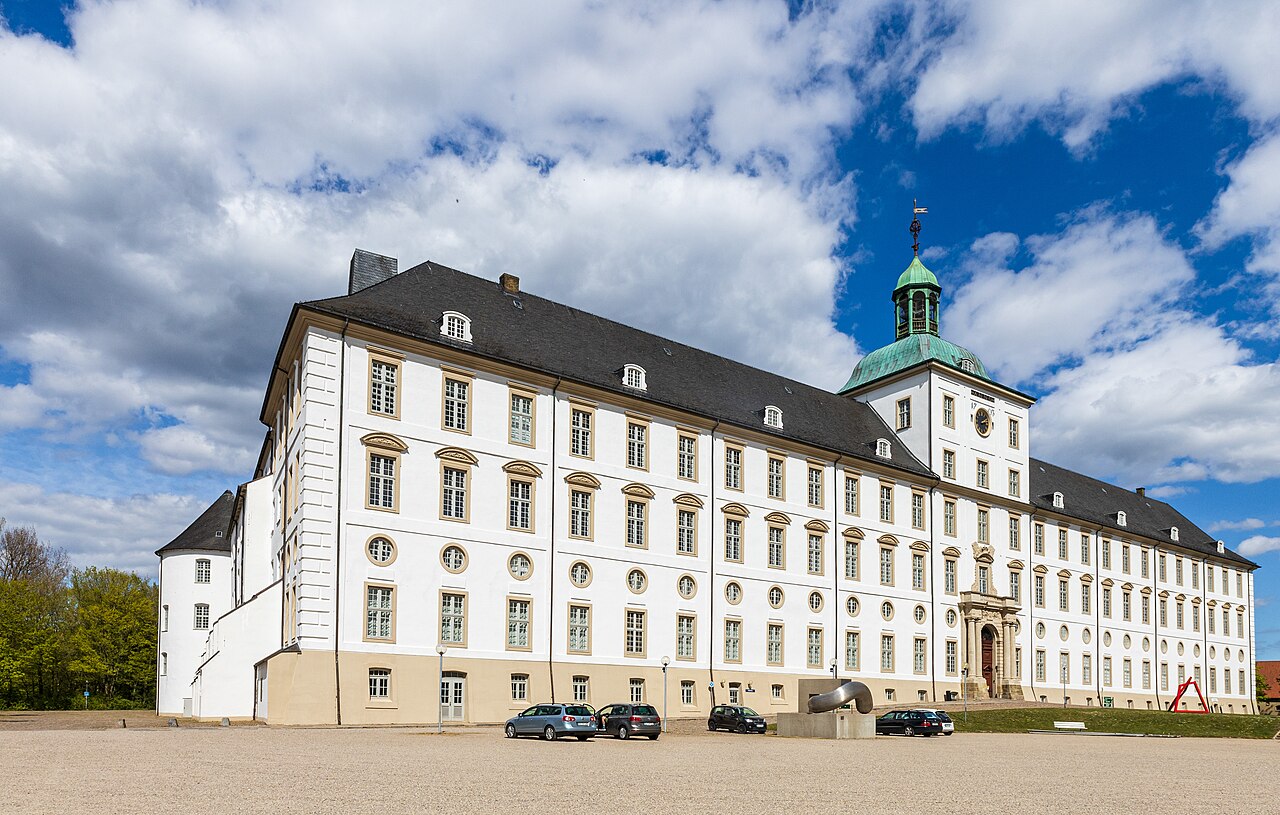
Husum Castle stands as the only manor-castle on the western coast of Schleswig-Holstein, Germany, underscoring the historical importance of Husum as a regional center. Constructed between 1577 and 1582, the castle was commissioned by Duke Adolf von Schleswig-Holstein-Gottorf (1526-1586), the first ruler of the newly established dukedom formed in 1544. This Renaissance era castle reflects the political and cultural ambitions of the duke and his lineage, whose descendants would later ascend to thrones in Sweden, Russia, and Oldenburg.
The castle was built in the distinctive Dutch Renaissance style, characterized by its red brick walls accented with lighter-colored horizontal lines, and its impressive array of seven towers. This architectural style was notably modern and sophisticated for its time, influenced by artisans primarily from western Europe who contributed to its design and construction. The castle's design shares similarities with later Danish royal castles such as Frederiksborg and Rosenborg in Copenhagen, which also feature red brick façades and multiple towers.
Architectural features and design
The castle's layout and construction demonstrate the innovative Renaissance architectural principles introduced to northern Germany in the late 16th century. The use of red brick combined with lighter stone or plaster lines creates a striking visual contrast that emphasizes the castle's structural elements. The seven towers serve both defensive and aesthetic functions, contributing to the castle's imposing silhouette on the flat landscape of the region.
Inside, the castle contains a variety of rooms that reveal the lifestyle and status of its noble inhabitants. The royal salons are richly decorated, reflecting the tastes and cultural influences of the Renaissance period. A chapel within the castle underscores the importance of religious practice for the ducal family. Other chambers and functional rooms provide a glimpse into the administrative and domestic aspects of castle life.
Historical context and significance
The establishment of Husum Castle coincided with the formation of the dukedom of Schleswig-Holstein-Gottorf, a significant territorial and political entity in the region. Duke Adolf used the castle as his residence during visits to the west coast, making it a center of governance and noble life. The castle's construction symbolized the duke's power and the cultural connections between northern Germany and western Europe during the Renaissance.
The lineage of Duke Adolf is notable for its wide-reaching influence across Europe. Descendants from this family became monarchs of Sweden, czars of Russia, and grand dukes of Oldenburg, linking Husum Castle to broader European dynastic histories. This heritage adds to the castle's cultural and historical importance beyond its immediate locality.
Preservation and public access
Today, Husum Castle is well preserved and functions as a museum that allows visitors to explore its royal salons, chapel, and other historic rooms. The museum offers insight into the castle's architectural and historical significance, as well as the lifestyle of its former noble occupants. Guided tours are available by appointment, providing detailed information and context for visitors interested in the castle's heritage.
The castle's location on the western coast of Schleswig-Holstein makes it a unique example of Renaissance architecture in a region dominated by other castle types, such as medieval fortresses and lowland castles. Its preservation contributes to the cultural landscape of Husum and serves as a valuable resource for understanding northern European Renaissance architecture and history.
Frequently asked questions (FAQ)
- How do I get to Husum Castle?
- Husum Castle is easily accessible by public transport, with regular train services to Husum from major cities like Hamburg and Flensburg. If you are driving, there is ample parking available nearby.
- What is the historical significance of Husum Castle?
- Husum Castle, built in the 16th century, served as a residence for the dukes of Schleswig and played a crucial role in the region's political history. The castle's architecture reflects Renaissance influences and showcases the transition of power in Northern Germany.
- When was Husum Castle built?
- Construction of Husum Castle began in 1577 and was completed in 1582. It was originally built as a ducal residence and has since undergone various renovations over the centuries.
- Can I take a guided tour of Husum Castle?
- Yes, guided tours are available at Husum Castle, providing visitors with in-depth insights into the castle's history and architecture. It is recommended to check the official website for tour schedules and to book in advance during peak seasons.
- Why is Husum Castle an important architectural site?
- Husum Castle is an important architectural site due to its unique Renaissance style and its well-preserved structures. The castle features beautiful courtyards, impressive facades, and intricate details that reflect the artistic trends of its time.
- Is it possible to host events at Husum Castle?
- Yes, Husum Castle offers facilities for hosting events such as weddings, conferences, and private gatherings. Interested parties should contact the castle management for more information on availability and services.
- What are the opening hours of Husum Castle?
- Husum Castle is typically open to visitors from April to October, with specific hours varying by day. It is advisable to check the official website for the most current opening hours and any seasonal changes.
- What is the best time to visit Husum Castle?
- The best time to visit Husum Castle is during the spring and summer months, when the gardens are in full bloom and guided tours are more frequent. Additionally, the pleasant weather allows for exploring the surrounding areas and enjoying outdoor activities.
- Are there any nearby attractions to Husum Castle?
- Yes, nearby attractions include the charming Husum town center, the picturesque harbor, and the Nordfriesland Museum, which offers insights into local history. Visitors can also enjoy walks along the scenic coastline, making it a great day trip destination.
- What are the ticket prices for Husum Castle?
- Ticket prices for Husum Castle are generally affordable, with discounts available for students, seniors, and children. It is recommended to check the official site for the most current pricing and any special offers available during your visit.
Information
Website
Visit websiteSources & official resources
Verify the information above using these authoritative references.
Loading map...
Visitor reviews
No reviews yet. Been here? Write the first review and help other travelers!
Write the first reviewVisited this castle? Share your experience
Your review helps other travelers and adds first-hand knowledge to our encyclopedia.