Danevirke
The Danevirke or Danework (modern Danish spelling: Dannevirke; Old Norse: Danavirki; German: Danewerk, meaning "earthwork of the Danes") is a remarkable system of early medieval fortifications located in Schleswig-Holstein, Germany. This extensive linear defensive structure stretches across the neck of the Cimbrian Peninsula, serving as a critical barrier from the Nordic Iron Age through the Viking Age and into the High Middle Ages. The Danevirke was last employed militarily during the Second War of Schleswig in 1864.
The fortifications consist of multiple earth walls, trenches, and the Schlei Barrier, extending approximately 30 kilometers from the former Viking trading center of Hedeby near Schleswig on the Baltic Sea coast in the east to the marshlands of the peninsula's western reaches. One notable section, the Østervolden Wall, defended the Schwansen Peninsula between the Schlei and Eckernförde inlets.
Origins and early construction phases
Although historical chronicles credit the Danish King Gudfred (reigned 804–810) with initiating the Danevirke around 808 AD as a defense against the expanding Frankish Empire, archaeological evidence reveals that the fortifications were begun much earlier, dating back to at least the 6th century and possibly as early as 500 AD. This predates King Gudfred's reign and suggests the structure evolved over centuries, reflecting the shifting political and military challenges faced by the Danes.
The original purpose of the Danevirke was to protect the Danish realm by fortifying the narrowest part of the Jutland Peninsula, effectively separating it from the southern territories controlled by the Franks and later the Saxons. The fortifications also safeguarded important trade routes and the prosperous Viking trading town of Hedeby, a key economic hub during the Viking Age.
Architectural features and expansions
The Danevirke is not a single wall but a complex system of multiple earthworks and ditches constructed and expanded in phases over several centuries. The walls were built primarily from earth and timber, with some stone reinforcements in later periods. The defensive works include:
- Linear walls extending across the peninsula to block land access
- Trenches and ditches to impede enemy movement
- The Schlei Barrier, a natural waterway fortified to prevent naval incursions
- The Østervolden Wall, a secondary defensive line protecting the Schwansen Peninsula
The construction techniques evolved over time, reflecting advances in military engineering and the need to respond to new threats. The walls were reinforced periodically, with some sections rebuilt or heightened to improve defensive capabilities.
Strategic location and military significance
The Danevirke's location was strategically chosen to control access to the Jutland Peninsula and protect the Danish heartland from southern invasions, particularly from the Franks and Saxons. By fortifying this narrow land corridor, the Danes could monitor and regulate movement, making it difficult for hostile forces to penetrate northward.
Throughout the Viking Age, the fortifications helped secure the vital trading center of Hedeby, which was one of the largest and most important Viking towns. The Danevirke thus played a dual role in military defense and economic protection.
Later history and military use
After its initial construction and expansions during the early medieval period, the Danevirke continued to be a significant defensive structure throughout the Middle Ages. However, its military importance diminished with changing warfare technology and political boundaries.
The last recorded military use of the Danevirke was during the Second War of Schleswig in 1864, when it served as a defensive line for Danish forces against Prussian and Austrian troops. Despite its ancient origins, the Danevirke was still considered a valuable fortification in this 19th-century conflict.
Archaeological significance and UNESCO World Heritage status
Modern archaeological investigations have uncovered details about the construction phases, techniques, and historical context of the Danevirke, shedding light on its evolution over more than a millennium. Excavations have revealed timber structures, palisades, and evidence of multiple rebuilding phases.
In recognition of its cultural and historical importance, the Danevirke, together with the nearby Viking trading settlement of Hedeby, was inscribed on the UNESCO World Heritage List in 2018. This designation highlights the site's value as a testimony to early medieval defensive architecture and Viking Age trade networks.
Preservation and current condition
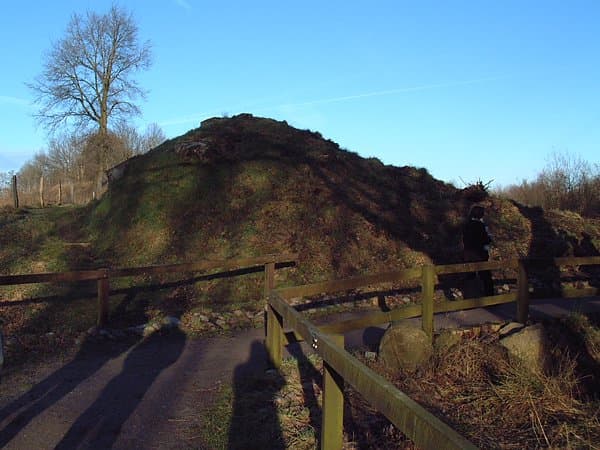
Today, the Danevirke is preserved as an important archaeological site and cultural monument. Although much of the original timber and earthworks have been eroded or altered over time, significant sections of the earth walls and ditches remain visible and accessible to visitors. The site is managed to protect its integrity while allowing public education about its historical role.
Visiting the Danevirke
Visitors to the Danevirke can explore the extensive earthworks and learn about the site's history through interpretive displays and guided tours. The proximity to the historic town of Schleswig and the Viking settlement of Hedeby offers opportunities to understand the broader historical landscape of the region.
The site is open year-round, with walking paths that trace the ancient defensive lines. It provides a unique glimpse into the military and economic strategies of early medieval Denmark and its neighbors.
Frequently asked questions (FAQ)
- How do I get to Danevirke castle?
- Danevirke castle is located near the city of Schleswig in Germany. You can reach it by car or public transport, with local buses connecting to Schleswig. The castle is also accessible for those who enjoy walking or cycling in the scenic surrounding areas.
- What is the historical significance of Danevirke?
- Danevirke is an ancient fortification that played a crucial role in protecting the Danish kingdom from invasions during the Viking Age. It is one of the most important archaeological sites in Northern Europe, showcasing the strategic military architecture of the time. The site offers insights into the early medieval history of the region.
- When was Danevirke constructed?
- The construction of Danevirke began in the 5th century and continued through the Viking Age, with various expansions and modifications over the centuries. This impressive defensive structure reflects the ongoing need for protection and control of trade routes during its time. The remnants visible today provide a glimpse into the engineering skills of the past.
- Can I visit Danevirke castle year-round?
- Yes, Danevirke castle is open to visitors throughout the year, although the best time to visit is during the spring and summer months when the weather is more favorable. Special events and guided tours are often scheduled during these seasons, enhancing the visitor experience. Be sure to check the official website for any seasonal hours or events.
- Why is the architecture of Danevirke unique?
- The architecture of Danevirke is unique because it combines earthworks with wooden and stone fortifications, showcasing a blend of construction techniques from different periods. This design reflects the military needs and technological advancements of its time. The sheer scale and engineering prowess of the structure continue to impress visitors and historians alike.
- Is it possible to access nearby attractions from Danevirke?
- Yes, several nearby attractions are accessible from Danevirke, including the historic town of Schleswig and the Schlei fjord, popular for its scenic beauty. Visitors can enjoy walking tours, museums, and local dining options in the area. The region is rich in history, making it an ideal base for exploring the surrounding sites.
- What are the ticket prices for visiting Danevirke?
- Ticket prices for Danevirke may vary, typically ranging from a small fee for adults, with discounts available for students and seniors. Children often receive free admission, making it a family-friendly destination. Check the official website for the latest pricing and any special offers.
- What are the opening hours for Danevirke castle?
- Danevirke castle generally opens from 9:00 AM to 5:00 PM, but hours may extend during peak tourist seasons or special events. It is advisable to check the official website for the most up-to-date information on hours and any holiday schedules. Planning your visit around these hours will ensure you make the most of your experience.
Photo gallery

Information
Loading map...
Visitor reviews
No reviews yet. Been here? Write the first review and help other travelers!
Write the first reviewVisited this castle? Share your experience
Your review helps other travelers and adds first-hand knowledge to our encyclopedia.