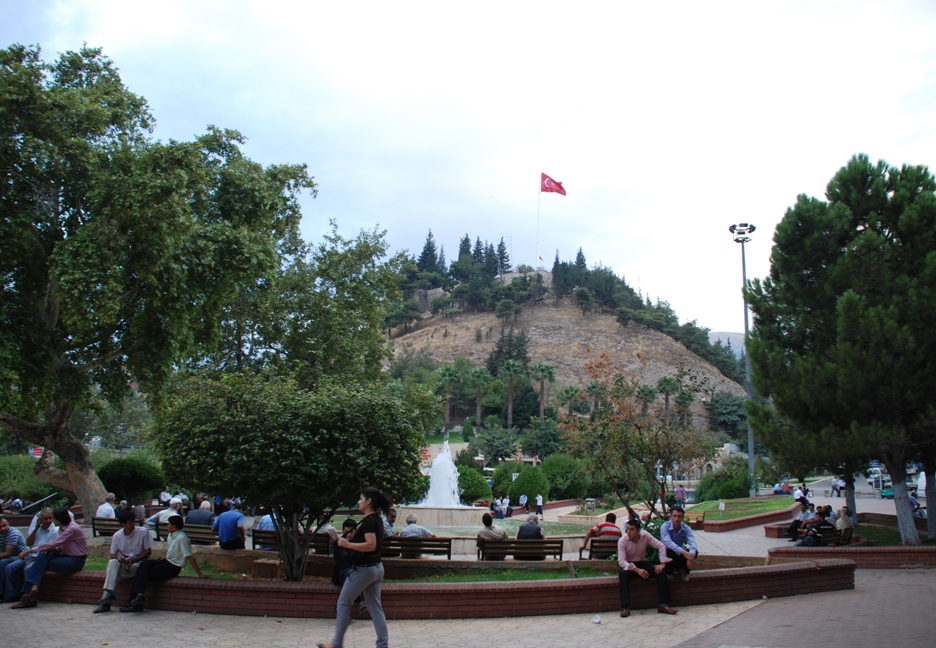
Hurman Castle
Hurman Castle stands as a remarkable example of a strategic hilltop fortress with a rich history spanning multiple empires in southeastern Turkey. Located in Dağlıca, within the municipality of Afşin, this castle occupies a commanding position overlooking the Hurman Çayı valley and the expansive Elbistan plain. Its elevated site provided a crucial vantage point for controlling the ancient trade and military routes linking Cappadocia with southeastern Anatolia and Syria, underscoring its enduring strategic importance.
The origins of Hurman Castle trace back to the late Roman period, as indicated by coin finds from that era, suggesting an initial establishment before the Byzantine Empire fortified the site. Throughout its history, the castle has borne various names reflecting the diverse cultures that influenced the region, including Romaina in Byzantine records and Hisn ar-Rummān in Arabic sources.
Historical significance and military role
During the 10th century, Hurman Castle was situated in a highly contested border area known as al-ʿAwāsim, a frontier zone between the Byzantine Empire and Arab forces. The fortress played a critical role in the Byzantine military strategy to secure and expand their eastern frontiers. A pivotal moment in its history was when the Armenian leader Melias captured the castle and restored it to Byzantine control, after which the Byzantines undertook significant refortification efforts in 911.
Shortly after, around 916, Hurman Castle became the central stronghold of the newly established Byzantine administrative district or theme of Lykandos. This elevated the castle’s status as both a military bastion and an administrative center, reinforcing Byzantine influence in the volatile borderlands.
From the 12th century onward, the region fell under the control of the Seljuk Turks, who substantially rebuilt and modified the fortress. The majority of the extant structures visible today date from this Seljuk period, reflecting their architectural style and military needs. Later, during the 17th and 18th centuries, the Ottoman Empire made further additions and alterations, indicating the castle’s continued strategic relevance over many centuries.
Architectural features and layout
Hurman Castle is classified as a hill castle, built on a rocky outcrop sloping southwest, which enhances its natural defensive advantages. The castle’s footprint is roughly rectangular, measuring approximately 80 meters in length and 50 meters across. This compact yet formidable layout was designed to maximize defense and control over the surrounding landscape.
The enclosing curtain walls are constructed from large ashlar blocks, finely cut and dressed stones of varying colors, some sections rising over ten meters high. These walls are reinforced by eight bastions, which provided strategic vantage points for defenders to observe and repel attackers. The bastions’ placement allowed effective coverage of the castle’s perimeter and the surrounding approaches.
Gates and defensive structures
The main entrance was situated on the western side, near the historic settlement of Sobagena. This gate originally served as the primary access point but was later supplemented by an additional defensive wall and gate constructed during the Seljuk period, creating a layered defense system. A secondary gate on the eastern side offered alternative access, reflecting the fortress’s complex and strategic design to control movement within and around the castle.
Interior remains and building foundations
Inside the castle walls, only the foundations of internal buildings remain. These remnants suggest a variety of functional structures necessary for the castle’s operation, although their specific purposes are not clearly identified. The layers of construction from Byzantine, Seljuk, and Ottoman periods have obscured many original details, but the foundations indicate spaces likely used for storage, garrison quarters, and administrative activities.
Cultural and historical legacy
Hurman Castle’s history reflects the dynamic and often turbulent history of southeastern Anatolia, a region shaped by the interaction of Byzantine, Arab, Armenian, Seljuk, and Ottoman powers. Its multiple names in different languages testify to this cultural mosaic. The castle’s strategic location and robust fortifications made it a focal point of military campaigns and administrative control over centuries.
Today, the castle’s ruins offer valuable insights into medieval military architecture and the historical geography of the borderlands between empires. Its well-preserved walls and bastions stand as a testament to the engineering skills and strategic foresight of its builders across different eras.
Visiting hurman castle
Visitors to Hurman Castle can explore the site’s impressive walls and bastions, taking in sweeping views of the surrounding valley and plains. Although much of the internal structures survive only as foundations, the castle’s layout and defensive features are still evident, providing a tangible connection to its storied past.
The castle’s location in the Afşin district makes it accessible for those interested in history, archaeology, and medieval architecture. While not as widely known as some other Turkish castles, Hurman Castle offers a unique glimpse into the complex history of the Byzantine-Seljuk frontier and the enduring legacy of fortifications in this region.
Frequently asked questions (FAQ)
- How do I get to Hurman Castle?
- Hurman Castle is located in Afşin, Turkey, and can be reached by car or public transportation from nearby cities. The castle is situated about 30 kilometers from Kahramanmaraş, making it an accessible day trip destination for visitors exploring the region.
- What is the historical significance of Hurman Castle?
- Hurman Castle dates back to the Byzantine period and has a rich history tied to various civilizations that have inhabited the region. It served as a strategic military fortress, providing protection and control over trade routes throughout history.
- When was Hurman Castle built?
- The exact construction date of Hurman Castle is not clearly documented, but it is believed to have been built in the 6th century AD during the Byzantine era. Over the centuries, it has undergone several renovations and additions reflecting the architectural styles of different periods.
- Can I explore the interiors of Hurman Castle?
- Yes, visitors can explore the grounds and some of the interior sections of Hurman Castle. However, certain areas may be restricted for safety reasons, so it's advisable to follow any guidelines provided by local authorities during your visit.
- Why is Hurman Castle a popular tourist attraction?
- Hurman Castle is popular among tourists due to its impressive architecture and panoramic views of the surrounding landscape. Additionally, its historical significance and the stories it holds attract history enthusiasts from all over.
- Is it possible to visit Hurman Castle year-round?
- Yes, Hurman Castle is open to visitors year-round, although the best time to visit is during the spring and fall when the weather is mild and pleasant. It is advisable to check local conditions or any potential closures before planning your trip.
- What are the opening hours for Hurman Castle?
- Hurman Castle typically opens at 9 AM and closes at sunset, but hours may vary depending on the season. It's recommended to verify the current opening hours through local tourist information before your visit.
- Are there any ticket prices for visiting Hurman Castle?
- Entry to Hurman Castle is generally free, but there may be a small fee for guided tours or specific activities. Be sure to check with local tour operators for any updated pricing details before your visit.
- What nearby attractions can I visit while in Afşin?
- While in Afşin, you can explore other historical sites such as the ancient city of Elbistan and enjoy the natural beauty of the surrounding landscapes. Additionally, local markets and traditional Turkish cuisine offer a complete cultural experience for visitors.
Information
Loading map...
Visitor reviews
No reviews yet. Been here? Write the first review and help other travelers!
Write the first reviewVisited this castle? Share your experience
Your review helps other travelers and adds first-hand knowledge to our encyclopedia.