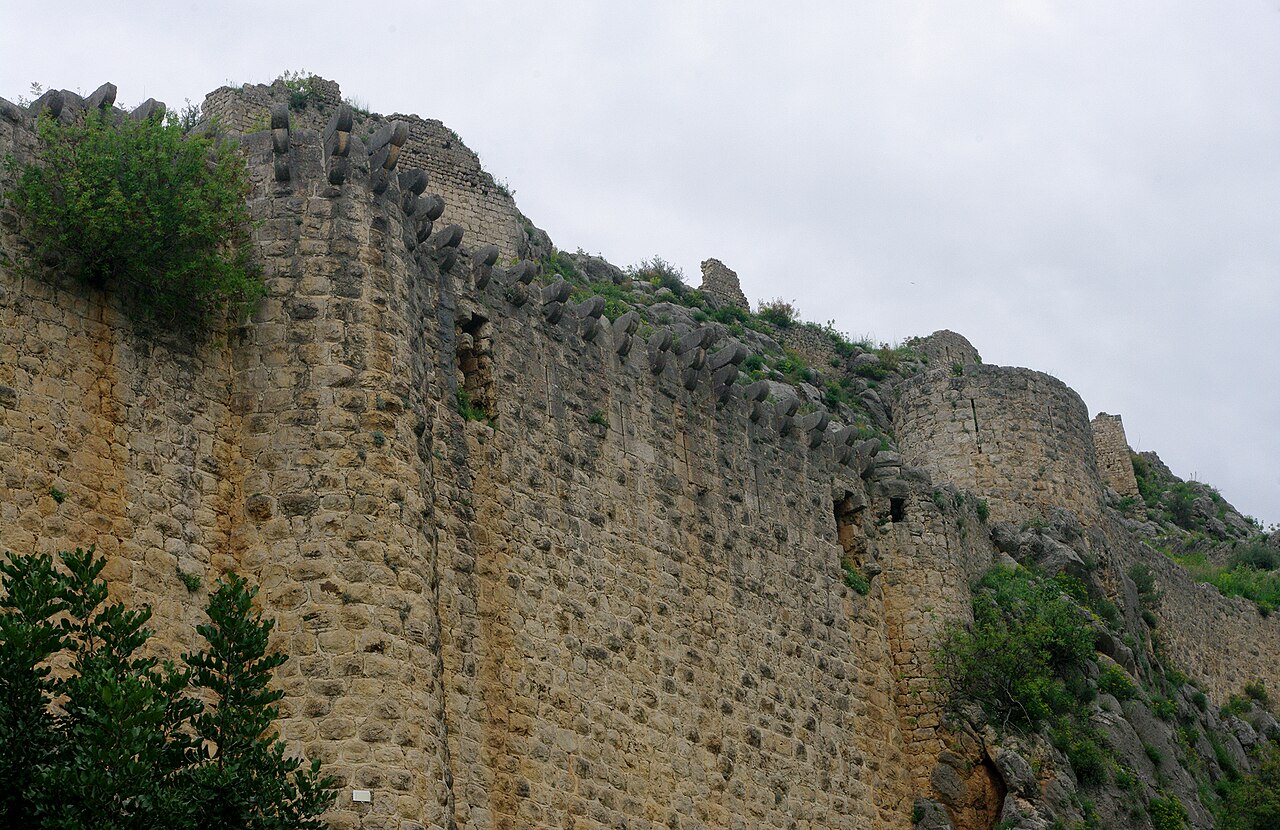
Feke Castle
Feke Castle, located in the municipality of Feke in modern-day Turkey, is a remarkable example of a medieval fortress with deep historical roots tied to the Byzantine Empire and the Armenian Kingdom of Cilicia. Strategically perched atop a steep mountain ridge in the rugged terrain of Cilicia, this hill castle was originally constructed in the late 10th or early 11th century as a defensive bastion overseeing the surrounding region. Its commanding position allowed it to control important routes and served as a vital military outpost in a contested border zone between Byzantine and Arab forces during the 7th and 8th centuries.
The fortress’s earliest phase reflects Byzantine military architecture aimed at securing the empire’s eastern frontiers. However, its significance grew substantially when it was seized and rebuilt by the Armenian Rubenid dynasty in the mid-11th century. King Constantine I of Armenia, son of Ruben I, made Feke Castle the principal seat of his principality, declaring it the capital in 1097. This transformation marked the castle as both a political and military center for the emerging Armenian Kingdom of Cilicia.
Historical development and political significance
Under the Rubenids, Feke Castle evolved beyond a mere fortress. The early 12th century saw rulers like Thoros I expand its fortifications and add palatial structures, reflecting its dual role as a military stronghold and princely residence. The castle's robust defenses and strategic location made it a focal point in regional conflicts.
One of the most notable events in the castle’s history was the siege of 1137 by Byzantine Emperor John II Komnenos. Despite a determined defense led by an Armenian commander named Constantine, the fortress fell after a prolonged siege. The capture resulted in the imprisonment of prominent Armenian nobles, including Prince Leo I and his sons. However, Armenian forces under Thoros II recaptured the castle in 1145, restoring it to Armenian control.
By 1173, the political center of the Rubenid principality shifted to Sis under Mleh, who moved the treasury and capital away from Feke Castle. Consequently, the fortress’s role transitioned from a seat of power to a prison for nobles and courtiers who had fallen out of favor, highlighting its continued strategic importance within the kingdom’s internal affairs.
Later history and cultural connections
Following the fall of the Armenian Kingdom of Cilicia in 1375, Feke Castle remained occupied by the Ajapahyan family until the 19th century. The settlement around the castle, known as Vaka in Armenian and Feke in Turkish, was home to a significant Armenian population of about 800 residents before the tragic events of the 1915 Armenian Genocide, during which many inhabitants were deported or killed.
The castle is also linked to Armenian cultural heritage through figures such as Etienne of Vahka, a 13th-century scholar and miniaturist. The fortress grounds serve as the burial site of notable individuals like Isabella of Antioch, who died in 1206. Nearby stood the Drazark Monastery, an important Armenian religious and cultural center from the early 12th century, renowned for its manuscripts with illustrated miniatures.
Architectural features and construction details
Location and layout
Feke Castle is strategically situated on a steep mountain ridge approximately 180 meters long from north to south, narrowing to about 25 meters at its midpoint. The castle’s natural defenses are enhanced by the precipitous cliffs on the western side, which are so sheer that no additional fortifications were necessary there.
Building materials and defensive structures
The fortress is primarily constructed from large, roughly dressed basalt stones, a volcanic rock prized for its strength and durability. These stones were carefully shaped and laid to form thick defensive walls capable of withstanding sieges and assaults. The castle is divided into two main sections: a lower outer fortress and an upper main fortress.
Entrances and towers
The lower fortress encompasses the entrance area, with the sole gateway located on the eastern side. This entrance is ingeniously designed with a multi-level passageway that ascends along the walls, allowing defenders to repel attackers in a controlled, stepwise manner. The northern and eastern sides are reinforced with a series of semicircular towers, built with precise masonry to strengthen the walls and provide vantage points for surveillance and defense.
Upper fortress and internal structures
Within the upper fortress lie the ruins of palatial buildings once inhabited by the Rubenid rulers. Archaeological remains include a water reservoir essential for sustaining the garrison during sieges, armories for storing weapons, and various other buildings likely used for administrative and residential purposes. These structures reflect the castle’s role as both a military installation and a princely residence.
Present condition and significance
Today, Feke Castle survives largely as fragmented ruins, yet its core layout and defensive features remain discernible. The combination of natural terrain and man-made fortifications demonstrates a sophisticated design aimed at protecting the rulers and resisting enemy forces in a turbulent historical period. The castle stands as a testament to the region’s complex history, reflecting Byzantine, Armenian, and later influences.
Its association with prominent historical figures, cultural heritage, and architectural ingenuity makes Feke Castle an important site for understanding the medieval history of Cilicia and the Armenian Kingdom. Visitors to the site can appreciate the enduring legacy of this fortress, which played a pivotal role in the military and political struggles of the region for several centuries.
Frequently asked questions (FAQ)
- How do I get to Feke Castle?
- Feke Castle is located in the Feke district of Turkey, easily accessible by car or public transportation from nearby cities. The scenic drive offers beautiful views of the surrounding landscapes, making the journey enjoyable. Once you arrive in Feke, follow the local signs to the castle.
- What is the historical significance of Feke Castle?
- Feke Castle dates back to the Byzantine period and has played a crucial role in the region's history, serving as a defensive structure against invasions. It later became an important site during the Crusades and reflects the military architecture of its time. The castle stands as a testament to the rich historical tapestry of Feke and its strategic significance.
- When was Feke Castle built?
- Feke Castle was originally constructed in the 11th century during the Byzantine Empire and has undergone various modifications through the centuries. Its architecture showcases elements from different periods, particularly during the Byzantine and Ottoman eras. The castle's enduring presence highlights its importance throughout Turkish history.
- Can I enter Feke Castle?
- Yes, visitors are welcome to explore Feke Castle and its surroundings. There may be specific areas that require caution due to restoration or safety concerns, so be sure to follow any posted guidelines. The panoramic views from the castle are a highlight of the visit!
- Why is Feke Castle a popular tourist destination?
- Feke Castle attracts visitors due to its rich history and stunning views of the surrounding region. The blend of natural beauty and historical architecture makes it a perfect destination for history buffs and nature lovers alike. Additionally, it offers a unique glimpse into the past, making it a memorable experience for all who visit.
- Is it possible to visit Feke Castle year-round?
- Yes, Feke Castle is open to visitors year-round, though the best time to visit is during the spring and fall when the weather is mild. However, it's advisable to check local conditions before your visit, as winter weather can affect accessibility. Always ensure you have the latest information on any seasonal events or closures.
- What are the opening hours for Feke Castle?
- Feke Castle is generally open to visitors from 9 AM to 6 PM, but these hours may vary seasonally. It's best to check ahead of your visit for any changes in operating hours. Early arrivals often provide a quieter experience and more opportunities for exploration.
- Are there any nearby attractions to visit?
- Yes, there are several attractions near Feke Castle, including local museums and natural parks that showcase the area's beauty. Exploring the charming town of Feke itself can also enhance your visit, offering local cuisine and culture. Make sure to allocate time to discover these nearby sites for a full experience.
- What are the ticket prices for Feke Castle?
- Admission to Feke Castle is typically affordable, with tickets priced at a nominal fee to support maintenance and preservation efforts. Discounts may be available for students and seniors, so be sure to inquire upon arrival. This makes it an economical option for those looking to delve into the region's history.
Information
Loading map...
Visitor reviews
No reviews yet. Been here? Write the first review and help other travelers!
Write the first reviewVisited this castle? Share your experience
Your review helps other travelers and adds first-hand knowledge to our encyclopedia.