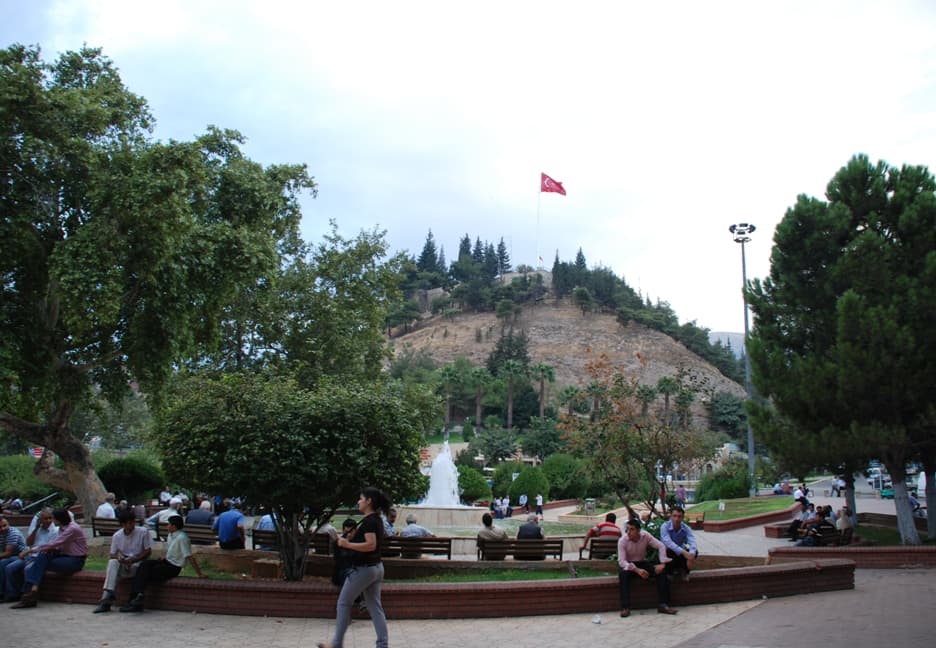
Maraş Castle — Turkey castle

Maraş Castle

Maraş castle in kahramanmaraş, turkey
Kahramanmaraş, Turkey
Early Medieval (5th–10th c.)
Partially Restored

Maraş Castle, located in the heart of Kahramanmaraş city in Turkey, is a significant historical fortress with origins tracing back to the early medieval period. Although the exact date of its construction remains uncertain, archaeological and historical evidence suggests it was built between the 1st century B.C. and 2nd century A.D., making it one of the enduring ancient fortifications in the region.

The castle is situated on a tumulus within the urban fabric of Kahramanmaraş, giving it a modest elevation relative to the surrounding terrain. This location provided strategic advantage for surveillance and defense while integrating the castle within the city's evolving landscape over centuries.

Architectural layout and fortifications

Maraş Castle is characterized by its rectangular plan, measuring approximately 150 metres north to south and 75 metres east to west. This compact footprint reflects typical early medieval military architecture designed for efficient defense and control.

The castle's fortifications include several square-plan bastions, three of which have undergone restoration by the Turkish Ministry of Culture and Tourism. These bastions reinforce the castle's defensive capabilities, allowing defenders to cover the walls effectively against attackers.

The construction materials vary between the outer and inner walls of the bastions: ashlar stone forms the exterior facing walls, providing durability and resistance to siege weaponry, while the interiors are built with rubble stone, a common practice to economize materials without compromising strength.

Defensive features and access points

The castle's main gate is located on the southern wall, serving as the principal entrance and exit point. The positioning of the gate would have been strategically chosen to control access and facilitate defense.

Additional defensive elements include arrow slits situated on the eastern wall. These narrow vertical openings allowed archers to fire arrows while remaining protected, a typical feature in early medieval fortifications designed to maximize defensive coverage.

Historical significance and preservation

Maraş Castle has witnessed numerous historical phases, reflecting the region's complex history of conquest, trade, and cultural exchange. Its enduring presence within Kahramanmaraş city underscores its role as a military stronghold and a symbol of the city's heritage.

The restoration efforts by the Ministry of Culture and Tourism have helped preserve the castle's structural integrity and historical features, making it accessible for visitors and scholars interested in early medieval architecture and Anatolian history.

Visiting maraş castle

Visitors to Maraş Castle can explore its restored bastions and walls, gaining insight into the defensive strategies employed during its active use. The castle's location within the city makes it an accessible destination for those interested in historical architecture and regional history.

While detailed visitor information such as opening hours and ticket prices may vary, the castle remains an important cultural landmark within Kahramanmaraş, contributing to the city's tourism and educational offerings.

Frequently asked questions (FAQ)

What is the historical significance of Maraş Castle?
Maraş Castle, located in Kahramanmaraş, Turkey, dates back to Roman times and has served various purposes throughout history, including military defense and royal residence. It is an important symbol of the region's rich heritage and has witnessed numerous historical events that shaped the area.
When was Maraş Castle built?
The origins of Maraş Castle can be traced back to the 4th century AD, although it has undergone several renovations and expansions over the centuries. The current structure reflects various architectural styles influenced by the civilizations that occupied the region.
Can I visit Maraş Castle?
Yes, visitors are welcome to explore Maraş Castle. The site offers a glimpse into the past with its impressive architecture and panoramic views of the surrounding area, making it a popular destination for both history enthusiasts and casual tourists.
What are the opening hours for Maraş Castle?
Maraş Castle is typically open to visitors from 9 AM to 6 PM daily, although hours may vary seasonally or due to special events. It's advisable to check ahead for any changes in the schedule before planning your visit.
Is there an entrance fee to visit Maraş Castle?
Yes, there is a small entrance fee to access Maraş Castle, which helps with its maintenance and preservation. The ticket prices are generally affordable, making it accessible for most visitors.
What is the best time to visit Maraş Castle?
The best time to visit Maraş Castle is during the spring and autumn seasons when the weather is mild and pleasant. This allows visitors to enjoy the outdoor surroundings and breathtaking views without the extreme heat of summer.
Are there any nearby attractions to visit?
Yes, there are several attractions near Maraş Castle, including the Kahramanmaraş Archaeological Museum and local bazaars that offer traditional crafts and sweets. Exploring the city will provide a richer understanding of the local culture and history.
How do I get to Maraş Castle?
Maraş Castle is easily accessible by car or public transportation within Kahramanmaraş. Local signs and maps can help guide you to the castle, which is situated at a prominent location in the city.
Is Maraş Castle accessible for individuals with disabilities?
Maraş Castle has made some efforts to improve accessibility, but due to its ancient structure, not all areas may be easily accessible for individuals with disabilities. It is recommended to contact the site in advance for specific accessibility information.

Photo gallery

Maraş Castle
Click to view

Photo by Elelicht•CC BY-SA 3.0

1 photo • Click any image to view in full screen

Information

Hill Castle

Loading map...

Visitor reviews

No reviews yet. Been here? Write the first review and help other travelers!

Write the first review

Visited this castle? Share your experience

Your review helps other travelers and adds first-hand knowledge to our encyclopedia.

Write a review

(5/5)

0/2000 characters

Your review will be visible after admin approval

Nearby castles

47.6 km

Nurdağı Castle

Nurdağı Kalesi İçi Yolu, Turkey

Nurdağı Castle, known locally as Nurdağı Kalesi, is a modern construction situated on a hill near the village of Nurdağı in the Gaziantep province of Turkey. Despite its traditional castle-like appearance, it is important to note that this site is not a genuine medieval fortress but rather a contemporary structure built in 2005. The castle was designed as part of a municipal park project to define the summit area of the hill and provide a recreational space for locals and visitors. Modern origins and purpose Unlike historical castles in Turkey, which often date back centuries and were constructed for defensive or administrative purposes, Nurdağı Castle serves primarily as a decorative boundary and a public amenity. Its construction in the early 21st century means it lacks the historical and architectural authenticity typical of traditional fortifications. The castle's walls and towers are built to evoke the aesthetic of ancient castles but do not incorporate historical defensive features or medieval construction techniques. Site features and landscape context The castle occupies a hilltop location that offers panoramic views of the surrounding landscape in Gaziantep province. The area inside the castle walls has been adapted to accommodate picnics and leisure activities, making it a community space rather than a historical monument. The site is freely accessible to the public, encouraging outdoor recreation and social gatherings. Possible historical traces While there is no documented evidence of a historical castle at this site, some excavations have revealed spaces carved into the bedrock. These may represent ancient dwellings or other forms of habitation predating the modern structure. However, no definitive archaeological findings confirm the existence of a medieval or earlier fortress here. The lack of historical records and scholarly references supports the conclusion that Nurdağı Castle is a recent addition to the landscape rather than a heritage site. Visitor information and accessibility Visitors to Nurdağı Castle can enjoy the open-air environment and the scenic hilltop setting without any entrance fee. The castle's role as a municipal park boundary means it is maintained for public use, with no restrictions on visiting hours. However, since the structure is a modern pastiche, it does not offer the historical exhibits, guided tours, or architectural details found at authentic castles. Practical considerations As a site primarily intended for leisure, Nurdağı Castle is suitable for families and groups seeking a picnic spot with views. It is not a destination for those interested in medieval architecture or Turkish castle history. Visitors should plan accordingly and consider combining their visit with other historical or cultural attractions in the Gaziantep region.

Contemporary (20th–21st c.)
Details
52.4 km

Haruniye Castle

Near Kurtbeyoğlu Mh., Turkey

Haruniye Castle, also known locally as Harun Resit Kalesi or Haruniye Kalesi, is a historic fortress situated in the hills above the village of Düziçi in the Osmaniye province of southern Turkey. This hill castle occupies a strategic position overlooking the route that historically connected the city of Kahramanmaraş to the fertile Cilician plain, an important corridor for trade and military movements in the region. Historical origins and early significance The origins of Haruniye Castle trace back to approximately 785 AD, when it was constructed under the orders of Harun al-Rashid, the renowned Abbasid Caliph. The castle was built to secure this vital road and to serve as a defensive stronghold amid the ongoing conflicts between the Abbasid Caliphate and the Byzantine Empire. Although the castle does not directly guard the Amanus Pass, it maintains intervisibility with Çardak Castle, another important fortress in the area, allowing for coordinated defense and communication. Byzantine capture and reconstruction During the Byzantine military campaigns against the Arabs in Syria, Emperor Nikephoros II Phokas captured the castle and its adjoining walled town in 959 AD. At that time, the fortress sheltered approximately 1,500 Muslim residents. The Byzantine forces likely caused significant damage to the castle during the siege. In response, Sayf ad-Dawlah, the governor of Aleppo, financed the reconstruction of Haruniye Castle and the surrounding town in 967 AD, restoring its defensive capabilities and infrastructure. Armenian period and Teutonic Knights By the late 12th century, Haruniye Castle had come under the control of the Armenian Kingdom of Cilicia. Records indicate that by 1198, the castle was held by an Armenian baron named Levon, who played a role in the coronation of King Leo I of Armenia. Following Levon, the lordship passed to Godfrey, continuing Armenian governance of the fortress. On 22 January 1236, King Hethum I of the Armenian Kingdom granted the village and castle of Haruniye to the Teutonic Knights as a reward for their military support to the Armenian state. This transfer highlights the castle's ongoing strategic and political importance in the region during the medieval period. Mamluk control and later history By the end of the 13th century, the castle fell into the hands of the Mamluks, who were expanding their influence throughout the Levant. In the mid-14th century, Haruniye served as the administrative headquarters for eastern Cilicia under Egyptian Mamluk rule, underscoring its continued relevance as a regional center of power. Architectural features and condition Haruniye Castle is classified as a hill castle, built with defensive walls adapted to the rugged terrain of the area. Though much of the original structure remains in ruins, key elements such as the curtain walls, battlements, and remnants of towers are still visible. The castle's position on elevated ground provided natural defenses, complemented by man-made fortifications designed to control the surrounding landscape. Currently, the castle is in a ruined state but remains accessible to visitors. Recent restoration efforts have been controversial; some repairs and new constructions intended for tourism have altered the site's historic character. Despite this, Haruniye Castle offers valuable insights into the military architecture and regional history of medieval Cilicia. Visiting Haruniye Castle today Visitors to Haruniye Castle can explore the ruins freely, gaining a sense of the castle's strategic importance and architectural layout. The site provides panoramic views of the surrounding hills and plains, reflecting its original purpose as a lookout and defensive position. While the ongoing restoration work may affect the aesthetic experience, the castle remains a significant cultural and historical landmark in Osmaniye province.

High Medieval (11th–13th c.)
Details
53.2 km

Bahçe Castle

Bahçe, Turkey

Bahçe Castle, locally known as Bahçe Kalesi, is situated on a hill in the town of Bahçe within the Osmaniye Province of Turkey. Although relatively obscure and scarcely mentioned outside local government sources, the castle's remains suggest a historical military function. The castle occupies a strategic position atop a hill, offering commanding views over the surrounding landscape and control over the historic and modern routes connecting Osmaniye and Gaziantep. Location and strategic importance Perched on a hill in the small town of Bahçe, the castle's location was likely chosen for its vantage point. The elevated position allowed for surveillance and defense along the old and new roads between Osmaniye and Gaziantep, two significant urban centers in southeastern Turkey. The surrounding neighborhood, known as Kale Mahallesi (Castle Neighborhood), preserves the memory of the fortification despite the limited physical remains. Architectural features and remains The surviving structure of Bahçe Castle is modest, consisting primarily of a roughly square enclosure formed by four walls measuring approximately 15 by 15 meters. The walls are about 90 centimeters thick and currently stand at an average height of only one meter. The masonry lacks ornamental or architectural detailing, indicating a purely functional military design rather than a residence or palace. The simplicity of the castle's construction suggests it served as a garrison fort, likely intended for a small contingent of soldiers tasked with monitoring and securing the area. The absence of towers, gates, or other defensive features commonly found in larger castles supports this interpretation. Historical context and usage According to local government sources, Bahçe Castle dates back to the Byzantine period and was used during medieval times. Its role as a military outpost fits within the broader context of Byzantine frontier defense systems in Anatolia. The castle would have been part of a network of fortifications designed to protect trade routes and regional centers from incursions. While no detailed historical records or archaeological studies have been published about Bahçe Castle, its strategic location and construction style align with Byzantine military architecture of the middle to late medieval period. Current condition and accessibility Today, Bahçe Castle exists as low, overgrown ruins amid modern residential development on the hilltop. The remains are partially preserved but lack significant restoration or archaeological excavation. Visitors can access the site freely, although it may be difficult to locate due to its modest size and the encroachment of contemporary buildings. The castle's limited physical presence and lack of interpretive facilities mean it is not a major tourist attraction. However, it holds value as a cultural heritage site reflecting the region's Byzantine past and military history. Visiting bahçe castle Visitors interested in exploring lesser-known historical sites in southeastern Turkey may find Bahçe Castle worth a brief visit. Its hilltop position offers views of the surrounding landscape, and the site provides insight into the modest defensive structures used during the Byzantine and medieval periods. Due to the absence of visitor amenities, those planning to visit should prepare accordingly and respect the site and surrounding private properties. Faqs about bahçe castle What is the historical significance of Bahçe Castle?Bahçe Castle served as a Byzantine-era garrison fortification, strategically positioned to control routes between Osmaniye and Gaziantep. Can I visit Bahçe Castle freely?Yes, the castle ruins are freely accessible, although finding the site can be challenging due to overgrowth and nearby modern residences. What remains of Bahçe Castle today?The castle consists of low, roughly square walls about 15 by 15 meters with no significant architectural details remaining. Is there any detailed historical or archaeological research on Bahçe Castle?No comprehensive studies have been published, and information is primarily from local government sources. What should visitors expect when visiting Bahçe Castle?Visitors should expect minimal ruins with no facilities, requiring preparation and respect for the surrounding residential area.

Late Medieval (14th–15th c.)
Details

