Hunaudaye Castle
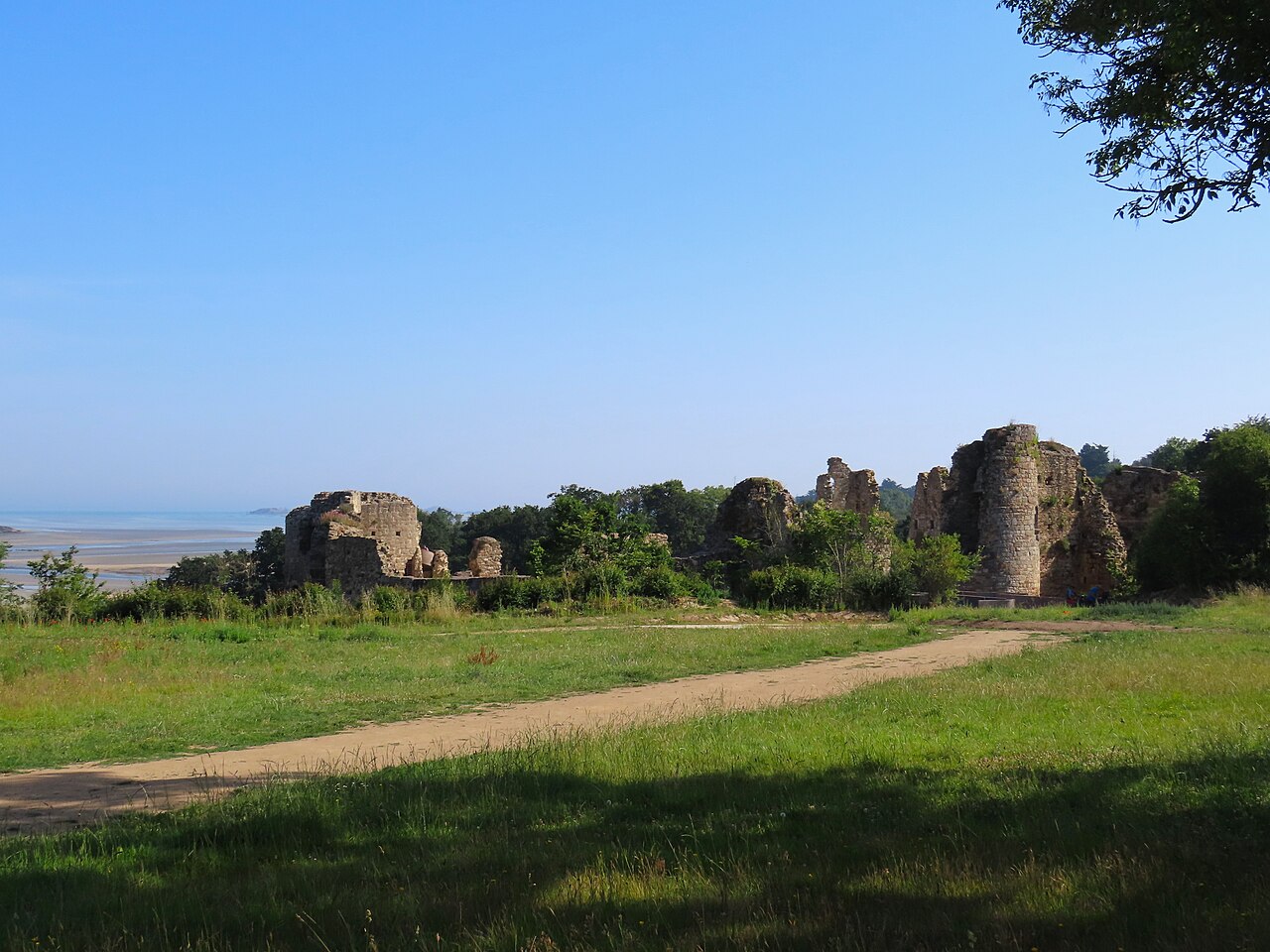
Hunaudaye Castle, also known as Château de la Hunaudaye, is a remarkable example of a late medieval hill castle located in the commune of Plédéliac, within the Côtes-d'Armor department of Brittany, France. Constructed initially in the early 13th century, this fortress embodies centuries of military, social, and architectural history that reflect the turbulent feudal struggles of the region.
The castle's origins trace back to around 1220, when Olivier Tournemine, a nobleman allied with Duke Pierre de Dreux of Brittany, was granted permission to build a stronghold to monitor the border river Arguenon. This river demarcated the boundary between the counties of Penthièvre and Dinan, two rival territories. The site itself was strategically chosen, situated on or near the remains of a 4th-century Gallo-Roman military camp, indicating the long-standing defensive importance of this location.
Early history and foundation
The castle was founded during a period of regional conflict and shifting allegiances. Olivier Tournemine's construction aimed to assert control over the eastern border of Penthièvre, protecting the territory against incursions from the neighboring Poudouvre region. The initial fortification likely featured a basic defensive layout typical of early 13th-century castles, adapted to the marshy terrain of the site.
War of the Breton Succession and destruction
During the mid-14th century, the castle became embroiled in the War of the Breton Succession (1341–1364), a civil war for the ducal crown of Brittany. The Tournemine family sided with the Penthièvre faction, allied with the French and the Counts of Blois, opposing the Montfort faction supported by the English. This alliance led to the castle being attacked and destroyed by Montfort forces and their English allies. The loss was devastating for the family, both militarily and personally, as three family members perished in the conflict.
Reconstruction and architectural evolution
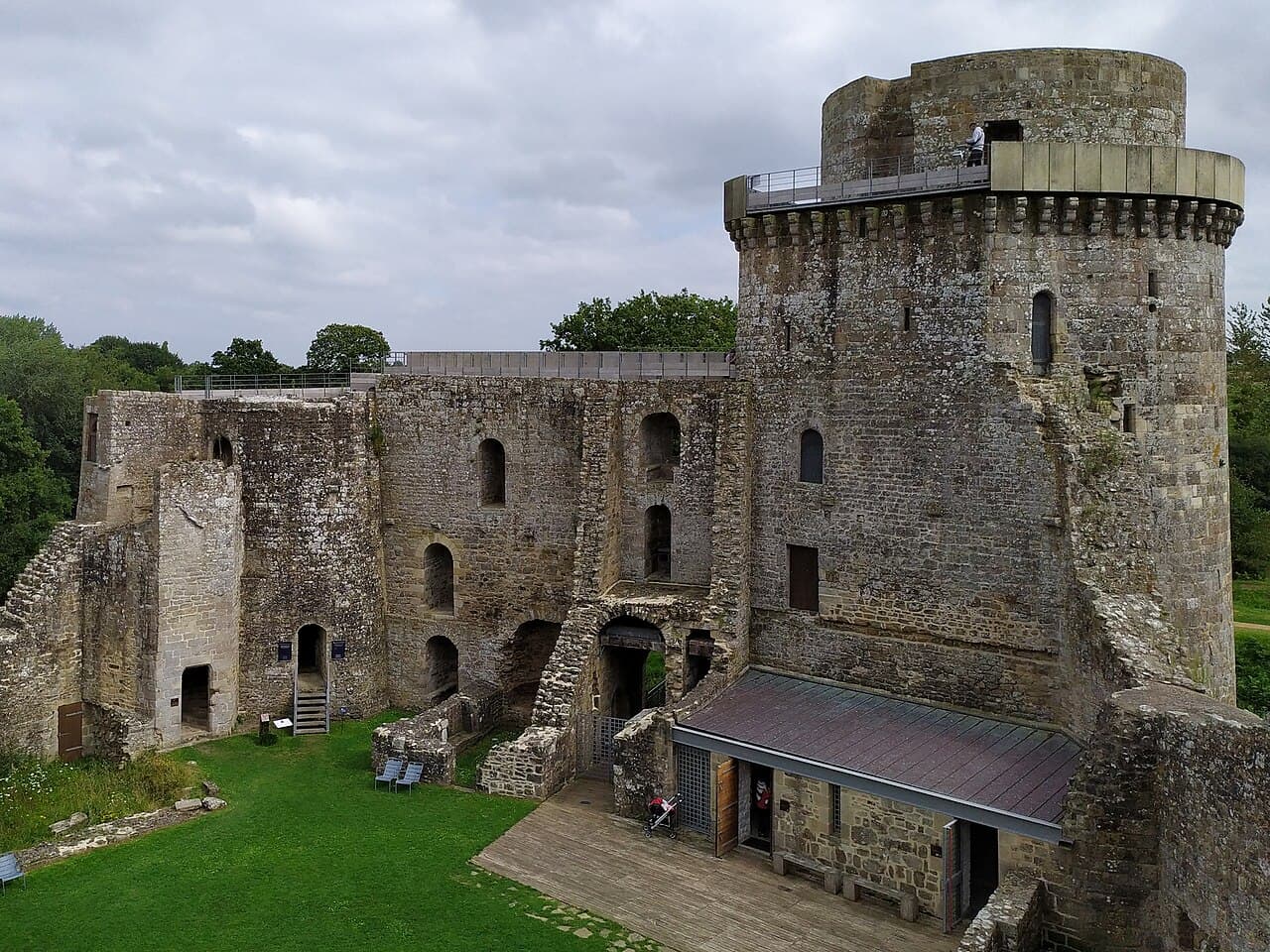
Rebuilding efforts commenced around 1367 under Pierre Tournemine, the youngest son of the family. The reconstruction spanned over a century, concluding around 1474 under Gilles Tournemine. The new design incorporated significant military innovations of the late medieval period, resulting in the castle's distinctive irregular pentagonal plan with five round towers connected by robust curtain walls. Unlike many contemporary castles, Hunaudaye lacks a central keep or donjon, relying instead on its curtain walls and towers for defense.
The castle was surrounded by a deep moat and accessed via a drawbridge, features restored in the 20th century to reflect their original function. The residential buildings formed three wings along the western curtain wall, including a vaulted cellar and a great hall with a monumental fireplace. Renaissance modifications introduced a ceremonial staircase and classical decorative elements, such as sculpted reliefs with Ionic capitals, enhancing the castle's domestic comfort and aesthetic appeal.
Social and political significance
By the late 15th century, the Tournemine family had risen to prominence within the Duchy of Brittany. In 1487, François Tournemine was elevated to baronial status, reflecting the castle's importance as a regional power center. The family's lands extended over more than 80 parishes, and they held various other estates and castles. The château served not only as a military fortress but also as a symbol of the family's social ascent and influence in Breton politics.
The castle remained in the Tournemine family until the end of the 16th century, when the male line died out. Subsequent owners focused on enhancing the castle's comfort rather than its defenses, exemplified by the addition of Renaissance-style features. However, the castle gradually fell into decline and was eventually abandoned.
French Revolution and decline
In 1783, the castle was sold to the Marquis de Talhouët. During the French Revolution in 1793, fears that the castle might serve as a base for the counter-revolutionary Chouans led revolutionary forces to dismantle and burn it. The destruction included the loss of roofs, wooden floors, furniture, archives, and key defensive elements such as the drawbridge and curtain walls. Following this, the castle entered a prolonged period of neglect and was used as a quarry for stone throughout the 19th century.
20th-century restoration and preservation
Recognizing its historical and architectural value, the French government classified Hunaudaye Castle as a Historic Monument in 1922, with additional land protections added in 1930. Following structural collapses, the state acquired the castle to undertake urgent conservation work. Restoration efforts throughout the 20th century included masonry stabilization, reconstruction of collapsed walls and towers, clearing and refilling the moat, and rebuilding the drawbridge (sans original mechanisms).
Archaeological excavations between 1978 and 2002 revealed earlier phases of fortification beneath the stone castle, including a motte-and-bailey structure with wooden palisades and polygonal towers. These findings highlight the site's continuous military use from the early medieval period through the late Middle Ages.
Since 1977, the castle has been managed by a dedicated association, and ownership transferred to the General Council of Côtes-d'Armor in 2008. Modern interventions aim to preserve the ruins while enabling public access and education about the site's rich history.
Architectural features and layout
The castle's irregular pentagonal layout is defined by its five round towers, two dating from the original 13th-century construction and three from the 14th-15th century rebuild. The granite walls, up to four meters thick, combine rough rubble and finely dressed stone, exemplifying late medieval military masonry.
The absence of a central keep is compensated by the strong curtain walls and strategically placed towers, providing overlapping fields of fire and vertical defense. The moat, once filled with water, enhanced the castle's defensive capabilities, while the drawbridge controlled access.
The residential quarters include a vaulted cellar, great hall, kitchen facilities with a fireplace, washbasin, and bread oven, and a Renaissance staircase tower featuring ornate doorways with classical motifs. The southeast tower, traditionally thought to have housed a chapel, may have served as a prison, as evidenced by carved religious reliefs made by imprisoned monks.
The castle in its landscape
Set on marshy ground near the Hunaudaye stream, a tributary of the Arguenon River, the castle's location leveraged natural water defenses and proximity to dense forests. This strategic position allowed control over key routes and monitoring of the borderlands between Penthièvre and neighboring territories.
Environmental studies show the surrounding landscape evolved from dense Iron Age forest to cultivated land during Roman and medieval times, reflecting broader regional changes in land use and settlement patterns.
Visiting Hunaudaye Castle today
Today, Hunaudaye Castle stands as a well-preserved ruin offering visitors a glimpse into medieval military architecture and Breton history. The site is open to the public for a fee, with restored features such as the moat and drawbridge enhancing the visitor experience. Interpretive signage and guided tours provide insights into the castle's complex history, architectural evolution, and the lives of its noble inhabitants.
The castle's management by a dedicated association ensures ongoing conservation and educational activities, making it a significant cultural landmark in Brittany and a compelling destination for enthusiasts of medieval history and architecture.
Frequently asked questions (FAQ)
- What is the historical significance of Hunaudaye Castle?
- Hunaudaye Castle, built in the 13th century, is a remarkable example of medieval military architecture in Brittany, France. It played a crucial role in the region's defense during various conflicts and remains a symbol of the feudal era.
- When is the best time to visit Hunaudaye Castle?
- The best time to visit Hunaudaye Castle is during the spring and early autumn months when the weather is mild and pleasant. This allows visitors to enjoy the beautiful surrounding landscapes and participate in outdoor activities.
- What are the opening hours for Hunaudaye Castle?
- Hunaudaye Castle is typically open to visitors from April to October, with varying hours depending on the month. It is advisable to check the official website for the most current information regarding specific opening times.
- Can I access Hunaudaye Castle with a wheelchair?
- Yes, Hunaudaye Castle is committed to accessibility and offers facilities for visitors with mobility challenges. However, some areas may have uneven surfaces, so it's recommended to check in advance for the best access routes.
- Is there an admission fee to enter Hunaudaye Castle?
- Yes, there is a nominal ticket price to enter Hunaudaye Castle, which helps support the maintenance and preservation of the site. Discounts may be available for students, seniors, and children, so be sure to inquire at the ticket office.
- What nearby attractions can I visit while in Plédéliac?
- While visiting Hunaudaye Castle, you can explore the charming village of Plédéliac and the beautiful surrounding countryside. Nearby attractions include the picturesque coast of Brittany and other historic sites like the town of Dinan.
- How do I get to Hunaudaye Castle from the nearest city?
- To reach Hunaudaye Castle from Saint-Brieuc, you can drive or take public transportation, as the castle is about 30 kilometers away. The journey offers scenic views of the Breton countryside, making it a pleasant trip.
Photo gallery

Information
Website
Visit websiteSources & official resources
Verify the information above using these authoritative references.
Loading map...
Visitor reviews
No reviews yet. Been here? Write the first review and help other travelers!
Write the first reviewVisited this castle? Share your experience
Your review helps other travelers and adds first-hand knowledge to our encyclopedia.