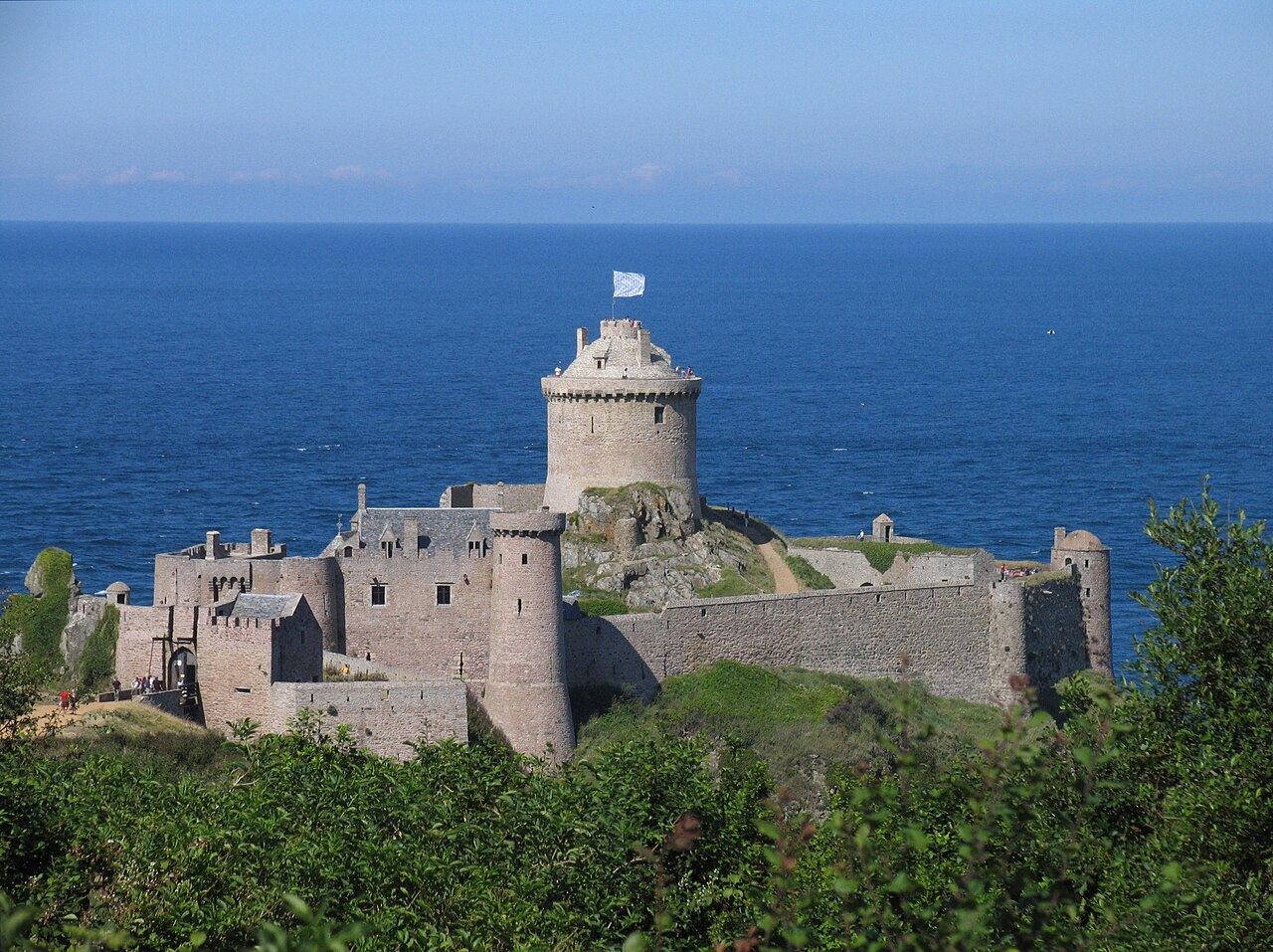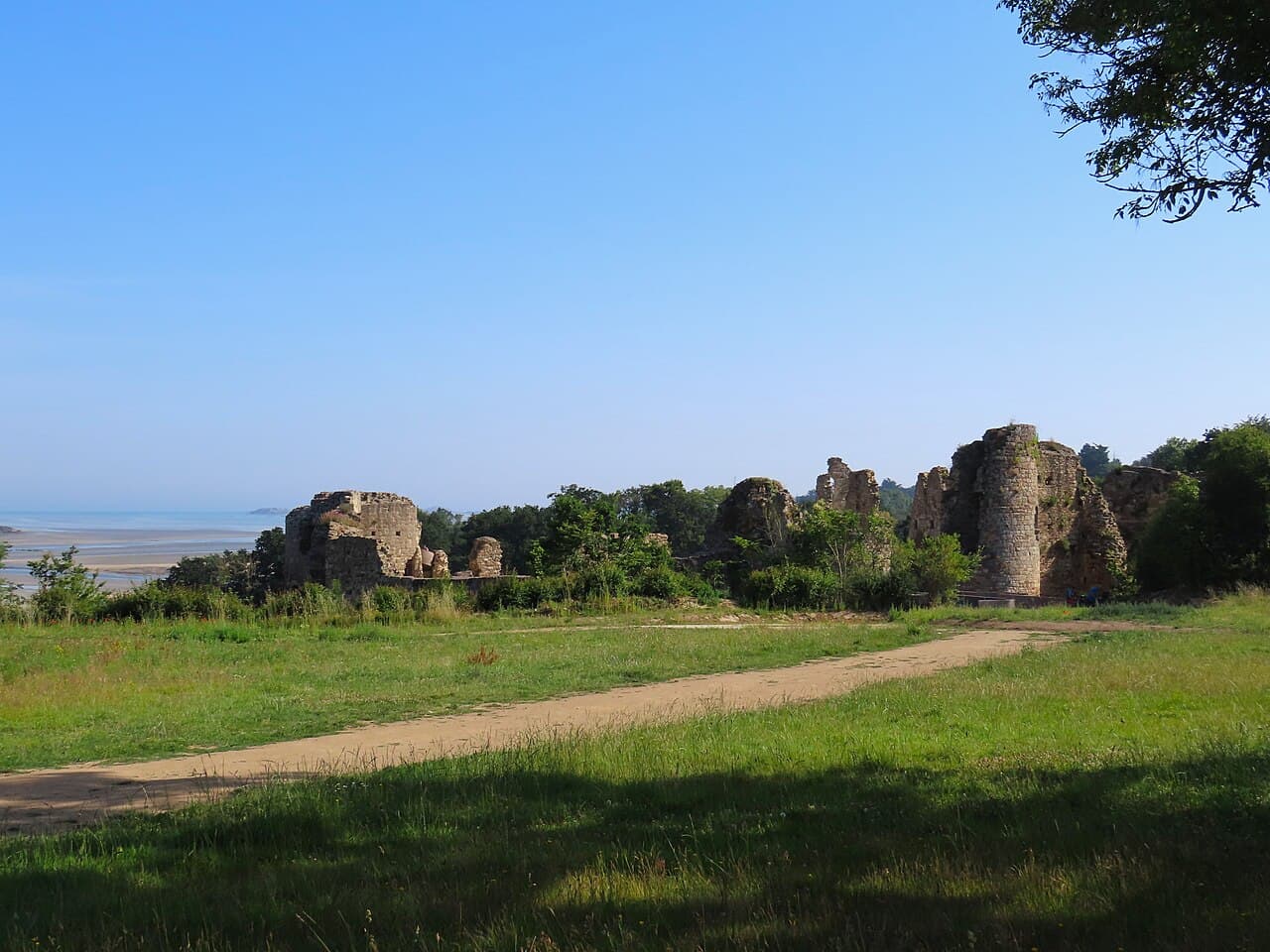
Guildo Castle
Guildo Castle, also known as Château du Guildo, is a striking medieval ruin located on a rocky promontory overlooking the estuary of the Arguenon river in the Hauts-de-France region of France. This hill castle dates primarily from the 13th century, with origins tracing back to an earlier 12th-century fortified manor. Its commanding position on a natural elevation approximately 20 meters above the surrounding landscape provided strategic oversight of the river and surrounding territory, making it a significant stronghold through centuries of Breton and French conflicts.
Early origins and medieval construction phases
The site of Guildo Castle was initially occupied in the 11th and 12th centuries by a fortified manor house, likely constructed of wood and stone. Archaeological evidence reveals a substantial 12th-century residence featuring stone masonry in key structural points, indicating the presence of affluent nobility, though no defensive walls are confirmed from this earliest phase. This manor served as the precursor to the fully stone-built castle that emerged in the late 13th century.
The first stone castle was built in multiple phases before the end of the 13th century, characterized by a residence attached to the northern curtain wall. This early castle was notable for its richly painted interior walls, including decorative motifs such as stylized floral designs and merlettes (small heraldic birds), reflecting the patron's high status and connection to the early Capetian dukes of Brittany. The castle combined residential comfort with defensive features typical of high medieval architecture.
Destruction and rebuilding during the 14th century
Guildo Castle suffered significant destruction in the mid-14th century, likely during the War of the Breton Succession. This conflict caused the castle to be abandoned temporarily. Reconstruction began in the late 1300s, introducing a more complex layout that included a large lower hall, a three-story apartment wing on the eastern side, a kitchen to the west, and new service buildings such as stables and a forge. The rebuilding reflected both the need for enhanced defense and the desire for improved residential and functional spaces.
15th-century expansions and noble associations
During the 15th century, Guildo Castle was enlarged and embellished, coinciding with the rise in status of Françoise de Dinan, the Lady of Guildo. Her marriage in 1444 to Gilles de Bretagne, brother of Dukes Francis I and Peter II of Brittany, brought prominence to the castle. After Gilles' execution in 1450, Françoise married Guy XIV de Laval in 1451, further linking the castle to powerful Breton nobility.
The castle's living quarters were expanded, and service areas reorganized to emphasize equestrian care, including the establishment of stables for prized horses and a dedicated smithy. These modifications reflected the lifestyle and status of its noble residents during a period of relative peace and prosperity.
Conflicts and decline in the late 15th and 16th centuries
The late 15th century brought renewed military challenges during the Mad War and the French Breton War. Guildo Castle was besieged multiple times and suffered severe damage, particularly during the 1489 campaign led by Louis I de la Trémoille. The castle's entrance châtelet was demolished, the polygonal tower and main residence burned, and service buildings including the forge and stables were destroyed.
Although partially rebuilt in the 16th century, the castle was adapted to the evolving demands of warfare, including the addition of an artillery bastion at the southwest corner that incorporated remnants of the earlier polygonal tower. Defensive ramparts were strengthened to accommodate gunpowder weaponry during the French Wars of Religion, when the castle endured several sieges by the Catholic League between 1590 and 1598.
Despite these efforts, the repeated assaults and damage led to gradual abandonment. By the 17th century, Guildo Castle was largely in ruins, and its strategic importance diminished.
Post-medieval use and archaeological rediscovery
In the 18th century, the castle ruins were repurposed for agricultural use, with the courtyard leased for maize cultivation and the site housing a pigsty. Following its sale in 1794, the castle served as a stone quarry throughout the 19th century, further contributing to the loss of original fabric.
Since 1982, extensive archaeological excavations have uncovered multiple construction phases, revealing detailed aspects of the castle's architecture, decorative wall paintings, and a variety of artifacts including equestrian equipment and currency. These findings have provided valuable insights into the castle's evolution, social history, and role in regional conflicts.
Architectural features and site layout
The ruins of Guildo Castle cover approximately 3,200 square meters on a mica-schist promontory intersected by a band of harder dolerite rock. The natural topography provided formidable natural defenses, with steep valleys and the Arguenon river surrounding the site on multiple sides.
The castle's layout evolved over centuries, initially centered around a northern residence with richly decorated interiors. Later phases added a large hall, multi-story apartments, kitchens, stables, a forge, and service wings arranged around a central courtyard featuring a rock-dug well.
Defensive structures included curtain walls, a polygonal tower, a châtelet gatehouse, postern gates, and later artillery bastions reflecting advancements in military architecture. Wooden galleries supported by vertical posts replaced roofs on service buildings during the late 15th century to improve surveillance and defense.
Ownership and historical significance
Guildo Castle's ownership passed through several prominent families, including the Penthièvre in the 11th century, Charles de Dinan in the 14th century, Françoise de Dinan in the 15th century, the Laval family in the 16th century, and Saint-Laurent d’Avaugour in the 17th century. From the 17th century onward, the castle was leased rather than continuously occupied by its owners.
Its strategic location and involvement in key regional conflicts such as the War of the Breton Succession, the Mad War, and the French Wars of Religion underscore its importance as a military and noble residence in Brittany's turbulent medieval and early modern history.
Current condition and visitor information
Today, Guildo Castle remains a well-preserved ruin accessible to the public. The site is recognized as a historic monument and has been under the care of the departmental council since 1981, ensuring ongoing preservation and archaeological research. Visitors can explore the evocative remains set amidst a beautiful natural landscape, offering insight into medieval castle architecture and Breton history.
The castle's combination of natural defenses, architectural evolution, and rich historical associations make it a significant cultural heritage site in the Hauts-de-France region.
Frequently asked questions (FAQ)
- What are the opening hours of Guildo Castle?
- Guildo Castle is open to visitors from 10 AM to 6 PM from April to September. During the off-peak months, October to March, the castle operates with reduced hours, typically from 10 AM to 4 PM on weekends. It's advisable to check the official website for any seasonal changes or holidays.
- Can I purchase tickets in advance for Guildo Castle?
- Yes, you can purchase tickets in advance via the official Guildo Castle website. This not only ensures your entry on busy days but may also offer discounts on group bookings or special events. It's recommended to secure your tickets ahead of time, especially during peak tourist seasons.
- When was Guildo Castle built?
- Guildo Castle was originally constructed in the 12th century, showcasing the architectural style of the time. It played a significant role in the region's history, serving as a fortification and residence. The castle has undergone various restorations, preserving its historical significance for visitors today.
- Is Guildo Castle accessible for visitors with disabilities?
- Yes, Guildo Castle strives to be accessible to all visitors, including those with disabilities. While some areas may present challenges due to the castle's historical structure, there are pathways and facilities designed to accommodate visitors with mobility issues. It’s best to contact the castle in advance for specific accessibility options.
- What is the best time to visit Guildo Castle?
- The best time to visit Guildo Castle is during the spring and summer months, from April to September, when the weather is pleasant and the gardens are in full bloom. Additionally, many events and guided tours are scheduled during this time, enhancing your experience. However, visiting during the off-peak months can offer a quieter atmosphere.
- Why is Guildo Castle considered historically significant?
- Guildo Castle is considered historically significant due to its role in medieval defense and as a noble residence. It reflects the architectural advancements of its time and provides insight into the region's feudal history. The castle has been part of various historical narratives, making it a valuable site for understanding the cultural heritage of France.
- What nearby attractions can I visit while in the area?
- While visiting Guildo Castle, you can explore other nearby attractions such as the picturesque town of Dinan, known for its medieval architecture, and the stunning beaches of the Côte d'Émeraude. The scenic coastal paths offer beautiful views and are perfect for hiking enthusiasts. Additionally, local markets and cafes provide an opportunity to experience the regional cuisine.
- What are the ticket prices for Guildo Castle?
- Ticket prices for Guildo Castle are typically around €8 for adults, with discounts available for students and children. Family tickets are also offered at a reduced rate, making it a great option for visitors traveling with kids. Check the official site for any special promotions or group rates.
Photo gallery

Information
Sources & official resources
Verify the information above using these authoritative references.
Loading map...
Visitor reviews
No reviews yet. Been here? Write the first review and help other travelers!
Write the first reviewVisited this castle? Share your experience
Your review helps other travelers and adds first-hand knowledge to our encyclopedia.