Hummel Castle
Hummel Castle, also historically known as Landfried and later Homole, is a medieval hill castle located near the modern municipality of Lewin Kłodzki in Poland. It stands on a conical hill called Gomoła, rising 733 meters above sea level in the Lewińskie Hills, commanding a strategic position above the Polskie Wrota Pass. This vantage point allowed the castle to oversee the vital Poland Route, a key trade and military corridor linking Prague with Silesia, including important towns such as Glatz and Breslau.
Historical context and ownership
The castle first appears in historical records in the mid-14th century, with its earliest known owner being Titzko von Pannwitz in 1346. Initially established by the Bohemian state, the lordship of Hummel became a significant territorial domain. Over the centuries, it passed through several noble families, including the Janovice, Poděbrady, and Kauffung lineages, reflecting the castle's importance in regional politics and control.
During the turbulent period of the Hussite Wars in the early 15th century, Hummel Castle was seized by the Taborites, a radical Hussite faction, in 1427. They renamed the fortress Homole, emphasizing its Czech influence. Under Taborite control, the castle served as a base for raids into the surrounding regions of Glatz and Silesia. Leadership during this period was shared by captains Jan Holý and Mikuláš Trčka z Lípy, and later it became the stronghold of the Taborite robber baron Jan Kolda of Žampach in 1440.
Following the decline of Hussite power, ownership reverted to the Poděbrady family after 1454. Notably, George of Poděbrady, who became King of Bohemia, appointed Václav Holý as the castle’s burgrave. After George's death in 1471, the lordship was divided among his sons, and in 1477 the territory expanded westward, adjusting the border between Glatz and Bohemia. The lordship was then granted to Hildebrand von Kauffung.
In the early 16th century, the castle gained notoriety as a refuge for robber barons under Sigismund von Kauffung. This lawlessness led to imperial intervention, and in 1534 the property was confiscated, with the last owner executed in Vienna. The castle was visually documented in 1536 by Elector Palatine Otto Henry, whose sketches remain the only accurate images of the fortress before it fell into ruin. By 1560, Hummel Castle was abandoned.
Throughout the 16th century, ownership changed hands multiple times, including possession by Ulrich von Hardegg, the Pernstein family, and the Wittelsbach dynasty. In 1590, Rudolf von Stubenberg acquired the estate, which was pledged to the nearby town of Reinerz in 1595. The lordship was officially dissolved in 1598, with most lands transferred to the Bohemian Chamber. During the 17th century, some villages were sold to local towns to finance military efforts during the Great Turkish War.
Following the First Silesian War and the Treaty of Hubertusburg in the mid-18th century, the area became part of Prussia and was known as the Humblischer District. Archaeological investigations in 1810 and 1962 uncovered ceramic fragments, shedding light on the site’s material culture and daily life.
Architectural features and layout
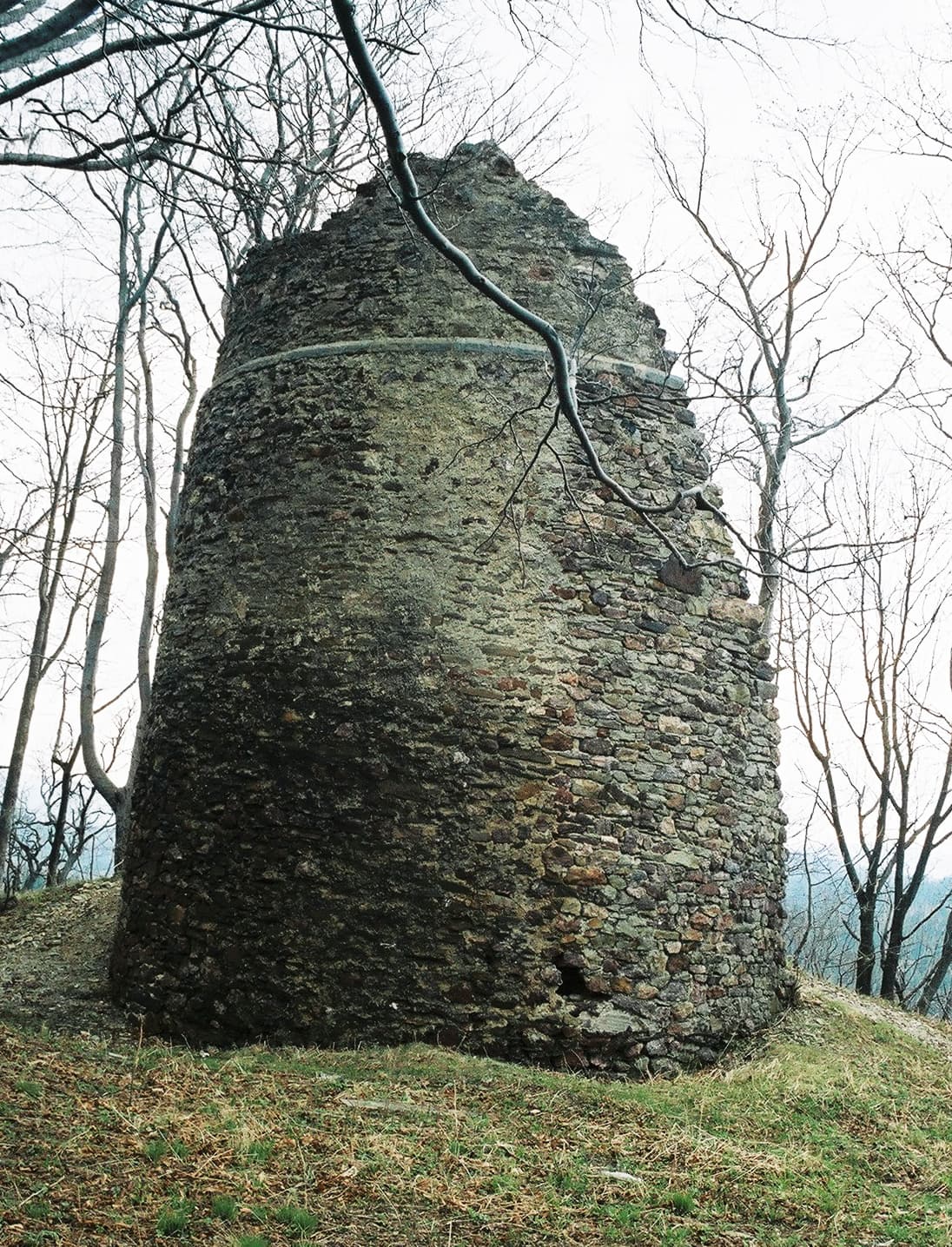
Hummel Castle was constructed primarily of stone, typical for a hill castle designed for defense and control of strategic routes. The fortress occupied a conical hill, which provided natural elevation and protection. The castle’s layout featured a roughly rectangular courtyard approximately 45 meters long and 18 meters wide. At the center stood a cylindrical stone tower, or keep, reaching about 30 meters in height. This tower served as the main defensive stronghold and residential quarters.
Surrounding the courtyard was a perimeter defensive wall that enclosed the castle grounds, providing protection against attackers. The castle was further defended by a dry moat encircling the hill, designed to hinder enemy approach. The stone construction of the keep and walls has endured in part, though much of the structure has succumbed to ruin over the centuries.
Defensive elements
The castle’s elevated position above the Polskie Wrota Pass allowed for extensive views of the surrounding landscape, essential for early warning of approaching forces. The cylindrical keep was a formidable defensive feature, with thick stone walls capable of withstanding siege weaponry of the medieval period. The dry moat added an additional layer of defense, making direct assault difficult.
Residential and functional spaces
Within the courtyard, the central keep likely housed the lord’s living quarters, storage rooms, and possibly a chapel. The surrounding walls may have included battlements and walkways for guards. While detailed records of the internal layout are scarce, the castle’s design reflects typical medieval fortress architecture focused on defense and control.
Archaeological findings and preservation
Archaeological excavations in 1810 and 1962 uncovered ceramic fragments and other artifacts, providing insight into the daily life and material culture of the castle’s inhabitants. These finds help historians reconstruct aspects of medieval life at Hummel Castle.
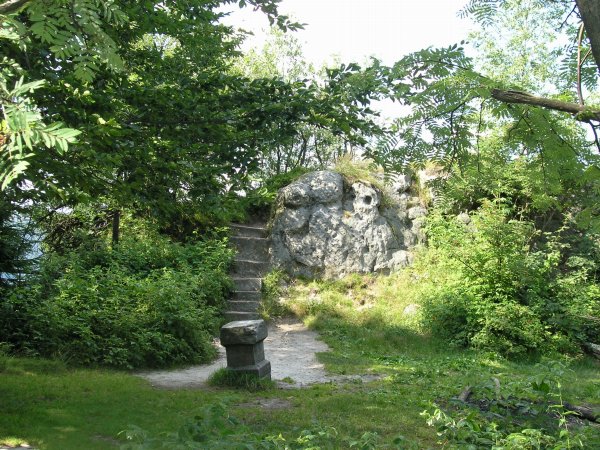
In the late 18th century, the ruins attracted attention from visitors, leading to the installation of an alley, gazebo, and benches around 1788–1789 to enhance the site’s appeal, though these features no longer survive. More recently, a wooden shelter was built within the western part of the courtyard around 2004 but collapsed in 2016.
Today, only fragments of the central tower and several meters of the outer wall remain visible. Traces of the dry moat are still identifiable, providing a tangible connection to the castle’s defensive past. The surviving stone remnants and archaeological evidence continue to inform understanding of Hummel Castle’s historical and architectural significance.
Historical significance and legacy
Hummel Castle played a crucial role in the medieval territorial and military landscape of the Bohemian-Silesian border region. Its strategic location overseeing the Poland Route made it a key fortress for controlling trade and military movements between Bohemia and Silesia. The castle’s involvement in the Hussite Wars and its association with notable figures such as George of Poděbrady highlight its importance in regional history.
The castle’s decline in the 16th century and eventual abandonment reflect broader political and military shifts in Central Europe, including the rise of more modern fortifications and changes in territorial control. Despite its ruinous state, Hummel Castle remains a significant cultural heritage site, attracting interest from historians, archaeologists, and visitors intrigued by its medieval past and architectural remnants.
Frequently asked questions (FAQ)
- What is the best time to visit Hummel Castle?
- The best time to visit Hummel Castle is during the late spring to early autumn months when the weather is favorable for hiking and exploring the ruins.
- Is Hummel Castle accessible to visitors?
- Yes, visitors can access the site of Hummel Castle, although the remains are ruins and the terrain may be uneven. Proper footwear and caution are advised.
- What historical events is Hummel Castle known for?
- Hummel Castle is known for its role in the Hussite Wars, particularly its occupation by the Taborites and later use by robber barons in the early 16th century.
- Are there any guided tours available at Hummel Castle?
- Currently, there are no official guided tours at Hummel Castle, but local tourist information centers may offer resources or walking routes for visitors interested in the site.
- How can I reach Hummel Castle?
- Hummel Castle is located near Lewin Kłodzki in the Lower Silesian Voivodeship of Poland. Visitors typically reach the site by car or hiking from nearby towns.
Photo gallery

Information
Website
Visit websiteSources & official resources
Verify the information above using these authoritative references.
Loading map...
Visitor reviews
No reviews yet. Been here? Write the first review and help other travelers!
Write the first reviewVisited this castle? Share your experience
Your review helps other travelers and adds first-hand knowledge to our encyclopedia.