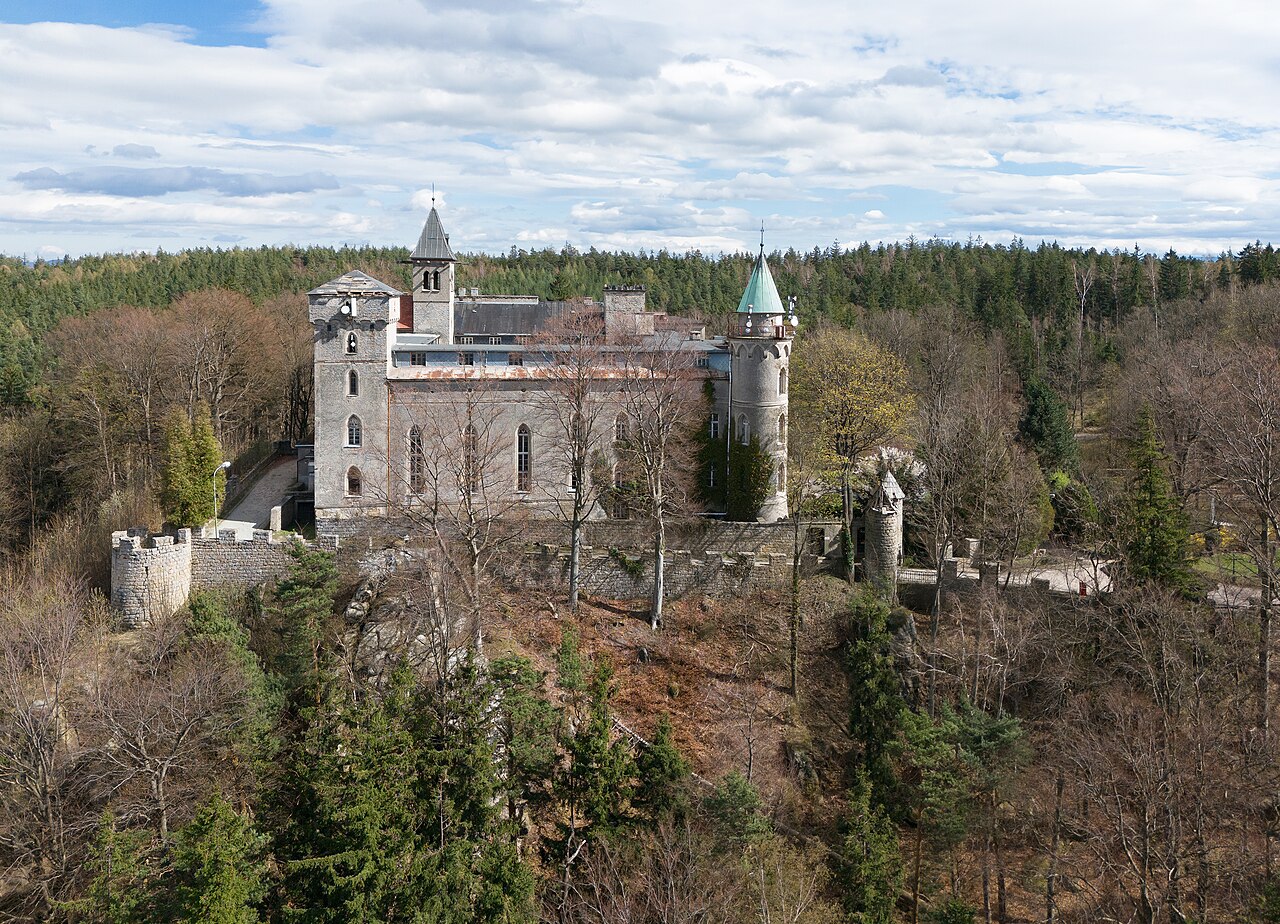
Fort Charles is a notable example of an 18th-century bastioned fortress located in Poland. As a military fortification designed during the post-Renaissance period, it reflects the evolution of defensive architecture that responded to the advances in artillery and siege warfare of its time.
The fortress is characterized by its star-shaped layout, a hallmark of bastioned fortifications developed in the late Renaissance and perfected in the 17th and 18th centuries. This design allowed for better defensive coverage, eliminating blind spots and enabling defenders to cover adjacent walls with overlapping fields of fire. The bastions themselves are angular projections from the main walls, constructed to absorb and deflect enemy cannon fire.
Architectural features and design
The bastioned fortress style of Fort Charles includes thick, sloped walls made of stone and brick, designed to withstand bombardment. The fortress likely incorporates moats or water defenses, common in such structures to hinder enemy approach. The walls are punctuated by bastions at strategic points, allowing defenders to mount artillery and provide crossfire.
Inside the fortress, there would have been casemates—vaulted chambers within the walls used to house troops, store ammunition, and mount cannons protected from direct fire. The fortress's internal layout would include courtyards and gates fortified with additional defensive structures such as ravelins or hornworks.
Historical context and significance
Constructed in the 18th century, Fort Charles was built during a period of significant military and political change in Europe. The post-Renaissance era saw the refinement of fortification techniques to counter the increasing power of gunpowder artillery. Poland, situated at a crossroads of European powers, required such fortifications to protect key strategic points.
The fortress would have served as a military stronghold, controlling important routes or borders. Its design reflects the military engineering principles developed by renowned architects and military engineers of the time, influenced by the works of Sébastien Le Prestre de Vauban, the famous French military engineer whose designs shaped fortifications across Europe.
Preservation and current condition
Today, Fort Charles is recognized for its historical and architectural value as a well-preserved bastioned fortress. The structure may be accessible to visitors interested in military history and architecture, offering insights into 18th-century fortification methods. Preservation efforts have likely focused on maintaining the integrity of the bastions, walls, and internal chambers.
Visitors can explore the fortress's defensive features and appreciate the strategic ingenuity behind its design. Its location in Poland adds to the cultural heritage of the region, representing a tangible link to the military history of the post-Renaissance period.
Military engineering and strategic importance
The bastioned design of Fort Charles allowed defenders to cover all approaches with overlapping fields of fire, a significant advancement over medieval castles. The angular bastions minimized dead zones and provided platforms for artillery, enhancing the fortress's defensive capabilities against sieges.
This design also facilitated the use of countermines and other defensive tactics, making the fortress a formidable obstacle for any attacking force. The strategic placement of the fortress within Poland would have been chosen to maximize control over important transportation or communication routes.
Influence of Vauban's principles
The fortress's design likely draws on the principles popularized by Vauban, emphasizing geometry, layered defenses, and integration with the surrounding landscape. Such fortresses were designed not only to resist attacks but also to serve as bases for launching military operations.
Visiting Fort Charles
While specific visitor information for Fort Charles is limited, bastioned fortresses of this type often offer guided tours, educational exhibits, and sometimes reenactments of historical military events. The site may include walking paths along the ramparts and bastions, providing panoramic views of the surrounding area.
Visitors interested in military architecture and European history will find Fort Charles a valuable destination. It represents a key example of post-Renaissance military engineering in Poland.
Frequently asked questions (FAQ)
- What is the historical significance of Fort Charles?
- Fort Charles is an 18th-century bastioned fortress in Poland, representing advancements in military architecture during the post-Renaissance period. It showcases defensive strategies designed to counter artillery warfare.
- What architectural features define Fort Charles?
- Fort Charles features a star-shaped layout with angular bastions, thick sloped walls, moats, casemates, and fortified gates, typical of bastioned fortresses designed for artillery defense.
- Can visitors tour Fort Charles?
- While specific visitor details are limited, bastioned fortresses like Fort Charles often offer guided tours and educational exhibits highlighting their military history and architecture.
- When was Fort Charles built?
- Fort Charles was constructed in the 18th century during the post-Renaissance period, reflecting the era's military engineering advancements.
- Why was the bastioned design important for Fort Charles?
- The bastioned design allowed defenders to cover all approaches with overlapping fields of fire, reducing blind spots and improving defense against artillery and sieges.
Photo gallery

Public domain
Information
Loading map...
Visitor reviews
No reviews yet. Been here? Write the first review and help other travelers!
Write the first reviewVisited this castle? Share your experience
Your review helps other travelers and adds first-hand knowledge to our encyclopedia.