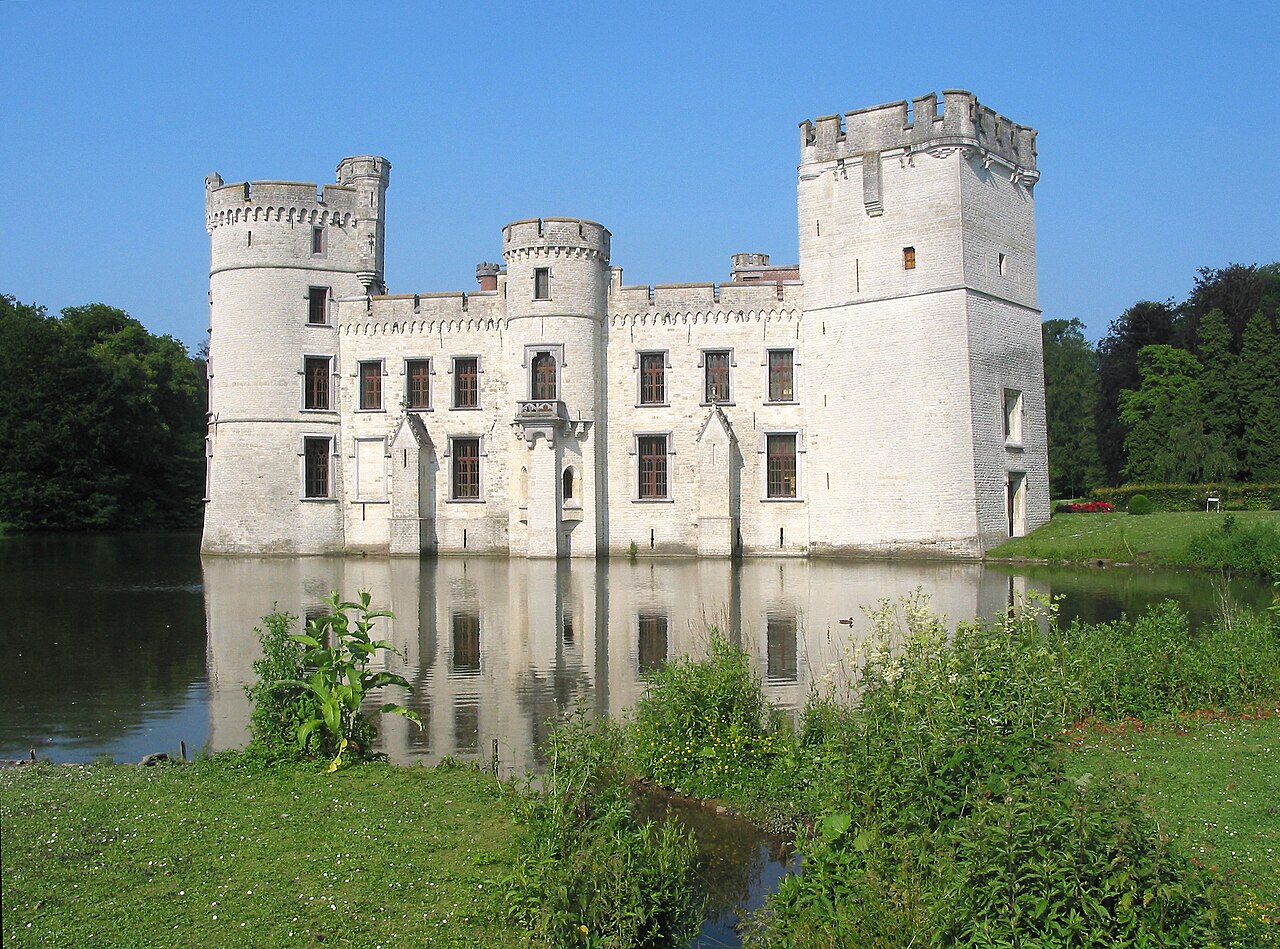
Humbeek Castle
Humbeek Castle stands as a significant example of a late medieval water castle located in the village of Humbeek, Belgium. Its origins trace back to the 14th century, with the oldest surviving structures dating from the 15th and 16th centuries. This castle has witnessed centuries of noble lineage, regional conflicts, and architectural evolution, reflecting the turbulent history and cultural heritage of the region.
Historic origins and noble lineage
The castle was originally established by local nobility near the village of Humbeek, adjacent to the extensive 's Gravenbos forest. Its strategic location, partially surrounded by water, classified it as a water castle, a defensive design that utilized natural and artificial moats to enhance protection. The castle's early construction utilized brick and sandstone, common materials in Belgian medieval fortifications, providing both resilience and aesthetic appeal.
Throughout its history, Humbeek Castle has been closely associated with prominent noble families. Around 1700, its lord, Jacques Le Cocq, was elevated to the title of Count in Castile, transforming the estate into a county and elevating its status within the aristocratic hierarchy. The estate later passed to the Le Candele family in 1804, and subsequently to the Lunden family in 1880 through inheritance. Baron Théophile Lunden, a notable military officer and royal stable master, was lord of the castle until 1908. The property remained with the Lunden family until 1995, when it was inherited by the Brussels-based t’Serstevens family. The current lord is jhr. Didier t’Serstevens.
Architectural features and restoration history
The castle suffered significant damage during the wars of the late 16th century, a period marked by regional conflicts that affected many noble estates. Restoration efforts in the 17th century were crucial in preserving the castle's structure and adapting it for continued use. The castle's current appearance largely reflects renovations and stylistic updates made in the 19th century, blending historical elements with contemporary tastes of that era.
Architecturally, Humbeek Castle features defensive water moats that emphasize its classification as a water castle. The use of brick and sandstone throughout the structure contributes to its durability and visual character. Inside, the castle houses a sandstone fireplace mantel adorned with caryatids, showcasing artistic craftsmanship. A distinguished salon is lined with Córdoba leather, a luxurious Spanish material that highlights the castle's international influences and noble refinement.
Additional interior details include exquisite 17th-century woodwork and ironwork, reflecting the skilled artisanship of the restoration period. These elements contribute to the castle’s rich decorative heritage and underscore its status as a noble residence rather than a purely military fortress.
Grounds and environmental significance
The castle is set within a private park that features two monumental cedar trees designated as protected monuments since 2010. One is a Lebanon cedar, planted circa 1860, and the other an Atlas cedar, planted after 1880. These trees add historical and ecological value to the estate, symbolizing the longevity and continuity of the property’s landscape.
While the castle and its park remain private and are not open to public visitation, the nearby 's Gravenbos forest, covering approximately 100 hectares, offers public access through several walking paths. Among these is the GR128 long-distance trail, which allows visitors to experience the surrounding natural environment and appreciate the castle’s setting from a distance.
Cultural and historical importance
Humbeek Castle embodies the historical narrative of regional nobility in Belgium, illustrating the evolution of aristocratic residences from fortified medieval strongholds to refined noble estates. Its survival through periods of conflict, restoration, and changing ownership highlights the resilience and adaptability of such properties. The castle’s architectural features, noble associations, and environmental context contribute to its significance as a cultural heritage site, even though it remains privately owned and inaccessible to the public.
The estate’s proximity to the 's Gravenbos forest and its integration into the local landscape underscore the traditional relationship between noble residences and their natural surroundings. This connection is preserved through the protection of the castle’s monumental trees and the maintenance of public forest trails.
Frequently asked questions (FAQ)
- How do I visit Humbeek Castle?
- Humbeek Castle is privately owned and not open to the public. However, visitors can explore the nearby 's Gravenbos forest, which offers walking paths including the GR128 long-distance trail.
- What is the historical significance of Humbeek Castle?
- Humbeek Castle dates back to the 14th century and has been associated with several noble families, including the Le Cocq and Lunden families. Its history reflects regional conflicts and noble lineage in Belgium.
- What architectural features characterize Humbeek Castle?
- Humbeek Castle is a late medieval water castle featuring brick and sandstone construction, defensive water moats, a sandstone fireplace mantel with caryatids, Córdoba leather-lined salons, and 17th-century woodwork and ironwork.
- Is Humbeek Castle accessible for events or tours?
- As a private residence, Humbeek Castle is not generally accessible for public tours or events. Any special access would depend on the owner's discretion.
- What can I see in the grounds surrounding Humbeek Castle?
- The castle grounds include two monumental cedar trees protected as heritage monuments, and the nearby 's Gravenbos forest offers public walking trails for visitors to enjoy the natural landscape.
Information
Sources & official resources
Verify the information above using these authoritative references.
Loading map...
Visitor reviews
No reviews yet. Been here? Write the first review and help other travelers!
Write the first reviewVisited this castle? Share your experience
Your review helps other travelers and adds first-hand knowledge to our encyclopedia.