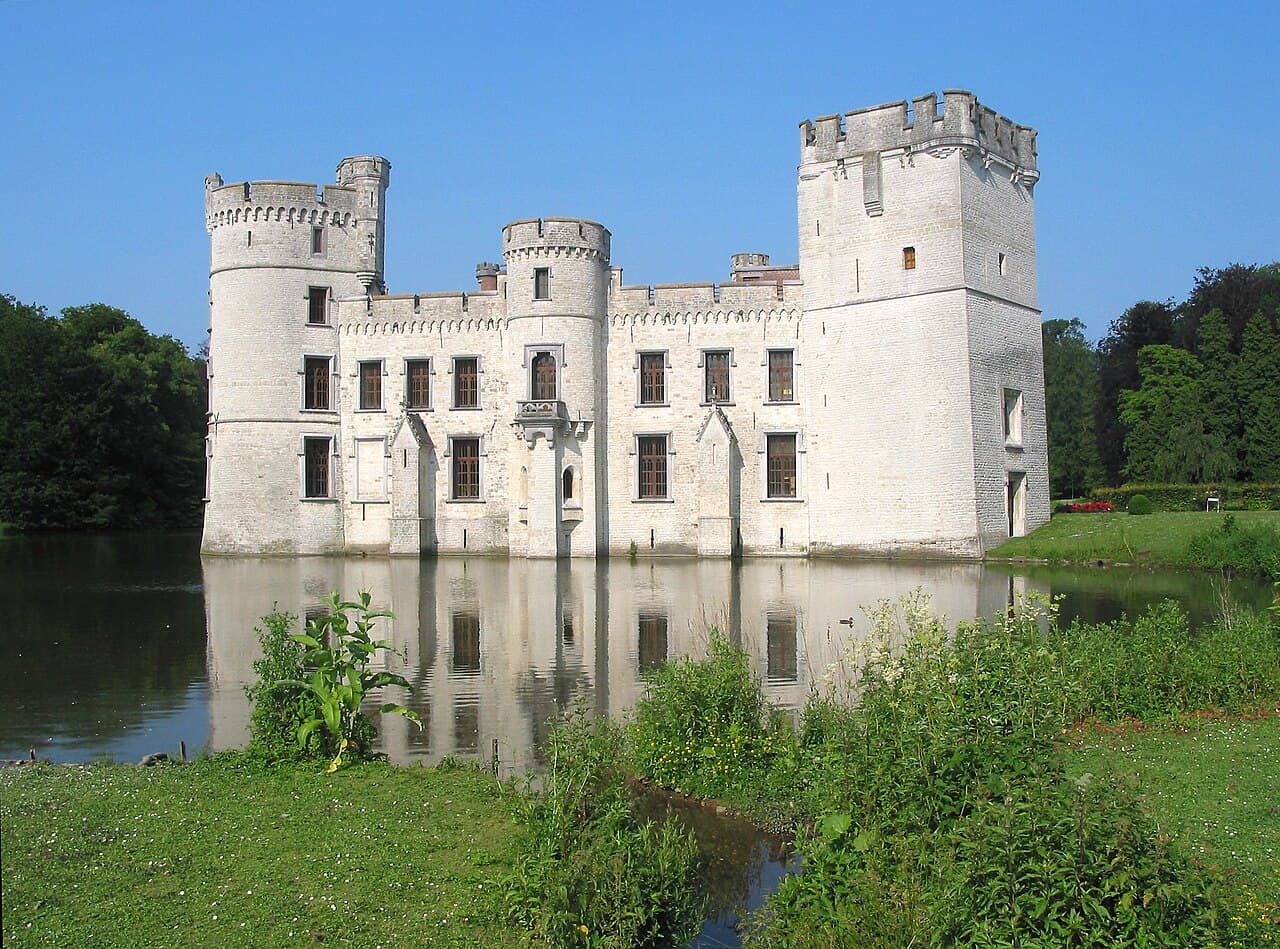
Bouchout Castle
Bouchout Castle stands as a remarkable example of a historic hill castle in Meise, Belgium, embodying centuries of architectural evolution and historical significance. Originally constructed in the 12th century during the High Medieval period, the castle has witnessed numerous transformations, reflecting the changing tastes, political climates, and functional needs of its various owners.
The earliest fortification on the site was likely built by Wouter van Craaynem at the conclusion of the Grimbergen Wars (1150–1170). This initial structure was strategically positioned within the young Duchy of Brabant, near the border with the County of Flanders and the territories of the Berthout family, lords of Grimbergen. The castle’s location was of considerable military and political importance, serving as a defensive stronghold in a contested region.
By around 1300, the castle was significantly enhanced with the construction of the Donjon tower by Daniel van Bouchout, a knight famed for his role in the Battle of Worringen (1288). This tower, the oldest surviving part of the castle, rises approximately 20 meters and features walls about one meter thick. It was designed with narrow vertical loopholes for archers and an upper platform with battlements and merlons, providing defensive cover. The Donjon also bears the Bouchout family coat of arms, a red cross, prominently displayed on the courtyard side.
Medieval origins and strategic importance
The castle’s original layout was a rectangular medieval design surrounded by a complex water defense system comprising five canals, later simplified to a single large pond during the early 17th century. Access was controlled by a long wooden drawbridge approximately 10 meters in length, which spanned the moat-like pond. Defensive towers occupied each corner of the rectangle, enhancing the castle’s ability to withstand attacks.
Throughout the 15th and 16th centuries, Bouchout Castle was owned by prominent families such as the Van der Marck and Transylvan families. However, during this period, the castle suffered neglect and damage, exacerbated by the Spanish dominance in the region and the iconoclastic fury of 1566, which led to widespread destruction of religious images and property.
Renaissance transformation and decline
At the dawn of the 17th century, Christoffel d’Assonville initiated restoration works that marked a shift from the castle’s purely military function toward a more residential and aesthetic purpose. He simplified the water defenses by replacing the five canals with a single surrounding pond but retained the original rectangular form of the castle.
In 1673, Peter-Ferdinand Roose acquired the castle and transformed it into a Renaissance-style château. He introduced French ornamental gardens and updated the castle’s appearance to reflect the contemporary tastes of the period. Despite these enhancements, Roose died in 1700 without heirs, leaving the castle’s future uncertain.
The castle endured further hardship during the French Revolution period (1797–1830), when it was partly destroyed. Soldiers looted the property, dismantled the wooden drawbridge, and partially filled in the defensive pond, significantly diminishing its fortification features.
Neo-gothic restoration and later history
In 1832, Count Amadeus de Beauffort undertook a major restoration of Bouchout Castle, guided by architect Tilman François Suys. This renovation gave the castle its distinctive neo-Gothic appearance, characterized by the addition of Gothic battlements, neo-Gothic windows, and the removal of the southern wing to create a more open structure. These changes emphasized the castle’s medieval character while adapting it for modern residential use.
From 1879 to 1927, the castle was home to Empress Charlotte of Mexico, widow of Emperor Maximilian I, who lived a secluded life there after her husband’s execution in 1867. Her residence adds a poignant chapter to the castle’s rich history.
Following Charlotte’s death, the estate was acquired by the Belgian State. Since 1938, the grounds have been developed into the National Botanic Garden of Belgium, also known as the Meise Botanic Garden. During World War II, the castle suffered damage from flying bombs and was occupied by German soldiers, who constructed bunkers on the property.
A significant restoration from 1987 to 1989 repaired the wartime damage. Today, the castle serves as a venue for meetings, lectures, and exhibitions within the botanic garden, integrating cultural heritage with public education and enjoyment.
Architectural features and layout
Bouchout Castle retains its rectangular medieval layout with the Donjon tower as its centerpiece. The tower’s original medieval windows on the second floor contrast with the neo-Gothic window replacements on the first floor, showcasing the blend of architectural periods. The castle’s defensive elements, such as the long drawbridge and surrounding pond, illustrate its strategic design for protection.
The southern wing was demolished during the 19th-century restoration to enhance the castle’s openness and aesthetic appeal. Inside, the first-floor Salle d’armes (Armoury Gallery) once housed neo-Gothic decorations, including old paintings, suits of armor, and a cannon. This space has since been converted into a large conference room after the removal of adjacent rooms.
Renaissance features remain visible in the castle, including a fireplace in the dining room and elaborately decorated ceilings in the Empress Room and White Room. These elements highlight the castle’s layered history and the successive influences of its owners.
Surrounding grounds and present use
The castle is centrally located within the expansive 92-hectare Meise Botanic Garden. The grounds feature a variety of natural and cultivated landscapes, including oak fields, beehouses, wild roses, and maple trees. Nearby are the Garden Shop and Tenant Farm to the south, as well as a large greenhouse complex that recreates diverse climate zones.
East of the castle lies a former Orangery, now repurposed for relaxation and dining, enhancing the visitor experience. Despite the damage sustained during World War II, including broken windows and military occupation, the castle has been carefully restored and preserved.
Bouchout Castle today stands as a testament to the region’s medieval heritage, Renaissance artistry, and neo-Gothic revival. Its ongoing use for cultural events within the botanic garden ensures that its rich history remains accessible and relevant.
Frequently asked questions (FAQ)
- What is the historical significance of Bouchout Castle?
- Bouchout Castle, located in Meise, Belgium, dates back to the 13th century and has served various roles throughout its history, including as a noble residence and a fortress. The castle is particularly notable for its association with the Belgian royal family, having been a favored retreat for King Leopold II. Today, it stands as a testament to the rich history and architectural evolution of the region.
- When was Bouchout Castle built?
- Bouchout Castle was originally constructed in the early 13th century, with significant renovations occurring in the 19th century. Its architectural style reflects a blend of medieval and neo-Gothic elements, showcasing the evolution of design over the centuries. Visitors can appreciate both the historic and aesthetic aspects of the castle during their visit.
- What are the opening hours for Bouchout Castle?
- Bouchout Castle is typically open to visitors from Tuesday to Sunday, with specific hours varying by season. It is advisable to check the official website for the most current opening times before planning your visit. This ensures you have the best experience without any unexpected closures.
- Can I visit the gardens surrounding Bouchout Castle?
- Yes, the gardens surrounding Bouchout Castle are open to the public and are part of the beautiful botanical gardens of Meise. These gardens feature a wide variety of plant species and offer a peaceful environment for visitors to explore. Admission to the gardens is often included with your castle ticket, making it a great addition to your visit.
- Is it possible to take guided tours of Bouchout Castle?
- Yes, guided tours of Bouchout Castle are available and provide a deeper insight into its history and architecture. These tours are led by knowledgeable guides who can share fascinating stories and details that you might miss on a self-guided visit. It is recommended to book your tour in advance, especially during peak tourist seasons.
- What is the best time to visit Bouchout Castle?
- The best time to visit Bouchout Castle is during the spring and early autumn when the weather is mild and the gardens are in full bloom. These seasons offer a picturesque backdrop for your visit, with vibrant flowers and lush greenery. Additionally, weekdays tend to be less crowded, allowing for a more leisurely experience.
- Are there any nearby attractions to visit after Bouchout Castle?
- Yes, after visiting Bouchout Castle, you can explore the nearby Meise Botanic Garden, which is one of the largest botanical gardens in Belgium. Additionally, the picturesque town of Meise offers charming cafes and shops, perfect for a relaxing afternoon. These attractions make for a delightful day trip in the area.
- What are the ticket prices for visiting Bouchout Castle?
- Ticket prices for Bouchout Castle vary depending on age and whether you are part of a group. Generally, discounts are available for children, students, and seniors. It is recommended to check the official website for detailed pricing and any available special offers or packages.
- How do I get to Bouchout Castle using public transport?
- Bouchout Castle is accessible via public transport, with regular bus services connecting it to nearby towns and cities. The closest train station is located in Meise, from which you can take a short bus ride or a pleasant walk to the castle. Always check local transport schedules for the most convenient routes and times before your visit.
Photo gallery

Information
Website
Visit websiteSources & official resources
Verify the information above using these authoritative references.
Loading map...
Visitor reviews
No reviews yet. Been here? Write the first review and help other travelers!
Write the first reviewVisited this castle? Share your experience
Your review helps other travelers and adds first-hand knowledge to our encyclopedia.



