Hull Castle
Hull Castle was a significant Tudor artillery fort located in Kingston upon Hull, England. Constructed in 1542 under the orders of King Henry VIII, the fort was part of the monarch's Device programme, aimed at strengthening coastal defenses against potential invasions from France and the Holy Roman Empire. This defensive complex, which included the castle itself and two supporting blockhouses, guarded the eastern side of the River Hull.
Design and architectural features
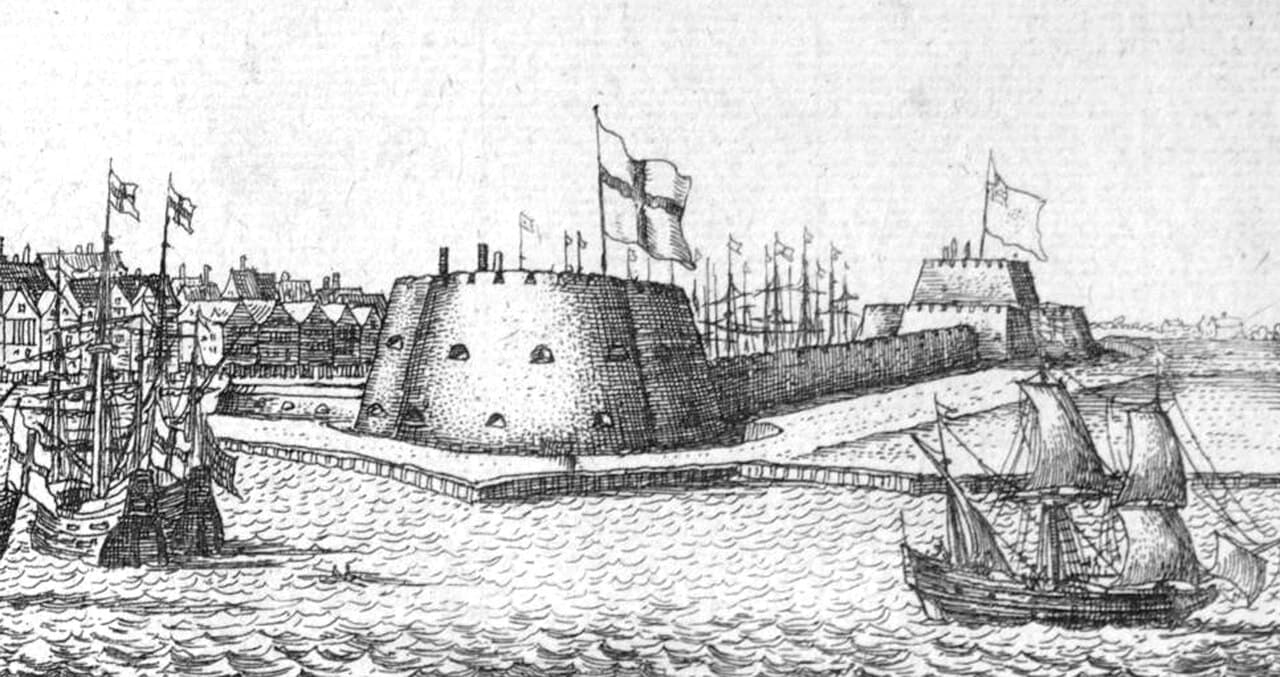
The castle was designed with two large, curved bastions and a rectangular keep at its core. The bastions were intended to mount artillery pieces, reflecting the evolving military technology of the 16th century. The two blockhouses, positioned to the north and south of the castle, each featured three curved bastions equipped to support heavy guns. These fortifications were connected by a curtain wall and surrounded by a moat, creating a formidable defensive perimeter.
The construction utilized stone and other materials salvaged from recently dissolved monasteries, a common practice during the English Reformation when monastic properties were repurposed. The entire project cost approximately £21,056, a substantial sum for the period.
Historical context and strategic importance
Hull Castle was a crucial element in Henry VIII's broader strategy to fortify England's vulnerable coastlines during a period of heightened international tension. The Device programme was initiated in response to threats from France and the Holy Roman Empire, who opposed Henry's break with the Catholic Church and his establishment of the Church of England.
By controlling the eastern approach via the River Hull, the castle and its blockhouses helped secure the town of Kingston upon Hull, an important port and trading center. The fortifications also served as a deterrent against raids and invasions, contributing to regional security during a turbulent era.
Role during the English Civil War and later history
Throughout the 16th and 17th centuries, Hull Castle's defensive structures were repurposed at times as prisons for Catholic recusants, individuals who refused to attend Anglican services. These prisoners often faced harsh conditions within the castle's confines.
During the English Civil War in the 1640s, the castle and its blockhouses played active roles in the sieges that affected Hull. The town was a Parliamentary stronghold, and the fortifications were vital in resisting Royalist forces. The castle remained in use during the interregnum period following the execution of Charles I.
After the Restoration of Charles II in 1660, the castle and blockhouses fell into neglect until 1681, when the King ordered the redevelopment of Hull's eastern defenses. This redevelopment resulted in the construction of the Hull Citadel, a larger and more modern fortification that incorporated Hull Castle and the South Blockhouse into its design. The North Blockhouse, however, was allowed to deteriorate and was ultimately demolished in 1801.
Decline and archaeological significance
The Hull Citadel, including the former castle structures, remained in use with various modifications until its demolition in 1864 to make way for new dock facilities. Although the above-ground structures were removed, the foundations of Hull Castle and parts of the blockhouses survived underground.
These remains have been the focus of archaeological investigations, which have helped to illuminate the castle's layout, construction techniques, and historical role. Today, Hull Castle is recognized for its contribution to Tudor military architecture and the history of coastal defense in England.
Frequently asked questions (FAQ)
- What is the historical significance of Hull Castle?
- Hull Castle, originally built in the 13th century, played a crucial role in the defense of Kingston upon Hull against invasions. It was a strategic stronghold for the English crown and witnessed numerous historical events, including the English Civil War, enhancing its importance in British history.
- When was Hull Castle constructed?
- Construction of Hull Castle began in 1293 under the orders of King Edward I. The castle was completed in the late 14th century and has since undergone several renovations, reflecting various architectural styles over the centuries.
- Can I visit Hull Castle?
- Yes, Hull Castle is open to visitors, offering guided tours that explore its rich history and architectural features. It's advisable to check the official website for any special events or seasonal closures before planning your visit.
- What are the opening hours for Hull Castle?
- Hull Castle typically opens to the public from 10 AM to 5 PM, but hours may vary seasonally. It is recommended to verify the current operating hours prior to your visit, especially on holidays.
- Is it possible to access Hull Castle for visitors with mobility challenges?
- Hull Castle strives to be accessible to all visitors, with facilities in place for those with mobility challenges. However, some areas may have limited access due to the castle's historical architecture, so it's best to plan your visit in advance and inquire about specific accessibility options.
- What are the ticket prices for visiting Hull Castle?
- Ticket prices for Hull Castle vary depending on age and group size, with discounts available for students and seniors. Children under a certain age may enter for free, so check the official site for the most up-to-date pricing information.
- When is the best time to visit Hull Castle?
- The best time to visit Hull Castle is during the spring and early autumn when the weather is generally pleasant. These seasons also coincide with various events and activities that enhance the visitor experience.
- Are there any nearby attractions to Hull Castle?
- Yes, near Hull Castle, you can explore the historic Old Town, the Ferens Art Gallery, and the Hull Maritime Museum. These attractions complement a visit to the castle and provide a fuller picture of the city's rich maritime history.
Photo gallery

Photo by Wenceslaus Hollar (1607–1677)•Public domain
Information
Current owner
Municipality
Loading map...
Visitor reviews
No reviews yet. Been here? Write the first review and help other travelers!
Write the first reviewVisited this castle? Share your experience
Your review helps other travelers and adds first-hand knowledge to our encyclopedia.