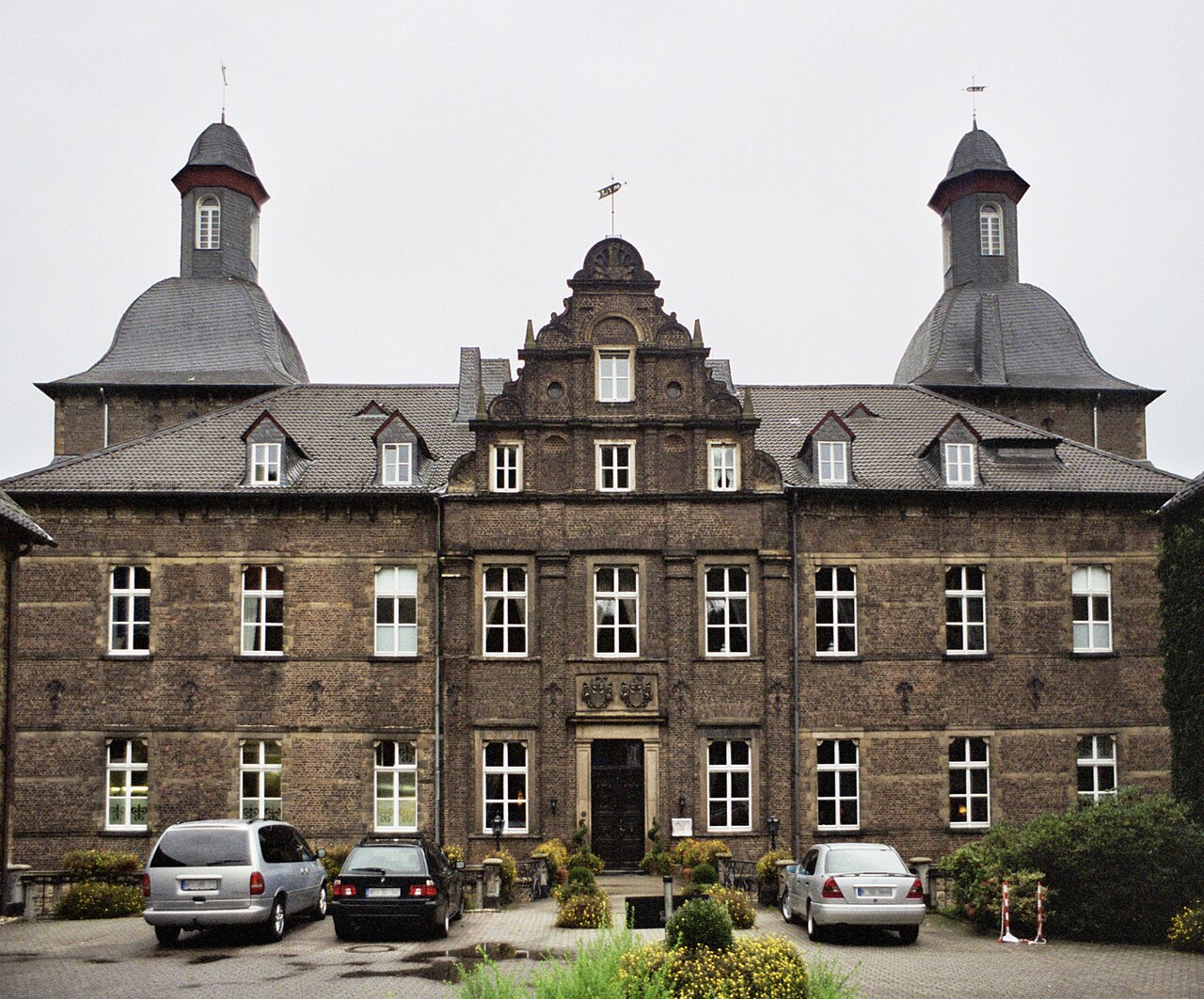
Alteburg
Alteburg is a significant early medieval hill castle complex located in the municipality of Essen, Germany. Its origins trace back to the Carolingian era, with archaeological and documentary evidence indicating the castle's establishment before 801 AD. The castle stands as an important example of early medieval fortification techniques and reflects the strategic and cultural developments of the Frankish period in the region.
The origins and historical context of Alteburg
The earliest documented reference to Alteburg appears in a record associated with the Werden Abbey, founded by Saint Liudger in 799. This 801 AD document mentions a "Burgbach" or castle brook, indicating the presence of a fortified site already serving as a landmark. The castle likely began as a fortified settlement in the 8th century, constructed or adapted by the Frankish people using building techniques characteristic of the Carolingian period. While it remains unclear whether the Frankish inhabitants originally built the castle or later acquired it, the site's continuous development through the 8th and 9th centuries is well documented through archaeological finds.
Carolingian architectural influence and development
During the 8th and 9th centuries, Alteburg underwent significant modifications to enhance its defensive capabilities. Excavations have revealed the use of mortar-bound stone walls made from Ruhrsandstein, a local sandstone, which reflects the advanced masonry skills of the Carolingian builders. The castle's fortifications include a large ring wall with a double-shelled stone construction approximately 1.90 meters thick, demonstrating a sophisticated approach to defense uncommon in earlier wooden and earthwork fortifications.
Architectural features and layout
The Alteburg complex covers roughly four hectares and consists of two primary areas: a heavily fortified main enclosure and an adjacent outer bailey. The main castle is defined by a ring wall typical of early medieval fortifications, enclosing the inner courtyard and defensive structures.
Main enclosure and fortifications
The southern section of the ring wall showcases the double-shelled stone construction with clay mortar, indicative of Carolingian masonry techniques. The gate passage features a leveled surface, suggesting deliberate engineering to facilitate controlled access. In contrast, the northern section reveals an earlier fortification style composed of wood and earthworks, characterized by post frameworks supporting earthen ramparts. This juxtaposition of construction methods illustrates the castle's evolution from prehistoric or early historic defensive forms to more advanced stone fortifications.
Outer bailey and archaeological remains
The outer bailey, located near the street "An der Alteburg," is a large enclosed courtyard whose original earthworks have largely eroded or been obscured by modern development. Archaeological excavations have uncovered numerous pottery shards dating from the 8th and 9th centuries, confirming the area's use during the castle's active period. These finds suggest the outer bailey served as a functional space for habitation or economic activity related to the castle's operation.
Archaeological significance and findings
Excavations conducted throughout the 20th and 21st centuries have provided valuable insights into the site's long history. Charcoal samples and artifacts date not only to the early medieval period but also to much earlier times, including the Neolithic, Middle Bronze Age, and Roman Imperial era. These discoveries imply a continuous or repeated human presence at the site over millennia, although the direct connection between these earlier periods and the castle's fortifications remains a subject of ongoing research.
Preservation and current status
Today, Alteburg is protected as a historic monument, with much of the site remaining undeveloped and inaccessible to the public. This preservation ensures the archaeological integrity of the castle complex for future study and contributes to understanding the region's early medieval history. The site's combination of stone and earthwork fortifications, along with its long chronological span, make Alteburg a valuable case study in the evolution of medieval military architecture in Germany.
Frequently asked questions (FAQ)
- When was Alteburg castle originally built?
- Alteburg castle dates back to the early medieval period, with origins before 801 AD during the Carolingian era.
- What architectural styles are evident at Alteburg?
- The castle features early medieval fortifications with Carolingian masonry techniques, including mortar-bound stone walls and earlier wood-and-earth defenses.
- Is Alteburg castle open to the public for visits?
- Much of Alteburg remains undeveloped and inaccessible to the public to protect its archaeological integrity.
- Where is Alteburg castle located?
- Alteburg is located in the municipality of Essen, in the North Rhine-Westphalia region of Germany.
- What archaeological findings have been discovered at Alteburg?
- Excavations have uncovered artifacts from the early medieval period as well as from the Neolithic, Middle Bronze Age, and Roman Imperial eras, indicating long-term human presence.
Information
Loading map...
Visitor reviews
No reviews yet. Been here? Write the first review and help other travelers!
Write the first reviewVisited this castle? Share your experience
Your review helps other travelers and adds first-hand knowledge to our encyclopedia.