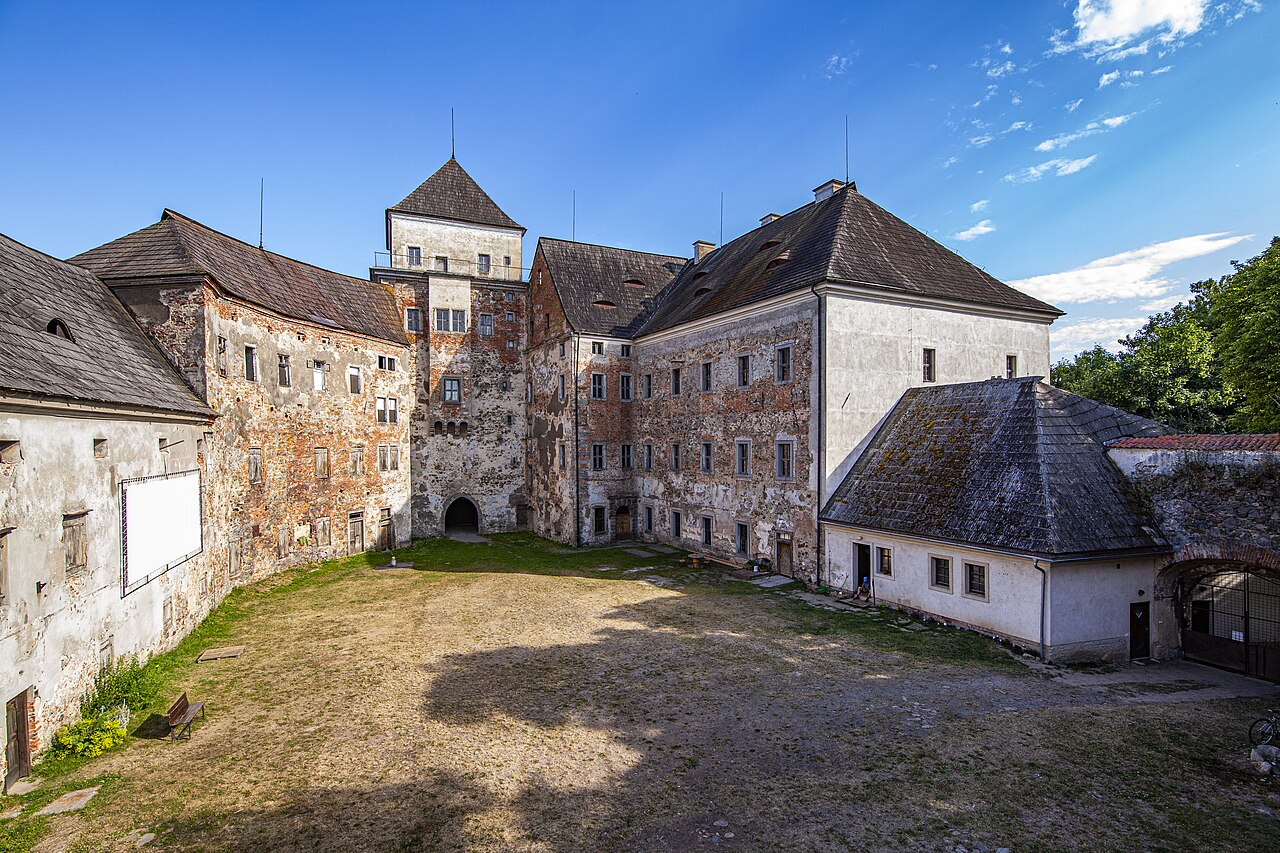
Hrochův Hrádek
Hrochův Hrádek is a significant archaeological and historical site located in the municipality of Březnice-Dobrá Voda in the Czech Republic. This hill castle stands on a prominent hill rising to 455 meters above sea level, overlooking the Skalica River, and offers a rare glimpse into the region's early medieval fortification practices. The site represents a layered history, beginning with its origins as an early medieval Slavic hillfort and evolving into a stone fortress during the late Middle Ages.
The earliest human activity at the site dates back to the late Iron Age, around the 6th and 5th centuries BCE, during the transition from the Hallstatt to the La Tène cultural periods. Archaeological evidence reveals that the hilltop was used as a fortified settlement by early Slavic peoples from the 10th to the 13th centuries. This early fortification consisted primarily of an earthwork rampart encircling approximately 1.1 hectares, with a ditch cut in front to enhance defense. The eastern side of the rampart, being the most accessible approach, features embankments up to three meters high, showcasing the strategic use of natural topography for protection.
Early medieval origins and strategic importance
During the early Middle Ages, Hrochův Hrádek likely functioned as a local administrative center connected to the nearby Přemyslid castle known as Bozeň near Počaply. It served as the residence of a regional official overseeing local governance and defense. According to German historical sources, the fortress may have originated as early as the 10th century as a small watch castle guarding the vital Golden Trail trade route between Mirovice and Březnice. This route was crucial for commerce and communication in the region.
The name "Hrochův Hrádek" is believed to derive from a noble named Hroch, who held the fortress during the 13th century. This period saw the transformation of the site from a primarily wooden and earthwork fortification into a more substantial stone fortress, reflecting broader trends in medieval castle construction across Central Europe.
Development into a stone fortress
By the late 14th century, the site had evolved into a stone fortress, although the first written record mentioning Hrochův Hrádek dates from 1475. This document notes the sale of the property by Václav of Švamberk, by which time the fortress was already abandoned. Throughout the late 15th and early 16th centuries, the fortress changed ownership multiple times, passing through the hands of notable figures such as Bohuslav of Němčice, Jan of Pruk, and Zdeslav Ojíř of Očedělice. In 1543, it was sold to Wenzel Bechinie of Lazan.
Despite these changes in ownership, the fortress gradually fell into disuse. By 1574, it was recorded as deserted and became associated with the nearby village of Nestrašov. The decline of the fortress reflects the shifting political and military landscape of the region, as well as changes in defensive architecture that rendered many older fortifications obsolete.
Architectural features and remaining structures
The surviving remains of Hrochův Hrádek provide valuable insights into medieval fortification design. The later stone fortress incorporated parts of the earlier earthwork defenses, particularly on its western side. The most prominent extant structure is the northern segment of the main tower or donjon, preserved up to the level of its third floor. This tower was constructed using traditional medieval masonry techniques, designed for both defense and residential use.
The tower's interior reveals a thoughtful arrangement of rooms and defensive features. Wooden beams supported the ceilings between floors, with the ground and first floors divided into two rooms each. Narrow slit windows provided illumination while minimizing vulnerability to attack. The second floor contained a larger chamber with a window featuring an integrated seat and access to a latrine, indicating attention to comfort and hygiene. The third floor retains the corbel of a fireplace, demonstrating the provision for heating within the tower.
Remnants of the original earth ramparts remain visible on the hill, marking the extent of the early medieval fortification. These earthworks, combined with the stone structures, illustrate the site's long-term strategic use and adaptation over several centuries.
Impact of modern developments and preservation efforts
In the 19th century, the ruins suffered partial destruction due to the construction of the Protivín–Zdice railway line. In 1875, the southern side of the castle hill, which contained remains of residential buildings, was removed to accommodate the railway. Despite this damage, the site has been recognized for its historical significance and has been protected as a cultural monument since 1965.
Today, Hrochův Hrádek stands as a valuable archaeological site and a testament to the region's early medieval history. Its ruins, including the earthworks, tower remains, and other structural fragments, offer a tangible connection to the past and attract historians, archaeologists, and visitors interested in medieval fortifications and Slavic heritage.
Visiting and exploring the site
The ruins are located on the eastern edge of the village, adjacent to the railway line. Visitors can observe the earthworks and stone remains in situ, gaining an understanding of the site's strategic layout and historical development. While the fortress is in a state of ruin, the preserved tower segment provides a striking example of medieval defensive architecture.
The site's setting on a hill overlooking the Skalica River valley offers scenic views and a sense of the natural defensive advantages that influenced its original construction. Interpretive signage and local guides may provide additional context for visitors interested in the site's history and archaeological significance.
Frequently asked questions (FAQ)
- How do I get to Hrochův Hrádek?
- Hrochův Hrádek is located in Březnice-Dobrá Voda, Czechia, and can be easily accessed by car or public transportation. The nearest train station is in Březnice, from where you can take a local bus or taxi to the castle. Detailed directions can be found on our website.
- What is the historical significance of Hrochův Hrádek?
- Hrochův Hrádek dates back to the 14th century and is an important example of medieval architecture in the region. It served as a noble residence and has witnessed many historical events over the centuries. The castle reflects the rich history and cultural heritage of Czechia.
- When was Hrochův Hrádek built?
- Construction of Hrochův Hrádek began in the 14th century, specifically around the year 1350. Over the years, it underwent various modifications and restorations that enhanced its architectural features. Today, it stands as a testament to the medieval period in Czech history.
- Can I take guided tours of Hrochův Hrádek?
- Yes, guided tours are available at Hrochův Hrádek, providing visitors with in-depth knowledge of the castle's history and architecture. Tours typically last about an hour and are conducted in multiple languages. It's recommended to book in advance, especially during peak tourist seasons.
- Why is the architecture of Hrochův Hrádek noteworthy?
- The architecture of Hrochův Hrádek is noteworthy for its blend of Gothic and Renaissance styles, showcasing the evolution of castle design over time. The intricate stonework, defensive features, and scenic views from the castle add to its charm. Visitors can appreciate both the functional and aesthetic aspects of this historic structure.
- Is it possible to visit Hrochův Hrádek year-round?
- Yes, Hrochův Hrádek is open to visitors year-round, though opening hours may vary by season. During the summer months, the castle is open more frequently, while winter hours may be limited. It's advisable to check our website for the latest information on opening times before planning your visit.
- What are the ticket prices for Hrochův Hrádek?
- Ticket prices for Hrochův Hrádek are quite reasonable, with discounts available for students and seniors. Children under a certain age may enter free of charge. For the most accurate and up-to-date pricing information, please visit our official website.
- What is the best time to visit Hrochův Hrádek?
- The best time to visit Hrochův Hrádek is during the spring and early autumn months when the weather is mild and the surrounding scenery is particularly beautiful. Summer can also be a great time, but be prepared for larger crowds. Regardless of when you visit, the castle offers a unique experience year-round.
- Are there any nearby attractions to Hrochův Hrádek?
- Yes, there are several nearby attractions, including the picturesque town of Březnice and other historical sites in the region. Nature enthusiasts can also explore the beautiful landscapes surrounding the castle. A visit to these nearby attractions can complement your experience at Hrochův Hrádek.
Information
Loading map...
Visitor reviews
No reviews yet. Been here? Write the first review and help other travelers!
Write the first reviewVisited this castle? Share your experience
Your review helps other travelers and adds first-hand knowledge to our encyclopedia.