Houska Castle
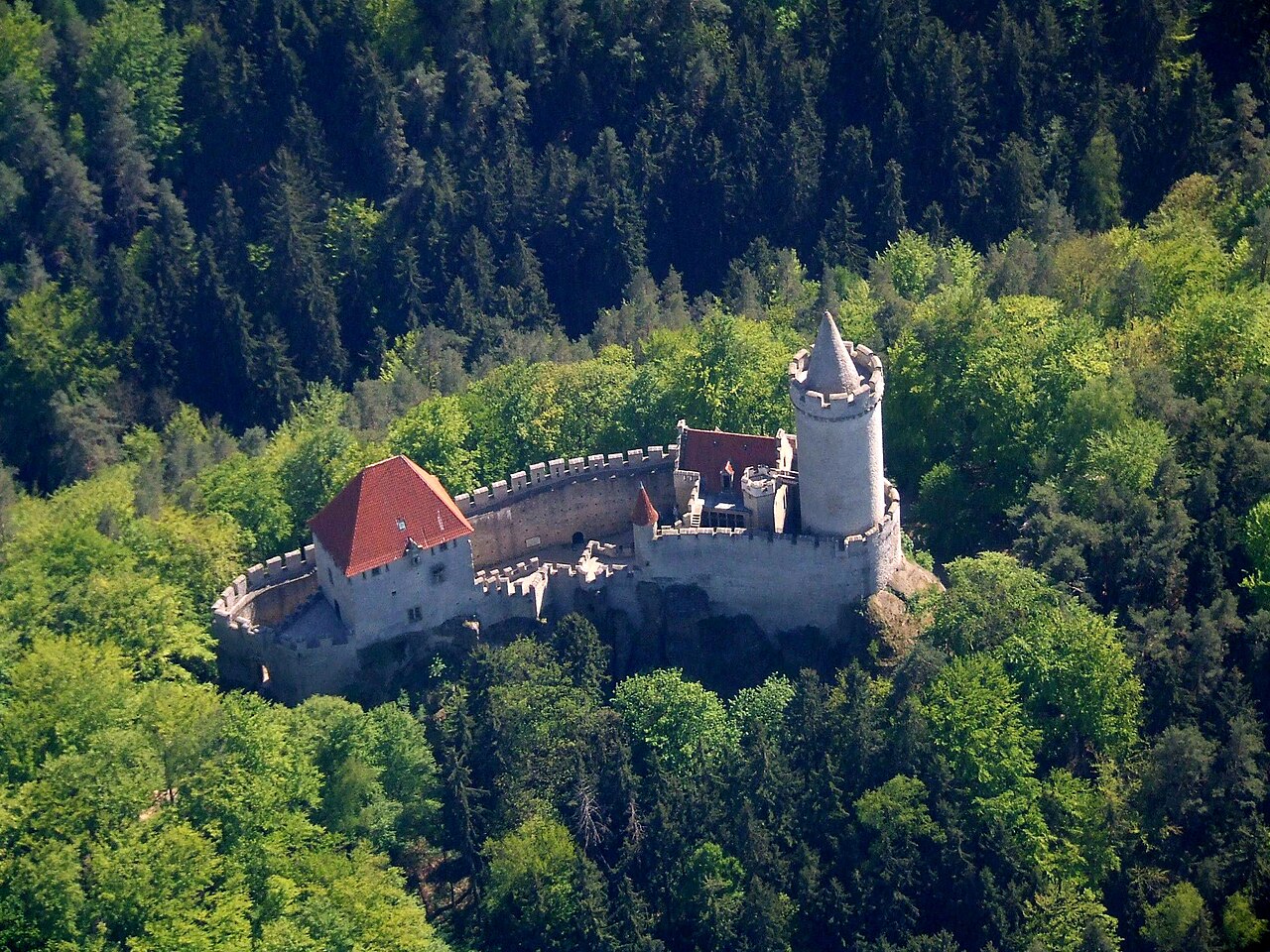
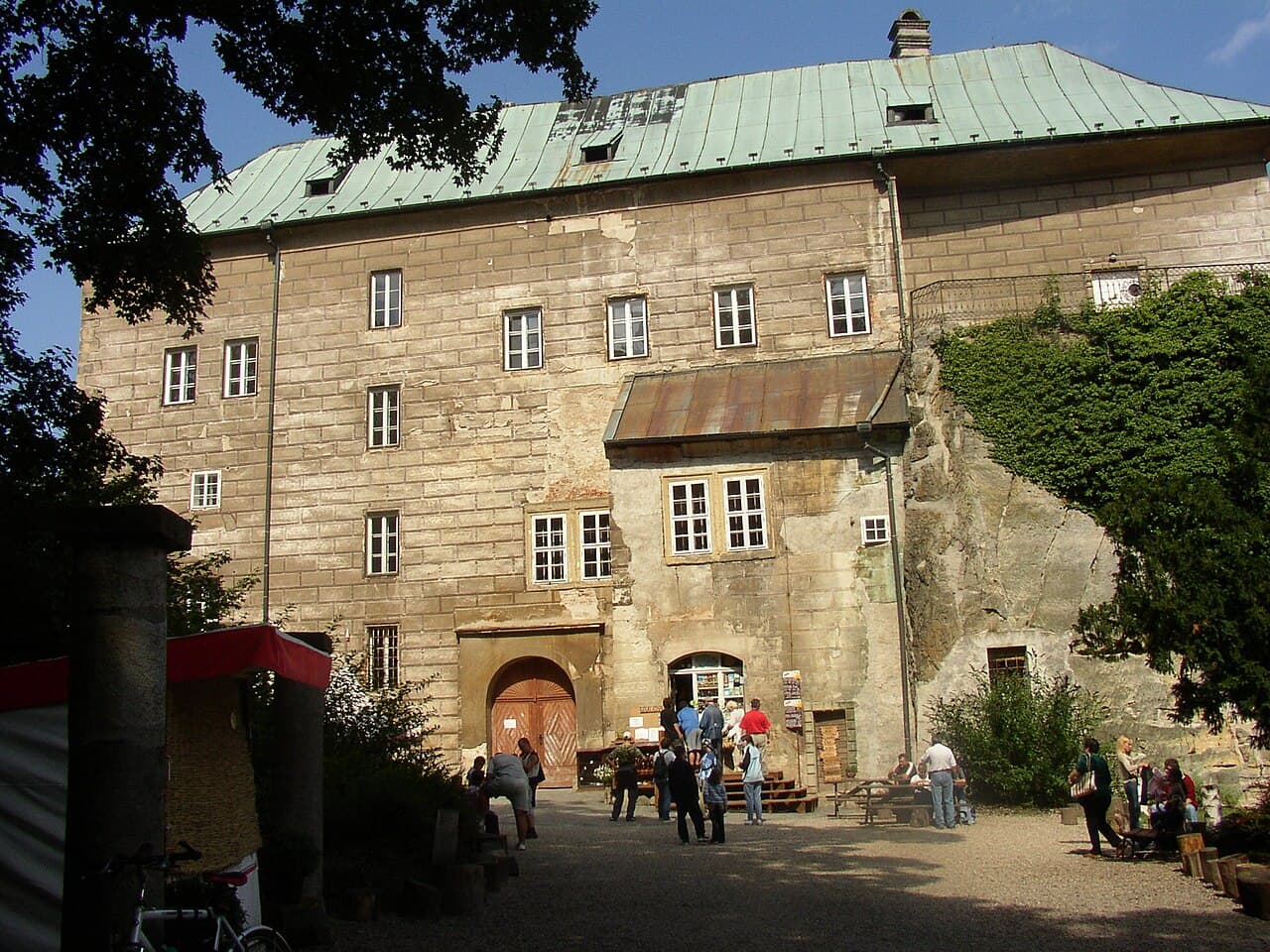
Houska Castle stands as a remarkable example of an early Gothic castle in the municipality of Blatce, Czechia. Constructed in the 13th century, it is one of the best preserved castles from the High Medieval period in the region. The castle's intriguing history and architecture have made it a significant cultural and historical monument, attracting tourists and scholars alike. Its remote location amidst forests, swamps, and rocky cliffs adds to its mysterious aura, further enhanced by local folklore that claims it was built to seal a gateway to Hell.
The castle's origins trace back to the reign of King Přemysl Otakar II (1253–1278), who likely commissioned its construction to serve as an administrative center overseeing royal estates in a strategically isolated area north of Prague. The earliest documented mention of Houska Castle dates to 1291 with the burgrave Záviš ze Stružnice, indicating its early role as a manorial seat and administrative hub. Initially, the castle was probably built without typical defensive features such as external fortifications or a water source, relying instead on its natural protection from steep cliffs and a cistern for rainwater collection.
Architectural design and features
Gothic origins and layout
The original castle was conceived as a Gothic fortress with a perimeter layout comprising two main parts. The surviving rear section was later transformed into a Renaissance chateau, but archaeological excavations have revealed traces of the front section's perimeter walls and forecourt structures. The castle is uniquely situated on a chalk sandstone plateau approximately 430 meters above sea level, with three sides bordered by steep cliffs providing natural defense.
At the heart of the castle stands a U-shaped arrangement of three two-story palaces enclosing a square courtyard. The ground floors featured flat ceilings, while the first floors boasted vaulted ceilings characteristic of Gothic architecture. The second floors contained operational rooms and defensive positions, accessible via spiral staircases. Two galleries, known as pavlače, connected the palaces on the first and second floors, enhancing the castle's internal circulation.
Notable interior spaces
Among the castle's most significant interior features is the Gothic chapel located within the northern palace. This chapel spans both the ground and first floors, with a square nave and pentagonal presbytery originally covered by a six-bay rib vault, later replaced by a cross vault. The chapel is illuminated by four tall traceried windows and contains early Gothic sedilia adorned with blind trefoil arcades. Its walls are richly decorated with valuable frescoes dating from around 1330 and the early 15th century, depicting religious scenes such as the Crucifixion, Archangel Michael, the Annunciation, and Saint Christopher.
The castle also houses the Green Chamber, decorated with late Gothic hunting-themed paintings and trophies, and the Knight's drawing room, which reflect the castle's medieval residential traditions. Renaissance modifications added painted motifs including hunting scenes, coats of arms, and wedding imagery, blending Gothic and Renaissance styles harmoniously.
Renaissance transformation and later history
Between 1584 and 1590, the Hrzánové z Harasova family undertook significant Renaissance-style renovations, updating the castle's interiors without compromising its fortress character. New vaulted ceilings were installed, and the main entrance wing was rebuilt with a new staircase. Despite these changes, the castle maintained its imposing presence atop the steep rocky cliff.
In the early 17th century, the castle served as a hunting retreat for the renowned military leader Albrecht von Wallenstein. The castle endured occupation by Swedish forces during the Thirty Years' War in 1639 but was soon reclaimed by imperial troops. Post-war, many of the outer defenses and the outer bailey were dismantled or fell into ruin, though the main residential buildings remained intact.
Ownership passed through several noble families, including the Kounic family in the 18th century, during which the castle gradually fell into disrepair. A major restoration in 1823 by Count Vincenc Karel Kounic removed some Renaissance gables and added stone galleries and windows, refreshing the castle's appearance. Later owners, including Princess Hohenlohe and Josef Šimonek, continued restoration efforts in the late 19th and early 20th centuries, preserving original Gothic frescoes and architectural details.
Wartime use and modern restoration
During World War II, the castle was occupied by the German Wehrmacht and the SS, who reportedly conducted occult experiments on site. After the war, the castle served various functions including as a state archive and was considered for use as a sanatorium. Since the 1990s, extensive restoration efforts have focused on preserving the castle's historical and architectural heritage.
Today, Houska Castle is open to the public and is a popular tourist destination. Visitors can explore the chapel with its fading frescoes and murals depicting demon-like and animal figures, the Green Chamber, the Knight's drawing room, and other historically significant rooms. The castle's eerie folklore, combined with its well-preserved Gothic and Renaissance architecture, make it a unique cultural landmark in Czechia.
Castle grounds and defensive structures
The castle originally featured a moat separating the front and rear sections, with a four-meter-wide zwinger (outer ward) protected by a rectangular tower measuring approximately 6 by 9 meters. This tower, which projected about four meters beyond the main building, was demolished in 1658. The defensive walls, bastions, and outer bailey were largely dismantled after the Thirty Years' War, with stones repurposed to fill moats.
Within the courtyard lies a bottle-shaped granary carved directly into the rock, although it has been partially compromised by later cellar excavations. The castle grounds also included a small ornamental garden planted on the slope below the castle around 1590, featuring a variety of coniferous and deciduous trees documented in the 20th century.
Historical significance and cultural impact
Houska Castle holds a special place in Czech history and folklore. Its unusual location, lack of typical defensive features, and the chilling legends about a gateway to Hell have fueled fascination and mystery. The castle's well-preserved Gothic chapel and frescoes provide valuable insight into medieval religious art and architecture in the region.
Its blend of Gothic and Renaissance architectural elements illustrates the evolution of castle design and noble residences in Bohemia from the Middle Ages through the Renaissance. The castle's survival through wars, neglect, and changing ownership reflects the resilience of Czech cultural heritage.
As a public cultural site, Houska Castle continues to educate visitors about medieval life, architectural history, and the rich tapestry of legends that surround it, making it a must-visit destination for those interested in history, architecture, and the supernatural.
Frequently asked questions (FAQ)
- What is Houska Castle known for?
- Houska Castle is famous for its unique Gothic architecture and its historical significance as one of the most well-preserved castles in the Czech Republic. Built in the late 13th century, it is often associated with legends of being a "gateway to Hell," which adds to its allure for visitors interested in history and the supernatural.
- When was Houska Castle built?
- Houska Castle was constructed in the second half of the 13th century, specifically around the year 1253. It was commissioned by the Czech King Ottokar II to protect the kingdom's borders and to serve as a residence for the nobility.
- How do I get to Houska Castle?
- Houska Castle is located approximately 50 kilometers north of Prague, making it accessible by car or public transportation. Visitors can take a train to the nearby town of Liberec and then use local buses or taxis to reach the castle.
- What are the opening hours for Houska Castle?
- Houska Castle is typically open for visitors from April to October, with varying hours depending on the season. It is advisable to check the official website for the most current opening hours before planning your visit.
- Can I take guided tours of Houska Castle?
- Yes, guided tours are available at Houska Castle, which provide in-depth information about its history, architecture, and legends. These tours are led by knowledgeable guides who can enhance your understanding of this fascinating site.
- Is Houska Castle accessible for visitors with disabilities?
- Houska Castle has limited accessibility for visitors with disabilities due to its historical architecture and terrain. While some areas may be accessible, it is recommended to contact the castle administration in advance to inquire about specific accessibility options.
- What is the best time to visit Houska Castle?
- The best time to visit Houska Castle is during the spring and early autumn months when the weather is mild, and the surrounding countryside is particularly scenic. Additionally, visiting on weekdays can help you avoid larger crowds.
- Are there any nearby attractions to visit while at Houska Castle?
- Yes, there are several nearby attractions, including the picturesque town of Český Krumlov and the stunning Český ráj (Czech Paradise) nature reserve. These sites offer beautiful landscapes, hiking opportunities, and more historical sites to explore.
- What are the ticket prices for Houska Castle?
- Ticket prices for Houska Castle vary depending on the type of tour and age of the visitor, typically ranging from 100 to 200 CZK for adults. Discounts may be available for students and seniors, so be sure to check for any special offers when purchasing your tickets.
Photo gallery

Information
Website
Visit websiteFeatured in
Articles on the Castlopedia blog that feature Houska Castle.
Sources & official resources
Verify the information above using these authoritative references.
Loading map...
Visitor reviews
No reviews yet. Been here? Write the first review and help other travelers!
Write the first reviewVisited this castle? Share your experience
Your review helps other travelers and adds first-hand knowledge to our encyclopedia.