Horsford Castle
Horsford Castle stands as a notable example of a Norman motte-and-bailey castle located in the village of Horsford, near Norwich in Norfolk, England. Its origins trace back to the Anglo-Saxon period before the Norman Conquest of 1066, making it a site with deep medieval roots. The castle’s strategic position on heathland east of Horsford village allowed control over the surrounding pasture and a deer park, reflecting its role in both military defense and land management.
Historical background and ownership
The land on which Horsford Castle was built originally belonged to Eadric Cild, an Anglo-Saxon nobleman. After the Norman Conquest, the estate was granted by King William the Conqueror to Robert Malet, the Lord of Eye, a powerful Norman lord. Robert Malet’s tenure ended when he opposed King Henry I, resulting in the forfeiture of his holdings at Horsford.
The manor was subsequently granted to Walter de Caen, who is credited with constructing the castle’s defining motte, a large earthen mound typical of early Norman fortifications. Walter de Caen also established a deer park adjacent to the castle, underscoring the dual military and economic functions of the site. The deer park would have served as a controlled hunting ground and a symbol of aristocratic status.
Walter’s son, Robert FitzWalter, served as Sheriff of Norfolk from 1115 to 1129. Robert’s pilgrimage to Rome and subsequent capture by bandits on his return is a notable episode in the castle’s history. After his release, attributed to the prayers to Saint Fides of Agen, Robert founded a monastery near Horsford Castle dedicated to this saint, linking the site with religious devotion and medieval monastic culture.
By the mid-15th century, Horsford Castle had likely fallen into disuse and was abandoned as a stronghold. Despite its decline, the site remains a Scheduled Monument today, recognized for its historical and archaeological significance.
Architectural features and layout
Horsford Castle exemplifies the typical motte-and-bailey design of Norman castles. The motte is a substantial raised earthwork, measuring approximately 77 meters long, 32 meters wide, and rising about 2.3 meters above the surrounding terrain, which itself is situated roughly 23 meters above sea level. This mound would have supported a wooden or stone keep, serving as the castle’s primary defensive structure.
Adjacent to the motte lies the bailey, an enclosed courtyard roughly 72 by 32 meters in size. The bailey contained auxiliary buildings such as barracks, stables, workshops, and storage facilities, supporting the castle’s daily functions. The bailey was enclosed by a palisade and possibly a ditch, providing an additional layer of defense.
The castle’s location on flat heathland was strategically chosen for surveillance and control of the surrounding landscape, including the deer park established by Walter de Caen. The earthworks, primarily composed of low mounds and ditches, remain visible today and provide insight into Norman military architecture adapted to the Norfolk environment.
The castle’s role in medieval society
Beyond its military purpose, Horsford Castle played a significant role in the administration and economic management of the local area. The establishment of a deer park highlights the importance of hunting and land control as expressions of noble power. The castle also functioned as a center of local governance under the stewardship of figures like Robert FitzWalter.
The foundation of a monastery dedicated to Saint Fides of Agen near the castle illustrates the intertwining of feudal authority and religious patronage. This monastery would have served both spiritual and social functions, reinforcing the influence of the castle’s lords in the region.
Current condition and preservation
Today, Horsford Castle exists as a Scheduled Monument with its earthworks well preserved. The motte remains the most prominent feature, with its large mound clearly visible in the landscape. The bailey’s outline is also discernible through surviving earthworks.
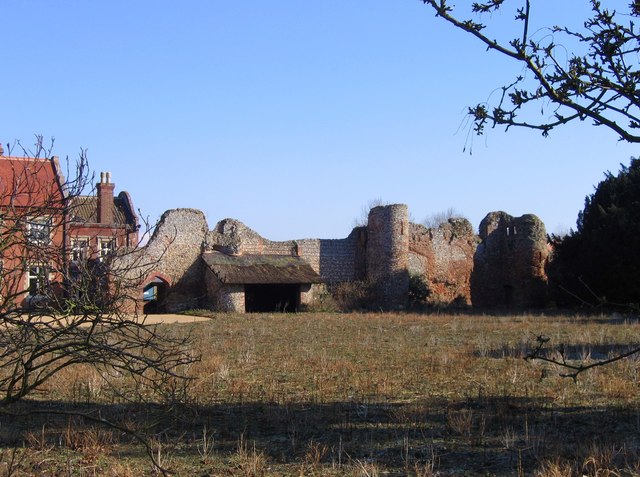
While no standing stone structures survive, the site’s archaeological value lies in these earthworks, which offer a tangible connection to the Norman period and early medieval fortification techniques. The castle’s preservation allows for ongoing study and public education about Norman military architecture and medieval life in Norfolk.
Visiting horsford castle
Horsford Castle is accessible to the public, though it lacks extensive visitor facilities due to its status as an earthwork site. Visitors can explore the motte and bailey remains and appreciate the castle’s historical context within the Norfolk landscape. The surrounding village of Horsford and nearby Norwich provide additional cultural and historical attractions.
Interpretive signage at the site helps visitors understand the castle’s layout and significance. The best time to visit is during the warmer months when the earthworks are more visible and the weather is conducive to outdoor exploration.
Frequently asked questions (FAQ)
- What is the historical significance of Horsford Castle?
- Horsford Castle is significant as a Norman motte-and-bailey castle built shortly after the 1066 conquest, representing early medieval fortification and local governance in Norfolk.
- Can I visit Horsford Castle today?
- Yes, Horsford Castle is accessible to the public as a Scheduled Monument with visible earthworks, though it has limited visitor facilities.
- What remains of Horsford Castle can be seen?
- Visitors can see the large motte earthwork mound and the outline of the bailey, which together show the castle's original layout.
- When was Horsford Castle built?
- The castle was constructed in the early Norman period, shortly after the Norman Conquest of 1066, by Walter de Caen.
- Why was a deer park established near Horsford Castle?
- The deer park was created by Walter de Caen to control local resources and demonstrate aristocratic status through managed hunting grounds.
Information
Website
Visit websiteSources & official resources
Verify the information above using these authoritative references.
Loading map...
Visitor reviews
No reviews yet. Been here? Write the first review and help other travelers!
Write the first reviewVisited this castle? Share your experience
Your review helps other travelers and adds first-hand knowledge to our encyclopedia.