Claxton Castle — United Kingdom castle

Claxton Castle

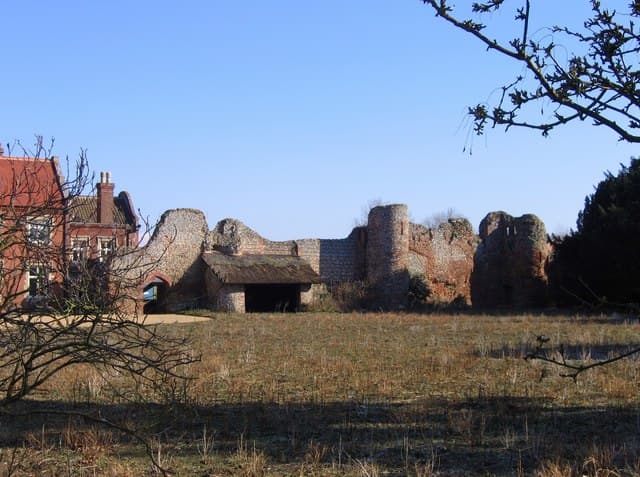
Claxton Castle: ruined brick castle in Norfolk, England
Late Medieval (14th–15th c.)
Ruins

Claxton Castle is a notable example of a medieval brick castle located in the village of Claxton, Norfolk, approximately 13 kilometers southeast of Norwich. This ruined castle stands as a significant historical site, illustrating the use of brick as a primary building material in English castle construction during the medieval period, which was relatively uncommon compared to stone.

Historical context and origins

The castle was constructed during the late medieval period, likely in the 14th or early 15th century, a time when brick was increasingly used in East Anglia for defensive and domestic architecture. Claxton Castle was built as a fortified manor house rather than a purely military fortress, reflecting the social status and residential needs of the local gentry.

The castle's location in Norfolk places it within a region known for its distinctive brick-built castles and manors, which emerged due to the scarcity of natural stone in East Anglia. This regional characteristic influenced the architectural style and construction techniques employed at Claxton.

Architectural features and layout

Claxton Castle was originally designed as a moated brick castle featuring a rectangular plan. The surviving ruins indicate the presence of substantial brick curtain walls and corner towers, which would have provided both defense and status display. The moat surrounding the castle added an additional defensive barrier, typical of fortified manor houses of the period.

The castle's brickwork is notable for its craftsmanship, with evidence of decorative patterns and careful bonding techniques. The use of brick allowed for more elaborate architectural details compared to rough stone, contributing to the castle's aesthetic appeal.

Inside the castle, there would have been a great hall, private chambers, service rooms, and possibly a chapel, although much of the internal layout is now lost due to the ruinous state.

Decline and current condition

Claxton Castle fell into decline after the medieval period and gradually became a ruin. Its current state is that of archaeological ruins, with only fragments of the original structure remaining visible above ground. The site has been subject to archaeological interest and preservation efforts to protect what remains of this rare example of a brick castle.

Despite its ruined condition, Claxton Castle remains an important cultural heritage site, offering insight into medieval brick construction and the lifestyle of the English gentry in Norfolk during the late Middle Ages.

Visiting Claxton Castle

The castle is accessible to visitors interested in medieval history and architecture, although facilities are limited due to its ruinous state. Visitors can explore the remains and appreciate the castle's historical significance within the Norfolk landscape.

Its proximity to Norwich makes Claxton Castle a worthwhile destination for those exploring East Anglia's medieval heritage and the unique tradition of brick-built castles in the region.

Frequently asked questions (FAQ)

How do I get to Claxton Castle?
Claxton Castle is conveniently located in Claxton, United Kingdom. You can reach it by car via the A140 or by taking public transportation to the nearest town and then a short taxi ride. Ample parking is available on-site for visitors.
What is the historical significance of Claxton Castle?
Claxton Castle dates back to the 14th century and has played a vital role in regional defense during medieval times. It is known for its rich history and stories of noble families that once resided there. The castle is a testament to the architectural and cultural development of the period.
When was Claxton Castle built?
Claxton Castle was constructed in the late 1300s, making it a significant historical landmark. It showcases the medieval architectural style prevalent at the time, including its impressive stonework and fortifications. Over the centuries, it has undergone various restorations to preserve its grandeur.
Can I take a guided tour of Claxton Castle?
Yes, guided tours are available at Claxton Castle, providing visitors with in-depth knowledge about its history and architecture. These tours are led by knowledgeable guides who share fascinating stories and insights. It is recommended to book in advance, especially during peak tourist seasons.
Why is Claxton Castle a popular tourist destination?
Claxton Castle attracts history enthusiasts and architecture lovers due to its stunning medieval design and rich historical background. Additionally, its picturesque setting and well-preserved grounds offer a unique experience for visitors. The combination of educational tours and scenic views makes it a must-visit location.
Is it possible to host events at Claxton Castle?
Yes, Claxton Castle offers facilities for hosting various events, including weddings, corporate functions, and private gatherings. The castle's historic charm provides a unique backdrop for any occasion. Interested parties should contact the castle's administration for more details regarding availability and services.
What are the opening hours for Claxton Castle?
Claxton Castle is open to visitors from 10 AM to 5 PM daily, with extended hours during the summer months. It is advisable to check the official website for any seasonal changes or special events that may affect opening times. Early arrival is recommended to fully enjoy the castle and its grounds.
What are the ticket prices for visiting Claxton Castle?
Ticket prices for Claxton Castle are reasonably set to make it accessible for all visitors, with discounts available for children, seniors, and groups. Family tickets are also offered at a reduced rate. It is best to purchase tickets online in advance to secure your visit.
What is the best time to visit Claxton Castle?
The best time to visit Claxton Castle is during the spring and early autumn months when the weather is mild and the gardens are in full bloom. Additionally, visiting during weekdays can help you avoid larger crowds. Special events and festivals may also be scheduled during these times, enhancing your experience.
Are there any nearby attractions to Claxton Castle?
Yes, there are several nearby attractions to explore, including picturesque parks, historical sites, and local museums. The beautiful countryside surrounding Claxton offers excellent walking trails and scenic views. Visitors can easily spend a full day exploring the area after touring the castle.

Photo gallery

Claxton Castle
Click to view

Photo by Graham Hardy•CC BY-SA 2.0

1 photo • Click any image to view in full screen

Information

Archaeological Site / Ruins

Loading map...

Visitor reviews

No reviews yet. Been here? Write the first review and help other travelers!

Write the first review

Visited this castle? Share your experience

Your review helps other travelers and adds first-hand knowledge to our encyclopedia.

Write a review

(5/5)

0/2000 characters

Your review will be visible after admin approval

Nearby castles

11.4 km

Norwich Castle Museum

Norwich, United Kingdom

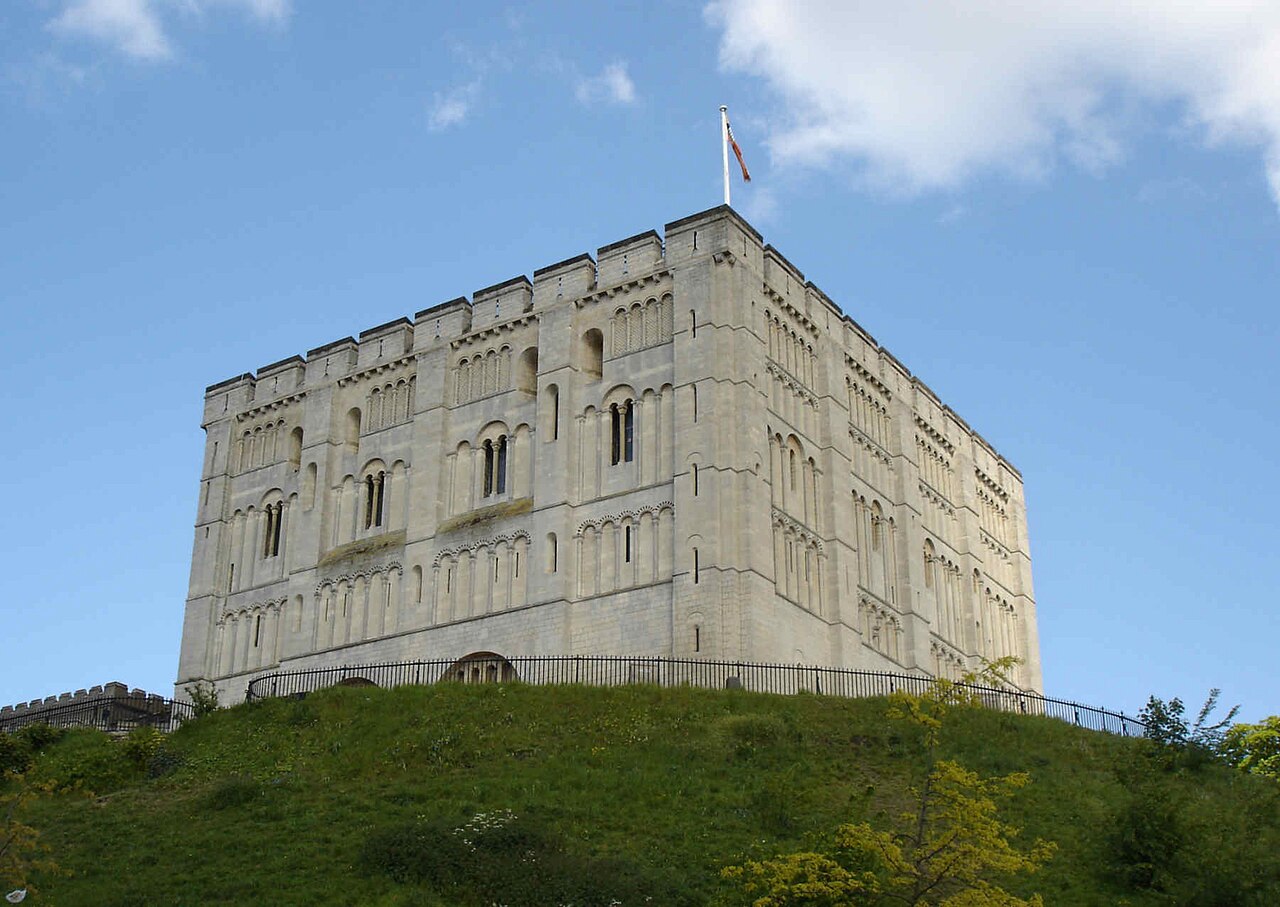
Norwich Castle Museum stands as a striking example of Norman military architecture in England, commanding the skyline of Norwich with its imposing stone keep and formidable curtain walls. Originally constructed by the order of William the Conqueror in the late 11th century, this hill castle was strategically placed to assert Norman control over the region shortly after the conquest of 1066. The castle’s massive keep, built primarily of flint and limestone, is one of the finest surviving examples of Norman military architecture in Britain and reflects the high medieval period’s emphasis on fortification and royal authority. The earliest construction phases of Norwich Castle began shortly after the Norman invasion, with the demolition of existing Saxon homes on the site to make way for the new fortress. The castle was largely completed by around 1112, during the reign of King Henry I. Although originally intended as a royal palace and stronghold, no Norman monarchs actually resided within its walls. Instead, the castle served multiple roles over the centuries, including a military fortress, administrative center, and eventually a prison. Architectural significance and design The castle’s defining feature is its massive stone keep, which rises prominently above the city. This square keep, typical of Norman design, features thick walls with narrow windows and crenellated battlements. The use of local flint combined with Caen stone dressings creates a distinctive appearance. The keep’s interior originally contained grand halls and chambers designed for both defense and residence, although these were adapted over time for other uses. Surrounding the keep is a substantial curtain wall with defensive towers and a gatehouse, forming a strong perimeter defense. The castle was built on an elevated mound, a classic feature of motte and bailey castles, although Norwich Castle’s stone keep replaced the earlier wooden structures typical of that style. The elevated position provided commanding views over Norwich and the surrounding countryside, vital for defense and control. Historical roles and transformations From royal fortress to county gaol Following its initial role as a royal fortress, Norwich Castle was adapted extensively for use as the county jail from the medieval period onwards. The castle’s robust construction made it an ideal location for imprisonment, and it housed felons, debtors, and other prisoners for several centuries. During this time, many internal modifications were made to accommodate prison cells, including the installation of iron bars and secure doors. Conversion into a museum In the late 19th century, the prison functions of Norwich Castle were discontinued. The Norwich City Council purchased the castle and undertook a significant restoration and conversion project. Many of the prison-era additions were removed to reveal and preserve the Norman architectural features. In 1894, Norwich Castle reopened as a public museum, dedicated to showcasing the region’s rich history, archaeology, and art collections. Collections and cultural importance Today, Norwich Castle Museum hosts an extensive range of exhibits, including archaeological artifacts from Norfolk and East Anglia, fine art collections, and displays on natural history. The museum’s galleries feature items spanning from prehistoric times through the Roman period to the medieval and modern eras. The castle itself is a heritage landmark, attracting visitors interested both in its architectural grandeur and its role in England’s history. Notable features within the museum Norman keep interior: Visitors can explore the restored great hall and chambers, gaining insight into medieval castle life. Archaeology galleries: Exhibits include Roman coins, Anglo-Saxon artifacts, and medieval weaponry. Fine art collections: The museum holds paintings and decorative arts from various periods, highlighting regional artistic heritage. Natural history displays: Showcasing local flora and fauna, these exhibits complement the historical narrative. Visitor experience and practical information Norwich Castle Museum is a key cultural attraction in Norwich, offering visitors a unique combination of medieval architecture and diverse museum collections. The castle’s elevated position provides panoramic views of the city, enhancing the visitor experience. The museum offers educational programs, guided tours, and special exhibitions throughout the year. Visitors should check the official museum website for up-to-date information on opening hours and ticket prices. The castle is accessible by public transport and is located near the city center, making it convenient for tourists exploring Norwich.

High Medieval (11th–13th c.)
Details
14 km
Bungay Castle — United Kingdom castle

Bungay Castle

Bungay, United Kingdom

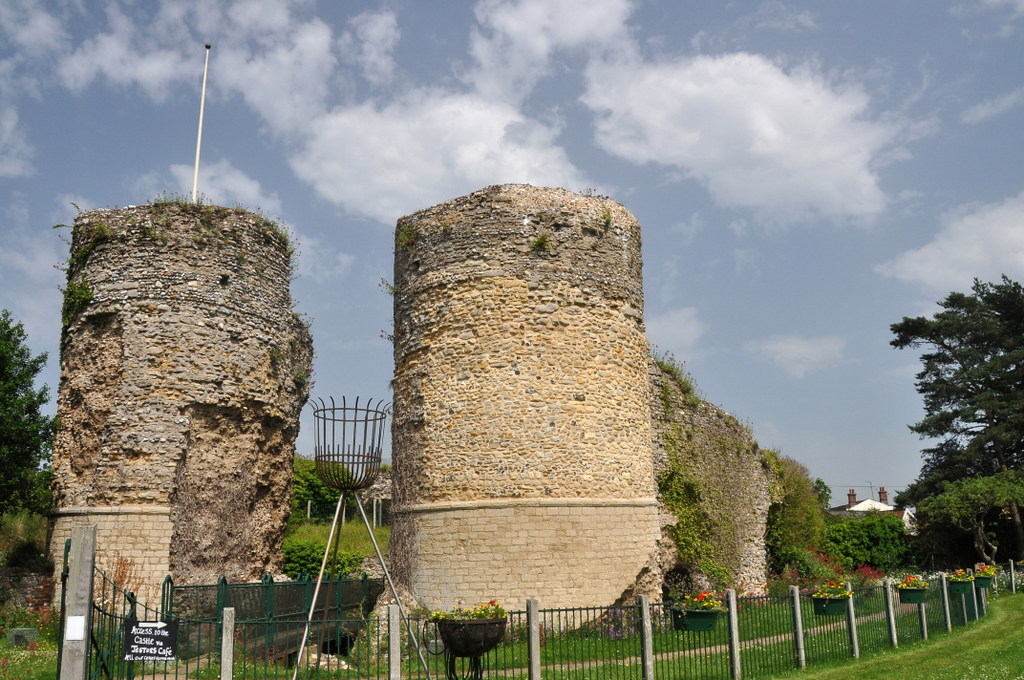
Bungay Castle, also historically known as Bigod Castle, is a significant Norman motte-and-bailey hill castle located in the town of Bungay, Suffolk, England. Constructed initially in the early 12th century, the castle occupies a naturally defensible position beside a sharp bend in the River Waveney, utilizing the river as a natural moat on one side. This strategic location exemplifies medieval military planning, combining natural and man-made defenses to protect the stronghold. The castle was founded around 1103 by Roger Bigod of Norfolk, a prominent Norman knight who established the original wooden fortifications typical of the period. These early earthworks and timber structures formed the foundation for what would become a substantial stone fortress. The transition from wood to stone began circa 1140 under Hugh Bigod, 1st Earl of Norfolk, Roger’s son, marking a significant architectural evolution that reflected the growing importance and permanence of the site. Norman origins and architectural evolution The initial phase of Bungay Castle's construction was typical of Norman military architecture: a motte-and-bailey design with a raised earthwork (motte) topped by a wooden keep, surrounded by a protective bailey enclosed by a palisade. This design allowed for rapid construction and effective defense during the turbulent years following the Norman Conquest. From 1140 onwards, Hugh Bigod initiated a major rebuilding campaign, replacing wooden structures with durable stonework. The centerpiece of this phase was the construction of a large square stone keep on the motte, completed around 1165. This keep was a formidable defensive and residential structure, embodying the Romanesque architectural style characteristic of Norman castles, with thick walls, narrow windows, and a commanding presence. The keep's significance and design The keep at Bungay was one of the largest and most expensive Norman keeps built in England during the 12th century. Contemporary estimates suggest the investment would equate to several million pounds today, underscoring the castle’s strategic and symbolic importance. The keep served as the last line of defense and a residence for the Bigod family, featuring multiple floors, strong defensive walls, and limited access points to enhance security. Historical context and military events Bungay Castle played a notable role during the turbulent period known as The Anarchy (1138–1154), a civil war between supporters of King Stephen and Empress Matilda. Hugh Bigod initially sided against King Stephen, leading to the temporary confiscation of the castle. Upon Henry II’s accession, the castle was returned to Hugh in 1163/4, who then undertook the significant stone building projects. During the Revolt of 1173–1174, Hugh Bigod again rebelled against Henry II. The castle was besieged by royal forces employing undermining tactics, an advanced siege technique aimed at collapsing walls by tunneling underneath. Though the castle sustained some damage and was deliberately slighted to reduce its military threat, it survived largely intact. The Bigods were fined heavily but retained possession after restoration. Later medieval developments and decline By the late 13th century, the castle had suffered neglect and partial ruin. In 1294, Roger Bigod, 5th Earl of Norfolk, initiated restoration efforts, likely constructing the imposing twin gatehouse towers and reinforcing the curtain walls surrounding the keep. These additions reflected advances in medieval fortification design, emphasizing controlled access and enhanced defense against siege weaponry. Following Roger Bigod’s death in 1297, the castle reverted to the Crown and gradually fell into disrepair. By 1382, it was described as "old and ruinous," marking the beginning of centuries of decline. Ownership passed through various hands, including the Dukes of Norfolk from 1483, but the castle was no longer maintained as a military stronghold. Post-medieval history and preservation In the 18th century, parts of the castle, including the keep and curtain walls, were quarried for road-building materials, causing significant loss of original fabric. By the 19th century, residential buildings had been constructed within the castle grounds, reflecting the site's changing function. These dwellings were removed by 1834 to preserve the ruins. Archaeological interest in Bungay Castle grew in the 20th century, with early excavations led by Leonard Cane and later by archaeologist Hugh Braun in the 1930s. These efforts helped stabilize the ruins and clarified the castle’s layout and historical phases. The site was among the earliest to be legally protected under the Ancient Monuments Consolidation and Amendment Act of 1913 and was designated a Grade I listed building in 1949. In 1987, ownership transferred from the Norfolk family to the town of Bungay, with the Bungay Castle Trust managing preservation and public access. As of mid-2024, the castle is temporarily closed for repairs, with plans to reopen when restoration is complete. Architectural remains and visitor experience Today, visitors to Bungay Castle can explore the well-defined ruins that include the remains of the massive Norman keep, substantial sections of the curtain walls, and the striking twin gatehouse towers dating from the late 13th century. These features offer a vivid glimpse into medieval defensive architecture and the castle’s historical evolution. The castle’s location on a flat hill approximately 11 meters above sea level, adjacent to the River Waveney, provides a scenic setting that enhances understanding of its strategic importance. The surviving structures demonstrate the castle’s role as both a military fortress and a noble residence over several centuries. Despite centuries of damage and stone-robbing, the castle’s ruins remain a compelling heritage site, reflecting the complex history of Norman and medieval England. The site is accessible to the public, offering educational opportunities and a tangible connection to England’s feudal past.

High Medieval (11th–13th c.)
Details
14.5 km
Norwich Castle — United Kingdom castle

Norwich Castle

Norwich, United Kingdom

Norwich Castle stands as a monumental symbol of Norman conquest and medieval fortification in the city of Norwich, Norfolk. Founded in the aftermath of the Norman Conquest of England by William the Conqueror between 1066 and 1075, it is a prime example of a high medieval hill castle constructed to assert Norman authority in an important regional center. This castle was the only royal fortress in East Anglia during the late 11th and early 12th centuries, underscoring its strategic and political significance. The castle began as a motte and bailey structure, featuring a raised earthwork mound (motte) surrounded by a wooden palisade and an enclosed courtyard (bailey). Around 1100, the wooden fortifications were replaced with a massive stone keep, built predominantly of Caen stone over a flint core, which has survived to the present day. This keep is a rare example of a hall keep, measuring approximately 29 by 27 meters at the base and standing about 21 meters tall. Its exterior is distinguished by blind arcading, decorative arches embedded in the stone walls, which 19th-century antiquarian G. T. Clark praised as the most ornamented keep in England. Architectural features and construction The keep and its design The stone keep was constructed between 1094 and 1121, replacing the original wooden structures. The entrance was originally located on the first floor on the eastern side, accessed via a now-demolished external stone stairway leading to the Bigod Tower, a forebuilding that served as a gatehouse and defensive feature. The interior layout of the keep, largely lost due to later modifications, is believed to have included a two-story great hall, a chapel, a kitchen, and numerous latrines, reflecting the keep’s dual role as a defensive stronghold and residence. Motte, bailey, and outer defenses The motte was artificially raised and the surrounding ditch deepened around 1100 to enhance defensive capabilities. The original Norman wooden bridge crossing the inner ditch was replaced in the 19th century. While the outer and inner curtain walls no longer survive, archaeological evidence confirms their former existence, enclosing the bailey and providing layered defense. Prison expansions and modifications From the early 13th century until 1887, Norwich Castle served as a county gaol. Extensive prison buildings were erected atop the motte in the late 18th and early 19th centuries. Architect John Soane led a major reconstruction between 1789 and 1793, removing the keep’s interior walls to create cells for male felons and adding separate facilities for debtors and women prisoners. Later, in 1827–1828, architect William Wilkins expanded the prison with three radiating wings containing 240 cells, an octagonal governor’s house with family apartments, a chapel, a committee room, and a mill house with a treadwheel for pumping water. These additions obscured the original Norman entrance and significantly altered the castle’s silhouette. Historical significance and events Military and political history Norwich Castle was a focal point during several key historical events. It was besieged during the Revolt of the Earls in 1075 and captured by Hugh Bigod in 1174 amid the Revolt of 1173–1174. The castle was recorded in the Domesday Survey of 1086 as one of 48 royal castles in England, highlighting its importance in the Norman consolidation of power. Role in local and social history In 1190, the castle provided refuge to the Jewish community during anti-Jewish violence in East Anglia, though tragically many who could not reach the fortress were killed. From 1220 onward, the castle’s role as a prison became central, housing state prisoners from as early as 1264. It remained a county gaol for over six centuries, witnessing public executions behind the castle and later private executions within the prison walls. Notable executions include Robert Kett, leader of Kett’s Rebellion in 1549, and James Blomfield Rush, executed in 1849 for murder. Conversion to museum and cultural heritage After ceasing to function as a prison in 1887, Norwich Castle was converted into a museum and art gallery, opening in 1895 under the direction of architect Edward Boardman. The castle is now managed by the Norfolk Museums Service and is part of the Norwich 12 heritage sites, a collection of important historic buildings in the city. The museum’s collections include significant archaeological finds from the region, including Anglo-Saxon and Viking artifacts, as well as decorative arts and fine art spanning the 17th to 20th centuries. Among the notable exhibits are the Harford Farm Brooch, a large collection of butterflies by Margaret Fountaine, and the early 20th-century needlework of Lorina Bulwer. Visitors can explore interactive displays, the dungeon, and the battlements, gaining insight into both the castle’s martial past and its cultural significance. Preservation and architectural legacy The castle’s stone keep remains a well-preserved example of Norman military architecture, despite the extensive alterations made during its use as a prison. Repairs to the keep’s outer stonework were carried out several times, notably by Anthony Salvin between 1835 and 1839 using Bath stone. The castle precinct includes a historic gallows site and a burial area for executed felons, marked by a commemorative stone plaque. Designated a scheduled ancient monument in 1915 and a Grade I listed building in 1954, Norwich Castle continues to be a vital cultural landmark. Its architectural features, historical associations, and role as a museum make it a key destination for understanding Norman England and the evolution of medieval fortifications in East Anglia.

High Medieval (11th–13th c.)
Details