Hörningsholm Castle
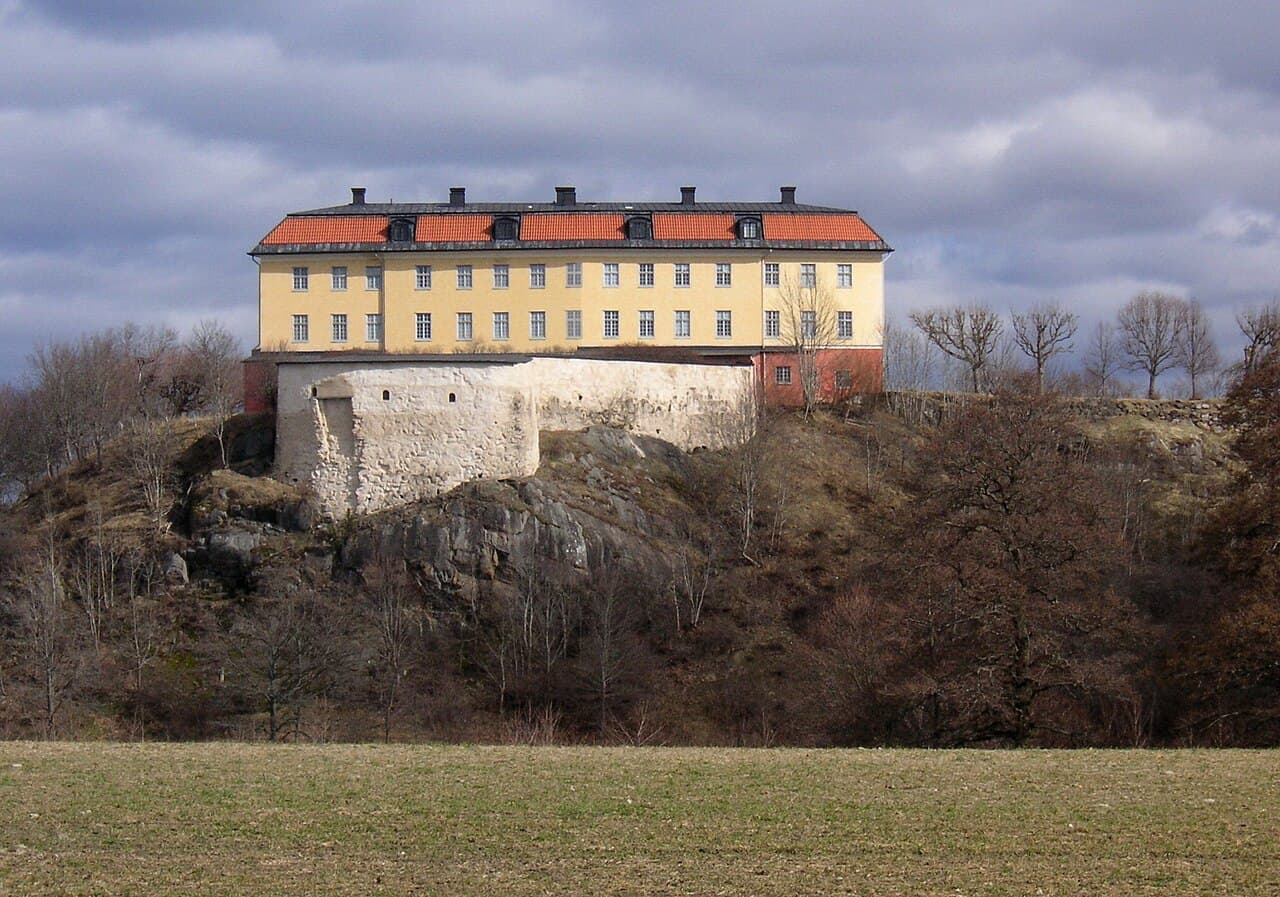
Hörningsholm Castle is situated on a prominent rocky cliff overlooking an inlet of the Baltic Sea near Södertälje, Sweden. Its strategic location on a hill made it a natural defensive site, likely fortified as early as the 13th century. The castle's origins trace back to the Sture family, who probably established the original stronghold during the late 15th or early 16th century. This early fortification played a significant role in regional defense and local governance during the Late Medieval period.
Early history and medieval origins
The site of Hörningsholm was initially a medieval fortress, with archaeological evidence suggesting fortifications existed on the rocky outcrop from the 1200s. The Sture family, a prominent noble lineage in Sweden, held ownership during the castle's formative years. The castle was constructed to oversee and protect the vital waterways leading into the Baltic Sea, controlling maritime access near Södertälje. Its medieval structure would have included typical defensive features such as thick stone walls, battlements, and possibly a moat or other water defenses due to its coastal proximity.
Destruction during the great northern war
In 1719, during the tumult of the Great Northern War, Hörningsholm Castle suffered severe damage when it was attacked and burnt down by the Russian army. This event was part of the Russian raids along the Swedish coastline aimed at crippling Sweden's military and economic power. The destruction left the castle in ruins, marking the end of its medieval phase and necessitating a complete reconstruction.
18th-century reconstruction and architectural transformation
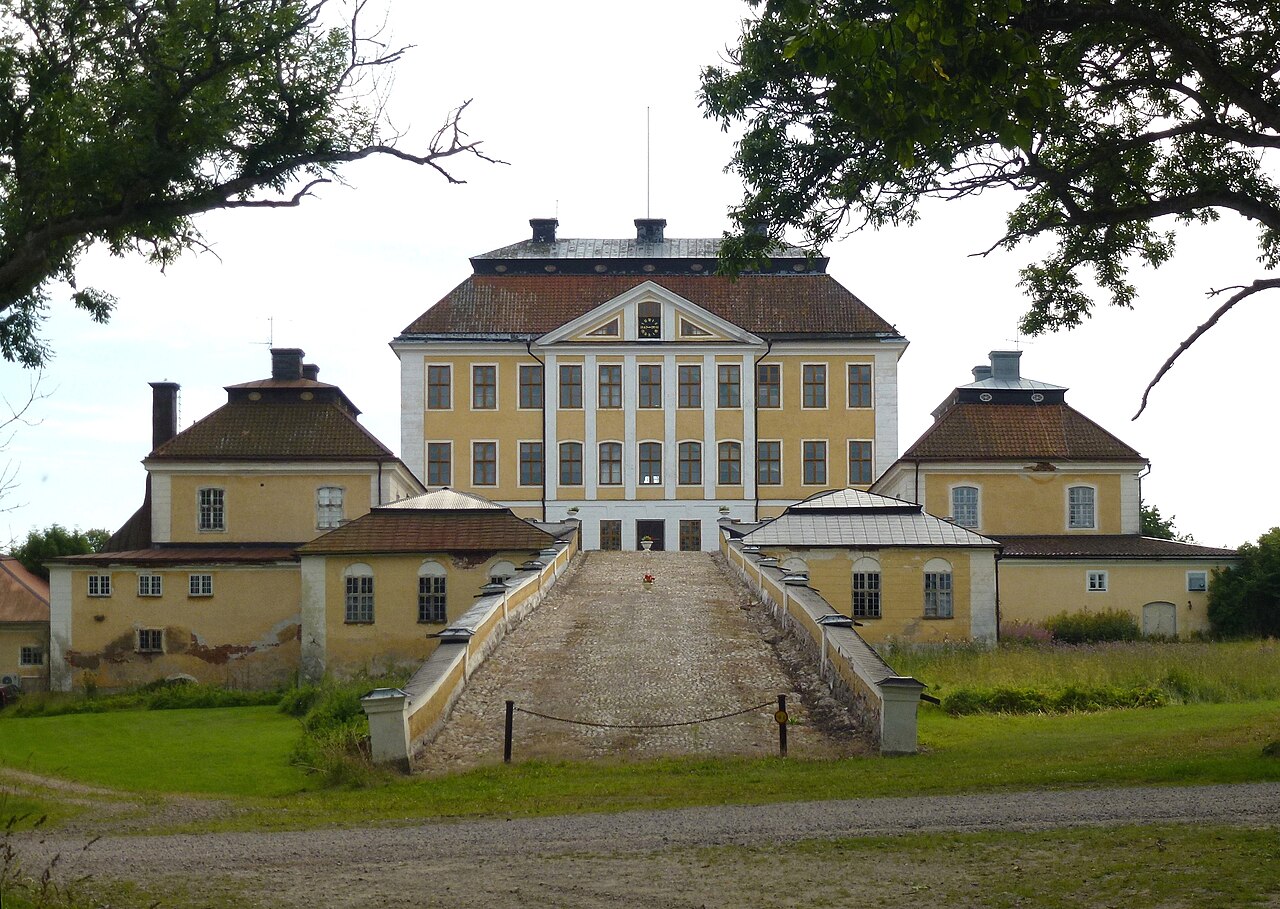
The castle was rebuilt in 1752 under the direction of Nils Bonde, who commissioned the renowned Swedish architect Carl Hårleman to design the new structure. Hårleman was a leading figure in the Swedish Rococo and early Neoclassical movements, and his work on Hörningsholm reflects the transition from medieval fortress to a more refined manor house. The rebuilt castle features elegant architectural elements characteristic of the Post-Renaissance period, blending functionality with aesthetic appeal.
Hårleman's design incorporated a more residential style, with large windows, symmetrical facades, and interior spaces suited for noble living rather than pure defense. The castle retained its commanding position on the hill, but its role shifted towards that of a manor house and symbol of aristocratic status rather than a military stronghold.
20th-century renovation and preservation
In the early 20th century, specifically between 1919 and 1920, the castle underwent significant renovation led by architect Ivar Tengbom. Tengbom was known for his work in the National Romantic style and early modern Swedish architecture. His renovations aimed to preserve the historical character of Hörningsholm while updating its facilities and structural integrity. This work helped maintain the castle's status as a well-preserved example of Sweden's aristocratic heritage.
Architectural features and layout
Hörningsholm Castle's layout reflects its evolution from a medieval fortress to a refined manor. The castle is built on a hilltop with natural rock formations forming part of its defensive perimeter. The structure includes a main residential building with multiple floors, featuring large sash windows and decorative cornices. The castle grounds include courtyards and gardens, typical of noble estates of the 18th century.
While the original medieval fortifications have largely been replaced or integrated into later constructions, elements such as thick stone walls and a commanding position overlooking the sea remain. The castle does not function as a fortress today but stands as a historical manor embodying centuries of Swedish noble architecture.
Cultural significance and current status
Today, Hörningsholm Castle is recognized as an important cultural heritage site in Sweden. Its history encapsulates the transition from medieval fortification to aristocratic residence, illustrating broader trends in Swedish architecture and society. The castle remains privately owned and is not generally open to the public, preserving its status as a private noble estate.
Its location near Södertälje and proximity to the Baltic Sea make it a notable landmark in the region, contributing to the historical landscape of Mörkö and the greater Stockholm area. Hörningsholm Castle's preservation reflects ongoing efforts to maintain Sweden's architectural heritage and noble estates.
Frequently asked questions (FAQ)
- When was Hörningsholm Castle originally built?
- The original fortifications at Hörningsholm Castle likely date back to the 13th century, with the main castle constructed by the Sture family in the late 15th or early 16th century.
- What happened to the castle during the Great Northern War?
- In 1719, the castle was attacked and burnt down by the Russian army during their coastal raids in the Great Northern War, leaving it in ruins.
- Who was responsible for the castle's 18th-century reconstruction?
- Nils Bonde commissioned the reconstruction of Hörningsholm Castle in 1752, with designs by the prominent architect Carl Hårleman.
- What architectural style characterizes the rebuilt castle?
- The castle rebuilt in 1752 reflects the Post-Renaissance style, incorporating elements of Rococo and early Neoclassicism typical of Carl Hårleman's work.
- Is Hörningsholm Castle open to the public?
- Hörningsholm Castle is privately owned and generally not open to the public, preserving its status as a private noble estate.
Photo gallery

Information
Current owner
Private owner
Loading map...
Visitor reviews
No reviews yet. Been here? Write the first review and help other travelers!
Write the first reviewVisited this castle? Share your experience
Your review helps other travelers and adds first-hand knowledge to our encyclopedia.