Södertuna Castle

Södertuna Castle in Gnesta, Sweden: a historic Renaissance estate
Gnesta, Sweden
Renaissance (15th–17th c.)
Well Preserved

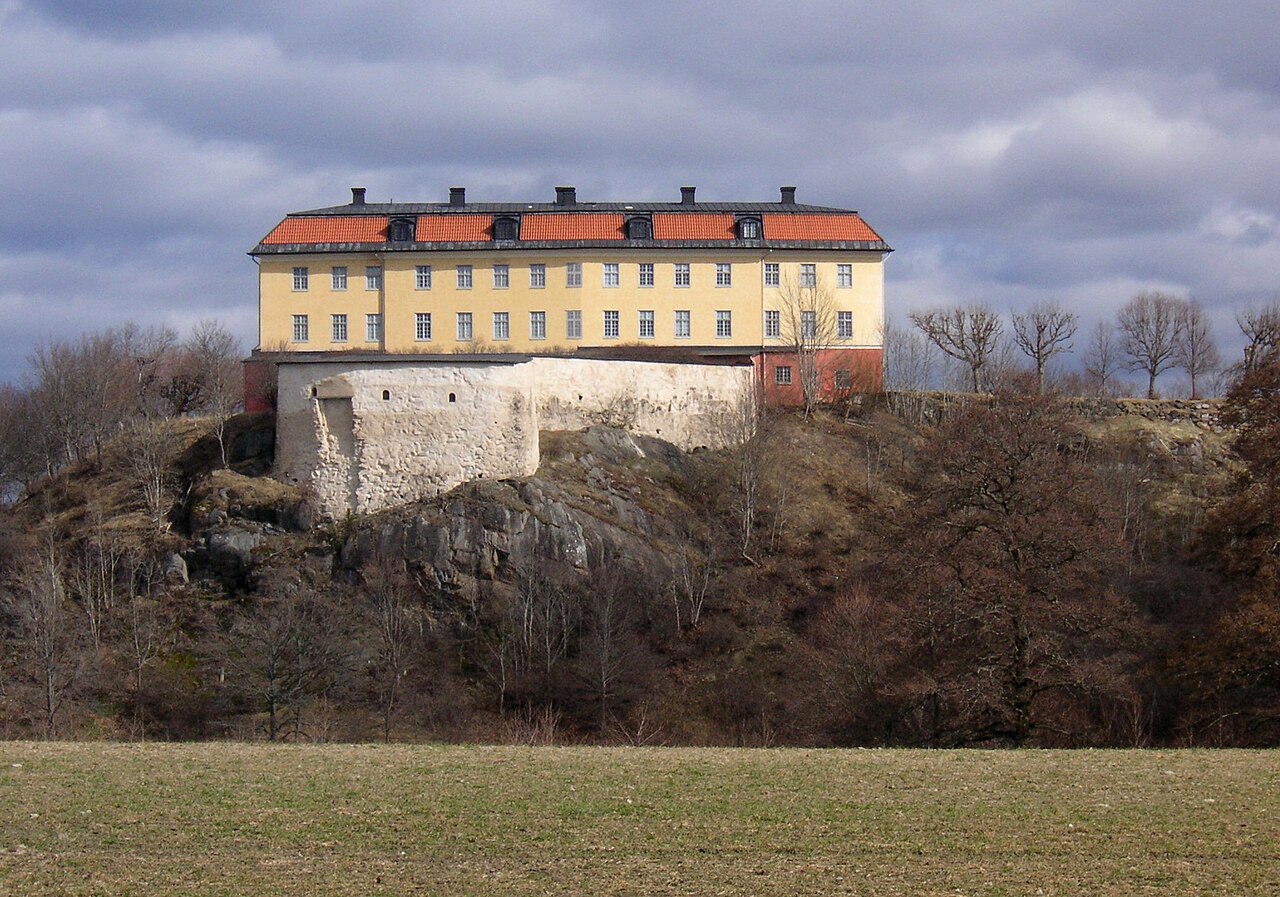
Södertuna Castle is a historic Renaissance castle situated on a small island in Lake Frösjön within Gnesta Municipality, Sweden. Its origins trace back to the 14th century, marking it as a medieval fortress that has undergone significant transformations through the centuries. Today, Södertuna functions as a luxury hotel and conference center, blending its rich heritage with modern amenities.

Medieval origins and architectural evolution

The castle's core structure dates from the medieval period, with its initial construction in the 14th century. This original fortress was built to serve both defensive and residential purposes, typical of medieval strongholds in Sweden. Over time, Södertuna Castle experienced extensive renovations and expansions that reflect the changing architectural styles and functional needs.

During the 17th century, the castle was updated significantly, incorporating elements of the renaissance architectural style. These updates included the addition of refined façades, larger windows, and more comfortable living quarters, moving away from purely defensive features to a more stately residence. Further modifications occurred in the late 18th century, adapting the castle to contemporary tastes and requirements.

The last major renovation took place in 1892, which helped preserve the castle's historical character while integrating modern conveniences. This renovation maintained the castle's Renaissance style while ensuring the building's structural integrity and usability for future generations.

Ownership history and cultural significance

Södertuna Castle has been owned by several prominent Swedish noble families, including the Sparre, Lovisin, Palmenfelt, Ehrensvärd, Wachtmeister, Adelborg, and von Eckermann families. Each family contributed to the castle's legacy, whether through architectural improvements, cultural patronage, or preservation efforts.

In 1985, the castle and its surrounding park were separated by the von Eckermann family. Shortly thereafter, the property was transformed into a hotel and conference center with the involvement of Norwegian investors. This conversion was officially inaugurated in 1986 by Princess Christina of Sweden, marking a new chapter in the castle's history as a venue for hospitality and events.

In 2007, ownership passed to the Åström family, who also manage other historic properties such as Dufweholms Manor Inn and Gripsholm Castle. Under their stewardship, Södertuna continues to operate as a luxury hotel, offering guests a unique experience steeped in Swedish history and Renaissance architecture.

Architectural features and setting

The castle is distinguished by its picturesque location on a small island, surrounded by the waters of Lake Frösjön. This setting not only provided natural defense in medieval times but also contributes to the estate's serene and scenic atmosphere today.

Architecturally, Södertuna Castle exhibits characteristic Renaissance features such as symmetrical façades, classical proportions, and ornate detailing. The castle complex includes the main building, outbuildings, and landscaped gardens that reflect the estate's historical development and noble status.

Visitors can explore the castle's elegant interiors, which retain elements from various periods, including medieval stonework and later period furnishings. The blend of architectural styles and historical layers offers insight into the evolution of Swedish noble residences from the Middle Ages through the Renaissance and beyond.

Modern use and visitor experience

Today, Södertuna Castle operates as a luxury hotel and conference center, providing accommodations, event spaces, and dining facilities. Its combination of historical ambiance and modern comfort makes it a sought-after destination for weddings, corporate events, and cultural gatherings.

The castle's location in Gnesta offers visitors access to the natural beauty of the surrounding region, including lake activities and countryside exploration. The estate's preservation and adaptive reuse demonstrate a successful example of maintaining historical heritage while serving contemporary functions.

Accessibility and visitor information

Guests can reach Södertuna Castle by road from Stockholm and other nearby cities, making it accessible for both day visits and longer stays. The hotel provides guided tours that highlight the castle's history, architecture, and notable former owners.

Special events and seasonal programs are held regularly, enhancing the visitor experience and promoting the cultural significance of the castle. The estate's hospitality services emphasize comfort and authenticity, ensuring a memorable stay within a historic setting.

Frequently asked questions (FAQ)

What is the historical significance of Södertuna Castle?
Södertuna Castle, built in the late 17th century, is an important historical landmark in Sweden, reflecting the architectural style of that era. It has served various purposes over the centuries, including a noble residence and a hotel, thus playing a significant role in the local heritage and culture.
When was Södertuna Castle constructed?
The construction of Södertuna Castle began in 1697 and was completed in 1701. Since then, it has undergone several renovations while maintaining its historical charm and significance.
Can I visit Södertuna Castle?
Yes, Södertuna Castle is open to visitors, offering guided tours that delve into its rich history and stunning architecture. Be sure to check the castle's website for current visiting hours and any special events that may be taking place.
What are the opening hours for Södertuna Castle?
Södertuna Castle typically opens its doors to visitors from 10 AM to 6 PM during the summer months, with reduced hours in the off-season. It is advisable to verify the opening hours before your visit as they may vary based on the time of year and special events.
Is it possible to hold events at Södertuna Castle?
Yes, Södertuna Castle is a popular venue for weddings, conferences, and other events. The castle offers various packages to accommodate different types of gatherings, set against the backdrop of its beautiful historical architecture.
What is the best time to visit Södertuna Castle?
The best time to visit Södertuna Castle is during the late spring and summer months when the weather is pleasant, and the gardens are in full bloom. Additionally, this is when the castle hosts various events and activities, enhancing the visitor experience.
Are there nearby attractions to Södertuna Castle?
Yes, the surrounding area of Gnesta offers several attractions, including beautiful nature trails, lakes, and cultural sites. Visitors can explore local parks and enjoy outdoor activities, making it a great destination for a day trip.
What are the ticket prices for visiting Södertuna Castle?
Ticket prices for Södertuna Castle vary depending on the type of tour and any special events. Generally, entry fees are reasonable, with discounts available for children, students, and seniors, making it accessible for a wide range of visitors.
How do I get to Södertuna Castle?
Södertuna Castle is easily accessible by car, located just a short drive from Stockholm. Public transportation options, including trains and buses, are also available, making it convenient for visitors traveling from nearby cities.

Information

Hill Castle

Loading map...

Visitor reviews

No reviews yet. Been here? Write the first review and help other travelers!

Write the first review

Visited this castle? Share your experience

Your review helps other travelers and adds first-hand knowledge to our encyclopedia.

Write a review

(5/5)

0/2000 characters

Your review will be visible after admin approval

Nearby castles

15.6 km

Öster Malma Castle

Nyköping, Sweden

Öster Malma Castle is a distinguished Baroque style manor located near Nyköping, Sweden. Constructed in the 1660s by Wilhelm Drakenhjelm, an administrator of the Swedish Board of Customs, the castle has preserved much of its original façade and architectural character from the 17th century. This period marked a significant era in Swedish architecture, where the Baroque style emphasized symmetry, grandeur, and decorative details, all of which are evident in Öster Malma's design. Architectural features and layout The castle's structure reflects typical Baroque architectural principles with a balanced and harmonious façade that has remained largely intact since its construction. The building is characterized by its orderly arrangement of windows and doors, classical pilasters, and modest ornamentation that aligns with the Swedish interpretation of the Baroque style, which was somewhat restrained compared to continental examples. Surrounding the castle, the grounds were developed extensively during the 18th century, which was the estate's heyday. The gardens feature formal parks, flowery terraces facing the adjacent lake, and orchards that were added in the 18th and 19th centuries. These landscape elements were designed to complement the castle's architecture and provide a scenic setting typical of noble estates of the time. The integration of natural and cultivated elements demonstrates the evolving tastes in landscape design from formal Baroque gardens to more naturalistic styles. Historical significance and hunting tradition Öster Malma Castle has a rich history tied to the Swedish aristocracy and landowning class. In 1947, the castle entered a new chapter when it was rented by the Svenska Jägareförbundet (Swedish Association for Hunting and Wildlife Management), largely due to the efforts of Prince Gustav Adolf, the chairman of the organization. This marked the beginning of the castle's association with hunting and wildlife education, which continues to define its identity today. The castle serves as a center for hunting culture and education, hosting events and courses related to game management and conservation. Its interiors include reception halls furnished with period-appropriate furniture that reflects the 17th and 18th centuries, creating an atmosphere that honors its aristocratic and hunting heritage. The combination of historic ambiance and modern use makes Öster Malma a unique venue for conferences, weddings, and cultural events. Gardens and landscape heritage The castle's gardens are an important aspect of its heritage. The 18th-century parks were designed to enhance the estate's natural beauty and provide leisure spaces for its inhabitants. The terraces overlooking the lake offer picturesque views and are planted with a variety of flowers and shrubs typical of the period. The orchards planted later add to the estate's charm and reflect the practical use of the land in addition to its ornamental function. Modern use and cultural importance Today, Öster Malma Castle is not only a historical monument but also a vibrant center for nature art and cultural activities. The estate embraces its legacy by hosting exhibitions and events that connect contemporary art with the natural environment. Its role as a venue for receptions and celebrations continues the tradition of the castle as a social and cultural hub. The preservation of Öster Malma Castle's architectural integrity and its surrounding landscape ensures that visitors can experience an authentic 17th-century Swedish Baroque estate. Its ongoing use by the Swedish Association for Hunting and Wildlife Management highlights the castle's unique place at the intersection of history, culture, and nature conservation.

Details
20.7 km
Hörningsholm Castle — Sweden castle

Hörningsholm Castle

Mörkö, Sweden

Hörningsholm Castle is situated on a prominent rocky cliff overlooking an inlet of the Baltic Sea near Södertälje, Sweden. Its strategic location on a hill made it a natural defensive site, likely fortified as early as the 13th century. The castle's origins trace back to the Sture family, who probably established the original stronghold during the late 15th or early 16th century. This early fortification played a significant role in regional defense and local governance during the Late Medieval period. Early history and medieval origins The site of Hörningsholm was initially a medieval fortress, with archaeological evidence suggesting fortifications existed on the rocky outcrop from the 1200s. The Sture family, a prominent noble lineage in Sweden, held ownership during the castle's formative years. The castle was constructed to oversee and protect the vital waterways leading into the Baltic Sea, controlling maritime access near Södertälje. Its medieval structure would have included typical defensive features such as thick stone walls, battlements, and possibly a moat or other water defenses due to its coastal proximity. Destruction during the great northern war In 1719, during the tumult of the Great Northern War, Hörningsholm Castle suffered severe damage when it was attacked and burnt down by the Russian army. This event was part of the Russian raids along the Swedish coastline aimed at crippling Sweden's military and economic power. The destruction left the castle in ruins, marking the end of its medieval phase and necessitating a complete reconstruction. 18th-century reconstruction and architectural transformation The castle was rebuilt in 1752 under the direction of Nils Bonde, who commissioned the renowned Swedish architect Carl Hårleman to design the new structure. Hårleman was a leading figure in the Swedish Rococo and early Neoclassical movements, and his work on Hörningsholm reflects the transition from medieval fortress to a more refined manor house. The rebuilt castle features elegant architectural elements characteristic of the Post-Renaissance period, blending functionality with aesthetic appeal. Hårleman's design incorporated a more residential style, with large windows, symmetrical facades, and interior spaces suited for noble living rather than pure defense. The castle retained its commanding position on the hill, but its role shifted towards that of a manor house and symbol of aristocratic status rather than a military stronghold. 20th-century renovation and preservation In the early 20th century, specifically between 1919 and 1920, the castle underwent significant renovation led by architect Ivar Tengbom. Tengbom was known for his work in the National Romantic style and early modern Swedish architecture. His renovations aimed to preserve the historical character of Hörningsholm while updating its facilities and structural integrity. This work helped maintain the castle's status as a well-preserved example of Sweden's aristocratic heritage. Architectural features and layout Hörningsholm Castle's layout reflects its evolution from a medieval fortress to a refined manor. The castle is built on a hilltop with natural rock formations forming part of its defensive perimeter. The structure includes a main residential building with multiple floors, featuring large sash windows and decorative cornices. The castle grounds include courtyards and gardens, typical of noble estates of the 18th century. While the original medieval fortifications have largely been replaced or integrated into later constructions, elements such as thick stone walls and a commanding position overlooking the sea remain. The castle does not function as a fortress today but stands as a historical manor embodying centuries of Swedish noble architecture. Cultural significance and current status Today, Hörningsholm Castle is recognized as an important cultural heritage site in Sweden. Its history encapsulates the transition from medieval fortification to aristocratic residence, illustrating broader trends in Swedish architecture and society. The castle remains privately owned and is not generally open to the public, preserving its status as a private noble estate. Its location near Södertälje and proximity to the Baltic Sea make it a notable landmark in the region, contributing to the historical landscape of Mörkö and the greater Stockholm area. Hörningsholm Castle's preservation reflects ongoing efforts to maintain Sweden's architectural heritage and noble estates.

Post-Renaissance (17th–18th c.)
Details
21.4 km
Gripsholm Castle — Sweden castle

Gripsholm Castle

Mariefred, Sweden

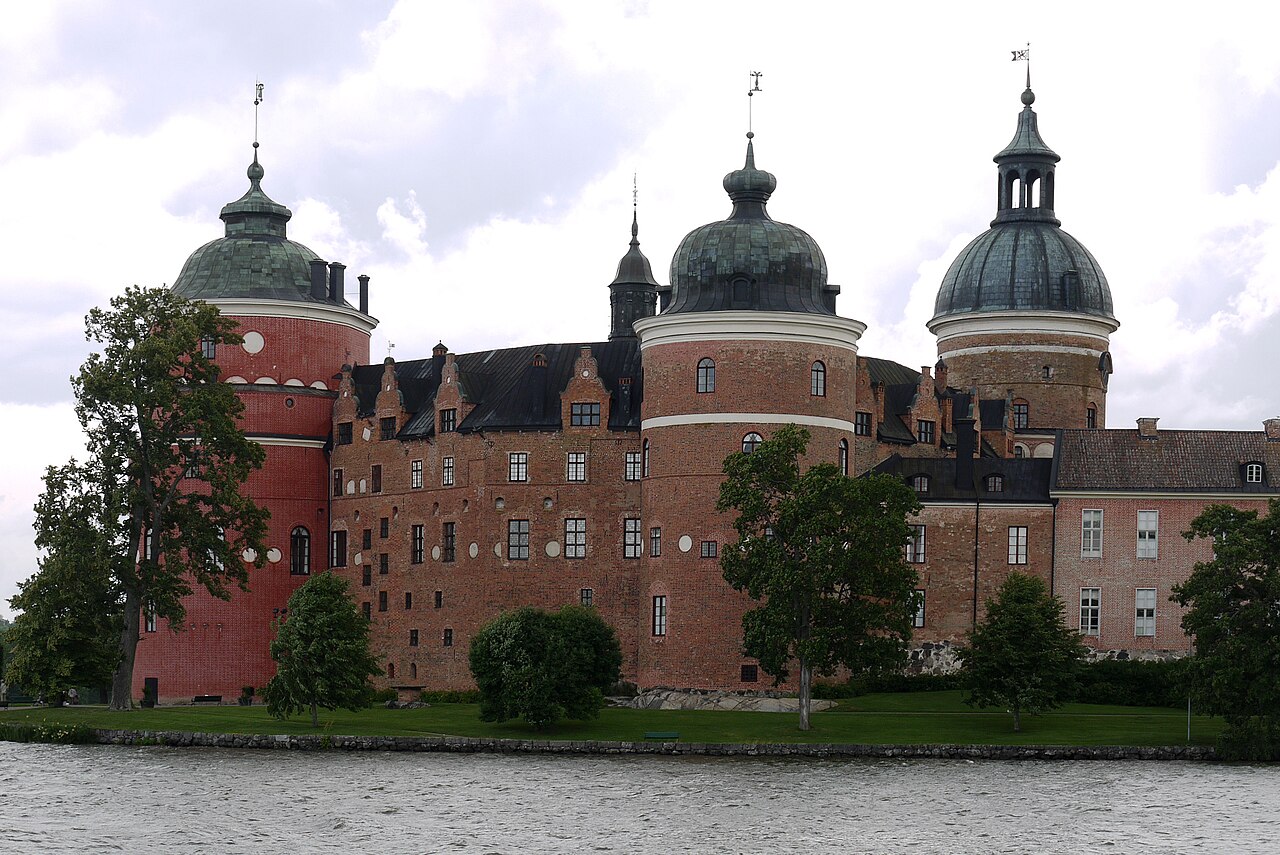
Gripsholm Castle stands as a remarkable testament to Sweden's rich Renaissance heritage and royal history, located in the picturesque town of Mariefred within the region of Sodermanlands lan. Constructed in the 16th century on the initiative of King Gustav I Vasa, the castle evolved from a medieval fortress originally built by Bo Jonsson Grip in the late 14th century. It is renowned not only for its imposing fortified layout with four distinctive round towers but also for its exceptional preservation of interiors and cultural treasures spanning several centuries. Historical origins and royal significance The site of Gripsholm Castle was first fortified between 1377 and 1380 by the powerful nobleman Bo Jonsson Grip, whose family emblem—a griffin's head—gave the castle its name. The fortress changed hands multiple times, including ownership by Queen Margaret and the influential statesman Sten Sture the Elder. In 1493, the castle was transferred to the Carthusian monks who established the nearby Pax Mariae monastery. However, the sweeping reforms of the Swedish Reformation led by King Gustav I in 1526 resulted in the dissolution of the monastery and the confiscation of Gripsholm, which then became a royal possession. From 1537 onward, King Gustav I undertook the construction of a new brick castle designed as a formidable defensive stronghold, featuring circular corner towers and thick walls. The castle's strategic location on an island in Lake Mälaren provided natural protection and control over the surrounding region. Gripsholm played a central role in Sweden's turbulent royal intrigues during the 16th century. Between 1563 and 1567, King Erik XIV imprisoned his brother John III and John's wife Catherine Jagiellon within the castle walls. Their son, Sigismund, who would later become king of both Poland and Sweden, was born here in 1566. Subsequently, John III reversed the tables by imprisoning Erik XIV at Gripsholm from 1571 to 1573, underscoring the castle's dual function as a royal residence and prison. Architectural features and interior highlights Fortified structure and towers The castle's square courtyard is enclosed by four imposing round towers, each with unique historical and functional significance. Griptornet, originally a defensive bastion, also served as a prison, evidenced by 17th-century inscriptions. Vasatornet contains notable chambers such as King Gustav I's bedchamber and Gustav III's divan room, now a gallery of self-portraits. The largest tower, Teatertornet, was transformed into a theater in the late 18th century under King Gustav III, designed by architect Erik Palmstedt. This theater retains original stage machinery and plaster statues by Tobias Sergel. Above it lies Gustav III's round salon, redecorated by Jean Eric Rehn in 1779, used for royal receptions and portrait displays. Fängelsetornet, the prison tower, is historically significant for holding high-profile prisoners during the 16th century. Royal wings and courtyard features The Kavaljersflygeln or Cavalier's Wing, built in 1780 by Fredrik Adolf Ulrik Cronstedt, housed court officials in modest residential quarters. The castle is surrounded by a moat, originally equipped with a drawbridge, which was filled in during King Gustav III's reign but later restored in the 1890s with a new drawbridge. The 1890s restoration led by architect Fredrik Lilljekvist added a third floor to parts of the castle and restored Renaissance stylistic elements, though some historical alterations from the 17th and 18th centuries were removed. Decorative painting, new window designs, and a turret over the gatehouse were also introduced. An ornamental well from the 1897 Stockholm Exhibition was installed in the inner courtyard. The outer courtyard displays two large 16th-century artillery pieces, "Galten" and "Suggan," trophies from Russia acquired in 1623. Inside, original 16th-century stained glass by Urban Glasmakare and metalwork by Peter Holländer survive, highlighting the castle's artisanal heritage. The grounds also historically featured various gardens, including a walled herb garden created by gardener Hans Friese in the mid-16th century. Cultural treasures and collections Gripsholm Castle is internationally celebrated for housing the Swedish National Portrait Gallery (Statens porträttsamlingar), one of the world's oldest and most extensive portrait collections. Established in 1820 and managed by the Nationalmuseum since the 1860s, the collection includes thousands of portraits of Swedish royalty, nobility, and notable figures from the Vasa era to contemporary times. The castle also contains one of Europe's best-preserved 18th-century theaters, a cultural gem reflecting the artistic patronage of King Gustav III, known as the "theater king." The theater's original stage machinery and rich decorative elements make it a unique attraction for visitors interested in performing arts history. Notable historical anecdotes An intriguing story associated with Gripsholm is the taxidermy of a lion that arrived alive in Sweden in the 18th century, allegedly as a diplomatic gift from the "Bey of Algiers." The lion was placed in the Royal Game Park in Stockholm and, after its death, was poorly stuffed by a taxidermist unfamiliar with the animal, resulting in a famously imperfect specimen now displayed at the castle. Modern significance and visitor experience Today, Gripsholm Castle is a well-preserved historical monument open to the public as a museum. Visitors can explore the richly decorated rooms from the Vasa period, the royal theater, and the extensive portrait collection. The castle's location near the Gripsholm deer park nature reserve and the charming town of Mariefred—with its shops, cafés, and restaurants—makes it a popular excursion destination. The castle's blend of Renaissance architecture, royal history, and cultural heritage offers a comprehensive glimpse into Sweden's past. Its preservation efforts, including the 19th-century restoration and ongoing maintenance, ensure that Gripsholm remains a vital part of Sweden's cultural landscape.

Renaissance (15th–17th c.)
Details