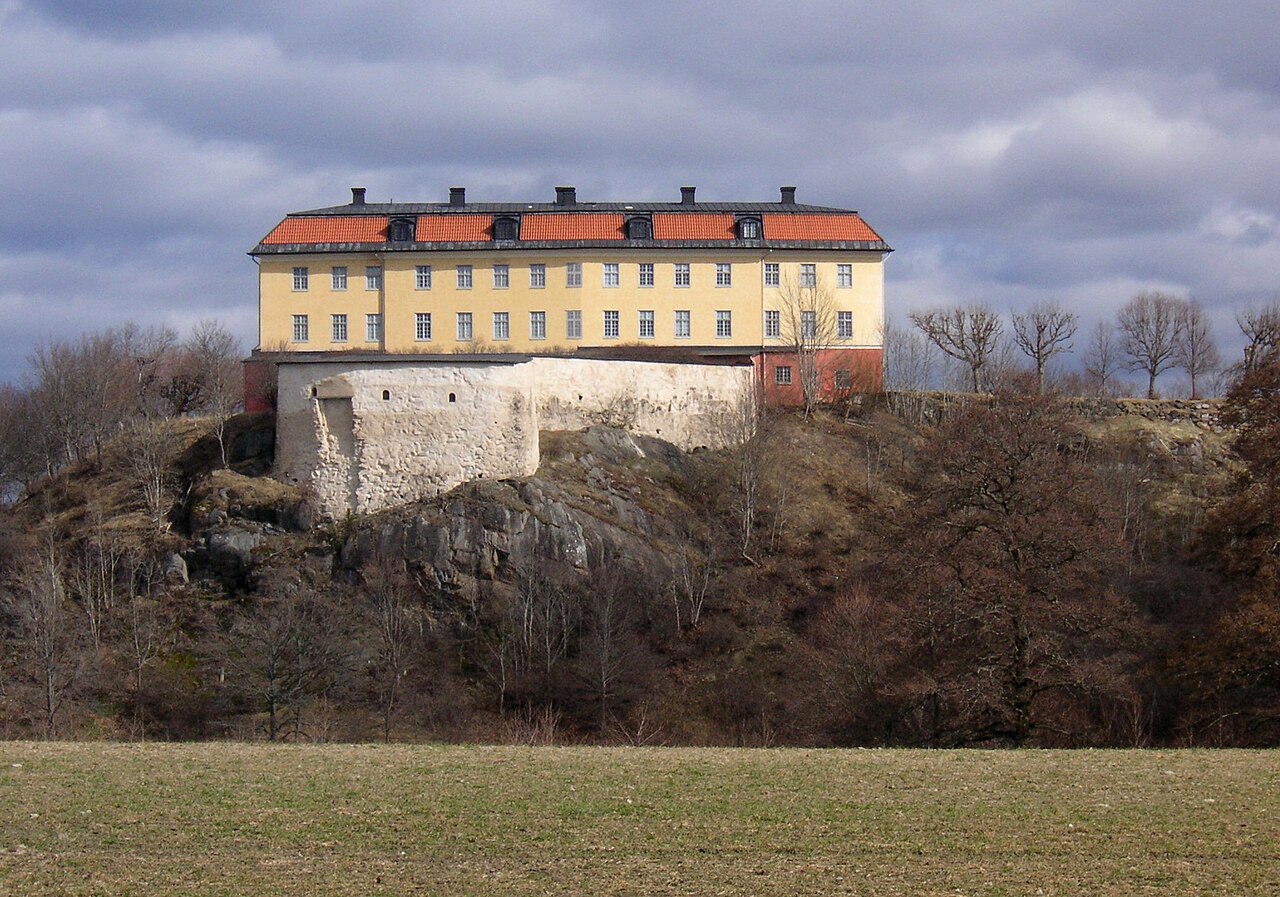
Hammersta Castle Ruins

Hammersta castle ruins in Nynäshamn, Sweden
Nynäshamn, Sweden
Late Medieval (14th–15th c.)
Ruins

Hammersta Castle ruins lie in Nynäshamn, Sweden, representing the remains of a late medieval stone fortress built around 1300. The site was originally a two-storey stone building measuring approximately 13 by 18 meters. It was constructed by Eringilse Nilsson, whose family had close ties to Bridget of Sweden, a significant religious figure of the 14th century. Eringilse's father was married to Bridget's sister, linking the castle's origins to notable medieval Swedish nobility.

Architectural features and construction

The castle's original structure was a robust stone building typical of late medieval fortifications in Sweden. Its two-storey design indicates it served both defensive and residential purposes. The thick stone walls would have provided protection against attacks, while the interior likely contained living quarters and essential rooms for the lord's household. Although now in ruins, the remaining foundations and stonework reveal the castle's rectangular footprint and solid construction methods of the period.

Historical context and family connections

Hammersta Castle was closely connected to prominent families of the time. Eringilse Nilsson's son, also named Eringilse, married Brita Olofsdotter Tott, a Danish noblewoman. This marriage linked the castle to the complex political relations between Sweden and Denmark during the 15th century. Around 1450, tensions escalated between the two kingdoms, and Brita was accused of espionage for Denmark. She was sentenced to death but later pardoned, a rare outcome that allowed her to contribute culturally by funding the famous fresco paintings at Ösmo Church, near the castle site.

Decline and later ownership

The castle was abandoned in the 15th century, likely due to changes in political and military circumstances that made such small stone fortresses less strategically important. After its abandonment, the estate passed through several noble families, including the Horn, Kruus, and Wrede families, between 1628 and 1767. During this period, a new manor house was constructed on the estate, beginning in 1685 and completed in 1723, reflecting the shift from medieval fortresses to more modern residential estates.

Cultural and heritage significance

Today, the Hammersta Castle ruins stand as a testament to the late medieval architecture and the turbulent history of Swedish-Danish relations in the Baltic region. The castle's connection to Bridget of Sweden's family and the story of Brita Tott add layers of historical interest. The nearby Ösmo Church frescoes funded by Brita provide a cultural link to the castle's past inhabitants and their influence on local art and heritage.

Visiting the ruins

The ruins are accessible to visitors interested in medieval history and architecture. While the castle itself no longer stands intact, the site offers insight into the construction techniques and noble life of the period. The surrounding landscape and proximity to other historical sites like Ösmo Church make it a valuable destination for cultural tourism in the region.

Frequently asked questions (FAQ)

How do I get to Hammersta Castle Ruins?
Hammersta Castle Ruins are located in Nynäshamn, Sweden, and can be easily accessed by car or public transport. If you're driving, there is parking available near the entrance. For public transport, check local bus schedules that connect Nynäshamn to surrounding areas.
What is the historical significance of Hammersta Castle Ruins?
Hammersta Castle Ruins date back to the 14th century and were originally built as a defensive structure. The castle played a crucial role in the region's history, particularly during conflicts in the Middle Ages. Today, it stands as a monument to Sweden's medieval architectural heritage.
When was Hammersta Castle originally constructed?
Hammersta Castle was constructed in the late 14th century, around 1390. It served as a noble residence and military fortification, reflecting the turbulent times of its era. The ruins that remain today offer a glimpse into the castle's storied past.
Can I enter the ruins of Hammersta Castle?
Yes, visitors can explore the ruins of Hammersta Castle. While some areas may have restricted access for safety reasons, many parts of the castle grounds are open for exploration. Be sure to respect the site and follow any posted guidelines.
Why is Hammersta Castle a popular tourist attraction?
Hammersta Castle is popular due to its rich history, stunning views of the surrounding landscape, and unique architecture. Visitors appreciate the opportunity to experience a piece of Sweden's medieval past while enjoying the natural beauty of Nynäshamn. Its proximity to other attractions also makes it a convenient stop for tourists.
Is it possible to visit Hammersta Castle Ruins year-round?
Yes, Hammersta Castle Ruins can be visited year-round, although accessibility may vary with the seasons. In winter, snow may impact travel plans, while summer offers a more pleasant experience for exploration. Always check local conditions before planning your visit.
What are the opening hours for Hammersta Castle Ruins?
Hammersta Castle Ruins are generally open from dawn until dusk, allowing visitors to enjoy the site at their convenience. However, it’s recommended to check for any seasonal changes or special events that might affect access. Always verify current hours before your visit.
Are there any ticket prices for visiting Hammersta Castle Ruins?
Admission to Hammersta Castle Ruins is typically free, making it an accessible destination for all. However, some guided tours or special events may have associated fees. Always check the official website or local tourist information for the latest details.
What nearby attractions can I visit while in Nynäshamn?
Nynäshamn offers a variety of nearby attractions, including beautiful coastal walks, charming cafes, and local museums. The nearby Nynäshamn Marina is perfect for those interested in sailing or enjoying waterfront views. Don’t forget to explore the scenic nature trails that surround the area.

Information

Hill Castle

Loading map...

Visitor reviews

No reviews yet. Been here? Write the first review and help other travelers!

Write the first review

Visited this castle? Share your experience

Your review helps other travelers and adds first-hand knowledge to our encyclopedia.

Write a review

(5/5)

0/2000 characters

Your review will be visible after admin approval

Nearby castles

15.2 km

Årsta Castle

Haninge, Sweden

Årsta Castle, located in Haninge, Sweden, is a historic manor with origins tracing back to the 14th century. Initially, the estate served as a residence for the Teutonic Order of Livonia, a powerful military and religious order influential in the Baltic region during the medieval period. This early connection places Årsta within the broader context of Northern European medieval history and the territorial ambitions of the Teutonic Knights. In 1467, the manor was acquired by Erik Axelsson Tott, a notable Swedish nobleman and statesman. The estate remained significant through the centuries, witnessing various ownership changes among prominent Swedish noble families, including the Kurck, Soop, and Fleming families. These families played important roles in Swedish history, often involved in military and political affairs. Architectural development and the main building The current main building of Årsta Castle was constructed around 1650 by Claes Hansson Bielkenstierna. This construction period places the manor firmly within the Renaissance era in Sweden, characterized by a transition from medieval fortress styles to more refined and comfortable noble residences. The manor reflects typical Renaissance architectural elements, emphasizing symmetry, proportion, and classical details rather than heavy fortifications. The building likely features a balanced facade, orderly window arrangements, and possibly decorative elements such as pilasters or cornices, consistent with Swedish Renaissance manors of the mid-17th century. While not a fortress in the military sense, Årsta Castle embodies the transformation of noble estates into stately homes that combined residential comfort with status display. Historical ownership and significance Ownership by the Bielkenstierna family marks an important phase in the manor's history, as Claes Hansson Bielkenstierna was responsible for the manor's Renaissance redesign. The subsequent ownership by the Kurck, Soop, and Fleming families reflects the estate's continued importance among Sweden's noble elite. Each family contributed to the manor's legacy, possibly making modifications or additions over the centuries. The estate's survival and maintenance through turbulent periods in Swedish history, including wars and political changes, underscore its resilience and the value placed on it by its owners. Modern use and preservation Today, Årsta Castle is owned by the Cedergren family. The manor has been adapted for modern use and currently hosts a restaurant, making it accessible to visitors and allowing the public to experience its historic ambiance. This adaptive reuse helps preserve the manor's architectural integrity while providing a sustainable function. The castle's setting in Haninge offers visitors a glimpse into Sweden's noble past, set against the region's natural beauty. The preservation of Årsta Castle as a well-maintained manor house contributes to the cultural heritage of the Stockholm County area. Architectural features and estate grounds While detailed architectural surveys are limited, Årsta Castle's Renaissance style suggests it includes hallmark features such as a central main building with a symmetrical layout, possibly complemented by auxiliary buildings and landscaped grounds typical of Swedish manors. The estate's layout would have balanced functional farm buildings with ornamental gardens and parkland, reflecting the lifestyle of the Swedish nobility in the 17th century. The manor's location in Haninge situates it within a region known for its rich history and natural landscapes, enhancing its appeal as a cultural and historical site.

Renaissance (15th–17th c.)
Details
18.9 km
Hörningsholm Castle — Sweden castle

Hörningsholm Castle

Mörkö, Sweden

Hörningsholm Castle is situated on a prominent rocky cliff overlooking an inlet of the Baltic Sea near Södertälje, Sweden. Its strategic location on a hill made it a natural defensive site, likely fortified as early as the 13th century. The castle's origins trace back to the Sture family, who probably established the original stronghold during the late 15th or early 16th century. This early fortification played a significant role in regional defense and local governance during the Late Medieval period. Early history and medieval origins The site of Hörningsholm was initially a medieval fortress, with archaeological evidence suggesting fortifications existed on the rocky outcrop from the 1200s. The Sture family, a prominent noble lineage in Sweden, held ownership during the castle's formative years. The castle was constructed to oversee and protect the vital waterways leading into the Baltic Sea, controlling maritime access near Södertälje. Its medieval structure would have included typical defensive features such as thick stone walls, battlements, and possibly a moat or other water defenses due to its coastal proximity. Destruction during the great northern war In 1719, during the tumult of the Great Northern War, Hörningsholm Castle suffered severe damage when it was attacked and burnt down by the Russian army. This event was part of the Russian raids along the Swedish coastline aimed at crippling Sweden's military and economic power. The destruction left the castle in ruins, marking the end of its medieval phase and necessitating a complete reconstruction. 18th-century reconstruction and architectural transformation The castle was rebuilt in 1752 under the direction of Nils Bonde, who commissioned the renowned Swedish architect Carl Hårleman to design the new structure. Hårleman was a leading figure in the Swedish Rococo and early Neoclassical movements, and his work on Hörningsholm reflects the transition from medieval fortress to a more refined manor house. The rebuilt castle features elegant architectural elements characteristic of the Post-Renaissance period, blending functionality with aesthetic appeal. Hårleman's design incorporated a more residential style, with large windows, symmetrical facades, and interior spaces suited for noble living rather than pure defense. The castle retained its commanding position on the hill, but its role shifted towards that of a manor house and symbol of aristocratic status rather than a military stronghold. 20th-century renovation and preservation In the early 20th century, specifically between 1919 and 1920, the castle underwent significant renovation led by architect Ivar Tengbom. Tengbom was known for his work in the National Romantic style and early modern Swedish architecture. His renovations aimed to preserve the historical character of Hörningsholm while updating its facilities and structural integrity. This work helped maintain the castle's status as a well-preserved example of Sweden's aristocratic heritage. Architectural features and layout Hörningsholm Castle's layout reflects its evolution from a medieval fortress to a refined manor. The castle is built on a hilltop with natural rock formations forming part of its defensive perimeter. The structure includes a main residential building with multiple floors, featuring large sash windows and decorative cornices. The castle grounds include courtyards and gardens, typical of noble estates of the 18th century. While the original medieval fortifications have largely been replaced or integrated into later constructions, elements such as thick stone walls and a commanding position overlooking the sea remain. The castle does not function as a fortress today but stands as a historical manor embodying centuries of Swedish noble architecture. Cultural significance and current status Today, Hörningsholm Castle is recognized as an important cultural heritage site in Sweden. Its history encapsulates the transition from medieval fortification to aristocratic residence, illustrating broader trends in Swedish architecture and society. The castle remains privately owned and is not generally open to the public, preserving its status as a private noble estate. Its location near Södertälje and proximity to the Baltic Sea make it a notable landmark in the region, contributing to the historical landscape of Mörkö and the greater Stockholm area. Hörningsholm Castle's preservation reflects ongoing efforts to maintain Sweden's architectural heritage and noble estates.

Post-Renaissance (17th–18th c.)
Details
24.8 km

Sandemar Castle

Haninge, Sweden

Sandemar Castle is a historic manor located in Haninge, Sweden, with origins tracing back to the early period of the Kalmar Union. Initially, the estate was owned by the Teutonic Order of Livonia, a powerful military and religious order that held significant territories in the Baltic region. In 1467, the prominent Swedish nobleman Erik Axelsson Tott acquired all the Order's properties in Sweden, including Sandemar, marking an important transfer of ownership during the late medieval period. The ownership of Sandemar during the 1500s remains largely undocumented, but by the 1600s, the estate was held by some of Sweden's most influential noble families, including the Oxenstierna, Bonde, and Falkenberg families. These families played critical roles in Swedish political and military history, and their stewardship contributed to the estate's development and preservation. Architectural evolution and the main building The current main building of Sandemar Castle was completed around 1693 under the direction of Gabriel Falkenberg, a member of the Royal Council and president. This period falls within the Renaissance era in Sweden, although the architectural style of the manor reflects a blend of late Renaissance influences adapted to local materials and climate. The manor's main building is notable for its wooden construction, which is somewhat unusual for grand estates of the time that often favored stone. The wooden walls are covered with tiles, and the water side plates serve as protection against the harsh sea winds from the nearby Baltic Sea. This combination of materials demonstrates a practical approach to architecture, balancing aesthetic qualities with environmental resilience. Historical significance and preservation Sandemar Castle escaped destruction during the Russian ravages of 1719, a series of raids along the Swedish coast during the Great Northern War. The nearby Dalarö Fortress likely served as a deterrent to Russian forces, sparing Sandemar from the widespread devastation that affected many other estates in the region. As a result, Sandemar has preserved many of its original Carolinian period decorations, offering valuable insight into Swedish noble life in the late 17th and early 18th centuries. The estate provides an important example of a well-maintained Renaissance manor that retains its historical character despite the passage of centuries. Gardens and landscape features In addition to the historic manor, Sandemar features an English garden that was added later, enhancing the estate's landscape. This garden includes a greenhouse, as well as vegetable and fruit tree plantations, reflecting the evolving tastes and practical needs of the estate's owners over time. Current ownership and status Today, Sandemar Castle remains privately owned by Karin Mattson Nordin, daughter of the noted real estate developer John Mattson. The estate continues to be a significant cultural and historical site within the Haninge region, representing centuries of Swedish noble heritage and architectural tradition. Architectural features and style While the castle is classified within the Renaissance period, its architectural style incorporates practical adaptations to its coastal environment. The use of wood construction covered with tiles and protective water side plates is characteristic of Swedish manor houses built near the sea during this period. The manor's layout and decorative elements reflect the influence of the Carolinian era, known for its elegant yet functional design. Main building layout The main building is designed as a manor house rather than a fortified castle, emphasizing residential comfort and aesthetic appeal. Its wooden framework is supported by sturdy beams and features large windows that allowed natural light to illuminate the interior spaces. The roof is steeply pitched and covered with tiles to withstand the regional climate. Interior decorations The interior preserves original Carolinian period decorations, including wood paneling, ornamental ceilings, and period-appropriate furnishings. These elements provide a glimpse into the artistic and cultural sensibilities of the Swedish nobility during the late 17th century. Historical context: the Kalmar Union and beyond The estate's early connection to the Teutonic Order of Livonia situates it within the broader political and military landscape of Northern Europe during the late medieval period. The Kalmar Union (1397–1523), which united Denmark, Norway, and Sweden under a single monarch, was a time of significant territorial and dynastic changes. Sandemar's transfer to Swedish noble hands in 1467 reflects the shifting power dynamics of the era. During the 17th century, Sweden emerged as a major European power, and estates like Sandemar played roles in supporting the nobility that governed the realm. Ownership by families such as the Oxenstierna and Bonde underscores the estate's importance within the Swedish aristocracy. Preservation and cultural heritage Sandemar Castle is an important example of a well-preserved Renaissance manor in Sweden. Its survival through turbulent historical events, including the Great Northern War and the Russian coastal raids, makes it a valuable cultural asset. The estate's combination of original architecture, period decorations, and landscaped gardens offers a comprehensive view of Swedish noble life from the late 17th century onwards. Efforts to maintain the castle and its grounds reflect a commitment to preserving Sweden's architectural heritage. The private ownership by the Mattson family has ensured that Sandemar remains a cared-for historic site, contributing to the cultural landscape of Haninge and the wider Stockholm region. Visiting information and accessibility As a privately owned estate, Sandemar Castle is not generally open to the public. However, its presence is well recognized in the region, and it is often featured in discussions of Swedish manor architecture and history. Visitors interested in the architectural and historical significance of Sandemar can explore the surrounding Haninge area, which offers other cultural and natural attractions.

Renaissance (15th–17th c.)
Details