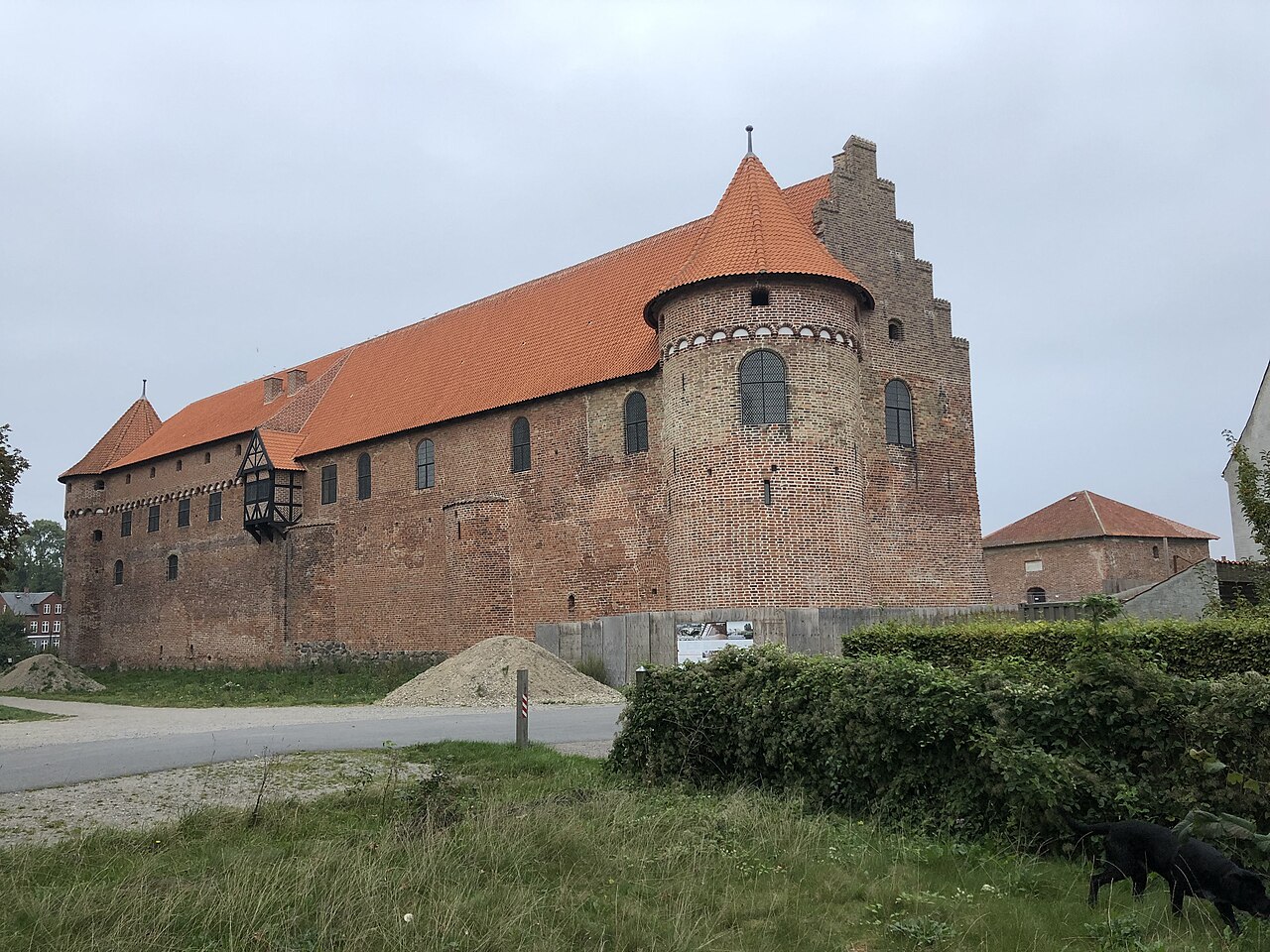
Skovsbo Castle
Skovsbo Castle is a notable example of Renaissance architecture in Denmark, located in the village of Ullerslev on the island of Funen. Its history stretches back to the 14th century, though the present manor house was constructed between 1572 and 1579 for Erik Hardenberg (1534–1604), a prominent privy councillor. This period marked a transition in Danish architecture, blending medieval defensive elements with the more refined and decorative features of the Renaissance.
Architectural design and features
The castle is built in the Renaissance style, characterized by its distinctive Dutch gables that adorn the roofline, a common feature in Northern European Renaissance buildings. The manor consists of two floors above a vaulted basement, which provided both storage and protection. A striking element of Skovsbo is its octagonal staircase tower located on the western side, capped with a spire that adds vertical emphasis and elegance to the structure.
Skovsbo's layout includes an original appendix in the south-eastern corner housing a secondary staircase, which is part of the initial construction phase. In 1891, another appendix was added to the north-eastern corner following a similar design, created by the architect August Klein (1839–1902), who was known for his work in historicist styles, ensuring harmony with the original Renaissance elements.
Historical context and ownership
The estate originally belonged to the Hardenberg family, with Erik Hardenberg commissioning the current manor house. The Hardenbergs were influential in Danish noble circles, and the castle served as a residence and administrative center for the estate. Covering approximately 183 hectares, the land surrounding Skovsbo has traditionally been used for agriculture and forestry, typical of Danish manor estates.
Skovsbo remains privately owned, maintaining its status as a private residence rather than a public museum or tourist attraction. This private ownership has helped preserve the castle's architectural integrity and historical ambiance.
Religious heritage and roadside crucifix
Across the road from Skovsbo Castle stands a roadside crucifix, installed around 1600 by Anna Rønnow, the Catholic wife of Erik Hardenberg. This crucifix is significant as it is the second oldest roadside crucifix in Denmark, surpassed in age only by the Crucifix of Holy Anders near Slagelse. The presence of this religious monument highlights the complex religious landscape of Denmark during the Reformation era, reflecting the differing faiths within the Hardenberg household.
Preservation and current status
Skovsbo Castle is well preserved, retaining much of its original Renaissance character. The combination of original 16th-century construction and sympathetic 19th-century additions by August Klein has allowed the manor to maintain its historical appearance while adapting to modern needs. Its vaulted basements, distinctive gables, and the octagonal tower remain key features admired by architectural historians and enthusiasts.
The castle's location in Ullerslev places it within the rich cultural landscape of Funen, an island known for its historic manors and castles. While not generally open to the public, Skovsbo's architectural and historical significance contributes to Denmark's heritage of Renaissance noble residences.
Frequently asked questions (FAQ)
- What are the visiting hours for Skovsbo Castle?
- Skovsbo Castle is privately owned and not generally open to the public, so there are no regular visiting hours available.
- What architectural style is Skovsbo Castle built in?
- Skovsbo Castle is built in the Renaissance style, featuring Dutch gables and an octagonal staircase tower with a spire.
- When was Skovsbo Castle constructed?
- The current manor house of Skovsbo Castle was constructed between 1572 and 1579 for Erik Hardenberg.
- Who was Erik Hardenberg?
- Erik Hardenberg was a privy councillor and nobleman who commissioned the construction of Skovsbo Castle in the late 16th century.
- What is the significance of the roadside crucifix near Skovsbo Castle?
- Installed around 1600 by Anna Rønnow, the roadside crucifix near Skovsbo Castle is the second oldest in Denmark, reflecting the religious history of the estate.
Information
Architect
August Klein
Current owner
Private owner
Loading map...
Visitor reviews
No reviews yet. Been here? Write the first review and help other travelers!
Write the first reviewVisited this castle? Share your experience
Your review helps other travelers and adds first-hand knowledge to our encyclopedia.