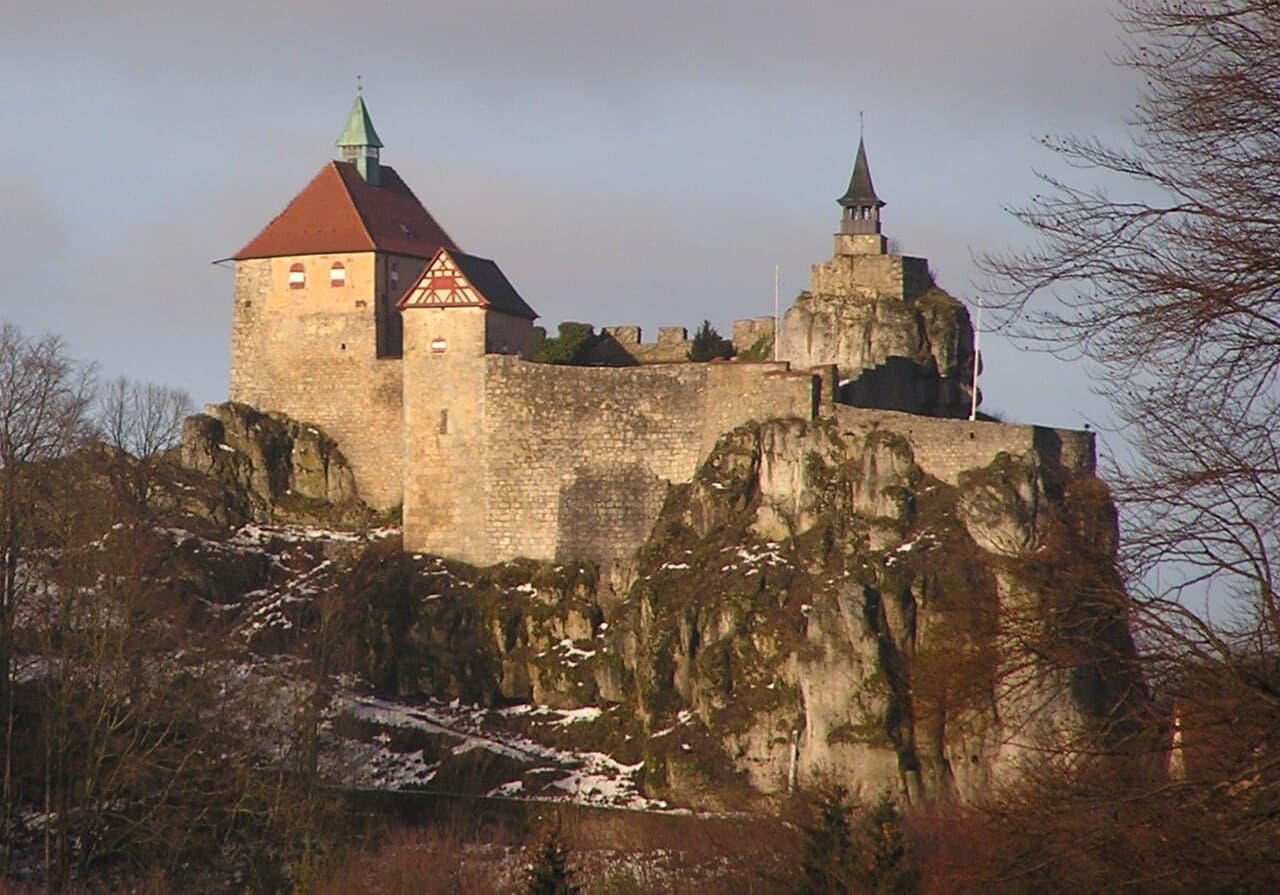
Hohenstein Castle
Hohenstein Castle, located in the municipality of Kirchensittenbach in Middle Franconia, Bavaria, is a site steeped in history dating back to the 11th century. The castle's origins are linked to the early medieval period, with the first documented mention occurring in 1163, when a castle guard named Sicolinus was recorded. Over the centuries, the castle witnessed numerous shifts in ownership and political significance, reflecting the turbulent history of the region.
The medieval origins and early history
The castle was initially associated with the Sulzbacher counts before coming under the control of the Hohenstaufen dynasty. This connection is so notable that Hohenstein Castle is sometimes referred to as Hohenstaufen Castle. Later, the castle passed through the hands of the Wittelsbach and Luxembourg houses, before returning to the Bavarian dukes. These transitions illustrate the castle's strategic importance in the shifting power dynamics of medieval Germany.
Role in regional conflicts
During the Landshut War of Succession in the early 16th century, control over the castle was contested, eventually leading to its acquisition by the imperial city of Nuremberg in 1505. The castle then served as the administrative seat for a Nuremberg keeper, playing a key role in managing and defending the city's newly acquired territories. However, the castle's military significance made it a target during the Second Margrave War when it was attacked and heavily damaged by the forces of Albrecht Alcibiades of Brandenburg-Kulmbach, Nuremberg's arch-enemy.
The castle's decline and partial preservation
Despite the devastation of the Second Margrave War, the castle remained under Nuremberg's control and was gradually rebuilt through the 17th century. A notable figure in the castle's history is Werner von Parsberg (d. 1455), a nobleman loyal to Nuremberg who held lordship over Hohenstein and often engaged in conflicts with other nobles.
The decisive decline began in 1806 when the Kingdom of Bavaria absorbed Nuremberg and its territories, including Hohenstein Castle. Subsequently, parts of the castle were sold for demolition and used as a quarry, leading to the loss of significant structures such as the castle keep. It was not until the mid-19th century that preservation efforts began, though by then much damage had already been done, leaving the castle in a semi-ruinous state.
Renaissance rebuilding and later history
Another phase of Hohenstein Castle's history is marked by its Renaissance reconstruction following destruction during the Peasants’ War. The castle was burned down and rebuilt in the Renaissance style, reflecting the architectural trends of the period. The castle chapel, constructed in the second half of the 17th century, stands out for its richly carved chancellery sound cover dated 1688. Today, the chapel is privately owned by the Imhoff family and remains available for church weddings of both denominations.
In 1763, Philipp Ernst Freiherr von Imhof acquired the castle and its estate, giving it much of its present appearance. Ownership changed hands several times through the 19th and 20th centuries, with significant restoration work undertaken by Oskar Hacker after he purchased the castle in 1976. Hacker transformed Hohenstein Castle into a hotel and restaurant, preserving its historical character while adapting it for modern use. The castle is currently owned by the Oskar Hacker Foundation, a non-profit organization dedicated to its maintenance.
Architectural features and current status
Hohenstein Castle's architectural evolution reflects its long history, from its early medieval origins through Renaissance modifications to modern restorations. The castle complex includes remnants of defensive walls, towers, and residential buildings typical of a high medieval hill castle. Although much of the original structure is in ruins, key elements such as the chapel and some restored sections offer insight into its past grandeur.
Today, the castle serves as a cultural landmark and tourist destination, with its hotel and restaurant facilities welcoming visitors interested in exploring its historic ambiance. The site also occasionally hosts events and weddings, leveraging its picturesque setting and historical significance.
Historical significance and cultural legacy
Hohenstein Castle stands as a testament to the complex feudal and political history of Bavaria and the surrounding Franconian region. Its changing ownership reflects broader European dynastic struggles and the rise and fall of imperial cities like Nuremberg. The castle's survival through wars, destruction, and neglect highlights the challenges of preserving medieval heritage in modern times.
Its chapel, Renaissance features, and association with figures like Werner von Parsberg and Philipp Ernst Freiherr von Imhof enrich its narrative, providing a multifaceted glimpse into noble life, military strategy, and architectural trends over several centuries.
Frequently asked questions (FAQ)
- How do I get to Hohenstein Castle?
- Hohenstein Castle is located in Kirchensittenbach, Germany, and can be reached by car via the A9 motorway. Public transport options include regional trains and buses that connect to Kirchensittenbach, followed by a short walk to the castle.
- What is the historical significance of Hohenstein Castle?
- Hohenstein Castle dates back to the 13th century and played a crucial role in the region's defense during the medieval period. Its well-preserved structures reflect the architectural style of its time and provide insight into the history of the Franconian region.
- When was Hohenstein Castle last renovated?
- The last major renovation of Hohenstein Castle occurred in the late 20th century, focusing on preserving its historical integrity while making it accessible for visitors. Ongoing maintenance ensures that the castle remains a significant landmark for future generations.
- Can I take guided tours of Hohenstein Castle?
- Yes, guided tours are available and highly recommended for a comprehensive understanding of the castle's history and architecture. Tours typically last about an hour and are led by knowledgeable guides who can answer any questions you may have.
- Why is Hohenstein Castle a popular destination for visitors?
- Hohenstein Castle is popular for its stunning views of the surrounding landscape, rich history, and architectural beauty. Visitors appreciate the serene atmosphere and the opportunity to explore a well-preserved medieval castle.
- Is it possible to host events at Hohenstein Castle?
- Yes, Hohenstein Castle offers facilities for hosting various events, including weddings and corporate gatherings. Interested parties should contact the castle management for specific details regarding availability and arrangements.
- What are the opening hours of Hohenstein Castle?
- Hohenstein Castle is typically open to visitors from April to October, with hours varying by season. It is advisable to check the official website for the most current opening hours before planning your visit.
- What are the ticket prices for visiting Hohenstein Castle?
- Ticket prices for Hohenstein Castle are generally affordable, with discounts available for students and seniors. Children under a certain age may enter for free, making it a family-friendly destination. Check the castle’s website for the latest pricing details.
- When is the best time to visit Hohenstein Castle?
- The best time to visit Hohenstein Castle is during the late spring and early autumn months when the weather is pleasant for outdoor exploration. Additionally, these seasons often feature special events and activities that enhance the visitor experience.
- Are there any nearby attractions to Hohenstein Castle?
- Yes, there are several attractions near Hohenstein Castle, including beautiful hiking trails and other historical sites in Kirchensittenbach. Visitors can enjoy the natural beauty of the region while exploring the local culture and history.
Photo gallery

Information
Website
Visit websiteSources & official resources
Verify the information above using these authoritative references.
Loading map...
Visitor reviews
No reviews yet. Been here? Write the first review and help other travelers!
Write the first reviewVisited this castle? Share your experience
Your review helps other travelers and adds first-hand knowledge to our encyclopedia.


