Burg Hartenstein
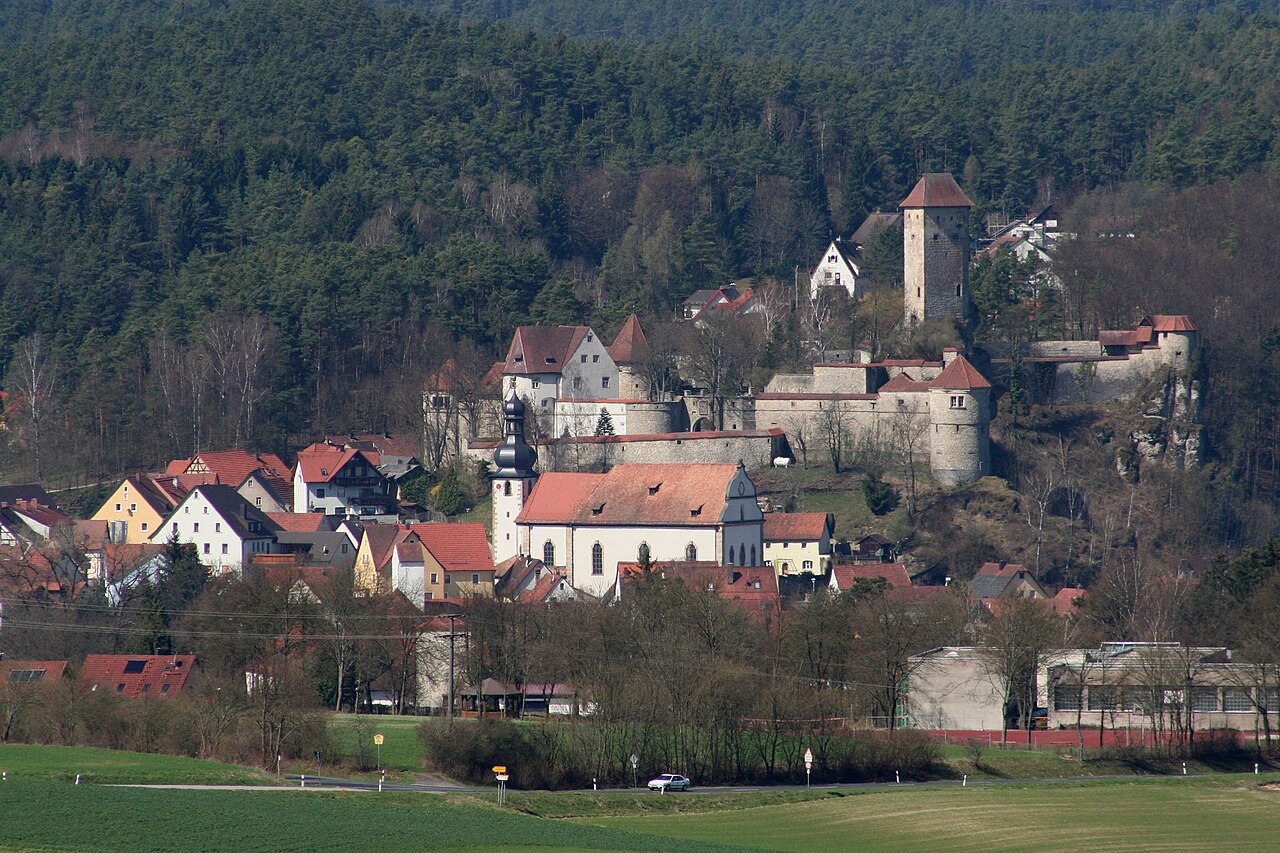
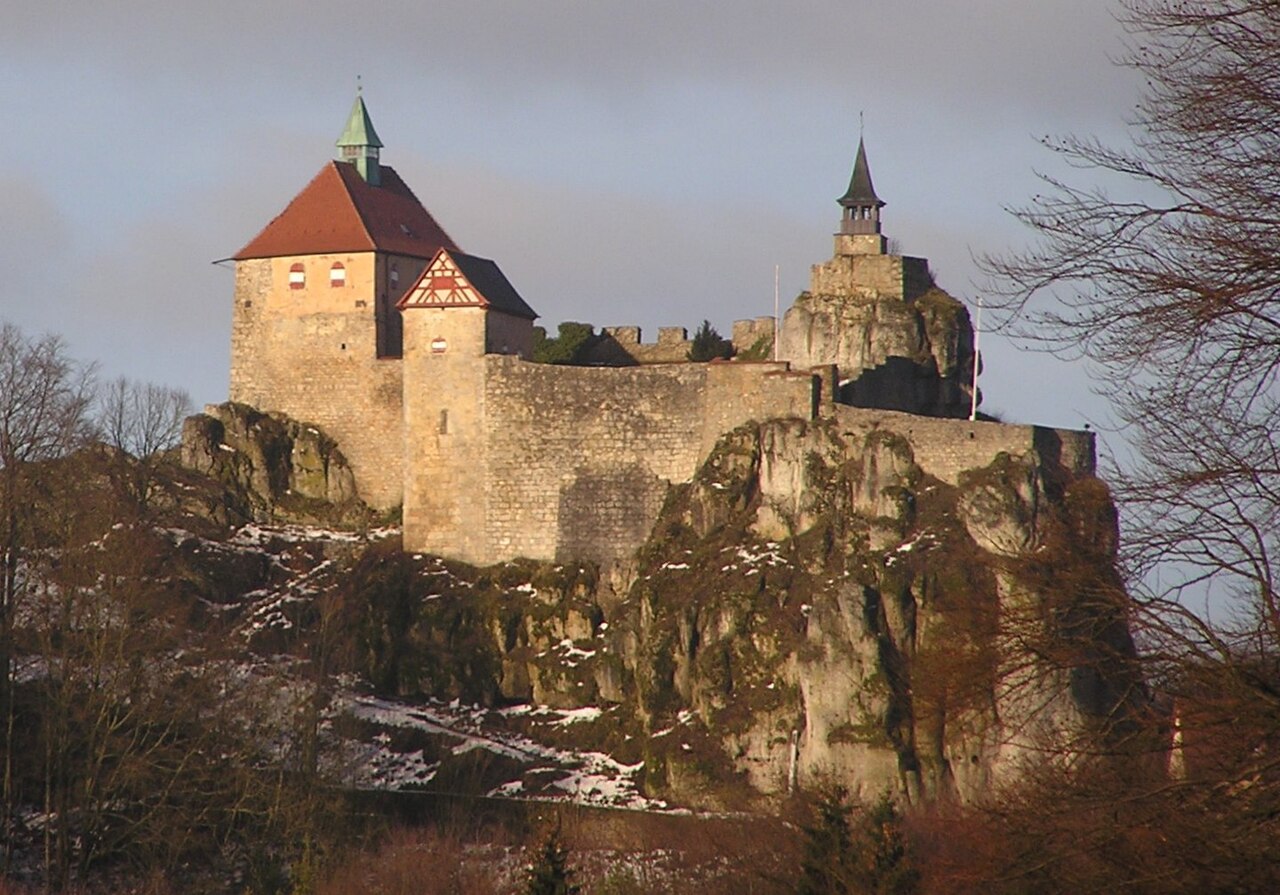
Burg Hartenstein is a notable medieval hill castle located near the small town of Hartenstein in the Franconian region of Germany. Its origins date back to the early 13th century, marking it as an important example of a fortified noble residence from the era of the Holy Roman Empire. The castle's strategic position on elevated terrain provided both defensive advantages and commanding views of the surrounding landscape, typical of hill castles designed to assert regional control and security.
Early history and noble ownership
The earliest confirmed documentation of Burg Hartenstein is from 1268, when the castle was held by Knight Rupert of Hartenstein. This record comes from a religious donation made by Rupert and his brothers to the Engelthal monastery in memory of their father, indicating the family's noble status and local influence. Earlier claims suggesting the castle's foundation in the 10th or early 11th century have been debunked through critical historical review, establishing the 13th century as the more accurate period of origin.
Ownership remained with the Neidstein family until the early 14th century, after which the castle passed through inheritance to the related Schenk von Reicheneck family around 1324 or 1325. This transition period was marked by military conflict, including an unsuccessful siege by Nuremberg troops, reflecting the castle's strategic importance in regional power struggles.
Imperial control and wittelsbach dynasty
Following the conflicts, King Ludwig the Bavarian, then ruler of the Holy Roman Empire, took possession of Burg Hartenstein. In 1329, he transferred the castle to the Palatinate branch of the Wittelsbach family through the Treaty of Pavia, integrating it into the holdings of one of the Empire's most prominent dynasties. This transfer underscored the castle's political significance within the complex feudal hierarchy of the time.
Architectural developments and renovations
Significant construction activity resumed after 1503 under the direction of Ludwig von Eyb the Younger, the Palatine bailiff responsible for administering the region. He oversaw extensive enlargements and renovations, likely expanding the castle's living quarters and administrative spaces. The surviving upper floors of the main building from this period now host exhibitions on the history of Franconian knighthood, while the ground floor includes a large hall designed for public functions such as dining and lectures.
In the late 17th century, Burg Hartenstein's defenses were further reinforced with the addition of outer walls and fortifications. However, these outer defenses were demolished after the castle's capture during the War of the Spanish Succession in 1703, when French and allied forces were active in the region, significantly altering the castle's military architecture.
20th-century ownership and preservation efforts
During the 20th century, the castle came into the possession of the Haunhorst family, with Dr. Hans Anna Haunhorst acquiring and initiating restoration work early in the century. In 2001, the local municipality purchased Burg Hartenstein, undertaking further preservation and opening the site to the public. Organizations dedicated to maintaining the castle's historical and cultural legacy were established, supporting ongoing conservation.
The castle today houses a permanent exhibit celebrating the history of Franconian knighthood, linking its medieval past to contemporary cultural identity. The Haunhorst family burial vault remains within the castle garden, with burials continuing into the 21st century, underscoring the site's enduring connection to local families.
Architectural features and ruins
Burg Hartenstein's ruins prominently display large ashlar blocks—carefully cut stone masonry typical of medieval construction. These stones bear clamp holes, small indentations left by metal clamps used during building, providing insight into historic masonry techniques. The castle's main building reflects the expansions from the early 16th century, with surviving upper floors and adapted ground-floor halls.
The late 17th-century outer fortifications, once formidable, were largely destroyed after 1703, leaving the castle with a more simplified defensive profile. Preservation efforts have focused on stabilizing the remaining stone structures and archaeological remains, ensuring the castle's layered history remains visible for visitors and scholars alike.
Cultural and heritage significance
Recognized as an important protected monument by Bavarian heritage authorities, Burg Hartenstein represents a valuable cultural and architectural heritage site. Its combination of medieval origins, Renaissance-era expansions, and later historical layers offers a tangible link to the region's feudal past and military history. The castle's exhibitions and ongoing conservation contribute to public understanding and appreciation of Franconian history and medieval knighthood traditions.
Visitors to Burg Hartenstein can explore the castle's ruins, learn about its historical context, and enjoy the scenic views from its hilltop location. The site remains a testament to the architectural ingenuity and strategic importance of hill castles in medieval Germany.
Frequently asked questions (FAQ)
- When was Burg Hartenstein originally built?
- Burg Hartenstein was originally built in the early 13th century, with the earliest confirmed record dating to 1268.
- What architectural features are notable at Burg Hartenstein?
- The castle features large ashlar blocks with clamp holes, reflecting medieval masonry techniques, and a main building expanded in the early 16th century.
- Who were the historical owners of Burg Hartenstein?
- Notable owners include the Neidstein family, the Schenk von Reicheneck family, King Ludwig the Bavarian, the Wittelsbach dynasty, and the Haunhorst family in the 20th century.
- Is Burg Hartenstein open to the public?
- Yes, the castle is owned by the local municipality and open to visitors, featuring exhibitions on Franconian knighthood and the castle's history.
- What happened to the castle's fortifications during the War of the Spanish Succession?
- The outer defensive walls built in the late 17th century were destroyed after the castle's capture in 1703 during the War of the Spanish Succession.
Information
Sources & official resources
Verify the information above using these authoritative references.
Loading map...
Visitor reviews
No reviews yet. Been here? Write the first review and help other travelers!
Write the first reviewVisited this castle? Share your experience
Your review helps other travelers and adds first-hand knowledge to our encyclopedia.