Hohensax Castle Ruins
Hohensax castle ruins stand as a significant historical site in the municipality of Sennwald within the Swiss canton of St. Gallen. Constructed around 1200 by the influential barons of Sax, this high medieval fortress played a notable role in regional power struggles and noble lineage developments during the Middle Ages. The castle's strategic location and robust construction reflect the typical defensive architecture of the period.
Construction and architectural features
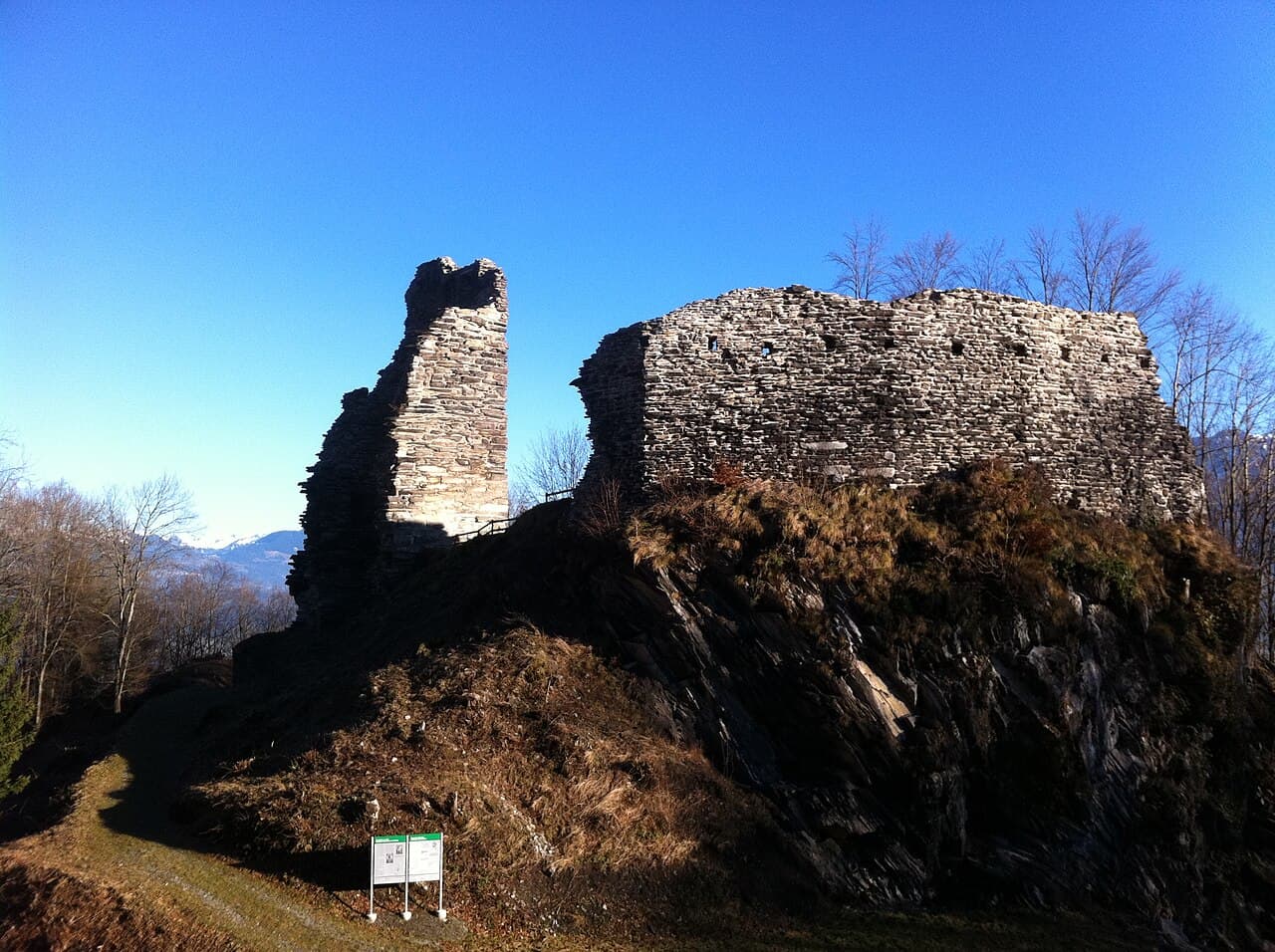
The castle was originally built as a hill castle, utilizing the natural elevation to enhance its defensive capabilities. Its design likely included a stone keep or main tower, surrounded by curtain walls and protected by a defensive gatehouse. While much of the structure now lies in ruins, archaeological evidence suggests the presence of battlements, courtyards, and possibly a moat or natural ditch to hinder attackers.
The castle's layout would have been typical of high medieval fortifications in the region, emphasizing strong walls and a compact footprint to maximize defense. The use of local stone materials contributed to its durability, although centuries of conflict and neglect have reduced the structure to its current state.
Historical significance and ownership
Hohensax castle was initially established by the barons of Sax, a noble family with considerable influence in the area. In 1248, the castle passed to Ulrich von Sax, who founded the Sax-Hohensax line of the family, marking an important chapter in the region's feudal history. The castle served not only as a military stronghold but also as a symbol of the family's power and territorial control.
During the late 14th century, the castle became embroiled in local conflicts. In 1393, it was plundered amid a feud, demonstrating the turbulent nature of noble rivalries at the time. Subsequently, the castle and its associated villages, including Sax and Gams, were sold to the dukes of Austria, reflecting shifting political alliances and territorial exchanges common in medieval Europe.
Destruction and aftermath
The castle met its demise during the Old Zürich War in 1446, when forces from Appenzell captured and deliberately slighted the fortress to prevent its further military use. This act of slighting was a common practice to neutralize enemy strongholds. Following its destruction, the barons of Hohensax relocated to the nearby Forstegg castle at Salez, indicating the continued prominence of the family despite the loss of their ancestral seat.
Later history and heritage status
In 1640, the ruined castle passed to the barony of Sax-Forstegg, which became part of the canton of Linth during the Helvetic Republic era starting in 1798. Later, this territory was integrated into the modern canton of St. Gallen. The barony included the villages of Sax, Salez, and Gams, maintaining a degree of regional administrative importance.
Today, the Hohensax castle ruins are recognized as an archaeological site of historical and cultural value. Visitors can explore the remains to gain insight into medieval fortification architecture and the feudal history of eastern Switzerland. The site offers a tangible connection to the medieval past and the noble families that shaped the region's development.
Visiting the ruins
The castle ruins are accessible to the public and provide a scenic viewpoint over the surrounding landscape. While the structure is in a state of ruin, efforts to preserve the site allow visitors to appreciate its historical context. Interpretive signage may be available to explain the castle's history and architectural features. The location in Sennwald makes it a worthwhile destination for those interested in medieval history and Swiss heritage.
Frequently asked questions (FAQ)
- When was Hohensax castle built and by whom?
- Hohensax castle was built around 1200 by the barons of Sax, a noble family influential in the region during the high medieval period.
- What led to the destruction of Hohensax castle?
- The castle was captured and deliberately destroyed (slighted) in 1446 during the Old Zürich War by the people of Appenzell to prevent its further military use.
- Can visitors access the Hohensax castle ruins today?
- Yes, the ruins are accessible to the public and offer scenic views along with historical insights into medieval fortifications in eastern Switzerland.
- What was the significance of the Sax-Hohensax family?
- The Sax-Hohensax line, founded by Ulrich von Sax in 1248, was an important noble family that controlled the castle and surrounding villages, playing a key role in local feudal history.
- What happened to the castle after it was destroyed?
- After its destruction, the barons of Hohensax moved to Forstegg castle at Salez, and the ruins later became part of the barony of Sax-Forstegg, which was incorporated into the canton of St. Gallen.
Photo gallery

Information
Loading map...
Visitor reviews
No reviews yet. Been here? Write the first review and help other travelers!
Write the first reviewVisited this castle? Share your experience
Your review helps other travelers and adds first-hand knowledge to our encyclopedia.