Hohenrechberg Castle
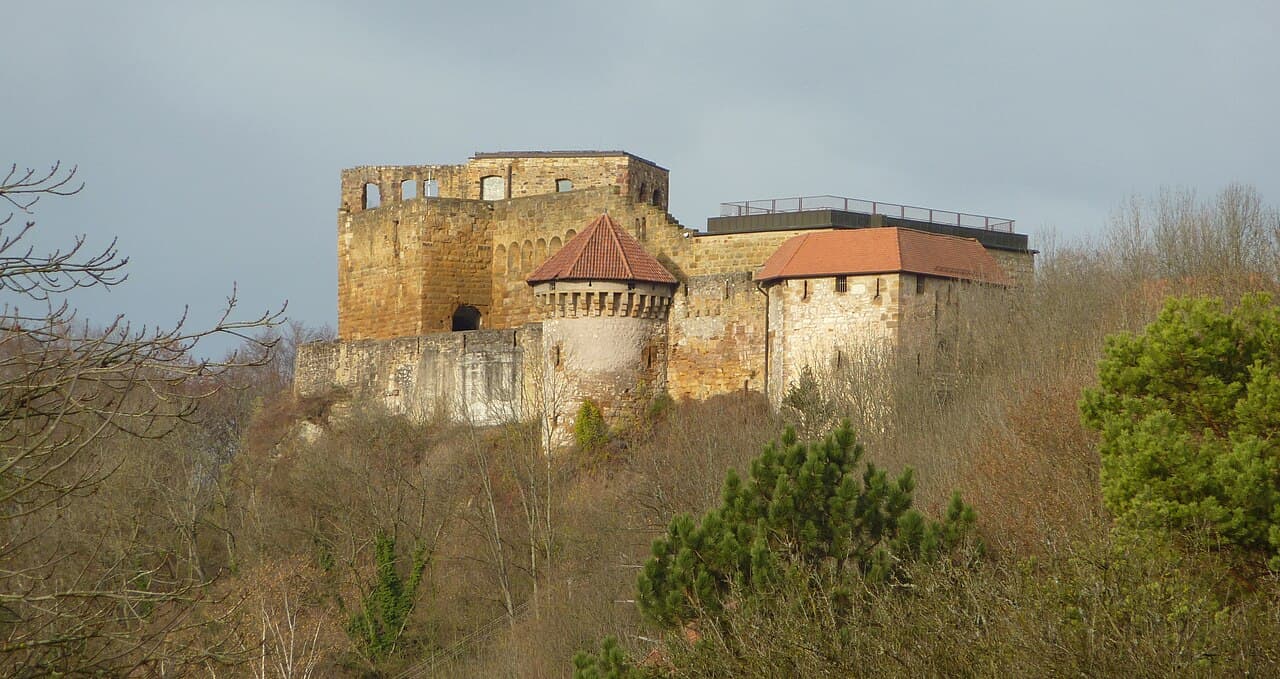
Hohenrechberg Castle is a 13th-century medieval spur castle situated on the Schlossberg spur of the Hohenrechberg mountain in Schwäbisch Gmünd, Baden-Württemberg, Germany. This castle forms part of the Three Emperors Mountains alongside the Hohenstaufen Mountain and Stuifen, lying just a few kilometers from the historic Hohenstaufen Castle, the ancestral seat of the Staufer dynasty. Although the first written record of Hohenrechberg dates to 1274, architectural and archaeological evidence suggests that its oldest structures were built at the beginning of the 13th century, during the height of the High Medieval period.
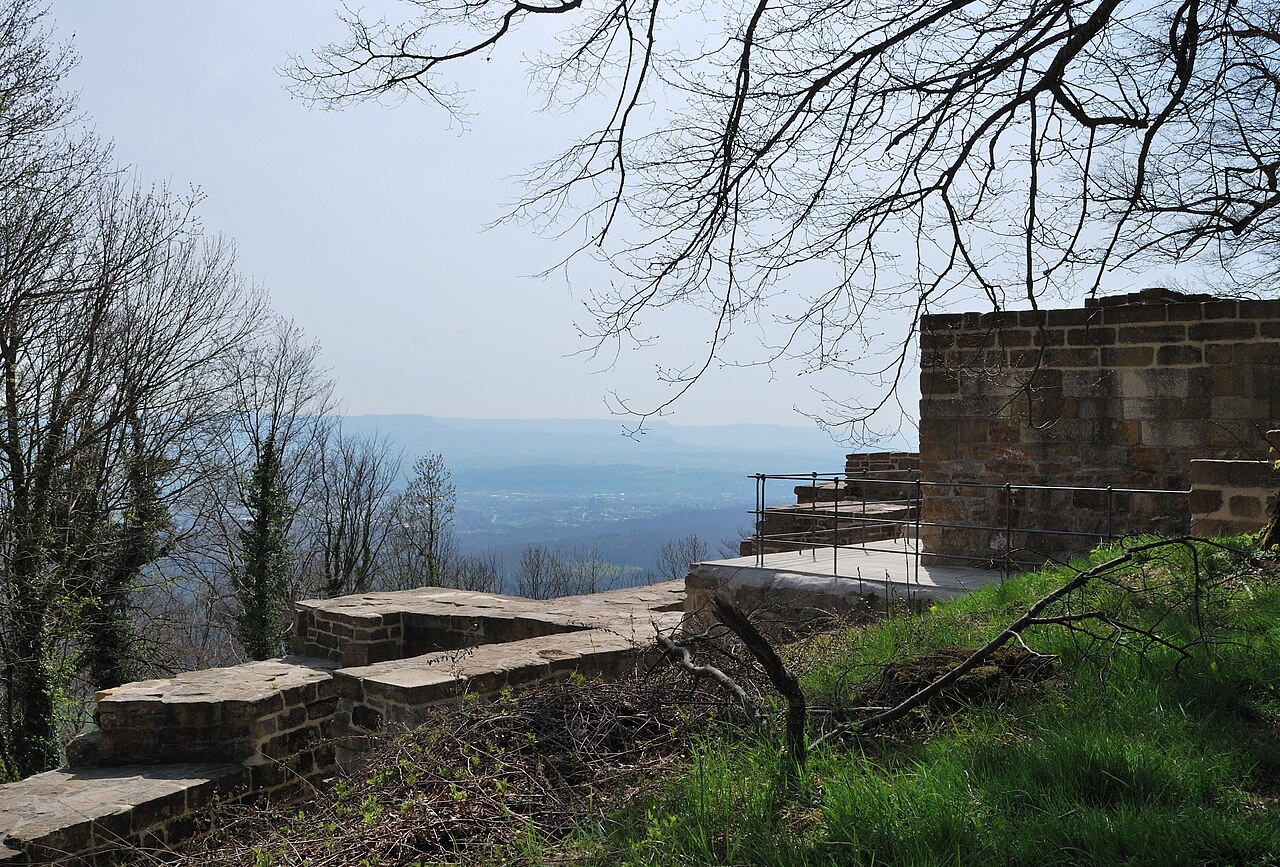
The castle was originally constructed as a spur castle, strategically perched on a rocky outcrop offering commanding views of the surrounding landscape. This location allowed it to serve both defensive and administrative functions for the knights of Hohenrechberg, who acted as ministeriales—unfree knights serving the Staufer dynasty. The castle's position also provided a vantage point overlooking the Swabian Forest to the north and the Swabian Jura to the south, enhancing its military and symbolic significance.
Architectural evolution and defensive features
Hohenrechberg Castle exemplifies typical Staufer-era military architecture with its use of humped ashlar masonry surrounding the inner courtyard. This masonry technique, characteristic of the period, involved carefully shaped stones with a distinctive raised central boss, adding both strength and aesthetic detail to the walls. The castle underwent numerous expansions and renovations over the centuries to adapt to evolving military technologies and needs.
Ring walls and towers
During the 13th century, the castle was fortified with a ring wall featuring Romanesque window arcades, an architectural element that combined defensive and decorative purposes. Subsequent centuries saw the addition of a second and third defensive wall, enhancing the castle's fortifications. These outer walls included a staircase tower and a maschikuli tower, the latter being a rare form of defensive architecture in Southern Germany. The maschikuli allowed defenders to drop projectiles or boiling substances on attackers directly below the walls, a sophisticated feature for the period.
Gatehouse and prison facilities
The gatehouse was a critical defensive structure, with its lower floor occasionally used as a prison. The castle also features a series of late medieval stirrup embrasures—narrow slits in the walls designed for archers and crossbowmen to fire while remaining protected. These embrasures are present in multiple locations, underscoring the castle's role as a fortified stronghold.
The outer bailey and residential quarters
The outer bailey of Hohenrechberg Castle, now partially repurposed as a restaurant and café, originally contained several important structures. These included a hidden tower storage, a staple (storage building), an apartment, and additional rooms and fortifications necessary for the castle's operation and defense.
The inner castle ring wall once enclosed several residential houses, which were destroyed on 6 January 1865 when a lightning strike ignited a fire that severely damaged the buildings. Some parts have since been reconstructed, notably the Eastern House, which now features a new roof and serves as a venue for weddings and events. It also hosts a small exhibition displaying castle models and archaeological artifacts recovered from the site, providing visitors with insights into the castle's history and construction.
Historical significance and ownership
Throughout its history, Hohenrechberg Castle was closely tied to the Rechberg family, who held it with only brief interruptions until 1986. These interruptions included occupations by the Duke of Württemberg during the periods 1554-1555, 1599-1601, and 1633-1634. The castle suffered significant damage during the Thirty Years' War, particularly in 1648 when it was attacked and plundered by French troops.
In the late 18th century, the castle played a role in the military campaigns of Napoleon Bonaparte. On 1 August 1796, it hosted a large dinner for General Jean Victor Marie Moreau and other high-ranking officers of the French army, indicating its continued strategic importance.
During World War II, American troops occupied the ruined castle for several months, further embedding it in the region's military history. In 1986, ownership transferred to Hans Bader, a factory owner from nearby Göppingen. Following his death in 2006, the castle came under the stewardship of the Rechberg Stiftung Hans Bader, a private foundation dedicated to its preservation.
Visitor experience and cultural heritage
Today, Hohenrechberg Castle is a popular tourist destination in the Ostwürttemberg region. Visitors can explore the ruined castle grounds, enjoy the exhibition housed in the Eastern House, and dine at the restaurant and café located in the outer bailey. The site offers spectacular panoramic views of the Swabian Forest and the Swabian Jura, making it a favored spot for photography and nature walks.
The castle's combination of medieval architecture, historical significance, and scenic location provides a rich experience for visitors interested in medieval history, castle architecture, and the legacy of the Staufer dynasty. Its preservation as a ruin allows for an authentic glimpse into the defensive and residential functions of a high medieval spur castle in Southern Germany.
Frequently asked questions (FAQ)
- How do I get to Hohenrechberg Castle?
- Hohenrechberg Castle is located in Schwäbisch Gmünd, Germany, and can be reached by car or public transportation. If you are driving, there is parking available nearby. For those using public transport, local buses connect Schwäbisch Gmünd to surrounding areas, making it convenient to visit.
- What is the historical significance of Hohenrechberg Castle?
- Hohenrechberg Castle dates back to the 13th century and played a crucial role in the regional power dynamics during the Middle Ages. Originally a fortress for the Counts of Württemberg, it showcases the feudal architecture of the period and provides insight into the area's rich history. The castle also reflects the evolving military architecture as it transitioned from a defensive stronghold to a noble residence.
- When was Hohenrechberg Castle built?
- Construction of Hohenrechberg Castle began in the early 13th century, with significant expansions and modifications occurring in the following centuries. The castle has undergone various renovations, particularly during the Renaissance, which enhanced its architectural features. Today, it stands as a testament to the historical timeline of the region.
- Can I visit Hohenrechberg Castle year-round?
- Yes, Hohenrechberg Castle is open for visitors throughout the year, although specific opening hours may vary by season. It is advisable to check the official website or contact the visitor center for the most accurate information on visiting hours and any seasonal events. Guided tours are often available, providing deeper insights into the castle's history.
- Why is Hohenrechberg Castle a popular tourist attraction?
- Hohenrechberg Castle is popular due to its stunning architecture, panoramic views of the surrounding countryside, and rich historical significance. Visitors are drawn to its well-preserved structures and the chance to explore the grounds and exhibitions that detail the castle's past. Additionally, the castle offers a unique glimpse into medieval life, making it a fascinating destination for history enthusiasts.
- Is it possible to host events at Hohenrechberg Castle?
- Yes, Hohenrechberg Castle offers facilities for hosting events such as weddings, corporate gatherings, and cultural activities. The picturesque setting and historical ambiance provide a unique backdrop for any occasion. It is recommended to contact the castle administration for more details on availability, catering options, and event planning assistance.
- What are the ticket prices for visiting Hohenrechberg Castle?
- Ticket prices for Hohenrechberg Castle are generally affordable, with discounts available for students, seniors, and children. Family packages may also be offered, making it accessible for groups. Check the castle's official website for the most current pricing and any special promotions or events that may affect entry fees.
- What is the best time to visit Hohenrechberg Castle?
- The best time to visit Hohenrechberg Castle is during the spring and autumn months when the weather is mild and the surrounding scenery is particularly beautiful. Summer can be busy with tourists, while winter may present challenges due to weather conditions. Regardless of the season, each visit offers a unique experience of the castle’s charm.
- Are there any nearby attractions to Hohenrechberg Castle?
- Yes, Hohenrechberg Castle is close to several attractions, including the picturesque Schwäbisch Gmünd town center, known for its historical buildings and vibrant cultural scene. Nature lovers will enjoy the nearby hiking trails and parks, which offer stunning views of the landscape. Visitors can also explore local museums and art galleries that showcase the region's heritage.
Photo gallery

Information
Loading map...
Visitor reviews
No reviews yet. Been here? Write the first review and help other travelers!
Write the first reviewVisited this castle? Share your experience
Your review helps other travelers and adds first-hand knowledge to our encyclopedia.