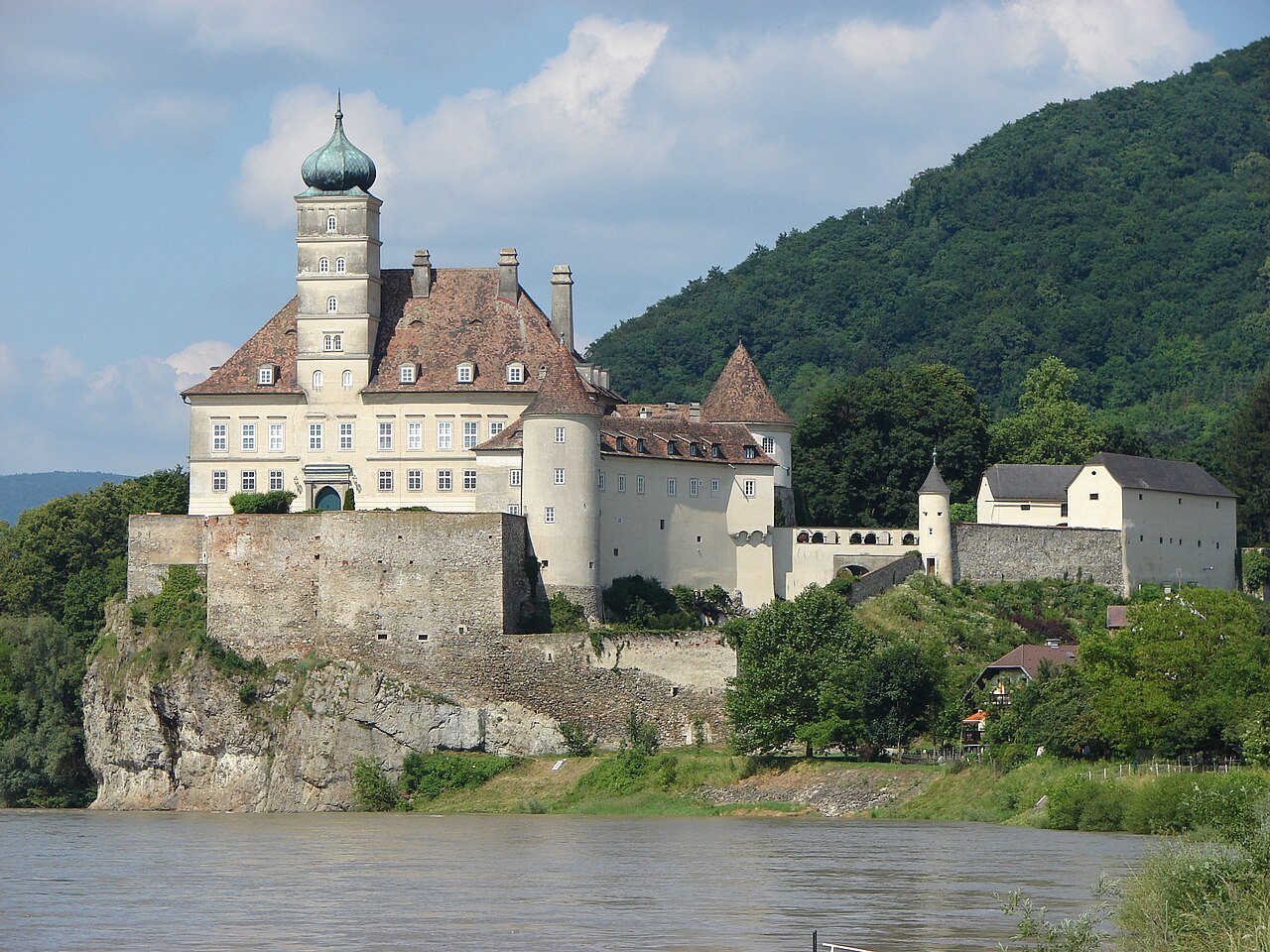
Hohenegg Castle
Hohenegg Castle, located in Hafnerbach, Austria, is a historic site with origins tracing back to the 12th century. First mentioned in historical records in 1140, the castle was initially constructed during the High Medieval period as a fortified stronghold typical of that era. Its strategic position served defensive purposes, overseeing the surrounding region and controlling key routes.
Medieval origins and architectural evolution
The original High Medieval fortress featured typical defensive elements such as thick stone walls, a central keep, and possibly a moat or natural defensive terrain, common in hill castles of the period. Over the centuries, the castle underwent significant transformations reflecting changing tastes and needs.
Between 1584 and 1594, Hohenegg Castle was converted into a Renaissance style residence. This renovation marked a departure from purely military architecture towards a more comfortable and elegant dwelling. Renaissance architectural features likely included larger windows, decorative stonework, and more refined living quarters, aligning with the broader European Renaissance movement emphasizing symmetry, proportion, and classical motifs.
Historical ownership and significance
Throughout the Middle Ages, Hohenegg Castle passed through the hands of several noble families, each contributing to its architectural and functional development. The castle's location in Lower Austria made it a valuable asset in regional power dynamics, often involved in local conflicts and territorial disputes.
Its transition into a Renaissance residence indicates a period of relative peace and prosperity, allowing the owners to focus on comfort and status rather than solely on defense.
Current condition and preservation status
Today, Hohenegg Castle lies in ruins. The remnants of its walls and structural elements provide insights into its historical phases but also reflect the challenges of preservation over centuries. The ruins attract visitors interested in medieval and Renaissance architecture, as well as the history of the region.
Efforts to stabilize and protect the site may exist, but the castle remains primarily an archaeological and historical landmark rather than a fully restored monument.
Architectural features and layout
The castle's original layout would have included a keep or donjon as the central defensive and residential tower, surrounded by curtain walls and possibly a courtyard. The Renaissance modifications likely introduced new residential wings, larger windows, and ornamental details, blending defensive robustness with aesthetic appeal.
The site’s elevated position typical of hill castles provided natural defense advantages and commanding views of the surrounding landscape, important for surveillance and control.
Visiting information and cultural importance
While Hohenegg Castle is not fully accessible as a restored site, its ruins offer a tangible connection to Austria's medieval and Renaissance heritage. Visitors can explore the remains and appreciate the layers of history embodied in the stonework and layout.
The castle contributes to the cultural landscape of Lower Austria, representing the architectural and historical transitions from fortified medieval strongholds to Renaissance noble residences.
Information
Loading map...
Visitor reviews
No reviews yet. Been here? Write the first review and help other travelers!
Write the first reviewVisited this castle? Share your experience
Your review helps other travelers and adds first-hand knowledge to our encyclopedia.