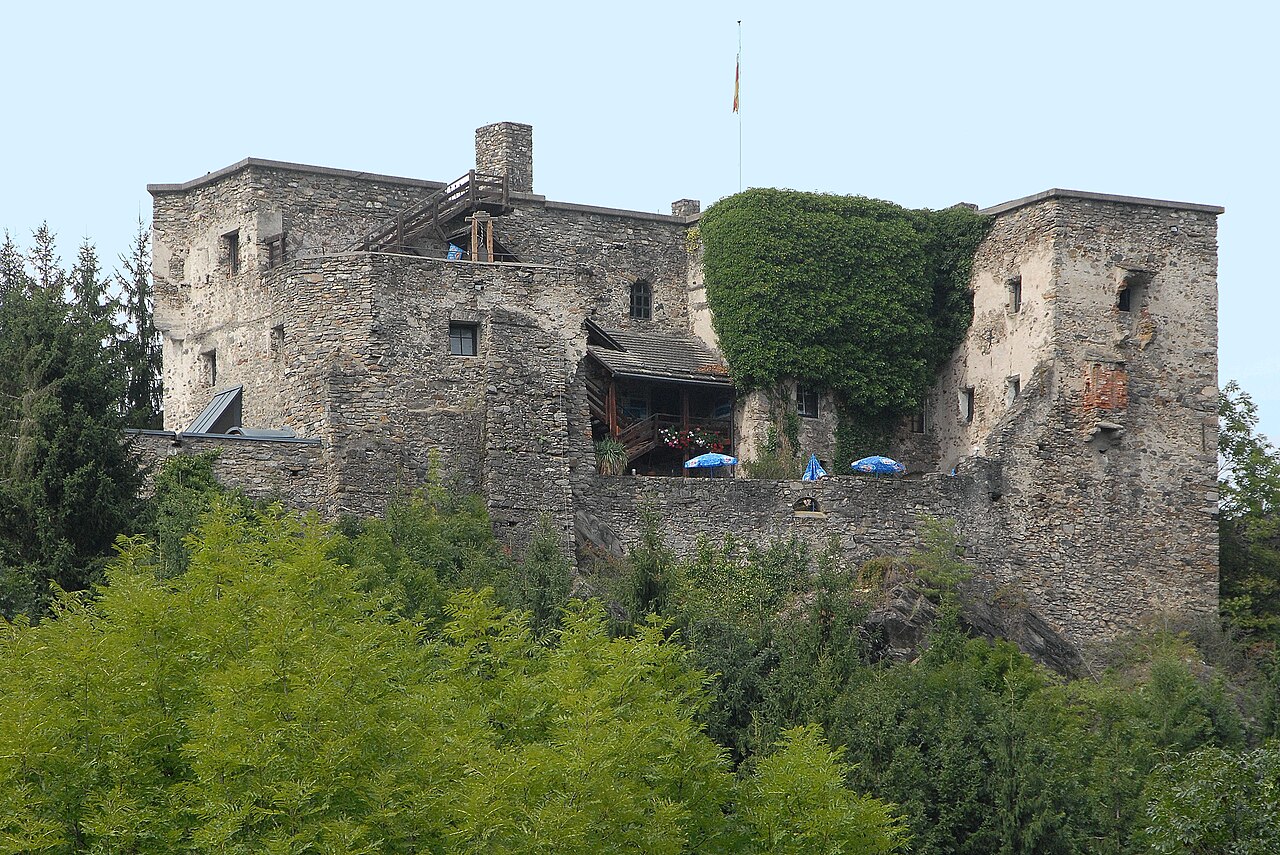
Hohenburg Castle Ruins
Hohenburg Castle ruins, located in Spittal an der Drau, Austria, represent a significant medieval fortress with origins tracing back to the late 11th century. First documented in 1142 as castrum Hohenburc, the castle served as the seat of a prominent Bavarian noble family, the Counts of Lurn, who governed the Lurngau region within the Duchy of Carinthia. This strategic location underscored the castle's importance in regional administration and defense during the High Medieval period.
Medieval origins and noble heritage
The castle's initial construction likely dates to the late 11th century, reflecting the typical defensive architecture of the era. The Counts of Lurn established Hohenburg as their stronghold, consolidating their power over the surrounding territory. The last notable count, Altmann, elevated the castle's ecclesiastical significance when he became Prince-Bishop of Trent in 1124. Upon his death in 1149, the castle was bequeathed to the Archbishopric of Salzburg, marking a transition from noble to ecclesiastical control.
Ecclesiastical administration and territorial disputes
Following its transfer, Hohenburg Castle became the seat for the episcopal ministeriales, administrators appointed by the Archbishopric of Salzburg. Throughout the 13th century, the castle was a focal point of territorial negotiations. In 1263, under the mediation of Duke Ulrich III of Carinthia, a property division was arranged between the Salzburg archbishops and the neighboring Counts of Ortenburg, who were heirs to the extinct Counts of Lurn and had long sought control over Hohenburg estates.
By 1311, Archbishop Conrad IV of Salzburg enfeoffed part of the castle to the sons of the late Count Frederick I of Ortenburg, further entrenching the castle's role in regional power dynamics. However, its prominence waned as nearby Feldsberg Castle supplanted it as the administrative center for the Salzburg possessions.
Decline and destruction
The extinction of the Ortenburg dynasty in 1418 led to their possessions, including Hohenburg, passing to the Counts of Celje. The castle likely suffered destruction during the 15th-century conflicts involving the Counts of Gorz and the Habsburg emperor Frederick III, who contested the inheritance of Count Ulrich II of Celje. These conflicts contributed to the castle's decline and eventual ruin.
Architectural features and later developments
Today, only ruins of Hohenburg Castle remain, offering insight into its medieval fortifications and layout. The castle originally featured typical High Medieval defensive structures such as thick stone walls, towers, and a strategic hilltop position overlooking the surrounding landscape. Notably, the former castle chapel was reconstructed in 1707 as the Baroque St Mary27s pilgrimage church (Maria in Hohenburg), reflecting the site's continued religious significance long after the castle's military function ceased.
Historical significance and cultural heritage
Hohenburg Castle ruins stand as an important testament to the shifting political and ecclesiastical powers in medieval Carinthia. Its history encapsulates the transition from noble family stronghold to ecclesiastical administration and the turbulent inheritance disputes that shaped the region's medieval landscape. The castle's remains attract historians, archaeologists, and visitors interested in medieval architecture and the complex feudal history of Austria.
Visiting and preservation
Although in ruins, the site is accessible to visitors who wish to explore the remnants of this High Medieval fortress. The location offers panoramic views of the surrounding Carinthian landscape, enriching the experience with natural beauty alongside historical exploration. Preservation efforts focus on maintaining the structural remains and the adjacent Baroque pilgrimage church, ensuring the site's cultural heritage endures for future generations.
Frequently asked questions (FAQ)
- What is the historical significance of Hohenburg Castle Ruins?
- Hohenburg Castle Ruins hold great historical significance as a former medieval fortress that dates back to the 12th century. It played a vital role in the defense of the region during various conflicts and has significant architectural features that reflect its strategic importance over the centuries.
- When was Hohenburg Castle built?
- Hohenburg Castle was constructed in the early 12th century, serving as a stronghold for local nobility. Its ruins today provide insight into the architectural styles and defensive strategies of the medieval period in Austria.
- Can I visit Hohenburg Castle Ruins?
- Yes, Hohenburg Castle Ruins are accessible to visitors, allowing them to explore the remnants of this historic site. The ruins can be reached via a short hike, which provides stunning views of the surrounding landscape.
- What are the opening hours for Hohenburg Castle Ruins?
- Hohenburg Castle Ruins are typically open for visitors during daylight hours, but it's best to check local resources for any seasonal changes. During peak tourist season, the site may have extended hours to accommodate visitors.
- Is it possible to get guided tours at Hohenburg Castle?
- Yes, guided tours are often available at Hohenburg Castle Ruins, providing in-depth information about its history and architecture. These tours can enhance your understanding of the site and are typically conducted by knowledgeable guides.
- What is the best time to visit Hohenburg Castle Ruins?
- The best time to visit Hohenburg Castle Ruins is during the spring and early autumn when the weather is mild and the surroundings are lush. These seasons also offer clearer views of the stunning landscape from the castle's ruins.
- Are there any nearby attractions to Hohenburg Castle Ruins?
- Yes, there are several attractions near Hohenburg Castle Ruins, including the picturesque town of Spittal an der Drau and the scenic Lake Millstatt. Visitors can enjoy a variety of outdoor activities and cultural experiences in the surrounding area.
- What are the ticket prices for Hohenburg Castle Ruins?
- Admission to Hohenburg Castle Ruins is generally free, allowing visitors to enjoy the historical site without any cost. However, there may be fees for guided tours or special events, so it's advisable to check in advance.
- How do I get to Hohenburg Castle Ruins?
- Hohenburg Castle Ruins can be accessed by car or public transportation, with parking available nearby. From the nearest town, a marked hiking trail leads directly to the ruins, making it a pleasant walk for visitors.
Information
Current owner
Archbishopric of Salzburg
Loading map...
Visitor reviews
No reviews yet. Been here? Write the first review and help other travelers!
Write the first reviewVisited this castle? Share your experience
Your review helps other travelers and adds first-hand knowledge to our encyclopedia.