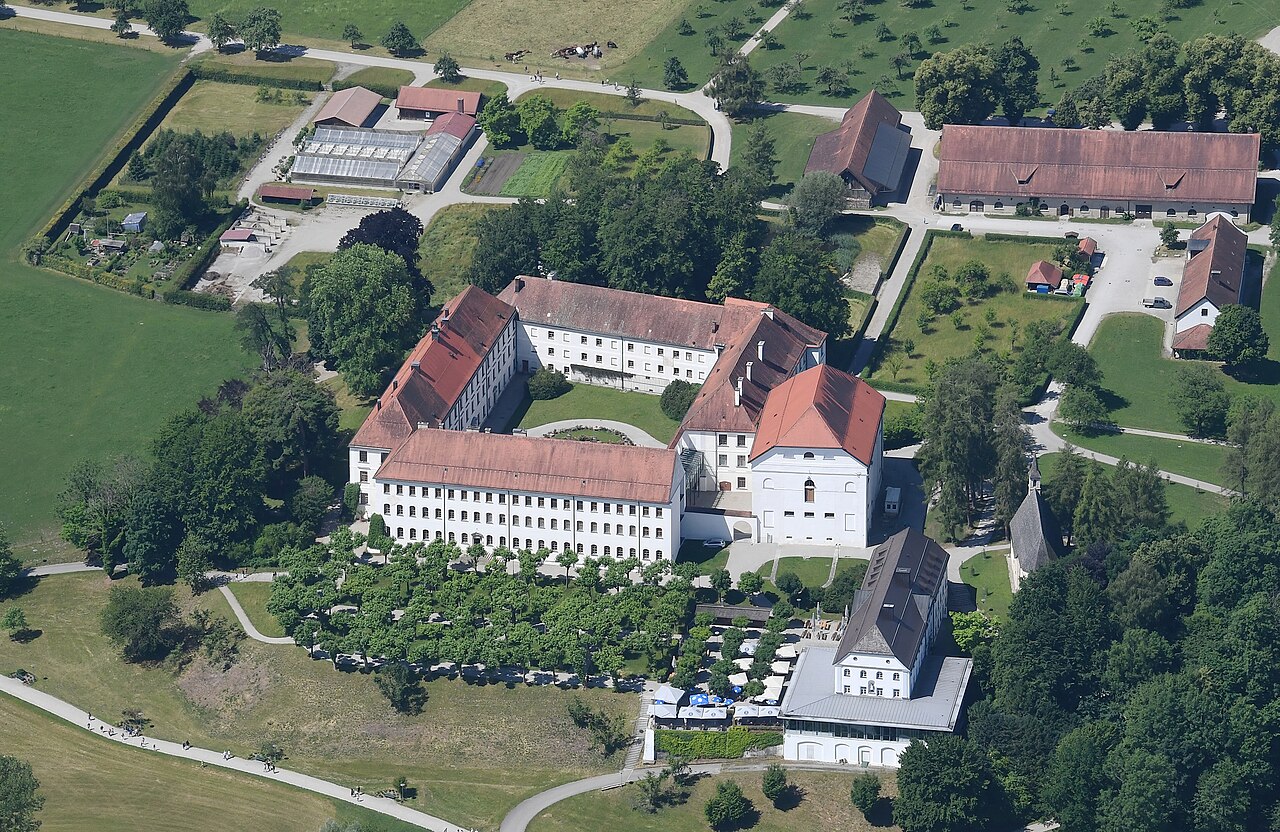
Burg Marquartstein
Burg Marquartstein is a significant medieval hill castle located in the municipality of Marquartstein in Bavaria, Germany. Founded in 1075 by Count Marquart of Marquartstein, a nobleman from the Chiemgau region, the castle has played an important role in the region's history for nearly a millennium. Its strategic position on a rocky outcrop about 575 meters above sea level overlooking the Tiroler Achen river valley provided natural defense and excellent visibility, characteristic of hill castles of the medieval period.
The castle's early history is intertwined with prominent noble families. After Count Marquart's death shortly after his marriage to Adelheid von Lechsgemünd, control of the castle passed to the Diepoldinger family through Adelheid's remarriage to Ulrich of Passau. Upon Ulrich's death in 1099, the castle entered the Spanheimer family's possession through the marriage of their daughter Uta to Engelbert II of Spanheim. This union led to the establishment of the County of Kraiburg-Marquartstein, later absorbed into the holdings of the Ortenburg family.
Following the extinction of the Ortenburg line in 1248, Hartmann I of Werdenberg acquired Burg Marquartstein, selling it in 1259 to Duke Heinrich XIII of Bavaria. Under Bavarian rule, the castle served as the administrative center for a Pflegamt, a regional governance district, until 1803 when jurisdiction passed to the district court of Traunstein. This administrative function highlights the castle's continued importance beyond its military origins.
Architectural features and layout
Burg Marquartstein exemplifies the typical characteristics of a hill castle with a layout adapted to its rocky terrain. The castle complex includes defensive walls, living quarters, and various ancillary buildings constructed primarily of stone. It encompasses approximately 40 bedrooms, indicating it was designed to house a sizable noble household and their retinue.
Archaeological investigations have revealed underground remains from both medieval and early modern periods, including parts of the former castle chapel and an outer bailey that no longer exists above ground. These subsurface features are protected under heritage preservation laws due to their historical and cultural significance.
Castle chapel of saints bartholomew and vitus
The castle's adjacent chapel, dedicated to Saints Bartholomew and Vitus, holds both religious and cultural importance. Originally part of the castle complex, the chapel was destroyed by fire in 1843 but was carefully rebuilt by 1845. This chapel notably served as the wedding venue for the renowned composer Richard Strauss in 1894, linking the site to broader cultural history beyond its medieval origins.
Historical transitions and ownership
The castle's ownership history reflects the complex feudal and dynastic relationships of medieval Bavaria. From its founding by Count Marquart, the castle passed through the Diepoldinger and Spanheimer families, becoming part of the County of Kraiburg-Marquartstein. Later, it came under the Ortenburg family until their extinction, after which it was acquired by Hartmann I of Werdenberg and then sold to the Bavarian duke.
In the 19th century, Burg Marquartstein experienced renewed attention as a residence. In 1857, it was purchased by Jemima Montgomery and Cajetan von Tautphoeus, likely for their son Rudolf von Tautphoeus, a Bavarian diplomat and chamberlain. Jemima Montgomery authored several novels during her time at the castle, contributing to its cultural legacy.
The castle's function shifted in the 20th century when it operated as a rural boarding school from 1928 to 1958. Later, in 1987, it was acquired by Konrad O. Bernheimer, an art dealer who undertook extensive restoration to house his family's art collection. Despite being placed on the market in 2015, Burg Marquartstein remains privately owned and is not open to public visitation.
Surrounding historical sites and cultural significance
Nearby fortifications such as Rettenburg and Streichenburg are historically connected to the development of Burg Marquartstein, indicating a network of medieval defenses in the region. The castle's elevated position and extensive history make it a notable landmark within the Chiemgau area.
Today, Burg Marquartstein and its chapel are officially protected as historic monuments, listed under heritage registers to ensure their preservation. The castle's architecture, historical associations, and cultural connections, including its link to Richard Strauss, contribute to its significance as a heritage site in Bavaria.
Frequently asked questions (FAQ)
- How do I visit Burg Marquartstein?
- Burg Marquartstein is privately owned and not open to the public, so visits are not possible. Visitors can view the castle from public nearby areas or explore other historic sites in Marquartstein.
- What is the historical significance of Burg Marquartstein?
- Founded in 1075, Burg Marquartstein has a rich history involving several noble families and served as an administrative center under Bavarian rule. It also has cultural ties through its chapel, where composer Richard Strauss was married.
- When was the castle chapel rebuilt?
- The castle chapel dedicated to Saints Bartholomew and Vitus was destroyed by fire in 1843 and rebuilt by 1845, preserving its historical and religious role.
- Can I see the art collection at Burg Marquartstein?
- The castle houses a private art collection owned by Konrad O. Bernheimer, but it is not open for public viewing as the property remains privately held.
- What architectural style is Burg Marquartstein?
- Burg Marquartstein features Gothic architectural elements typical of medieval hill castles, with stone construction adapted to its rocky terrain.
Information
Current owner
Private owner
Loading map...
Visitor reviews
No reviews yet. Been here? Write the first review and help other travelers!
Write the first reviewVisited this castle? Share your experience
Your review helps other travelers and adds first-hand knowledge to our encyclopedia.