Hlohovec Castle — Slovakia castle

Hlohovec Castle

Hlohovec Castle: Renaissance-Baroque hill castle in Slovakia
Hlohovec, Slovakia
Post-Renaissance (17th–18th c.)
Well Preserved

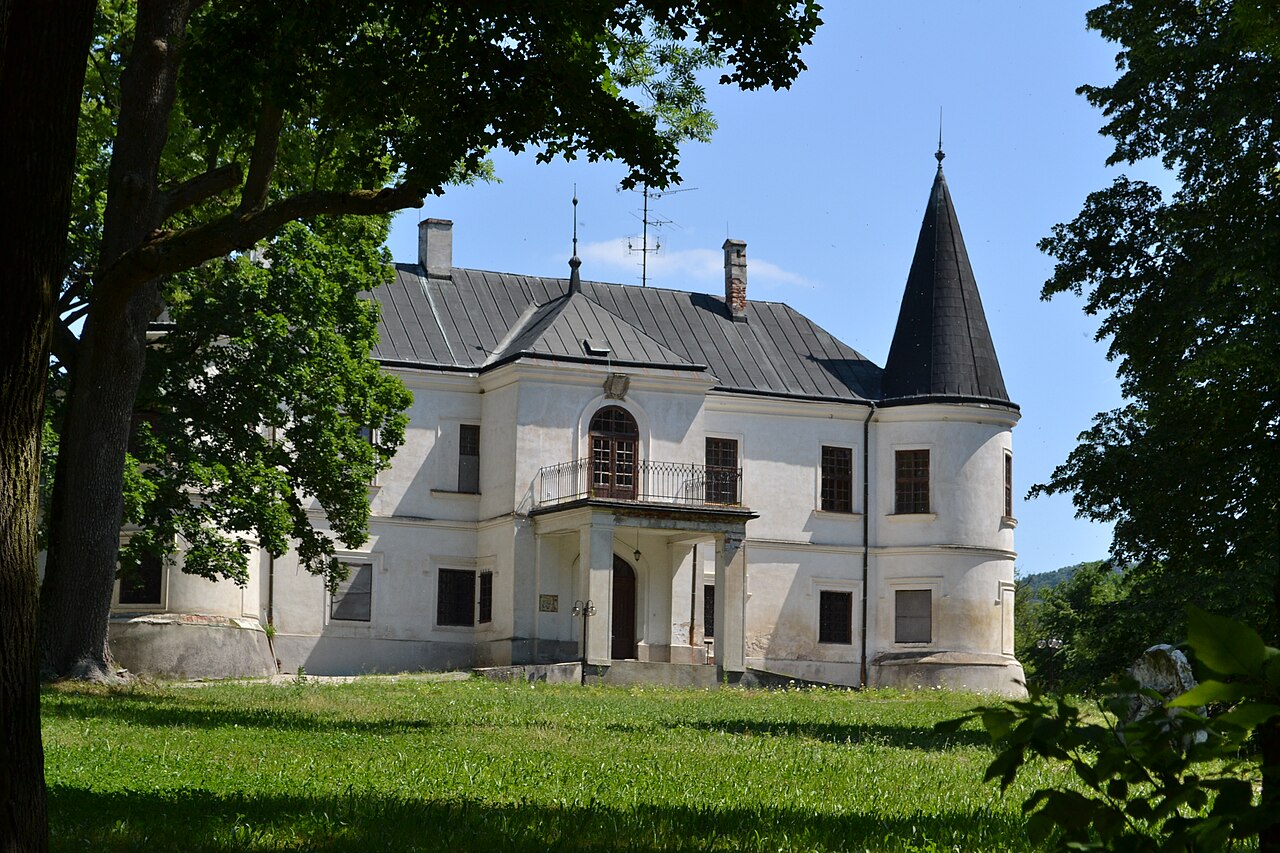
Hlohovec Castle stands as a prominent example of Renaissance-Baroque architecture in the town of Hlohovec, Slovakia. Constructed in 1720, this hill castle occupies a historically strategic location that was originally the site of a Slavic settlement and later a medieval castle dating back to the 13th century. The castle's evolution reflects the architectural and cultural transitions in the region from the medieval through the post-Renaissance periods.

Historical development and site significance

The site of Hlohovec Castle has been continuously important since early medieval times. The original Slavic settlement laid the groundwork for the construction of a medieval fortress in the 13th century, which served as a defensive stronghold in the region. Over the centuries, this medieval structure was replaced and transformed, culminating in the present castle built in the early 18th century.

The 1720 construction of the current castle replaced the older medieval fortifications, reflecting the changing needs and tastes of the era. This period marked a shift from purely defensive architecture to more residential and representational functions, characteristic of the Renaissance and Baroque architectural styles.

Architectural features and layout

The castle exhibits hallmark features of Renaissance-Baroque architecture, including symmetrical layouts, ornate facades, and decorative elements that combine both Renaissance clarity and Baroque grandeur. Its position on a hill provides natural defensive advantages and commanding views over the surrounding landscape.

Within the castle grounds, several notable structures contribute to its historical and architectural interest. The Empire theatre, built in 1802, is an early 19th-century addition that highlights the cultural functions the castle assumed beyond military and residential uses. The 18th-century riding school underscores the importance of equestrian activities and noble leisure pursuits during the castle's heyday.

Additionally, the presence of a Baroque garden pavilion within the castle area reflects the period's emphasis on landscaped gardens and outdoor architectural features designed for aesthetic enjoyment and social gatherings.

Preservation and current status

Hlohovec Castle is generally well preserved, maintaining much of its post-Renaissance architectural integrity. Its historical layers, from medieval foundations to Baroque modifications, provide valuable insights into the region's architectural evolution.

Today, the castle and its associated structures serve as important cultural landmarks in Hlohovec, attracting visitors interested in history, architecture, and the arts. The castle's setting and preserved features offer a tangible connection to Slovakia's noble past and regional development.

Surrounding cultural and historical context

The castle's location in Hlohovec situates it within a rich historical landscape of western Slovakia, an area marked by various cultural influences over centuries. The castle's transformation from a medieval fortress to a Renaissance-Baroque residence mirrors broader trends in Central European castle architecture and aristocratic life.

Its proximity to other historical sites and the town itself makes Hlohovec Castle a key point of interest for understanding the local heritage and the shifts in architectural styles and social functions from the Middle Ages through the early modern period.

Frequently asked questions (FAQ)

When was Hlohovec Castle originally built and what preceded it?
Hlohovec Castle was built in 1720 on the site of a 13th-century medieval castle, which itself was established on an earlier Slavic settlement.
What architectural styles are represented in Hlohovec Castle?
The castle primarily features Renaissance and Baroque architectural elements, reflecting its post-Renaissance construction period and later modifications.
What notable structures are found within the castle grounds?
Within the castle grounds, visitors can find the Empire theatre built in 1802, an 18th-century riding school, and a Baroque garden pavilion.
Is Hlohovec Castle open to the public and what can visitors expect?
While specific visiting hours and ticket prices are not widely published, the castle serves as a cultural landmark in Hlohovec and often hosts events and exhibitions related to local history and the arts.
What is the condition of Hlohovec Castle today?
Hlohovec Castle is well preserved, maintaining much of its architectural integrity from the post-Renaissance period.

Photo gallery

Hlohovec Castle
Click to view

Photo by Ľuboš Repta•CC BY-SA 4.0

1 photo • Click any image to view in full screen

Information

Hill Castle

Sources & official resources

Verify the information above using these authoritative references.

Loading map...

Visitor reviews

No reviews yet. Been here? Write the first review and help other travelers!

Write the first review

Visited this castle? Share your experience

Your review helps other travelers and adds first-hand knowledge to our encyclopedia.
Write a review

(5/5)

0/2000 characters

Your review will be visible after admin approval

Nearby castles

2.9 km
Leopoldov Fortress — Slovakia castle

Leopoldov Fortress

Leopoldov, Slovakia

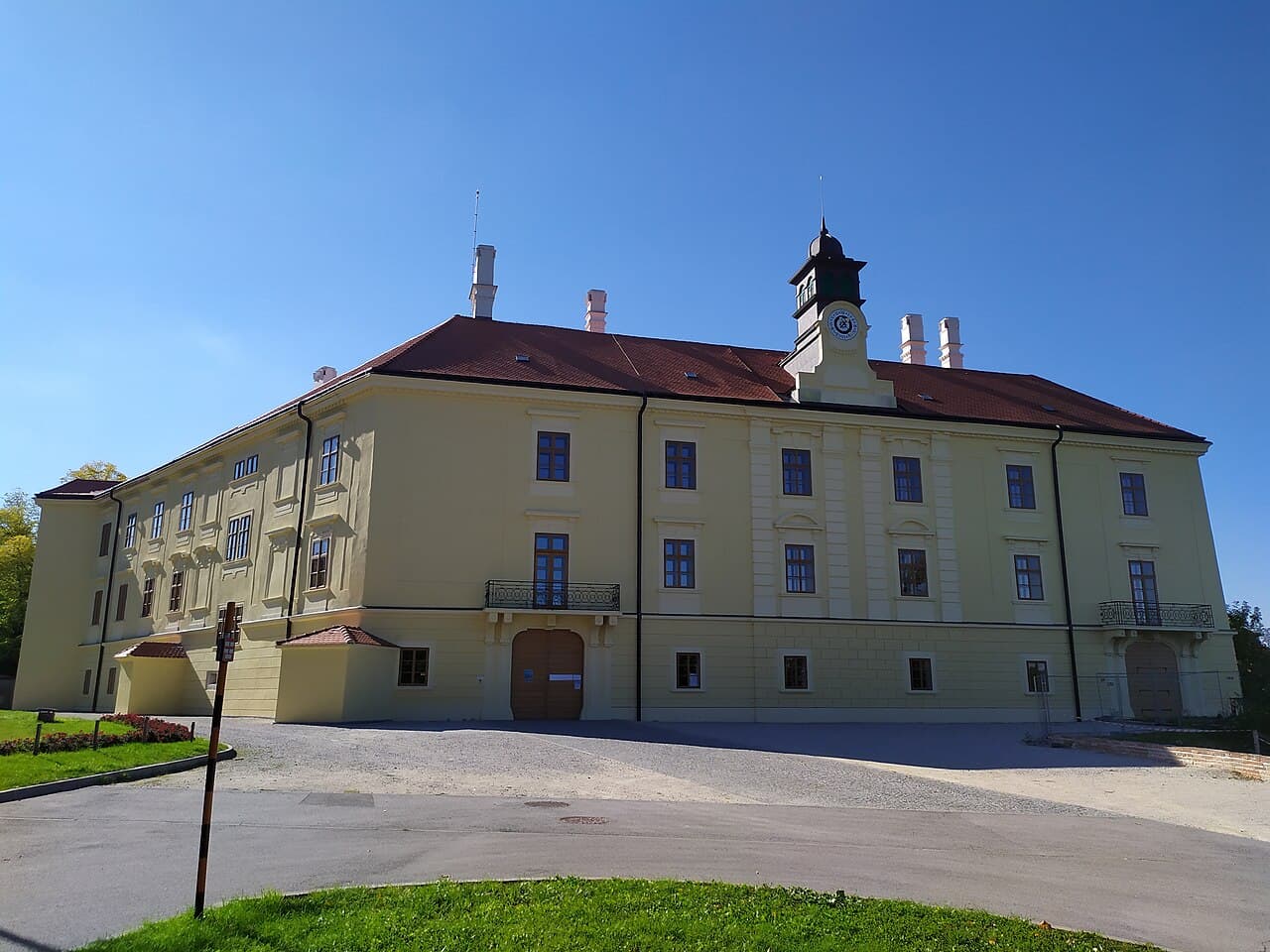
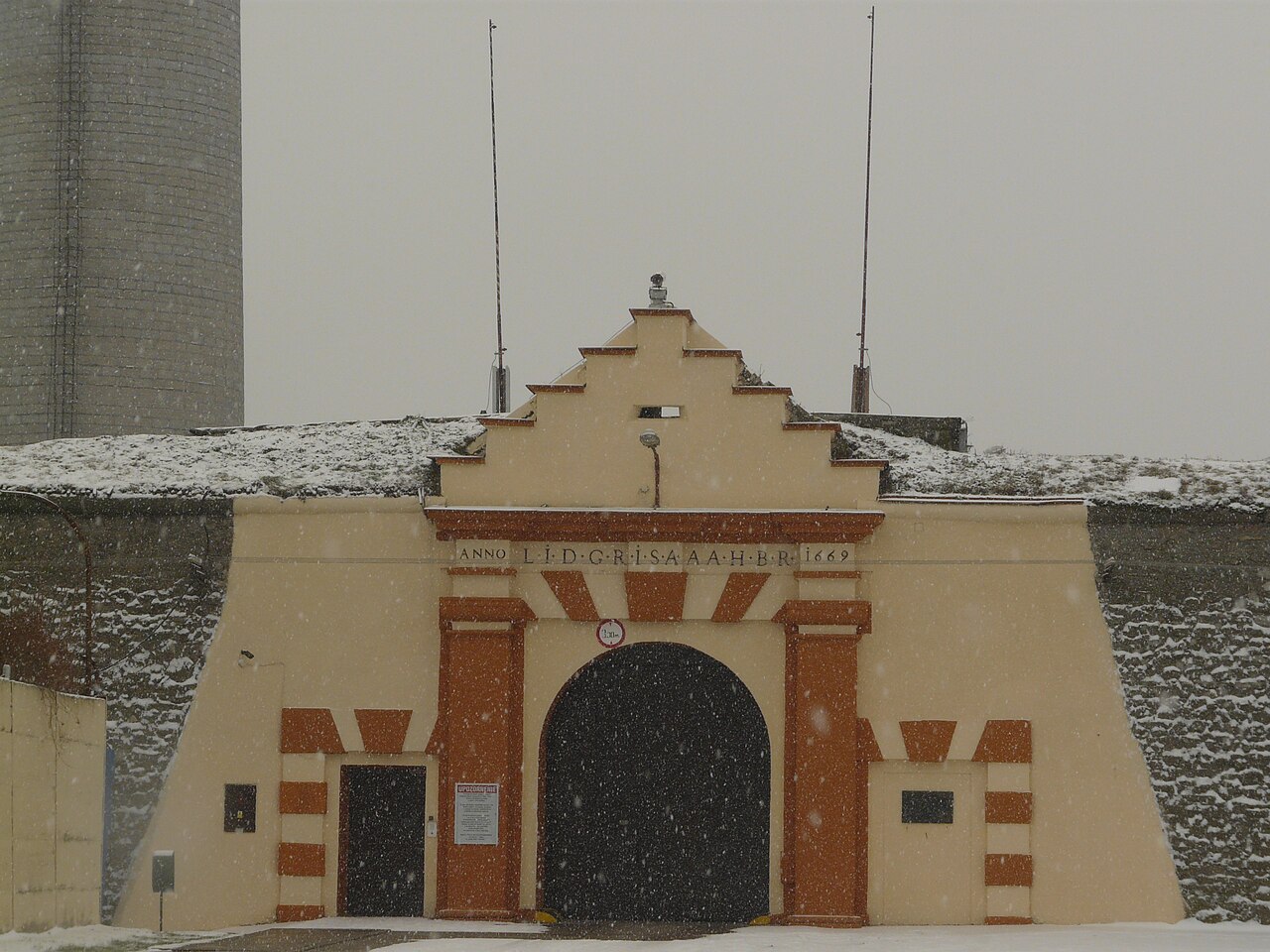
Leopoldov Fortress is a significant Renaissance bastioned fortress located in the town of Leopoldov, Slovakia. Constructed between 1664 and 1669 on the orders of Emperor Leopold I, the fortress was originally designed as a defensive stronghold against the advancing Ottoman Turks. Its strategic purpose was to protect the Habsburg monarchy's territories in the region during a period of intense military conflict in Central Europe. The fortress's name honors the emperor who commissioned its construction. Architectural design and fortifications The fortress exemplifies the bastioned fortress style, a hallmark of Renaissance military architecture that emerged in response to the development of powerful artillery. Its design incorporates angled bastions that allowed defenders to cover all approaches with overlapping fields of fire, minimizing blind spots. The fortress is surrounded by thick walls and deep moats, creating a formidable barrier against siege warfare. The layout is geometric and symmetrical, typical of the era's fortification principles, which emphasized both defense and order. Structural features The main defensive elements include several bastions positioned at the fortress's corners, curtain walls connecting these bastions, and a system of ravelins and outworks designed to delay attackers. The fortress also features a central courtyard and internal buildings that served various military and administrative functions. The robust stone construction and earthworks were designed to absorb and deflect cannon fire. Historical role and evolution Leopoldov Fortress was granted town status in 1669, shortly after its completion. Although its original purpose was military defense, the fortress's role evolved significantly over the centuries. From 1855 onward, the fortress was converted into a state prison, marking a new chapter in its history. This transformation utilized the fortress's secure and isolated design to detain prisoners under strict conditions. Use as a state prison The prison gained notoriety particularly during the Communist era in Czechoslovakia, when it was used to hold political prisoners and dissidents. The harsh conditions and strict regime made Leopoldov one of the most infamous prisons in the country. Among its inmates was Gustáv Husák, who was imprisoned from 1954 to 1960 before later becoming the Communist president of Czechoslovakia. The prison's reputation was marked by episodes of severe repression and human rights abuses. Modern history and challenges Following the Velvet Revolution of 1989, Leopoldov Prison experienced a series of violent riots, escapes, and disturbances. These events prompted direct intervention by high-ranking government officials, including the Prime Minister, who engaged in negotiations and reforms within the prison walls. The facility suffered significant damage during these upheavals. Despite a 1990 vote by the Slovak National Council to close the prison, the decision was reversed in 1993. The prison underwent modernization and reconstruction to improve conditions and security. However, it remains a high-security penitentiary and one of the largest in Slovakia. Notable incidents and legacy One of the most dramatic episodes in the prison's history was the 1991 mass escape, when seven inmates violently broke out, killing five prison guards in the process. This event underscored the ongoing challenges of managing the facility and highlighted the tense atmosphere within its walls during the post-Communist transition. Current status and cultural significance Today, Leopoldov Fortress stands as both a historical monument and an active prison complex. Its architectural features reflect the military engineering of the Renaissance period, while its later adaptation as a prison tells a complex story of political repression and social change in Central Europe. The fortress is a tangible link to the region's turbulent history and remains a site of interest for those studying military architecture and 20th-century political history.

Renaissance (15th–17th c.)
Details
24.8 km
Nitra Castle — Slovakia castle

Nitra Castle

Nitra, Slovakia

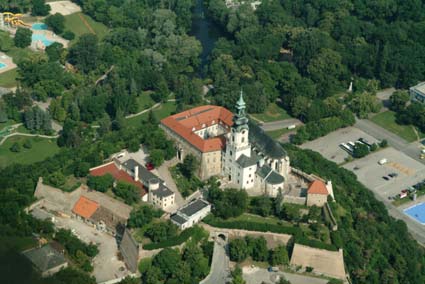
Nitra Castle stands prominently on a hill overlooking the city of Nitra in Slovakia, a site with a rich history dating back to the High Medieval period. Constructed initially in the 11th century on the foundations of an earlier fortification, the castle complex has evolved over centuries, reflecting the region's shifting political, military, and religious landscape. It remains a significant cultural monument, combining architectural styles from Romanesque to Baroque, and serving historically as a fortress, episcopal seat, and administrative center. Early history and strategic importance The site of Nitra Castle was first fortified in the late 8th century as part of a Slavic principality, making it one of the earliest centers of power in the region. The hill, rising approximately 220 meters above sea level and naturally defended on three sides by the Nitra River, provided an ideal location for defense and control. During the 9th century, under the influence of Great Moravia, the fortress was expanded and strengthened to serve as a princely seat, marking its importance in early medieval politics. The earliest written records mention a basilica dedicated to Saint Emeram (also known as Jimram), which is part of the current castle complex and dates back to the 11th century. This church, built in the Romanesque style, is the oldest surviving structure within the castle grounds and symbolizes the early Christianization of the region. Medieval development and architectural evolution Throughout the High Medieval period, Nitra Castle underwent significant transformations. The original Romanesque church was complemented in the 14th century by the construction of the Upper Gothic Church, showcasing the transition to Gothic architectural elements such as pointed arches and ribbed vaults. The castle's fortifications were reinforced during this era, including the erection of Vazil's Tower, a key defensive structure associated with local legends. The castle's defenses were tested during the 13th century, surviving the Mongol invasion of 1241 with limited damage. However, in 1271, the fortress was besieged and largely damaged by forces under Prěmysl Otakar II, leading to the burning of Saint Emeram's church and destruction of parts of the defensive walls. Subsequent restoration efforts rebuilt the church and strengthened the fortifications. From the 14th to 16th centuries, the castle was influenced by prominent rulers such as Matúš Čak Trenčiansky, Sigismund of Luxembourg, and Matthias Corvinus. The castle suffered heavy damage in 1465 during conflicts involving Corvinus's troops but was rebuilt, reflecting the ongoing military and administrative importance of the site. Renaissance and baroque modifications In response to the rising threat of the Ottoman Turks during the 16th century, Nitra Castle's defenses were further reinforced. New fortifications, including an inner gate and a Renaissance-style palace, were constructed to enhance the castle's military capabilities while providing improved residential and administrative facilities. Despite robust defenses, the castle was briefly occupied by Turkish forces in 1663, after which extensive reconstruction of the defensive system took place. The 17th and 18th centuries saw the addition of the Lower Church and the transformation of the Bishop's Palace from its original Gothic form into a Late Baroque style building, reflecting changing tastes and the castle's ecclesiastical function. Architectural highlights and surviving structures The castle complex today showcases a blend of architectural styles and historical layers. The Romanesque Church of St. Emmeram remains the oldest part of the complex, notable for its robust stone construction and early medieval design. The Upper Gothic Church, with its characteristic pointed arches and ribbed vaults, highlights the castle's evolution during the 14th century. Vazil's Tower stands as a surviving medieval fortification element, linked to local legends of imprisonment within its dungeons. The Bishop's Palace, remodeled in the 18th century, exhibits the elegant forms of Late Baroque architecture, serving as a residence and administrative center for the bishopric. Fortification walls from various periods survive, including medieval stone walls with projecting bastions and later Renaissance defensive structures designed to counter artillery threats. The inner gate from the 16th century remains intact, illustrating the castle's adaptation to changing military technologies. Cultural significance and current status Nitra Castle has served as the seat of the Nitra bishopric since 1296, following a royal grant by King Andrew III to Bishop Pascház, who also undertook repairs after earlier conflicts. This long-standing ecclesiastical role has shaped much of the castle's architectural and cultural development. Today, the castle is a well-preserved hill castle and a dominant landmark in the city of Nitra. It attracts visitors interested in medieval history, architecture, and Slovak cultural heritage. The ongoing remodeling of the church and preservation efforts aim to maintain the castle's historical integrity while enhancing its accessibility and educational value. The castle's layered history, combining military, religious, and administrative functions, offers a rich narrative of Central European history from the early medieval period through the Baroque era. Its architectural diversity and strategic location continue to make Nitra Castle a significant monument in Slovakia's cultural landscape.

High Medieval (11th–13th c.)
Details
26.6 km
Starý zámek v Horních Lefantovcích — Slovakia castle

Starý zámek v Horních Lefantovcích

, Slovakia

Starý zámek v Horních Lefantovcích is a historic hill castle located in Slovakia, dating back to the 13th century. This high medieval fortress was strategically positioned on elevated terrain, typical of hill castles designed for defense and surveillance during the Middle Ages. Although now in a state of ruins, the castle remains an important site for understanding medieval fortification techniques and regional history. Historical context and origins The castle was established in the high medieval period, a time characterized by the proliferation of fortifications across Central Europe. The 13th century marked a period of territorial consolidation and frequent conflicts, prompting the construction of castles like Starý zámek to secure important routes and assert noble control over the surrounding lands. While detailed records of its founding lords are scarce, the castle likely served as a residence and military stronghold for local nobility or feudal lords. Its location on a hill provided a vantage point for monitoring movements in the region, giving it both defensive and administrative significance. Architectural features and layout Starý zámek v Horních Lefantovcích exemplifies typical high medieval hill castle architecture. The remains suggest a compact fortress with defensive walls adapted to the natural contours of the hill. The castle likely included a keep or donjon—a central fortified tower serving as the last line of defense and the lord's residence. Surrounding the keep, there would have been curtain walls with battlements and possibly a gatehouse controlling access. The castle's elevated position would have been complemented by natural slopes and possibly artificial ditches or moats to enhance its defenses. Construction materials and techniques The castle was constructed primarily from local stone, a common practice in medieval fortifications to ensure durability and resistance to siege weaponry. Masonry techniques of the 13th century involved thick walls and narrow windows or arrow slits for archers, features likely present at Starý zámek. Decline and current condition Over the centuries, Starý zámek v Horních Lefantovcích fell into disuse and eventually ruin. Like many medieval castles, changes in military technology and political shifts rendered such fortifications obsolete. Today, only partial remains of walls and foundational structures are visible, classifying the site as castle ruins. Despite its ruined state, the site attracts visitors interested in medieval history and castle architecture. It offers insight into the defensive strategies employed during the high medieval period in Slovakia. Cultural significance and preservation The castle is part of Slovakia's rich heritage of medieval fortifications, contributing to the understanding of feudal society and regional defense networks. Efforts to preserve the ruins focus on maintaining the structural remnants and preventing further deterioration. Visitors to Starý zámek can explore the remains and imagine the castle's role in medieval times, supported by interpretive signage and local historical research. Visiting information While specific visitor facilities are limited due to the castle's ruined condition, the site is accessible to the public. It is advisable to wear appropriate footwear for uneven terrain and to check local sources for access details and any guided tours available in the area.

High Medieval (11th–13th c.)
Details