Hiroshima Castle
Hiroshima Castle, also known as "Carp Castle" (Rijō), stands as a prominent example of a Japanese lowland castle with a rich history dating back to the late 16th century. Constructed in 1591 by the powerful daimyo Mori Terumoto, the castle was strategically located in the heart of Hiroshima city, within the Hiroshima Prefecture region. It was built during the closing years of the Sengoku period, a time marked by intense military conflict and political consolidation in Japan. Unlike many hilltop castles, Hiroshima Castle is classified as a lowland castle (hirajiro), constructed on flat plains near rivers, which influenced its defensive design and urban integration.
The foundation and historical significance of Hiroshima Castle
Mori Terumoto was a formidable daimyo who controlled extensive territories in the San'in and San'yo regions of western Japan. Having outgrown his previous stronghold at Yoshida-Koriyama Castle, he commissioned the construction of Hiroshima Castle to serve as a new political and military center in 1591. The castle's location was carefully chosen for its strategic advantages, including proximity to waterways and fertile lands, facilitating both defense and administration.
The castle quickly became a symbol of Mori Terumoto's power and influence. However, his alignment with the Western Army during the pivotal Battle of Sekigahara in 1600 led to his downfall. After the Western forces' defeat, Terumoto's lands were confiscated, and he was reassigned to govern a smaller domain in what is now Yamaguchi Prefecture. His place as lord of Hiroshima was taken by Fukushima Masanori, a former ally of Toyotomi Hideyoshi.
Fukushima masanori and the castle's turbulent early years
Fukushima Masanori is remembered for his tenure at Hiroshima Castle, but his relationship with the Tokugawa shogunate was fraught with tension. In 1617, a devastating flood severely damaged the castle. Fukushima sought permission from the Tokugawa government to repair the damage, as was required by law for any castle renovations. However, the shogunate delayed its response, effectively denying his request.
Undeterred, Fukushima began repairs in 1619 without official sanction. This act of defiance was used by the Tokugawa as a pretext to confiscate his lands, stripping him of his lucrative domain around Hiroshima and relocating him to a smaller province in modern-day Nagano. This episode reflects the strict control the Tokugawa shogunate exerted over daimyo and castle construction during the Edo period.
Architectural features and design of Hiroshima Castle
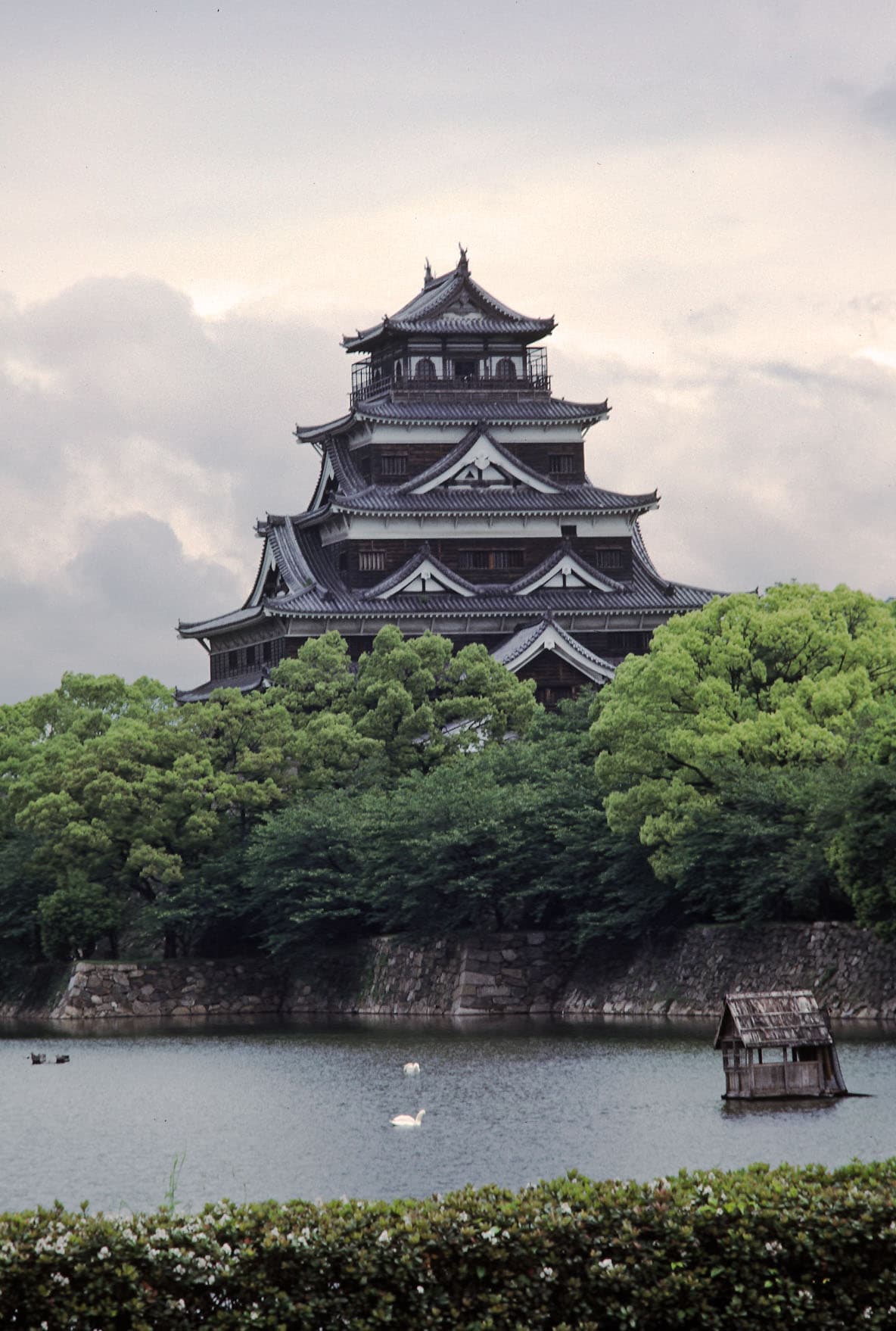
The original Hiroshima Castle featured a multi-storied tenshu (main keep) rising prominently above the surrounding moats and stone walls. The castle complex included extensive defensive structures such as moats, stone ramparts, gates, and baileys designed to protect against both military assault and flooding. The layout was typical of Japanese castles of the late Sengoku period, balancing military functionality with residential and administrative needs.
Though the castle was destroyed in the atomic bombing of August 6, 1945, its grounds and some structures have been partially restored. The current main keep is a post-war concrete reconstruction typical of early 20th-century restoration efforts. However, the reconstructions near the main gate are crafted in wood, reflecting traditional Japanese carpentry and providing a more authentic architectural experience.
Visitors are encouraged to explore the Obikuruwa area, a section behind the main keep that offers peaceful views of the moats and stone walls. This area remains less crowded, allowing for quiet reflection on the castle's historical and cultural significance.
Hiroshima castle during the modern era and preservation efforts
Despite its destruction during World War II, Hiroshima Castle remains a potent symbol of the city's resilience and historical heritage. It was designated a National Treasure in 1931, underscoring its cultural importance. The atomic bombing on August 6, 1945 obliterated the castle, but post-war restoration efforts have sought to preserve its legacy.
The castle grounds now serve as a public park and museum site, educating visitors about Hiroshima's feudal past as well as the tragic events of the 20th century. The combination of concrete and wooden reconstructions offers insight into both traditional Japanese castle architecture and modern preservation challenges.
Visitor experience and cultural significance
Today, Hiroshima Castle is a major tourist attraction in Hiroshima city, drawing visitors interested in Japanese history, architecture, and culture. The site provides educational exhibits about the castle's construction, the lives of its historical inhabitants, and its destruction and restoration. The peaceful moats and stone walls invite leisurely exploration, while the reconstructed main keep offers panoramic views of the surrounding urban landscape.
The castle also hosts cultural events and festivals that celebrate Hiroshima's heritage, making it a living monument that connects past and present. Its story embodies the resilience of a city that has rebuilt itself from devastation, preserving its historical identity for future generations.
Frequently asked questions (FAQ)
- How do I get to Hiroshima Castle?
- Hiroshima Castle is easily accessible by public transport. You can take the tram to the "Hiroshima Castle" stop, and it's just a short walk from there. Alternatively, if you're coming from Hiroshima Station, it’s about a 20-minute walk or a short bus ride.
- What is the historical significance of Hiroshima Castle?
- Hiroshima Castle, also known as Carp Castle, was originally built in the 1590s and served as the home of the feudal lord during the Edo period. The castle symbolizes Hiroshima's rich history and resilience, as it was destroyed by the atomic bomb in 1945 and later reconstructed. Today, it stands as a reminder of the past and a symbol of peace.
- When was Hiroshima Castle rebuilt after the war?
- Hiroshima Castle was rebuilt in 1958, more than a decade after the atomic bombing in 1945. The reconstruction aimed to restore the castle to its former glory and included the addition of a museum inside that showcases the castle's history and the city of Hiroshima. The rebuilt structure is a popular tourist attraction and an important cultural site.
- Can I enter the castle keep?
- Yes, visitors can enter the castle keep, which houses a museum featuring artifacts and exhibits related to Hiroshima's history. Climbing to the top of the keep offers stunning panoramic views of the city and the surrounding area. There is an admission fee for entering the keep.
- Why is Hiroshima Castle considered an important landmark?
- Hiroshima Castle is considered an important landmark due to its historical significance and architectural beauty. The castle's design reflects the traditional Japanese castle style, and it stands as a testament to the city's resilience after the devastation of World War II. It attracts both history enthusiasts and tourists from around the world.
- Is it possible to visit Hiroshima Castle year-round?
- Yes, Hiroshima Castle is open to visitors year-round, although the opening hours may vary by season. It is advisable to check the official website for the latest information on hours and any seasonal events. Visiting during cherry blossom season in spring offers a particularly picturesque experience.
- What are the ticket prices for Hiroshima Castle?
- As of now, the admission fee to enter the castle keep is typically around 370 yen for adults, with discounts for children and seniors. Prices may vary for special exhibitions or events, so it's best to check the official website for the most current information. Tickets can be purchased on-site or online.
- What is the best time to visit Hiroshima Castle?
- The best time to visit Hiroshima Castle is during the spring (March to May) when cherry blossoms bloom, creating a stunning backdrop. Autumn (September to November) is also a fantastic time, as the fall foliage enhances the castle's beauty. Visiting during weekdays can help you avoid larger crowds.
- Are there any nearby attractions to explore?
- Yes, there are several nearby attractions worth exploring, including the Hiroshima Peace Memorial Park and Museum, which commemorates the victims of the atomic bombing. Shukkeien Garden, a beautiful traditional Japanese garden, is also within walking distance, offering a tranquil escape from the city. Both sites provide a deeper understanding of Hiroshima's history and culture.
Photo gallery

Public domain
Information
Opening hours
370 yen; Open 9am-6pm except Dec - Feb closes at 5pm; Open until 7pm during Golden Week and Obon holidays; closed 12/29-12/31. Only the main keep requires admission, the park is free.
Website
Visit websiteSources & official resources
Verify the information above using these authoritative references.
Loading map...
Visitor reviews
No reviews yet. Been here? Write the first review and help other travelers!
Write the first reviewVisited this castle? Share your experience
Your review helps other travelers and adds first-hand knowledge to our encyclopedia.