Miyao Castle
Miyao Castle (宮尾城, Miyao-jō) stands as a notable example of a Sengoku period fortification on Itsukushima Island, also known as Miyajima, in Hiroshima Prefecture, Japan. Built in the mid-16th century by the renowned warlord Mōri Motonari, this site was less a traditional castle with grand donjon towers and residential quarters, and more a tactical hill fort designed for military strategy during a time of intense regional conflict. Its primary purpose was to serve as a decoy and trap for Motonari's rival, Sue Harukata, culminating in the decisive Battle of Miyajima in 1555.
Historical context and strategic purpose
The Sengoku period (1467–1615) was marked by nearly constant military conflict among regional lords vying for power. Within this turbulent era, Miyao Castle was constructed not as a residence or administrative center but as a military installation to lure enemy forces into a vulnerable position. Unlike many Japanese castles featuring a tenshu (main keep), Miyao Castle lacked such a structure, emphasizing its role as a hill fort rather than a conventional castle.
Mōri Motonari, a prominent daimyo known for his strategic acumen, orchestrated the castle's construction on the island of Itsukushima to exploit the terrain and control the maritime approaches. The castle's location in Hamano-cho, Miyajima, Hatsukaichi city provided a commanding vantage point over the surrounding waters and land routes, facilitating surveillance and control.
Architectural features and layout
The fortification consisted primarily of earthen ramparts, wooden palisades, and strategically placed watchtowers rather than stone walls or massive keeps. Its design capitalized on the natural topography of the island's hills, integrating defensive features that enhanced visibility and defensibility. The absence of a donjon or residential buildings distinguishes Miyao Castle from typical Japanese castles of the period, aligning it more closely with the concept of a hill castle or hill fort.
The castle's fortifications were likely temporary or semi-permanent, constructed rapidly to meet the exigencies of war. Defensive works included trenches and wooden barriers designed to impede enemy advances and channel attackers into kill zones. The castle's position also allowed control over nearby sea lanes, crucial for supply and communication during the campaign against Sue Harukata.
The battle of Miyajima and military significance
The most significant event associated with Miyao Castle was the Battle of Miyajima in 1555, where Mōri Motonari successfully used the castle as bait to draw Sue Harukata's forces into a trap. The battle is notable for its clever use of deception and terrain, resulting in a decisive victory for the Mōri clan and solidifying Motonari's power in the region.
Following the battle, Miyao Castle's military importance diminished, and it did not develop into a permanent seat of power or administrative center. Instead, its legacy endures as a symbol of strategic ingenuity during one of Japan's most chaotic historical periods.
Location and modern context
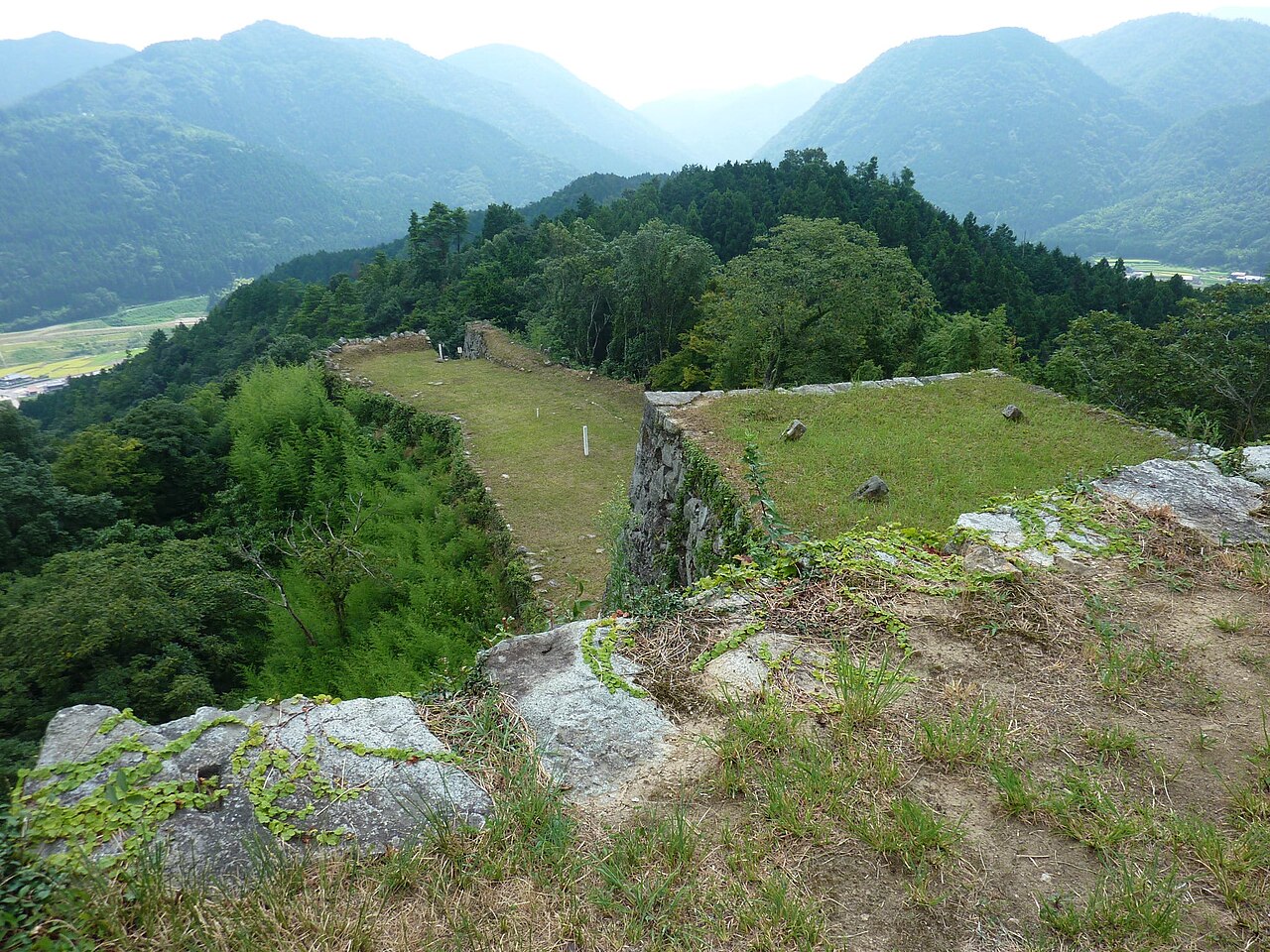
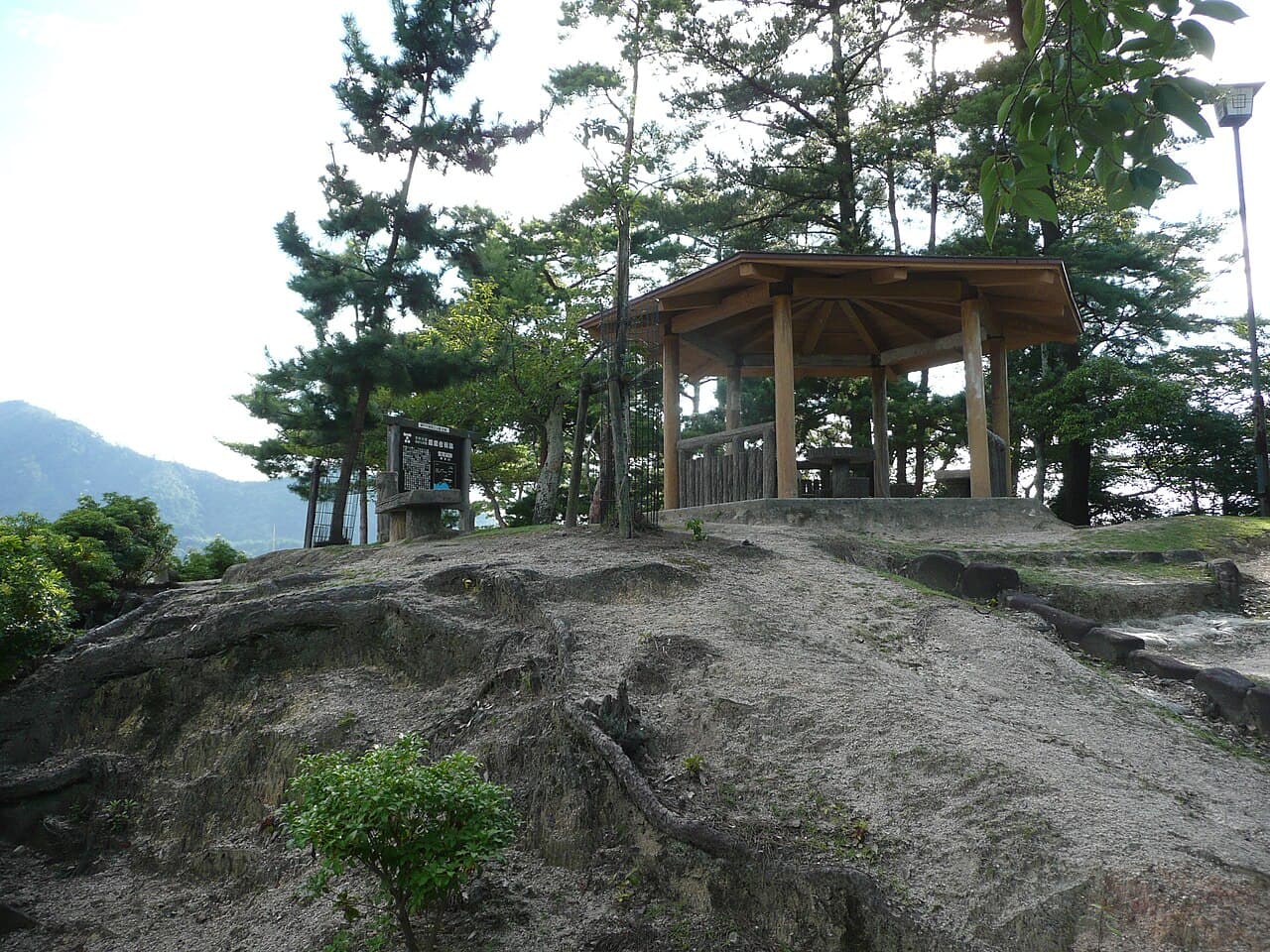
The site of Miyao Castle is situated in Hamano-cho on Itsukushima Island within Hatsukaichi city, Hiroshima Prefecture. Today, the castle remains are limited, with no surviving donjon or large stone structures, reflecting its original function as a temporary fortification. The site is accessible to visitors interested in the military history of the Sengoku period and the legacy of the Mōri clan.
Itsukushima Island itself is famous for the Itsukushima Shrine, a UNESCO World Heritage site, and the castle ruins contribute to the island's rich historical landscape. Visitors can explore the natural terrain and remnants of fortifications, gaining insight into the military strategies employed during the mid-16th century.
Architectural classification and preservation
Miyao Castle is classified as a hill castle due to its elevated position and reliance on natural topography for defense. It does not fit the typical mold of Japanese castles with grand stone walls and keeps but represents a category of military architecture focused on rapid construction and tactical advantage.
The site is currently considered partially preserved, with archaeological interest but limited above-ground remains. Preservation efforts focus on maintaining the landscape and interpretive signage to educate visitors about its historical role.
Frequently asked questions (FAQ)
- How do I get to Miyao Castle?
- Miyao Castle is located in Hatsukaichi, Japan, and can be easily accessed by public transportation. The nearest train station is Hatsukaichi Station, from where you can take a short bus ride or a pleasant walk to the castle.
- What is the historical significance of Miyao Castle?
- Miyao Castle dates back to the early 16th century and played a crucial role during the feudal period in Japan. It served as a strategic military stronghold and was important for the local samurai clans in the region.
- When was Miyao Castle built?
- Miyao Castle was constructed in 1560, during the turbulent Sengoku period, a time characterized by social upheaval and constant military conflict in Japan. The castle has undergone several renovations over the years, preserving its historical integrity.
- Can I visit Miyao Castle year-round?
- Yes, Miyao Castle is open to visitors year-round, though some facilities may have limited access during the winter months. It's always a good idea to check the official website for any seasonal updates or maintenance schedules.
- Why is Miyao Castle considered an architectural gem?
- Miyao Castle is renowned for its unique architectural style that combines traditional Japanese castle design with local influences. Its stone walls and wooden structures showcase the craftsmanship of the era, making it a fascinating site for architecture enthusiasts.
- Is it possible to explore the interior of Miyao Castle?
- While the exterior of Miyao Castle is open for exploration, access to the interior may be restricted due to preservation efforts. However, visitors can enjoy the surrounding gardens and the panoramic views from the castle grounds.
- What are the best times to visit Miyao Castle?
- The best times to visit Miyao Castle are during the spring and autumn months when the weather is mild and the scenery is particularly beautiful. Cherry blossoms in spring and vibrant autumn foliage create a picturesque backdrop for your visit.
- Are there any nearby attractions to Miyao Castle?
- Yes, there are several nearby attractions, including the famous Itsukushima Shrine on Miyajima Island, which is just a short ferry ride away. Additionally, the scenic views of the Seto Inland Sea add to the charm of the area.
- What are the ticket prices for Miyao Castle?
- Admission to Miyao Castle is generally affordable, with tickets priced around 500 yen for adults and discounted rates for children and seniors. Special rates may apply for group visits, so it's advisable to check in advance.
- What are the opening hours of Miyao Castle?
- Miyao Castle is typically open from 9 AM to 5 PM, with extended hours during peak tourist seasons. It's recommended to verify the specific opening hours on the official website before your visit to ensure a smooth experience.
Photo gallery

Information
Address
Hamano-cho, Itsukushima Island
Loading map...
Visitor reviews
No reviews yet. Been here? Write the first review and help other travelers!
Write the first reviewVisited this castle? Share your experience
Your review helps other travelers and adds first-hand knowledge to our encyclopedia.