Herzberg Castle
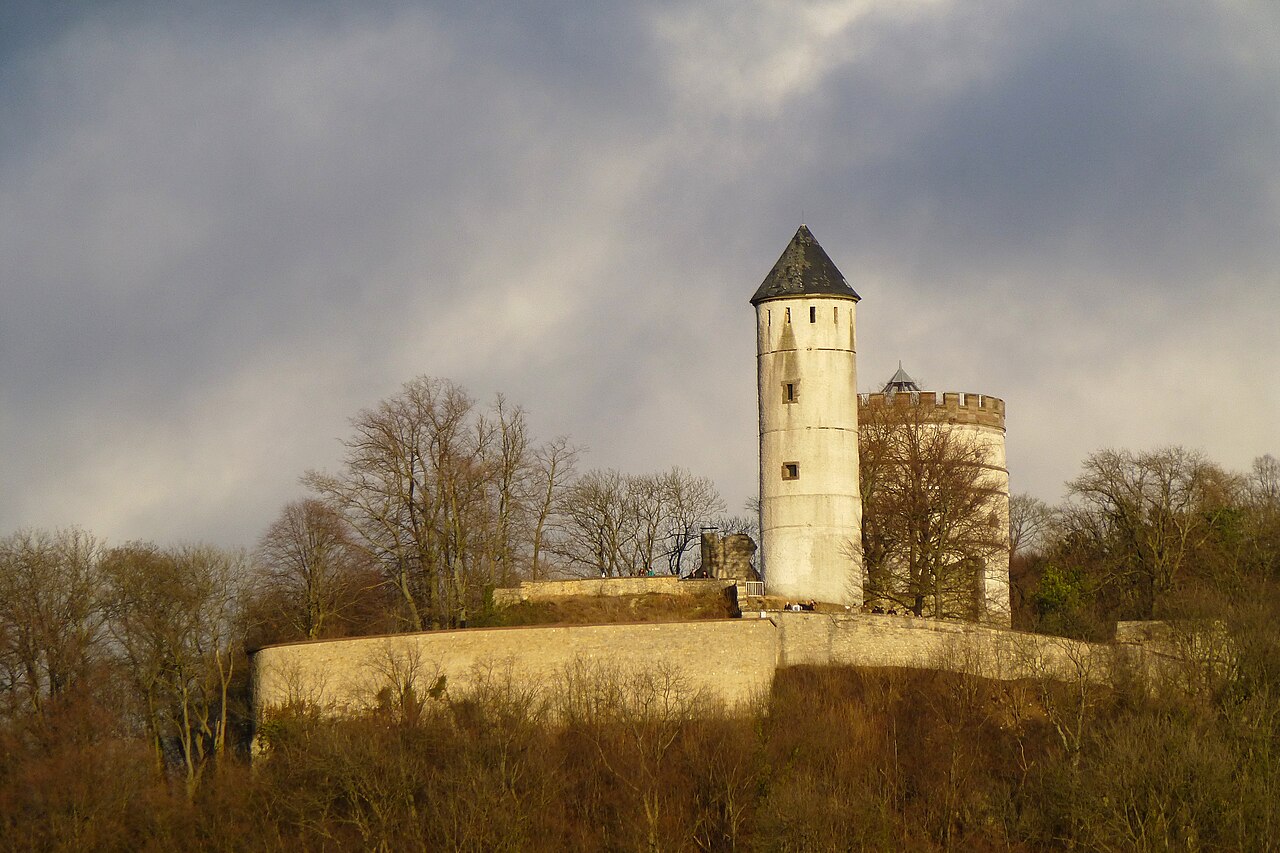
Herzberg Castle stands prominently in the town of Herzberg am Harz, Germany, as a significant example of a hill castle with origins tracing back to the early 11th century. Constructed initially between 1024 and 1029, the castle began as a medieval fortress and hunting lodge, likely commissioned by King Lothair III of Süpplingenburg, who later ascended as Emperor. Its strategic location atop the Schlossberg ridge at an elevation of 275 meters provided a commanding view of the surrounding landscape, essential for defense and surveillance in the medieval period.
The castle's first documented mention dates to 1143. By 1158, it passed into the hands of the influential House of Welf through a land exchange between Emperor Frederick Barbarossa and Duke Henry the Lion. The Welf dynasty maintained control for over seven centuries, shaping the castle's role as a political and residential center. Notably, in 1218, it served as an imperial residence for Empress Maria of Brabant. The castle also functioned as a widow's residence for prominent duchesses such as Marie, widow of Emperor Otto IV, and the widow of Duke Albert the Great.
Herzberg Castle as a ducal seat and its architectural evolution
From 1290, Herzberg Castle became the seat of the Brunswick-Grubenhagen branch of the Welf family, serving as the principal residence of its dukes until 1596. This period saw significant architectural development, including the reconstruction after the devastating fire of 1510 that destroyed much of the original medieval structure. The fire claimed two attendants' lives, though the ducal family escaped unharmed. The rebuilding, completed by 1528, incorporated contemporary architectural styles of the early 16th century, blending medieval fortification elements with Renaissance influences.
The castle was home to notable figures such as Duke George of Brunswick-Lüneburg, who lived there until his death in 1635. His son, Ernest Augustus, born in the castle in 1629, later became the first Elector of Hanover, marking the castle's connection to significant historical personalities.
Later uses and modern history
By 1714, Herzberg Castle ceased to function as a ducal residence and was repurposed for practical uses, including serving as a granary. From 1852, it housed the Amtsgericht, the district court of Herzberg. In 1900, a museum was established within the castle, dedicated to its history and regional heritage, featuring exhibits on the Welf dynasty, local forestry, arms manufacturing, and organ building.
During World War II, the castle sustained significant damage when a nearby munitions factory exploded in April 1945, destroying the roof and much of the museum's collections. Further damage occurred in 1947 due to the demolition of adjacent military bunkers. Restoration efforts began in 2006, with a major renovation project starting in 2017 supported by state and federal funds. Archaeological excavations during this time uncovered foundation walls from the castle's original medieval phase, enhancing understanding of its construction history.
Architectural features and layout
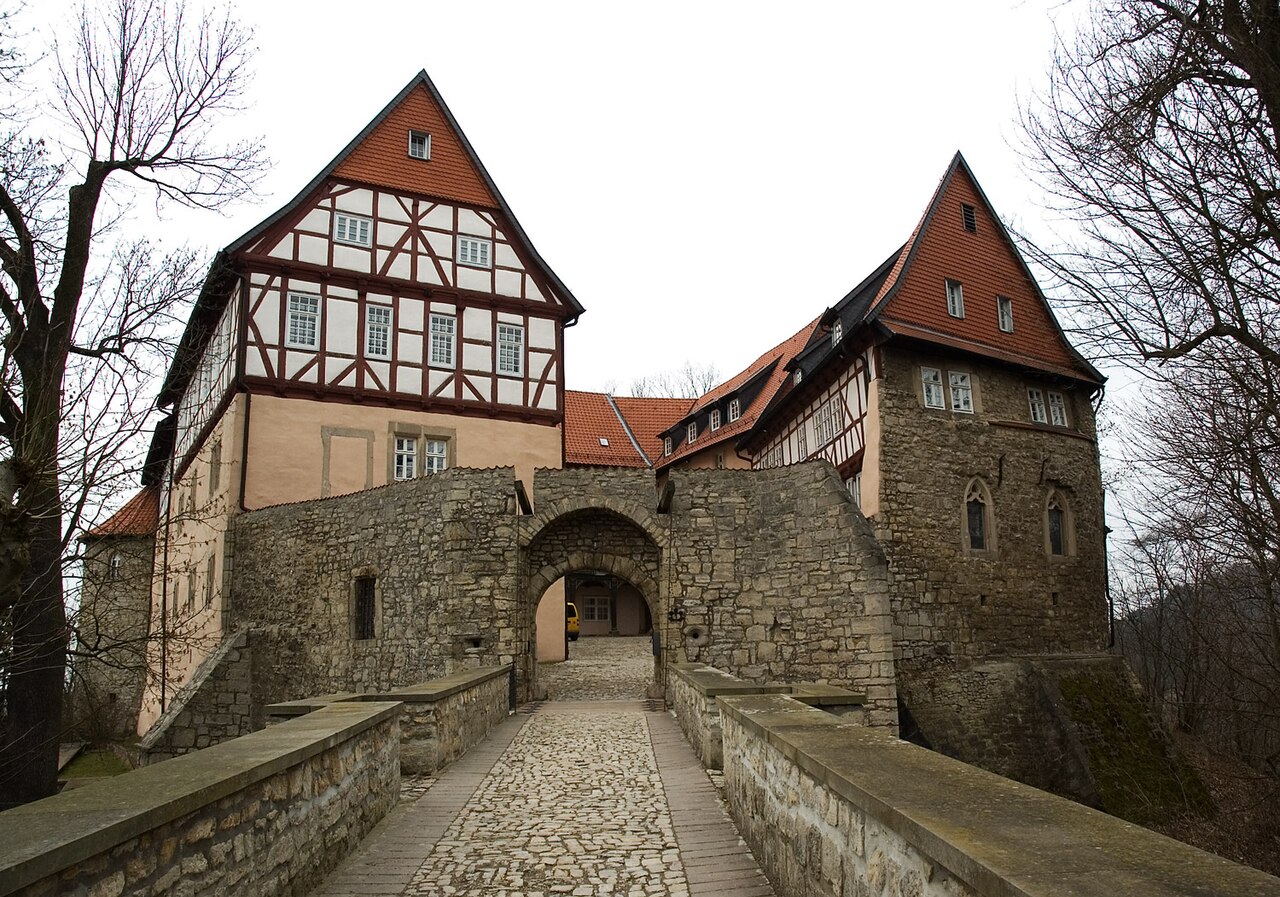
Today, Herzberg Castle presents as a quadrangular complex formed by four wings enclosing a rectangular inner courtyard approximately 40 by 58 meters in size. The lower levels, including basements and ground floors, are constructed mainly of sandstone, providing a solid foundation. Above, three wings display traditional timber framing with visible wooden beams painted in historic ochre, while the fourth wing is built entirely of stone, extending into upper floors.
Access is through a well-preserved two-story gatehouse connected to a barbican and an imposing gate tower, reflecting the castle's medieval defensive design. The eastern corner features the distinctive Uhrturm (Clock Tower), noted for its three upper timber-framed stories and a lead-covered lantern dome, a signature element of the castle's silhouette.
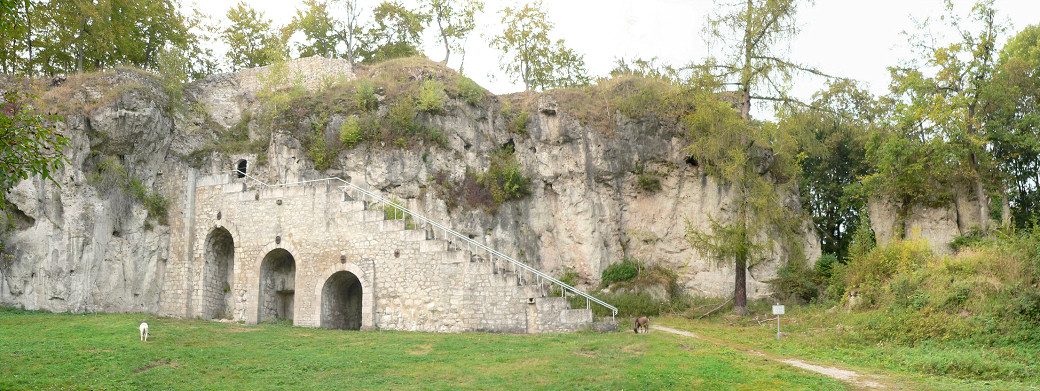
Remnants of the early medieval fortress include a deep defensive ditch to the south, up to five meters deep, and an 80-meter-long Vorwall (earthwork embankment) along the southeast side, standing two and a half meters high and five meters wide at the base. These features illustrate the castle's original fortification system.
The roof is covered with traditional red hollow tiles, while six copper water spouts adorn the courtyard-facing side of the Sieber wing, combining functionality with decorative appeal. Inside, the south wing houses a chapel room converted into a café and restaurant. The large Rittersaal (ceremonial hall) in the Stammhaus wing seats 130 guests and integrates historic paintings with modern audiovisual technology for events. The Marstall wing continues to serve as the location for the Amtsgericht.
Archaeological discoveries and preservation efforts
Recent archaeological work during restorations has revealed multiple foundation layers beneath the current structure, shedding light on the castle's various construction phases from the medieval period onward. The castle sits on a geological formation with soluble rock layers prone to gradual landslides, which has posed challenges to the stability of the foundations over centuries.
Restoration has included careful conservation of decorative elements such as the original timber framing's ochre paint, coats of arms on gatehouses, and the distinctive copper water spouts. The museum within the castle displays artifacts including a facsimile of a 12th-century gospel book associated with Henry the Lion, a 16th-century cradle linked to the Welf family, and exhibits on regional crafts and history.
Herzberg Castle remains an important cultural site, blending its historical significance with contemporary civic functions, and continues to attract visitors interested in medieval architecture, noble lineage, and German heritage.
Frequently asked questions (FAQ)
- What is the best time to visit Herzberg Castle?
- The best time to visit Herzberg Castle is during the warmer months from spring to early autumn when the weather is pleasant for exploring the castle grounds and enjoying the café in the chapel room.
- Is Herzberg Castle accessible to visitors with mobility issues?
- Herzberg Castle has some areas with uneven terrain and historic structures that may pose challenges for visitors with mobility issues. It is advisable to contact the castle administration in advance to inquire about specific accessibility options.
- Can I attend events or weddings at Herzberg Castle?
- Yes, the castle's large Rittersaal (ceremonial hall) is equipped with modern audiovisual equipment and can accommodate up to 130 guests, making it suitable for events such as weddings and cultural gatherings.
- When was Herzberg Castle originally built?
- Herzberg Castle was originally constructed in the early 11th century, most likely between 1024 and 1029, initially serving as a hunting lodge and fortress.
- What historical figures are associated with Herzberg Castle?
- Notable historical figures linked to Herzberg Castle include King Lothair III of Süpplingenburg, Empress Maria of Brabant, Duke George of Brunswick-Lüneburg, and Ernest Augustus, the first Elector of Hanover.
Information
Current owner
Municipality
Loading map...
Visitor reviews
No reviews yet. Been here? Write the first review and help other travelers!
Write the first reviewVisited this castle? Share your experience
Your review helps other travelers and adds first-hand knowledge to our encyclopedia.