Hertford Castle
Hertford Castle stands as a significant historic monument beside the River Lea in the town of Hertford, England. Its origins trace back to the early 10th century when the Anglo-Saxon king Edward the Elder established a fortification on the site around the year 913. This early defensive structure marked Hertford's importance in regional power dynamics during the Early Medieval period.
By the time of the Norman Conquest in 1066, the castle had evolved into a classic motte-and-bailey design, characterized by a raised earthwork mound (the motte) and an enclosed courtyard (the bailey), both protected by a water-filled moat. Following William the Conqueror's victory, the castle was granted to Peter de Valognes, a Norman nobleman who served as High Sheriff of Essex and Hertfordshire. The castle's strategic importance was recognized and maintained through successive royal and noble ownerships.
Medieval fortifications and royal connections
During the late 12th century, under the reign of King Henry II (1170–1174), Hertford Castle underwent substantial reconstruction. These works included the construction of robust flint walls, the installation of drawbridges, and fortified gatehouses, enhancing its defensive capabilities against both external threats and internal unrest. The reign of Richard I saw further enhancements led by his regent, William Longchamp, who continued to strengthen the castle's fortifications.
The castle's ownership shifted following the death of Robert de Valognes in 1184, returning it to royal possession. It became a focal point during the First Barons' War (1215–1217), enduring a significant siege in 1216 by French forces allied with rebellious English barons. Under the governorship of Walter de Godarvil, the castle surrendered after a month-long siege but was reclaimed by royal forces under King Henry III in 1217. This period marked a transition from purely military functions to a more residential role for the castle.
Royal residence and notable occupants
In 1299, King Edward I granted Hertford Castle to his second wife, Queen Margaret. The castle also served as a prison for prominent captives, including members of the Knights Templar in 1309, and later, during the Hundred Years' War, it held important prisoners such as King David II of Scotland and King John II of France. From 1360, John of Gaunt, the third son of Edward III, made Hertford Castle his principal country residence, further reinforcing its defenses and status.
Throughout the Late Medieval period, Hertford Castle remained intertwined with English royalty and politics. Richard II housed his wife, Isabella of Valois, here, while Henry V and Katherine of France frequently stayed at the castle. Henry VI was born and spent part of his early life at Hertford, later gifting it to his wife Margaret of Anjou. During the Wars of the Roses, ownership passed through notable figures such as Elizabeth Woodville and the Duke of Buckingham.
Tudor transformation and later history
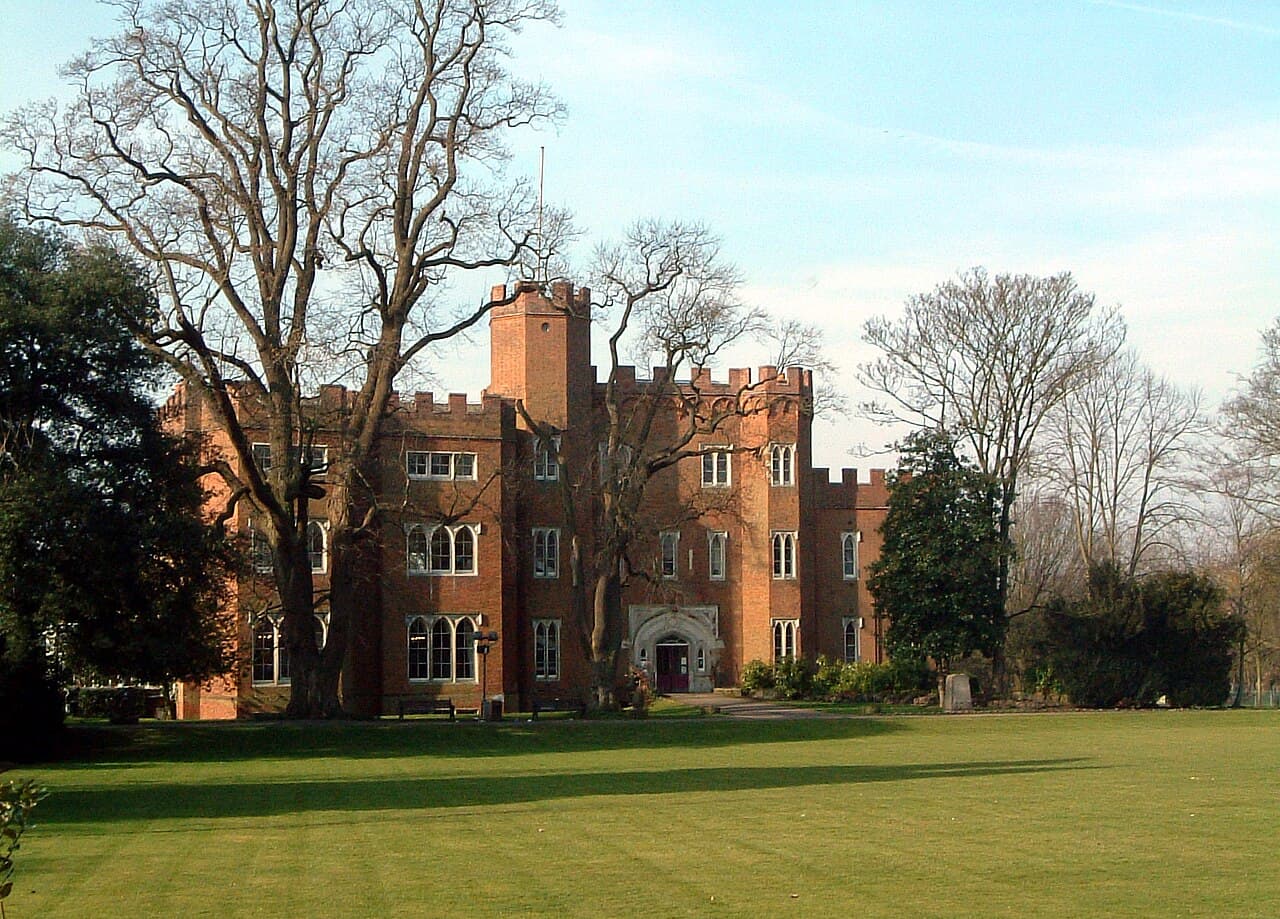
The Tudor period saw significant architectural and functional changes. Henry VIII invested heavily in converting Hertford Castle from a military fortress into a more comfortable civilian palace. The iconic three-story Tudor gatehouse, constructed around 1460–1465 primarily from brick, remains the most prominent feature of the castle today. This gatehouse includes an octagonal stair turret that provided internal access between floors.
Ownership continued to reflect royal favor, with Edward VI granting the castle to Mary I, who used it to imprison Protestant martyrs during her reign. Queen Elizabeth I was known to visit the castle on several occasions, underscoring its continued importance as a royal residence.
From the reign of James I onward, Hertford Castle gradually ceased to function as a royal residence and entered a period of decline. Under Charles I, it was granted to William Cecil, 2nd Earl of Salisbury. In the 17th and 18th centuries, lessees such as Sir William Harrington and Sir William Cowper undertook restoration efforts, though the castle's role had shifted away from its original defensive purpose.
Architectural features and grounds
The castle's original motte-and-bailey layout remains evident today. The motte is a substantial earthen mound approximately 30 meters across and 6.5 meters high, located in the northeast section of the site. This feature provides a direct link to the castle's early Anglo-Saxon origins.
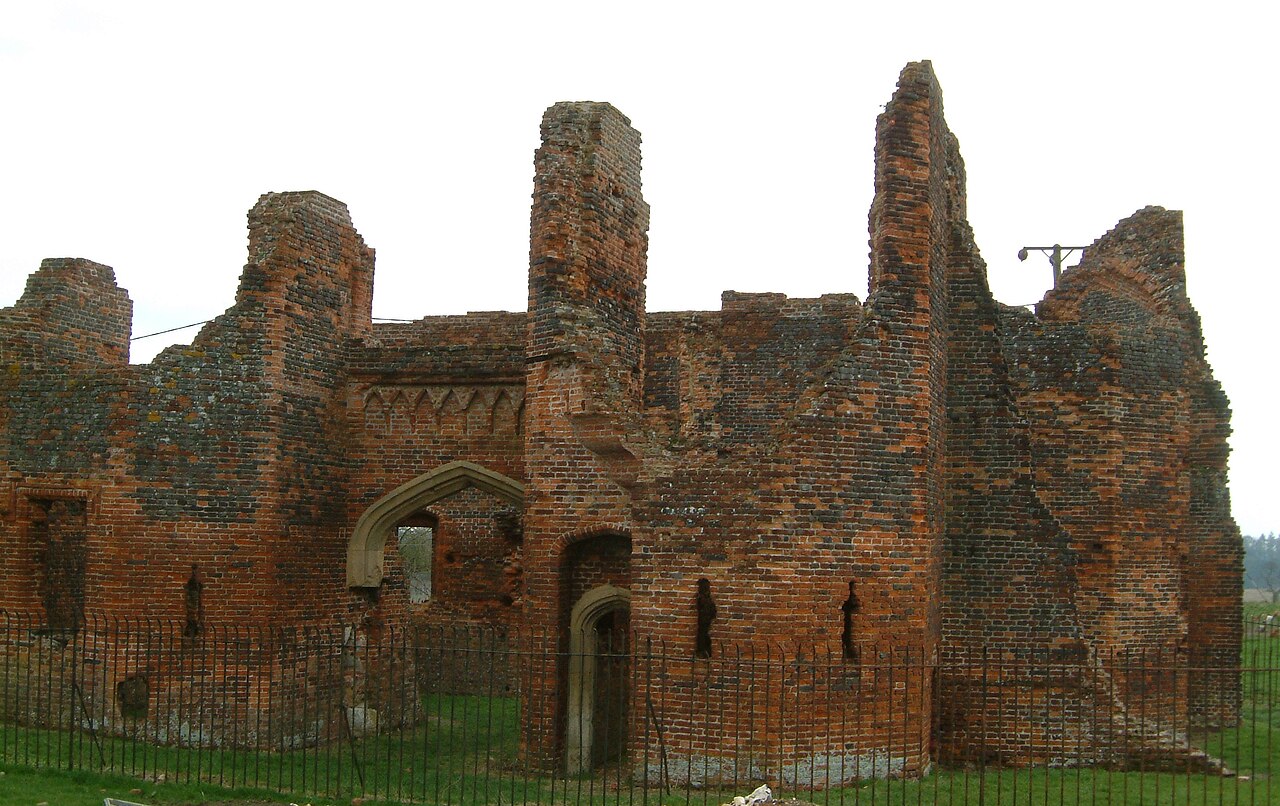
The bailey, covering roughly one hectare, is partially enclosed by surviving stone rubble walls along the southern and eastern edges. These remnants of the medieval curtain walls include the fragmentary remains of a narrow octagonal tower dating from the 14th century, which would have served as a defensive lookout or strongpoint.
The Tudor gatehouse is the best-preserved structure on the site. In the late 18th century, it was expanded with a south wing designed in the Gothic Revival style, featuring pointed arch windows framed with stone and a crenellated parapet concealing a slate roof. Brick battlements were added to enhance its picturesque silhouette. Further expansions in the 19th and 20th centuries included the addition of two two-story side wings in 1937, which enlarged the gatehouse while preserving its historic character.
Archaeological discoveries and preservation
Extensive archaeological excavations between 1977 and 1990 revealed sections of medieval walls and ditches, as well as evidence of the castle's original double moat system. The moat was mainly visible on the southern side before being filled in around 1905. These findings have provided valuable insights into the castle's defensive layout and historical development.
Today, the gatehouse is a Grade I listed building, reflecting its exceptional architectural and historical significance. The remaining portions of the bailey walls hold a Grade II* listing. The castle grounds have been transformed into public gardens, and the gatehouse is used as a venue for events and leased for various purposes, ensuring the site's continued preservation and community engagement.
Hertford castle in the community and tourism
In the 20th century, Hertford Corporation leased the gatehouse for administrative use and developed the surrounding grounds into public gardens, enhancing the castle's accessibility and appeal. The castle remains a cherished heritage site, attracting visitors interested in medieval architecture, Tudor history, and English royal heritage. Its well-preserved structures and picturesque setting provide a unique window into England's past.
Visitors can explore the castle's grounds, appreciate the architectural evolution from Anglo-Saxon fortification to Tudor palace, and participate in cultural events hosted within the historic gatehouse. Hertford Castle exemplifies the layered history of English castles, combining military, residential, and civic roles across centuries.
Frequently asked questions (FAQ)
- How do I get to Hertford Castle?
- Hertford Castle is located in the town of Hertford, Hertfordshire, England. It is accessible by car, local bus services, and is within walking distance from Hertford East railway station.
- What are the visiting hours for Hertford Castle?
- The castle grounds and public gardens are generally open during daylight hours. The gatehouse is used for events and administrative purposes, so visiting hours may vary. It is advisable to check with local tourist information for specific opening times.
- Is there an entrance fee to visit Hertford Castle?
- Access to the castle grounds and public gardens is typically free. Fees may apply for special events or guided tours held within the gatehouse. Visitors should verify current pricing before planning their visit.
- What architectural styles are represented at Hertford Castle?
- Hertford Castle features a mix of architectural styles including Anglo-Saxon motte-and-bailey fortifications, medieval flint walls and towers, Tudor brickwork in the gatehouse, and Gothic Revival additions from the 18th century.
- Can I explore the interior of the Tudor gatehouse?
- The Tudor gatehouse is primarily used for events and leased spaces, so public access to the interior may be limited. Visitors can appreciate its exterior architecture and the surrounding gardens during open hours.
- Why is Hertford Castle historically significant?
- Hertford Castle holds historical significance as a site continuously occupied and modified from the Anglo-Saxon period through the Tudor era, serving as a royal residence, military fortress, and prison for notable historical figures.
Photo gallery

Information
Website
Visit websiteSources & official resources
Verify the information above using these authoritative references.
Loading map...
Visitor reviews
No reviews yet. Been here? Write the first review and help other travelers!
Write the first reviewVisited this castle? Share your experience
Your review helps other travelers and adds first-hand knowledge to our encyclopedia.