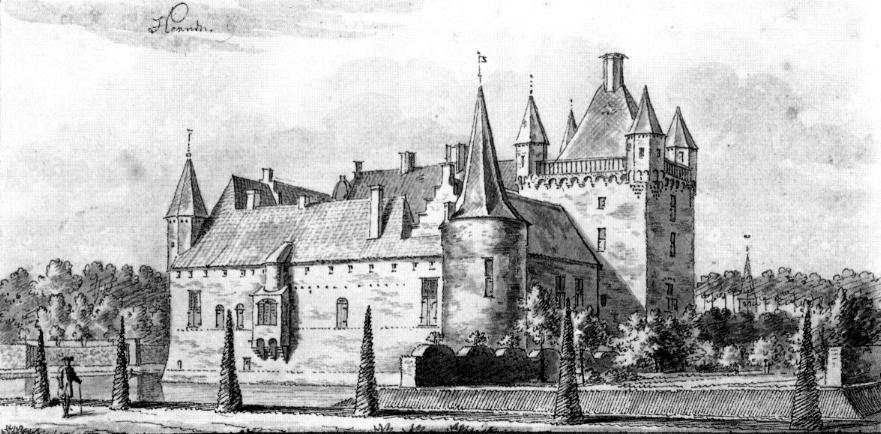
Doddendael Castle
Doddendael Castle is a notable example of a late medieval moated castle located in Ewijk, Netherlands. Constructed in the 1430s, this castle is surrounded by a moat and has witnessed a turbulent history marked by sieges, fires, and restorations. Its strategic position made it a valuable military and residential site throughout the centuries.
Construction and architectural features
The castle was originally built in the 15th century with the primary defensive feature of a surrounding water-filled moat, typical of late medieval fortifications in the region. The moat served both as a defensive barrier and a status symbol. The castle's structure included heavy base walls constructed from local stone, designed to withstand attacks and fires. Although much of the upper structure suffered damage over time, the base walls remain a testament to the robust medieval masonry techniques.
Historical ownership and significance
Initially, Doddendael Castle was owned by various families before being acquired by the Van Stepraedt family in 1489 for 4,000 gold guilders. This purchase marked a significant period in the castle's history, as the Van Stepraedt family were responsible for multiple restorations and adaptations of the castle over the following centuries.
In 1526, Duke Charles of Gelre purchased the castle and used it as a military base. That same year, the castle was attacked during a revolt by the people of Nijmegen, who plundered and set it ablaze. The Van Stepraedt family repurchased the castle in 1528 despite its damaged condition and undertook restoration efforts.
Sieges, fires, and restoration efforts
The castle's strategic importance made it a target during regional conflicts. In 1585, it was occupied by Spanish forces during the turbulent period of the Eighty Years' War. Subsequently, during the Siege of Nijmegen, Prince Maurits recaptured the castle and set it on fire again, leaving only the heavy base walls intact.
Despite these setbacks, the Van Stepraedt family tirelessly restored the castle, demonstrating resilience and commitment to preserving their ancestral home. The castle ceased to be their main residence by the mid-17th century but remained significant in local history.
Religious significance and secret worship
Following the prohibition of Roman Catholicism in the region, the Van Stepraedt family allowed the castle's vault to be used as a conventicle, a secret meeting place for Roman Catholics to attend mass. This aspect of the castle's history highlights its role not only as a military and residential structure but also as a site of religious refuge. Remnants of this conventicle are still visible today, offering insight into the clandestine religious practices during periods of persecution.
Modern restoration and current use
The last major restoration of Doddendael Castle took place in 1977, focusing on preserving the structural integrity and historical character of the building. Today, the castle is well-preserved and serves as a popular venue for parties, weddings, dinners, meetings, and conferences. Its picturesque setting and historical ambiance make it a favored backdrop for various cultural and social events.
Architectural style and classification
Doddendael Castle exemplifies the late medieval architectural style common in the Netherlands during the 15th century. Its classification as a water castle is due to the defining moat that encircles the structure, providing both defense and aesthetic appeal. The castle's robust stone base walls reflect the practical military architecture of the period, designed to resist sieges and fires.
Location and accessibility
Situated in the village of Ewijk, within the province of Gelderland, Doddendael Castle is accessible to visitors interested in medieval architecture and Dutch history. While it remains privately owned and used for events, the castle's grounds and historical significance attract tourists and scholars alike.
Frequently asked questions
- When was Doddendael Castle built? The castle was constructed in the 1430s during the late medieval period.
- What is the architectural style of Doddendael Castle? It is a late medieval water castle featuring a moat and heavy stone base walls.
- Who owned the castle historically? Various families owned it, notably the Van Stepraedt family from 1489, and Duke Charles of Gelre briefly in 1526.
- What significant events affected the castle? The castle was plundered and burnt in 1526, occupied by Spanish forces in 1585, and burned again during the Siege of Nijmegen.
- Is the castle open to the public? While primarily used for private events, the castle grounds can be visited during special occasions.
- What is a conventicle? A conventicle is a secret meeting place for forbidden religious worship, which the castle vault served for Roman Catholics.
- When was the last restoration? The last extensive restoration occurred in 1977 to preserve the castle's structure.
Frequently asked questions (FAQ)
- How do I get to Doddendael Castle?
- Doddendael Castle is located in Ewijk, Netherlands, and can be accessed via public transport or by car. The nearest train station is in nearby Nijmegen, from where you can take a bus or taxi to the castle. Ample parking is available on-site for visitors who choose to drive.
- What is the historical significance of Doddendael Castle?
- Doddendael Castle dates back to the 14th century and is a fine example of medieval architecture. It has played a vital role in the region's history and has been restored to preserve its cultural heritage. The castle serves as a testament to the feudal past of the Netherlands and offers insights into historical lifestyle and defense.
- When was Doddendael Castle constructed?
- Doddendael Castle was originally built in the late 14th century, around 1350. Throughout the centuries, it has undergone several renovations, especially in the 19th century, which have contributed to its current appearance. The rich history of the castle makes it a fascinating site for visitors interested in architecture and history.
- Can I take guided tours of Doddendael Castle?
- Yes, guided tours of Doddendael Castle are available for visitors looking to learn more about its history and architecture. Tours typically include access to various rooms and the castle grounds, led by knowledgeable guides. It is advisable to book in advance, especially during peak tourist seasons.
- Why is Doddendael Castle considered an architectural gem?
- Doddendael Castle showcases a blend of medieval and neo-Gothic architectural styles, making it unique in its design. The intricate details of its stonework, along with the picturesque moat, enhance its charm. The castle's well-preserved state allows visitors to appreciate the craftsmanship of the era.
- Is it possible to host events at Doddendael Castle?
- Yes, Doddendael Castle offers facilities for hosting various events, including weddings, corporate gatherings, and private parties. The scenic surroundings and historical ambiance provide a beautiful backdrop for any occasion. For more information on bookings and availability, contact the castle's administration directly.
- What are the opening hours for Doddendael Castle?
- Doddendael Castle is open to visitors from Tuesday to Sunday, with varying hours depending on the season. Typically, it opens at 10 AM and closes at 5 PM, but it's best to check the official website for any seasonal changes. Special events may also affect regular hours, so planning ahead is recommended.
- What are the ticket prices for visiting Doddendael Castle?
- Ticket prices for Doddendael Castle vary depending on age and type of tour. Generally, adult tickets are priced around €10, while discounts are available for children and seniors. Group rates and family tickets may also be offered, so inquire at the ticket office for the best options.
- When is the best time to visit Doddendael Castle?
- The best time to visit Doddendael Castle is during the spring and early autumn when the weather is mild and the gardens are in bloom. Summer months can be busy with tourists, while winter offers a quieter experience, though some outdoor areas may be less accessible. Regardless of the season, the castle's historical charm is appealing year-round.
- Are there any nearby attractions to visit after Doddendael Castle?
- Yes, after visiting Doddendael Castle, you can explore several nearby attractions, including the picturesque town of Nijmegen, known for its rich history and vibrant culture. The Ooijpolder area offers beautiful natural landscapes for hiking and cycling. Additionally, the Museum Het Valkhof in Nijmegen houses impressive art collections and archaeological artifacts.
Information
Loading map...
Visitor reviews
No reviews yet. Been here? Write the first review and help other travelers!
Write the first reviewVisited this castle? Share your experience
Your review helps other travelers and adds first-hand knowledge to our encyclopedia.