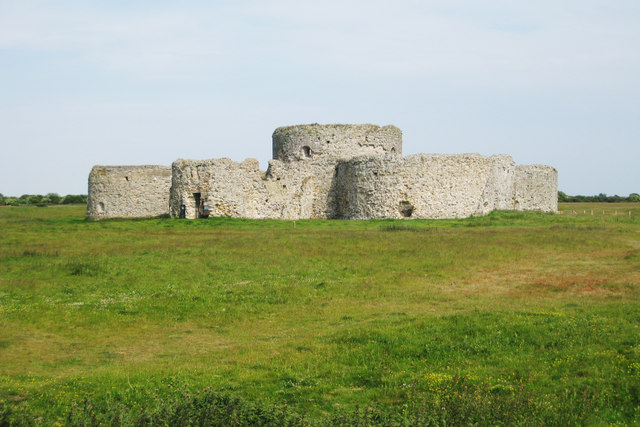
Henry VIII's Forgotten Castle
Camber Castle, located near Rye in England, stands as a significant yet often overlooked example of early modern military architecture. Commissioned by King Henry VIII in the early 16th century, the castle was part of a strategic network of coastal defenses known as the Henrician Castles or Device Forts. These fortifications were constructed in response to the threat of invasion from continental Europe, particularly from France and the Holy Roman Empire. Camber Castle's construction began in 1512 and reflects the transitional period in fortress design, where the introduction of gunpowder artillery necessitated new defensive concepts.
Unlike traditional medieval castles designed primarily to withstand sieges involving ladders and battering rams, Camber Castle was among the first in England built specifically to resist cannon fire and to mount artillery for coastal defense. This shift marked a revolutionary change in military architecture, as the castle's design focused on low, thick walls and angled bastions to deflect and absorb cannonballs. The castle's location between Rye and Winchelsea was strategically chosen to protect the entrance to the harbor and provide a safe anchorage for the English fleet.
Architectural innovation and italian influence
One of the most distinctive aspects of Camber Castle is its architectural style, which diverges from the typical English coastal fortifications of the period. The castle was designed by the German engineer Stefan von Haschenperg, whose work incorporated Italian Renaissance military engineering principles. This influence is evident in the castle's angular bastions and the concentric layout that allowed for overlapping fields of fire, a precursor to the later star fort designs that became widespread in Europe.
The castle's plan consists of a central courtyard surrounded by a curtain wall with four bastions projecting outward. These bastions were designed to mount heavy artillery pieces, enabling defenders to cover the approaches to the castle and the adjacent sea. The thick walls and low profile were intended to minimize damage from enemy cannon fire, a significant evolution from the high stone walls of medieval castles.
Historical context and military significance
Camber Castle was part of Henry VIII's broader coastal defense strategy initiated after his break with the Catholic Church and the subsequent threat of invasion by Catholic powers. The castle was constructed alongside other Device Forts such as Deal, Walmer, and Sandgate, forming a defensive chain along England's southern coastline.
Despite its innovative design, Camber Castle never saw significant military action. Its strategic purpose was to protect the harbor and provide a refuge for the English fleet, but the harbor's silting over time reduced its effectiveness. This natural change in the landscape meant that the fleet could no longer safely anchor behind the castle, diminishing its military value.
Decline and preservation status
Over the centuries, Camber Castle fell into disuse and was gradually abandoned. The silting of the Camber harbor rendered the castle obsolete as a naval defense point. Today, the castle remains as a partially preserved ruin, with significant portions of its walls and bastions still visible. It offers valuable insight into early 16th-century military architecture and the transitional period between medieval fortresses and modern artillery forts.
The castle is managed as a historic site, attracting visitors interested in England's military history and the evolution of fortification design. Its unique blend of English and Italian engineering, along with its connection to Henry VIII's reign, makes it a notable example of Renaissance military architecture in England.
Visiting camber castle
Visitors to Camber Castle can explore the ruins and learn about its history through onsite information panels and guided tours. The site is accessible year-round, with best visits recommended during the spring and summer months when the weather is favorable. The castle's proximity to the towns of Rye and Winchelsea also allows visitors to explore other historical attractions in the region.
Faqs about camber castle
- When was Camber Castle built? Construction began in 1512 under the orders of Henry VIII as part of his coastal defense program.
- What makes Camber Castle architecturally unique? Its design incorporates Italian Renaissance military engineering principles, including angled bastions and a concentric layout, which were innovative for England at the time.
- Can visitors enter the castle? Yes, the castle is open to the public, allowing exploration of the ruins and educational displays.
- Why did Camber Castle fall into disuse? The silting of the nearby harbor reduced its strategic value, preventing ships from anchoring safely behind the castle.
- Is Camber Castle part of a larger network of fortifications? Yes, it was one of several Henrician Device Forts built along England's southern coast to defend against invasion threats.
Frequently asked questions (FAQ)
- How do I get to Henry VIII's Forgotten Castle?
- Henry VIII's Forgotten Castle is located in Rye, United Kingdom. You can reach the castle by car, with parking available nearby, or by public transport, with regular train services to Rye from London and other major cities.
- What is the historical significance of Henry VIII's Forgotten Castle?
- This castle is significant as it was built during the reign of Henry VIII, primarily for defense against French invasions. It reflects the architectural style of the Tudor period and provides insight into the military strategies of the time.
- When was Henry VIII's Forgotten Castle built?
- Construction of Henry VIII's Forgotten Castle began in the early 1540s and was completed shortly thereafter. It was part of a series of fortifications built during the Tudor era to protect the English coastline.
- Can I take guided tours of the castle?
- Yes, guided tours are available at Henry VIII's Forgotten Castle. These tours offer visitors a deeper understanding of the castle's history, architecture, and its importance during the Tudor period.
- Why is the architecture of Henry VIII's Forgotten Castle unique?
- The architecture of Henry VIII's Forgotten Castle is unique due to its combination of military functionality and Tudor design elements. Its circular structure and thick stone walls were designed to withstand attacks, while its decorative features reflect the aesthetics of the period.
- Is it possible to visit the castle year-round?
- Yes, Henry VIII's Forgotten Castle is open to visitors year-round, although specific opening hours may vary by season. Be sure to check the official website for the latest information on hours and any seasonal events.
- What are the ticket prices for visiting the castle?
- Ticket prices for Henry VIII's Forgotten Castle vary depending on age and group size, with discounts available for children and seniors. Family tickets and special rates for groups are also offered, making it accessible for all visitors.
- What is the best time to visit Henry VIII's Forgotten Castle?
- The best time to visit Henry VIII's Forgotten Castle is during the spring and early autumn when the weather is mild and the gardens are in bloom. These seasons also tend to be less crowded, allowing for a more enjoyable experience.
- Are there any nearby attractions to visit after the castle?
- Yes, after visiting Henry VIII's Forgotten Castle, you can explore the charming town of Rye, known for its medieval architecture and cobbled streets. Additionally, the nearby Camber Sands beach and Dungeness nature reserve offer beautiful coastal scenery and outdoor activities.
Information
Website
Visit websiteSources & official resources
Verify the information above using these authoritative references.
Loading map...
Visitor reviews
No reviews yet. Been here? Write the first review and help other travelers!
Write the first reviewVisited this castle? Share your experience
Your review helps other travelers and adds first-hand knowledge to our encyclopedia.