Helmond Castle
Helmond Castle, located in North Brabant, is a remarkable example of a medieval water castle with a rich history dating back to the early 14th century. Constructed around 1325, the castle replaced an older stronghold known as 't Oude Huys, whose remains were uncovered during excavations in 1981, revealing the foundations of a stone keep and various artifacts. This transition marked a significant development in the region's defensive architecture, reflecting the evolving needs and styles of castle construction in the High Medieval period.
The castle's origins are closely tied to the noble families that controlled the surrounding lands. In the 12th century, the area around Helmond was under the possession of the van Hornes. Later, the current castle was owned by the Berlaer family before passing to the van Cortenbach family in 1433. Through marriage, ownership transferred to the Arberg family in 1683. The manor and castle eventually came into the hands of Carel Frederik Wesselman, a mint master, in 1781. This lineage highlights the castle's role as a noble residence and administrative center over several centuries.
Architectural design and defensive features
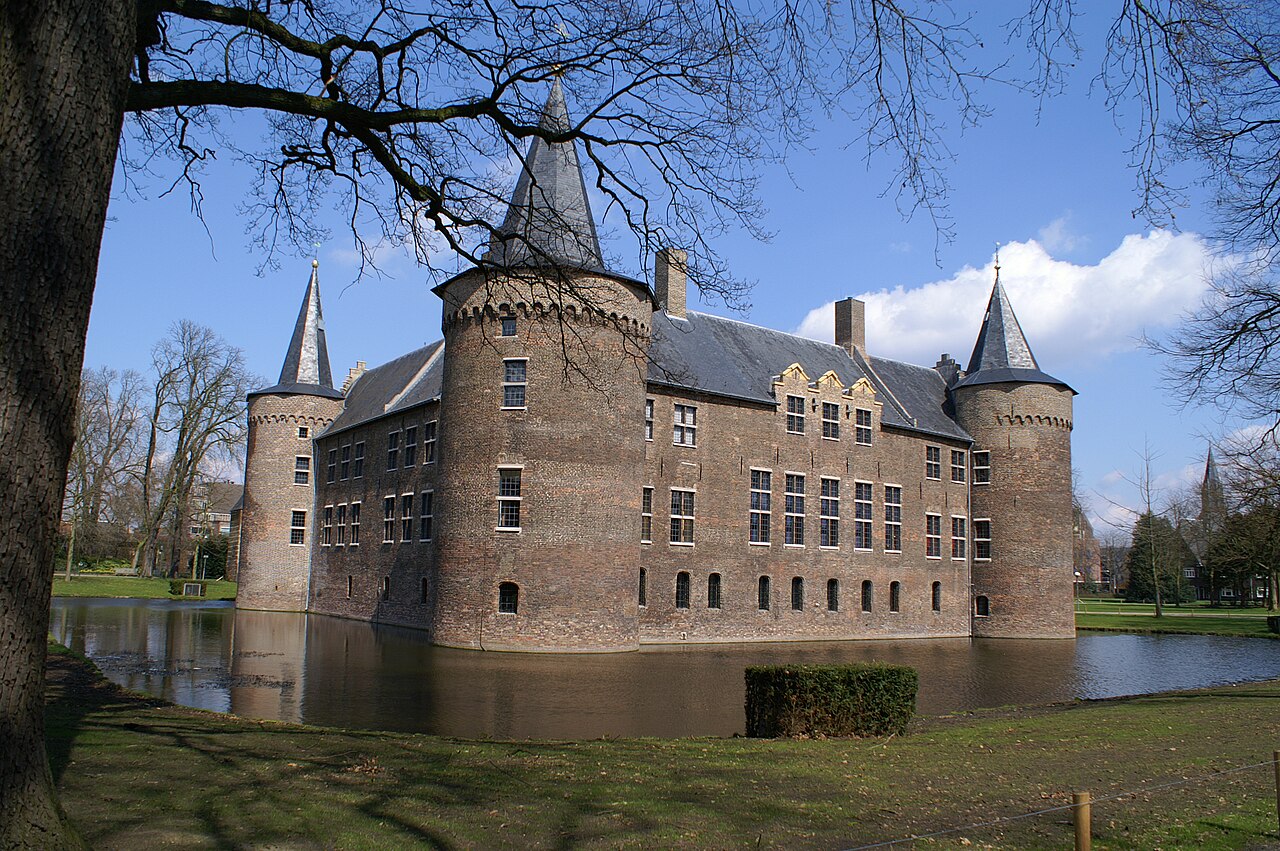
Helmond Castle is designed as a square water castle, measuring approximately 35 by 35 meters, with a distinctive layout featuring a round tower at each corner. Unlike many medieval castles, it lacks a central keep or donjon, a design choice that aligns it with other notable Dutch castles such as Het Muiderslot, Castle Radboud, and Castle Ammersoyen. This square plan with corner towers was considered more effective for defense than older, circular castles, providing better fields of fire and structural stability.
The corner towers each have a diameter of about 8 meters, and the main entrance is located on the north side through a gate building that is nearly integrated with the adjacent structures. Historically, the castle was surrounded by a double ring of moats, although today only the moat directly encircling the castle remains. The presence of multiple moats was a common defensive feature in water castles, enhancing protection against siege and attack.
Additional outbuildings and entrance gates once complemented the castle's defenses and functionality, but many were removed to make way for modern infrastructure, including the construction of the Kasteel-Traverse, a bridge running through the center of Helmond. Despite these changes, the castle's core defensive elements remain intact, showcasing its medieval military architecture.
Historical events and renovations
In 1549, Helmond Castle suffered a significant fire that damaged the west wing and the roofs. Although the fire caused substantial harm, it did not result in total destruction. Renovations and restorations in the 20th century uncovered evidence of the castle's resilience and preservation of original structural elements, particularly in the cellar vaults which remain largely authentic.
The castle's interior has undergone extensive changes over the centuries, with little of the original decoration surviving. However, a few authentic fireplaces on the first floor provide a glimpse into its historic residential use. In 1923, a major renovation introduced a system of corridors in front of the original rooms, adapting the building for new functions.
Modern use and cultural significance
Ownership of Helmond Castle transferred to the municipality of Helmond in 1921, following the bequest by the widow of the last lord, Anna Maria de Jonge van Zwijnsbergen, with the stipulation that the castle be used for public or municipal purposes. After renovation, the castle served as the town hall from 1923 until the 1970s, when municipal operations moved to a new building. Despite this, the castle retained important civic functions, including two wedding halls and the council chamber until 2001.
Since 1982, the castle has housed Museum Helmond, contributing to the cultural heritage and public engagement with the region's history. It also continues to serve as a popular wedding venue, blending its historical ambiance with contemporary uses.
Architectural comparison and significance
Helmond Castle's architectural style is characteristic of the High Medieval period, with a focus on practical defensive design rather than ornate decoration. Its square layout with round corner towers exemplifies a strategic evolution in castle design, prioritizing defense and utility. The absence of a central keep differentiates it from earlier medieval fortifications, emphasizing the importance of the curtain walls and towers.
The castle's preservation of original cellar vaults and fireplaces offers valuable insights into medieval construction techniques and residential arrangements. The integration of the castle into the urban fabric of Helmond, especially with the construction of the Kasteel-Traverse, reflects the balance between heritage conservation and modern urban development.
Visiting helmond castle today
Visitors to Helmond Castle can explore its historic architecture and enjoy the exhibits at Museum Helmond, which showcases the region's history and culture. The castle's picturesque moat and imposing towers provide a striking backdrop for photography and events. Although much of the interior has been adapted for modern use, the castle retains its medieval character and offers a unique window into the past.
The castle's location in North Brabant makes it accessible for day trips from major Dutch cities, and its role as a cultural venue ensures a dynamic visitor experience. Guided tours and special events often highlight the castle's history, architecture, and significance within the region.
Frequently asked questions (FAQ)
- What is the historical significance of Helmond Castle?
- Helmond Castle, with its origins dating back to the late 14th century, is a remarkable example of medieval architecture in Poland. It served as a stronghold and residence for various noble families, reflecting the region's rich history and cultural heritage.
- When was Helmond Castle built?
- Helmond Castle was constructed in the late 1300s, around 1380, showcasing the Gothic architectural style prevalent during that period. Over the centuries, it has undergone various renovations and restorations, preserving its historical essence.
- Can I visit Helmond Castle?
- Yes, Helmond Castle is open to visitors, offering guided tours that explore its history, architecture, and the surrounding gardens. Visitors can immerse themselves in the fascinating stories of the castle while enjoying its scenic views.
- What are the opening hours for Helmond Castle?
- Helmond Castle is typically open from 10 AM to 5 PM, with extended hours during the summer months. It is advisable to check the official website for any seasonal changes or special events that may affect visiting hours.
- Is it possible to access Helmond Castle for individuals with disabilities?
- Yes, Helmond Castle is committed to providing accessibility for all visitors. There are facilities and pathways designed to accommodate individuals with disabilities, ensuring everyone can enjoy the castle's historical significance.
- What is the best time to visit Helmond Castle?
- The best time to visit Helmond Castle is during the spring and early autumn months when the weather is mild, and the gardens are in full bloom. This allows for a more enjoyable experience while exploring the castle's grounds.
- Are there any nearby attractions to visit when at Helmond Castle?
- Yes, the area surrounding Helmond Castle offers several attractions, including local museums and beautiful parks. Visitors can also explore the charming town of Helmond, featuring cafes and shops that showcase the local culture.
- What are the ticket prices for visiting Helmond Castle?
- Ticket prices for Helmond Castle are generally affordable, with discounts available for students and seniors. It's best to check the official website for the most current pricing and any special promotions.
Information
Loading map...
Visitor reviews
No reviews yet. Been here? Write the first review and help other travelers!
Write the first reviewVisited this castle? Share your experience
Your review helps other travelers and adds first-hand knowledge to our encyclopedia.