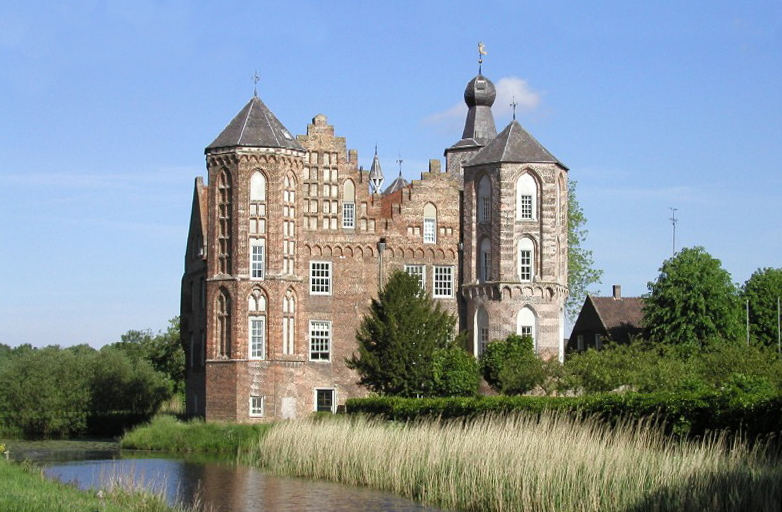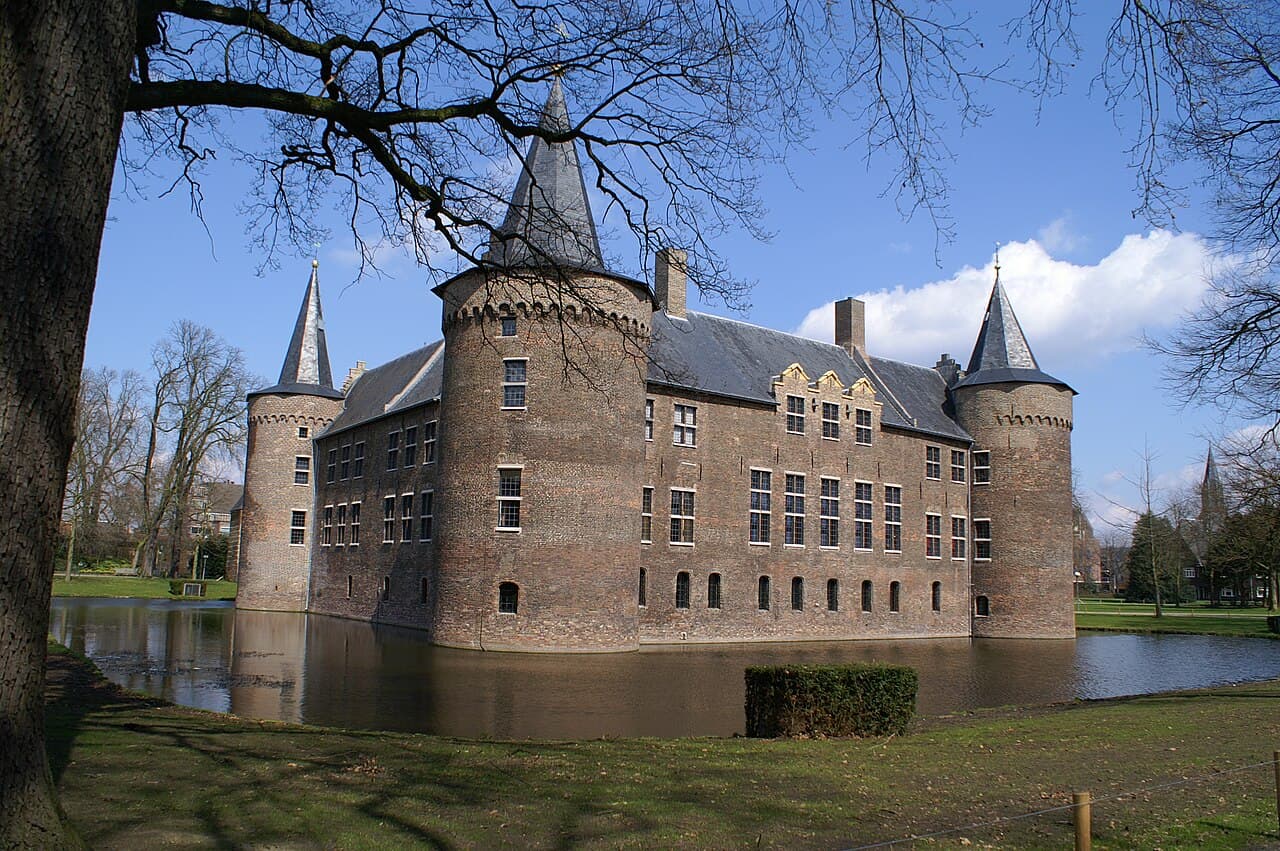
Helmond Castle
Helmond Castle, locally known as Kasteel Helmond, stands prominently in the heart of the town of Helmond, located in the province of North Brabant in the Netherlands. This moated fortress is a remarkable example of a square castle with four circular corner towers, reflecting the typical defensive architecture of the Late Medieval period. Its strategic location and architectural features have played a significant role in the military and political history of the region.
Historical origins and early construction
The construction of Helmond Castle began around 1402, commissioned by a member of the Van Berlaer family to replace an earlier fortress known as ‘t Oude Huys, situated approximately 250 meters to the southwest. Excavations in 1981 uncovered the dungeon remains and artifacts of this older castle, underscoring the long-standing defensive importance of the site. The Van Berlaer family, prominent local lords, established the castle as a seat of power in the region.
Helmond Castle’s design is characterized by its square layout with four circular corner towers. This form closely resembles other Dutch castles such as Ammersoyen Castle, Muiden Castle, and the partially surviving Radboud Castle. The walls, though relatively thin at approximately 1.3 meters, were supplemented by a robust system of double moats which provided an effective defense against artillery, particularly cannons.
Architectural features and defensive design
The castle’s fortifications were intricately linked to the defenses of the surrounding town of Helmond. Originally, the northern towers and the northern curtain wall were topped with crenellations rather than the conical roofs seen today. The main gate was also part of this northern defensive wall. The castle’s reliance on water defenses and its strategic siting contributed significantly to its resilience during multiple sieges.
In 1549, a devastating fire damaged the castle, particularly the west wing. Despite this, the structure was not demolished but repaired, preserving its medieval character. Over the centuries, the castle underwent several modifications, including the addition of large windows during the 20th-century renovations, which altered its original defensive appearance to accommodate new functions.
Helmond Castle during the Eighty Years' War
The castle played a notable role during the Eighty Years' War (1568–1648), a conflict between the Spanish Empire and the Dutch rebels seeking independence. The Lords of Helmond sided with the Spanish, making the castle a target for the Dutch State troops. In 1581, the town of Helmond was captured after a siege, but the castle itself withstood the assault, forcing the attackers to withdraw.
Subsequent sieges in 1587 also failed to capture the castle, highlighting its strong defensive position despite its relatively thin walls. However, the tide turned in 1602 when Prince Maurice of Orange led a siege involving cannon fire. After sustained bombardment, the approximately 45 soldiers garrisoned inside surrendered, marking a significant moment in the castle’s military history.
In 1603, the castle was seized by Walloon troops. Ownership at this time had passed to the Van Cortenbach family, who maintained the property but primarily resided in their estates in what is now Belgium. The castle’s military importance diminished as the political landscape evolved.
Later ownership and transformations
By the late 18th century, the castle was sold to a patrician from Utrecht, who undertook restoration and reconfiguration efforts. The castle remained in private hands until 1920 when it was sold to the town council of Helmond. This transition marked the beginning of a new chapter, as the castle was repurposed as the town hall.
The 20th-century renovations significantly altered the castle’s interior and exterior. Large windows were installed to provide more light, and many original interior elements were lost or replaced. Only a few features such as some stucco ceilings and several fireplaces remain from the original medieval interiors.
Current use and cultural significance
Since 1982, Helmond Castle ceased functioning as the town hall but continues to serve ceremonial purposes, including hosting weddings. It also houses a small museum in its cellars dedicated to the history of the castle and the town of Helmond. This museum offers visitors insights into the castle’s rich past and the local heritage.
Additionally, the castle hosts an art gallery featuring both contemporary and historical collections, enriching the cultural life of Helmond. The preservation of Helmond Castle as a well-preserved moated fortress and its adaptation for modern uses underscore its enduring importance as a landmark of Dutch history and architecture.
Frequently asked questions (FAQ)
- What is the historical significance of Helmond Castle?
- Helmond Castle, dating back to the 14th century, is a prime example of medieval architecture in the Netherlands. Originally built as a defensive fortress, it has witnessed significant events throughout Dutch history, making it a vital landmark in the region.
- When was Helmond Castle built?
- Helmond Castle was constructed in the late 14th century, with its foundations laid around 1350. Over the centuries, it has undergone various renovations, reflecting the architectural styles of different periods.
- Is it possible to visit Helmond Castle?
- Yes, Helmond Castle is open to the public and offers guided tours that allow visitors to explore its rich history and architecture. It is advisable to check the castle's official website for any specific visiting arrangements or events.
- What are the opening hours of Helmond Castle?
- Helmond Castle is typically open to visitors from Tuesday to Sunday, with specific hours varying by season. It is recommended to verify the current opening hours on their website before planning your visit.
- Can I take photographs inside Helmond Castle?
- Visitors are generally allowed to take photographs in designated areas of Helmond Castle. However, it is important to respect any signs indicating restrictions on photography and to be mindful of other guests during your visit.
- What is the best time to visit Helmond Castle?
- The best time to visit Helmond Castle is during the spring and early autumn when the weather is pleasant, and the garden is in bloom. Additionally, these seasons tend to have fewer crowds, allowing for a more enjoyable experience.
- Are there nearby attractions to visit after Helmond Castle?
- Yes, there are several attractions near Helmond Castle, including the Museum Helmond, which showcases local art and history. The beautiful parks and gardens in the vicinity also provide a lovely setting for a leisurely stroll.
- What are the ticket prices for Helmond Castle?
- Ticket prices for Helmond Castle are quite reasonable, with discounts available for children, seniors, and groups. It is best to check the official website for the latest pricing and any special offers that may be available during your visit.
- How do I get to Helmond Castle?
- Helmond Castle is easily accessible by public transportation, with nearby train and bus stations providing convenient options for visitors. For those driving, there is parking available close to the castle, making it simple to reach this historic site.
Photo gallery

Information
Address
Kasteelplein 1, Helmond, Netherlands
Loading map...
Visitor reviews
No reviews yet. Been here? Write the first review and help other travelers!
Write the first reviewVisited this castle? Share your experience
Your review helps other travelers and adds first-hand knowledge to our encyclopedia.