Helfštýn Castle
Helfštýn Castle is a prominent medieval fortress located in the municipality of Lipník nad Bečvou, in the present-day Czech Republic. Perched atop a steep rocky outcrop overlooking the Moravian Gate and the Bečva River valley, it commands a strategic position that has shaped its military and architectural evolution since its foundation in the early 14th century. Established likely by the knight Friduš of Linava after 1312, Helfštýn was built to replace earlier fortifications lost during his marauding campaigns, marking the beginning of a complex history intertwined with regional power struggles and military innovation.
The castle’s initial construction featured a polygonal layout with wooden buildings surrounded by a modest defensive wall and moat. Only a small stone palace with a vaulted cellar on the northern side remains from this earliest phase. The first significant owners, the Lords of Kravaře, controlled Helfštýn from around 1320 for over a century. Under their stewardship, especially during the late 14th and early 15th centuries under Lacek of Kravař, the castle underwent extensive enlargement. This included the construction of a robust two-meter-thick curtain wall enclosing an area approximately 60 by 30 meters, the addition of a new palace wing with a chapel on the eastern side, and the creation of a zwinger, an outer defensive ward designed to impede attackers.
Strategic role during the Hussite wars and later sieges
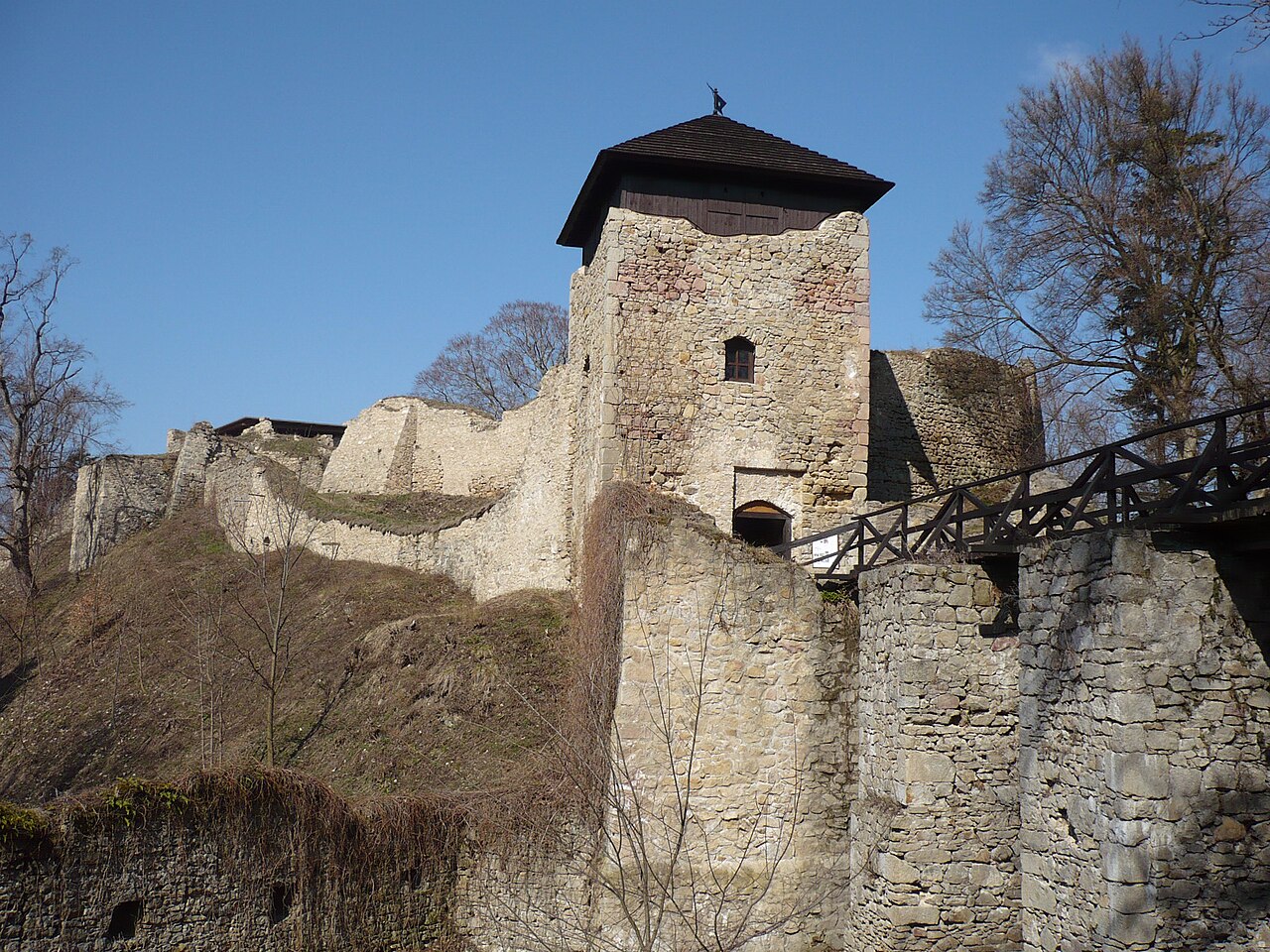
Helfštýn played a pivotal strategic role during the Hussite Wars of the early 15th century. It served as a bastion for Hussite forces, with its fortifications enabling it to withstand several sieges. The castle’s defenses were notably tested during the siege by King Matthias Corvinus in 1468, when Helfštýn successfully resisted his forces. The outer ward, known as the předhradí, was constructed around the turn of the 15th century and featured the Trubačská Tower above the main gate. The walls of this outer ward contain inward-facing towers dating from the Hussite period, highlighting the castle’s adaptation to the evolving demands of warfare.
Architectural evolution and fortification enhancements
With the advent of artillery in the 15th century, Helfštýn’s defenses were upgraded to include casemates—armored gun emplacements within the walls—and various gun positions. Following the 1468 siege, the castle’s entrance was fortified with a corridor flanked by a rectangular tower and a bastion, as well as a small rounded bastion known locally as the "dog kennel" or psinec. The northern palace was expanded with three bastions, though only the northeast bastion survives today. These fortifications formed part of a comprehensive defensive upgrade to meet the challenges posed by emerging military technologies.
During the tenure of the Pernštejn family in the late 15th century, Helfštýn saw extensive late Gothic and Renaissance renovations. These included the construction of a new entrance portal, additional small rounded bastions reinforcing the outer ward, and the creation of a large southwestern outer ward measuring about 150 by 60 meters. This outer ward’s walls featured five horseshoe-shaped bastions designed to withstand artillery and handgun attacks. The main palace was transformed into a two-winged residence with a rare spiral staircase tower on the northern wing, providing access to upper floors. The Trubačská Tower was also reconstructed during this period.
Renaissance palace and architectural significance
The Renaissance palace within the inner ward, attributed to architect Baldassare Maggi and completed under the Bruntálský of Vrbno family, marked a transition from purely military architecture to more comfortable and stylistically sophisticated living quarters. This palace incorporated vaulted rooms and a chapel, reflecting Renaissance architectural influences and the evolving function of the castle as a residence as well as a fortress.
Decline, preservation, and modern restoration
During the Thirty Years’ War in the 17th century, Helfštýn was occupied by imperial troops and endured two sieges by Danish and Swedish forces in 1626 and 1643. After the war, its military importance waned significantly. In 1656, parts of the castle were deliberately dismantled to prevent its future use as a fortress, leading to gradual abandonment and ruin by the late 18th century.
The 19th century brought a renewed appreciation for Helfštýn as a romantic ruin, inspiring early preservation efforts aimed at opening the site for cultural events. The 20th century saw extensive restoration and reconstruction projects, although some early interventions altered original features. More recent conservation has prioritized historical accuracy, including adaptations for the annual blacksmith festival known as Hefaiston. Archaeological and preservation work has continued into the 21st century, culminating in a major reconstruction of the castle’s core completed in 2020, which was honored with the Czech Architecture Award in 2021.
Castle layout and notable features
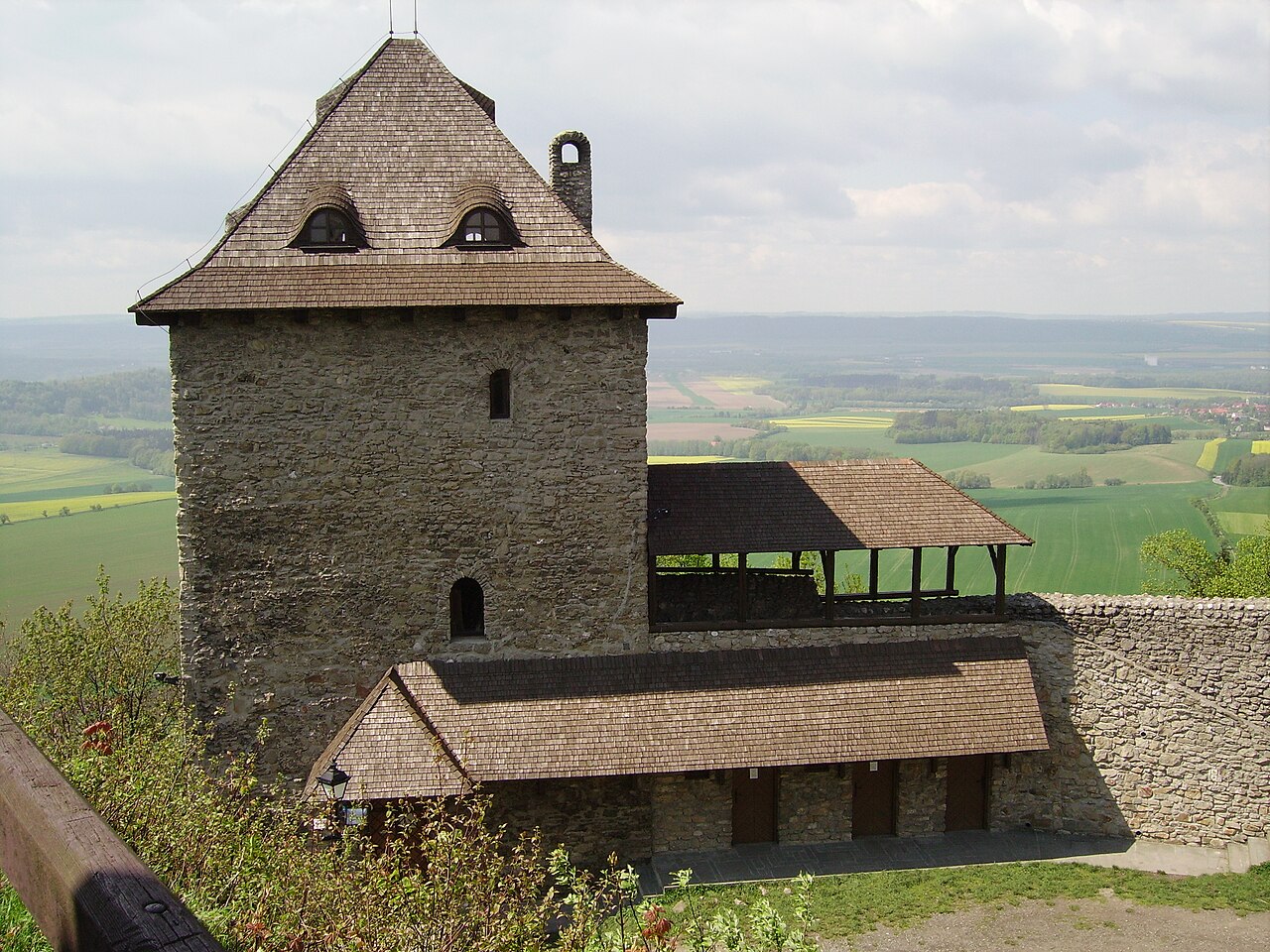
Today, Helfštýn Castle is among the largest castle complexes in the Czech Republic, extending along a long, irregular polygonal plan approximately 187 meters in length and up to 152 meters wide. The site includes five gates and four courtyards, connected by massive defensive walls, towers, and zwinger sections that have been preserved or carefully reconstructed. The bergfried, known as the Hussite Tower, has been fully rebuilt and functions as a viewing platform offering panoramic views of the surrounding landscape.
The castle’s cellars house permanent exhibitions of blacksmith artworks, while the former bakery hosts a blacksmith studio active during the annual Hefaiston blacksmith symposium. This event showcases live forging at multiple historical forges, with wrought metal creations displayed throughout the site. Noteworthy decorative and practical elements include historically forged gates and grilles, a towering forged sculpture called Prometheus near the entrance standing about ten meters tall, and a functional forged chess set.
A historic well known as the Devil’s Well is part of the castle’s features and is associated with local legends. Recent restorative efforts have respected the site’s historical authenticity, adding features such as glass roofing over the palace and converting the northern tower of the outer ward into a lookout, enhancing both preservation and visitor experience.
Frequently asked questions (FAQ)
- How do I get to Helfštýn Castle?
- Helfštýn Castle is located near Lipník nad Bečvou in the Olomouc Region of Czechia. It is accessible by car and local public transport; parking is available near the castle entrance.
- What is the best time to visit Helfštýn Castle?
- The castle is best visited from late spring to early autumn when the weather is favorable for exploring the extensive grounds and outdoor exhibitions, including the annual Hefaiston blacksmith festival.
- Can I participate in the Hefaiston blacksmith festival at Helfštýn?
- While visitors cannot forge themselves, the Hefaiston festival offers live demonstrations by skilled blacksmiths, with many wrought metal artworks displayed throughout the castle grounds.
- Are guided tours available at Helfštýn Castle?
- Guided tours are available and provide detailed insights into the castle's history, architecture, and the blacksmith traditions associated with the site.
- Is Helfštýn Castle wheelchair accessible?
- Due to the castle's hilltop location and historic structure, accessibility is limited. Some areas may be challenging for visitors with mobility impairments.
Information
Sources & official resources
Verify the information above using these authoritative references.
Loading map...
Visitor reviews
No reviews yet. Been here? Write the first review and help other travelers!
Write the first reviewVisited this castle? Share your experience
Your review helps other travelers and adds first-hand knowledge to our encyclopedia.