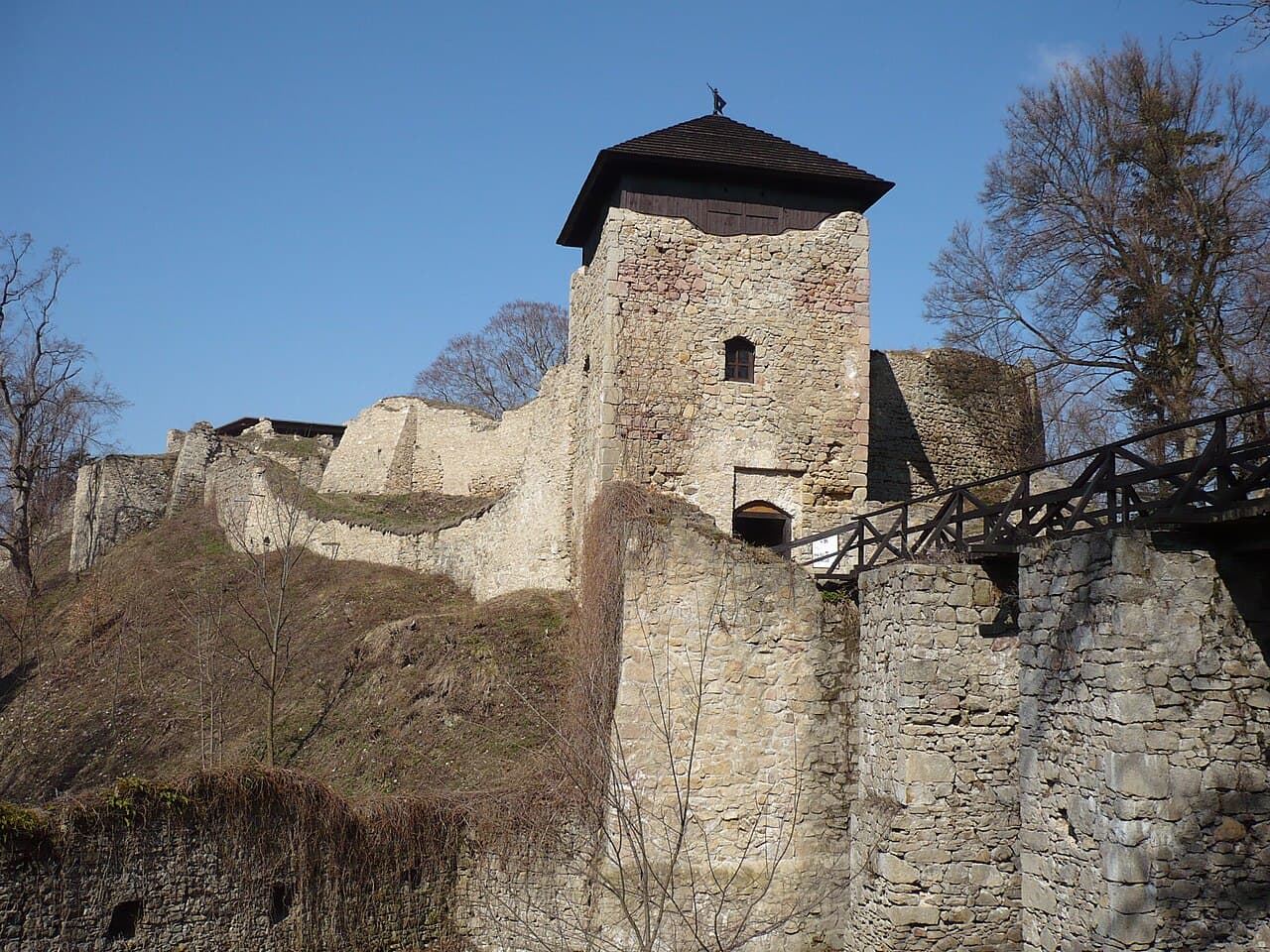
Lukov Castle
Lukov Castle stands as a remarkable example of a Gothic hill castle nestled in the Hostýn-Vsetín Mountains near the village of Lukov in Moravia, Czechia. Its origins date back to the early 13th century, built as a fortified stronghold to protect the Moravian lands during a period of frequent territorial conflicts. The castle’s strategic location on a rocky spur between two stream valleys provided natural defenses that were augmented by extensive walls, bastions, and a complex layout combining an upper castle and a larger lower section known as the Unterburg.
Early history and medieval significance
The first indirect references to Lukov Castle appear in early 13th-century documents. In 1219, a castellan named Bun de Lucowe is mentioned, indicating the castle’s operational status at that time. A 1235 charter by Queen Constance of Hungary identifies a priest named Lambertus associated with Lukov, further confirming the settlement's ecclesiastical importance. The earliest confirmed written record dates to 1332, involving the influential Sternberg family, who held ownership intermittently over the following centuries. Around 1334, King Charles IV briefly took possession of the castle, but by 1342 it reverted to the Sternbergs, reflecting the turbulent ownership patterns common in medieval Moravia.
Ownership and conflicts
Throughout the late Middle Ages, Lukov Castle changed hands multiple times among prominent Moravian noble families such as the Sternbergs, the Lords of Kunštát, and later the Nekeš of Landek. These families often contested property rights, resulting in numerous documented disputes over inheritance during the 15th and 16th centuries. The castle was a focal point during the Bohemian-Hungarian wars, suffering significant damage when it was set ablaze in 1469 by forces under Matthias Corvinus. Following this destruction, the castle was restored and expanded, including the addition of the notable Bastei Johanka bastion, which enhanced its defensive capabilities and made it one of the largest castles in Moravia.
Renaissance and early modern period
In the early 17th century, ownership passed to the prominent military leader Albrecht von Wallenstein through his marriage to Lukrécie Nekeš. During the Thirty Years’ War, the castle was seized by rebel Valach forces but was retaken by Imperial troops in 1627. Shortly thereafter, the castle was sold to Štěpán Šmíd of Freyhofen. However, in 1643, Swedish forces captured the castle and partially demolished its defenses, marking the beginning of its decline. By 1750, official administrative functions had moved from the castle to the nearby village of Lukov, and by the end of the 18th century, the castle was noted as uninhabited and in ruinous condition.
Architectural features and archaeological significance
Lukov Castle was constructed primarily from locally quarried stone, with its layout featuring a combination of an upper castle and a larger lower section or Unterburg. The castle’s defensive system included extensive walls, bastions, and a southern zwinger, an outer defensive courtyard that archaeological excavations have revealed to contain ceramic fragments linked to the Urnfield culture, dating back to the 8th to 9th centuries BCE. This discovery indicates that the site held strategic importance long before the medieval castle was erected.
The chapel of st. john
A significant architectural and religious feature of the castle is the chapel of St. John, originally built in the Romanesque style but later rebuilt in the Gothic architectural style. The chapel was documented in a papal record from 1392 and once housed relics of the Holy Cross, underscoring the castle’s religious significance in the region.
Bastei johanka bastion
The Bastei Johanka is one of the most prominent military architectural features of Lukov Castle. Added during the 15th-century expansion following the castle’s reconstruction after wartime damage, this bastion served as a vital defensive tower protecting the castle’s vulnerable approaches. Its robust construction exemplifies the advancements in military architecture during the late medieval period.
Decline, preservation, and modern status
Following its partial destruction by Swedish forces in 1643, Lukov Castle gradually fell into abandonment and disrepair over the subsequent centuries. By the early 19th century, it was described as a ruin, with some of its walls and bastions still visible but subject to dismantling and stone reuse in nearby constructions.
Starting in 1983, local organizations initiated efforts to restore and study the castle ruins. These endeavors have helped preserve the remaining structures and opened the site to the public, allowing visitors to explore its rich history and architectural remnants. Between 2004 and 2006, biological surveys recorded 35 species of land snails inhabiting the ruins, highlighting the site’s ecological as well as historical importance.
Today, the surviving walls and structural outlines of Lukov Castle provide valuable insights into medieval fortification strategies and the complex history of Moravian nobility. The castle remains a significant cultural landmark, reflecting the layered history of the region from prehistoric times through the medieval and early modern periods.
Frequently asked questions (FAQ)
- How do I get to Lukov Castle?
- Lukov Castle is located near the village of Lukov in the Hostýn-Vsetín Mountains of Moravia, Czechia. Visitors typically reach the site by car or hiking trails from nearby towns. Parking is available in the village, and well-marked paths lead up to the castle ruins.
- What is the best time to visit Lukov Castle?
- The best time to visit Lukov Castle is during late spring to early autumn when the weather is mild and the hiking trails are accessible. The castle ruins are outdoors and can be affected by winter snow and rain, so warmer months provide a more comfortable experience.
- Is Lukov Castle accessible for visitors with limited mobility?
- Due to its location on a rocky hill and the nature of the ruins, Lukov Castle has limited accessibility for visitors with mobility challenges. The terrain involves uneven paths and steep climbs, so appropriate footwear and physical readiness are recommended.
- What architectural styles are visible at Lukov Castle?
- Lukov Castle primarily exhibits <strong>Gothic architectural features</strong>, particularly in its chapel of St. John and defensive structures like the Bastei Johanka bastion. The chapel originally had <strong>Romanesque elements</strong> before its Gothic reconstruction.
- Can I explore the entire castle ruins at Lukov Castle?
- Visitors can explore much of the surviving ruins of Lukov Castle, including the upper castle, lower Unterburg, chapel remains, and defensive bastions. However, some areas may be restricted for safety reasons due to the ruinous condition.
Photo gallery

Information
Website
Visit websiteSources & official resources
Verify the information above using these authoritative references.
Loading map...
Visitor reviews
No reviews yet. Been here? Write the first review and help other travelers!
Write the first reviewVisited this castle? Share your experience
Your review helps other travelers and adds first-hand knowledge to our encyclopedia.