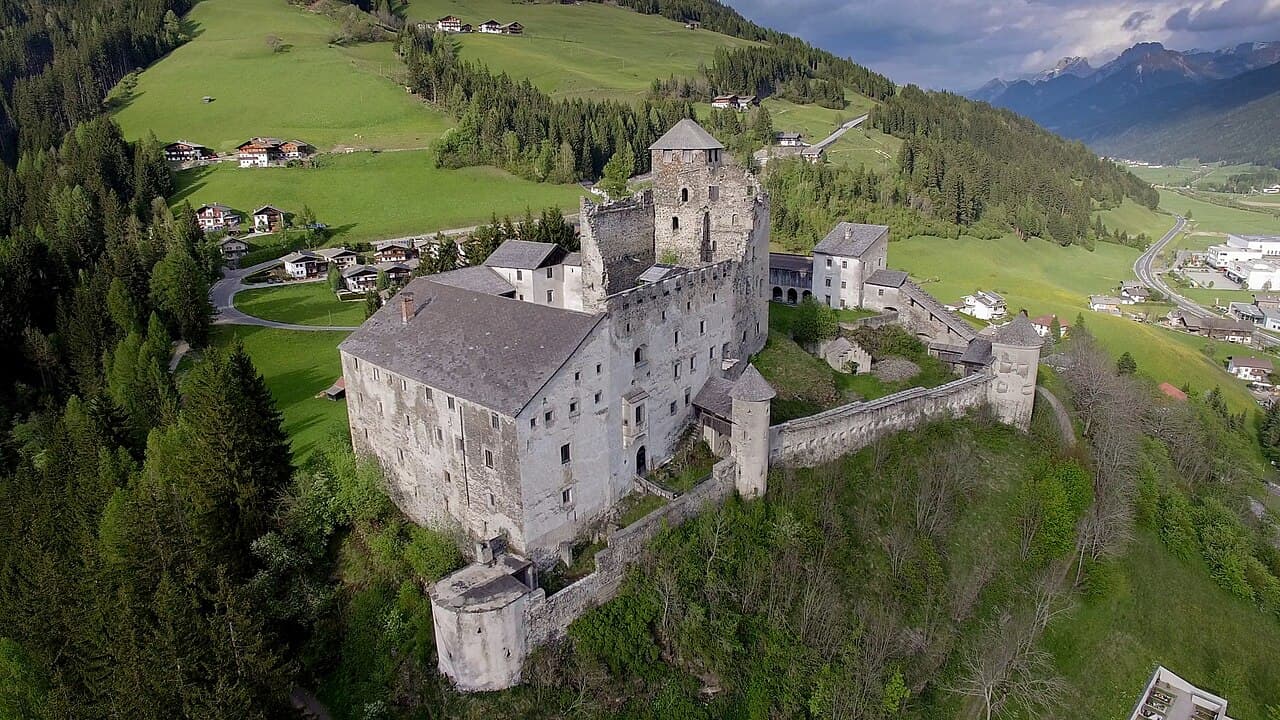
Heinfels Castle
Heinfels Castle is a prominent hill castle situated in the scenic Puster Valley, near the entrance to the Villgraten Valley in Tirol, Austria. Its strategic location has long been significant for controlling access routes through these valleys. The castle's history is deeply intertwined with the medieval power struggles and territorial governance of the region.
The origins and historical context of Heinfels Castle
Although the area around Heinfels was first settled by the Huns around 500 AD, the first documented mention of the castle itself dates to 1243. This places its origins firmly in the high medieval period, a time characterized by the construction of fortified structures to assert feudal control and defend territories. The castle originally belonged to the County of Gorz, an influential noble family that played a significant role in the region's medieval history.
Heinfels Castle was primarily built as a defensive stronghold, leveraging its elevated position to oversee and protect the surrounding valleys. Its location made it a key point of control for trade and military passage, which was crucial during the frequent conflicts of the Middle Ages.
Architectural features and expansions
The castle's initial construction in the 13th century reflects typical high medieval fortification styles, with robust stone walls, defensive towers, and a compact layout suited for defense and residence. The structure was designed to withstand sieges and provide a secure refuge for its occupants.
Significant modifications were made around the beginning of the 16th century, particularly an expansion on the west side. This expansion likely included the addition of new defensive elements and living quarters to adapt to evolving military technologies and the needs of its residents. The castle's fortifications were enhanced to better resist artillery, which was becoming more prevalent in warfare during this period.
Notable architectural elements
- Stone curtain walls that provided formidable defense against attackers.
- Watchtowers strategically placed to maximize visibility over the valleys.
- Gatehouse with defensive mechanisms such as portcullises and murder holes.
- Residential quarters adapted over time to improve comfort while maintaining security.
- Courtyards that served both practical and social functions within the castle complex.
The siege of 1526 and religious conflict
One of the most significant events in Heinfels Castle's history was the siege in 1526 led by Michael Gaismair, a prominent figure in the Tyrolean Peasants' War. Gaismair commanded a force of approximately 2,000 soldiers aiming to challenge the Catholic rule and feudal authorities in the region. The siege reflects the turbulent religious and social upheavals of the early 16th century, as Protestant and revolutionary movements sought to reshape the political landscape.
Despite the siege, the castle's defenses held firm, underscoring the effectiveness of its medieval fortifications and strategic design. This event is a key episode illustrating the castle's role not only as a military stronghold but also as a symbol of feudal power and religious authority during a period of significant change.
Later history and current status
Following the upheavals of the 16th century, Heinfels Castle continued to serve as a noble residence and defensive site, though its military importance gradually declined with the advent of modern warfare. Over the centuries, it underwent various repairs and renovations to maintain its structure and adapt to changing uses.
Today, Heinfels Castle is privately owned, which has helped preserve its historical integrity. While not extensively open to the public, it remains a significant cultural landmark in Tirol, attracting interest from historians, architects, and visitors fascinated by medieval fortifications and Tyrolean history.
Heinfels castle in the context of Tyrolean heritage
Heinfels Castle is an important example of high medieval architecture in the Tyrol region, embodying the military, political, and social dynamics of its era. Its preservation offers valuable insights into the construction techniques and defensive strategies of the Middle Ages, as well as the complex history of religious conflict and noble power in Austria.
The castle's location in the Puster Valley also highlights the strategic importance of this area as a crossroads in the Eastern Alps, linking various cultural and economic regions. As such, Heinfels Castle stands as a testament to the enduring legacy of medieval fortifications in shaping the history and landscape of Tirol.
Frequently asked questions (FAQ)
- How do I get to Heinfels Castle?
- Heinfels Castle is located in the picturesque village of Heinfels, Austria. The castle can be reached by car and is well-signposted from the main roads. Public transport options include regional buses that connect to nearby towns, making it accessible for visitors without a vehicle.
- What is the historical significance of Heinfels Castle?
- Heinfels Castle dates back to the 12th century and played a vital role in the region's defense during the Middle Ages. It served as a stronghold for the counts of Görz and has a rich history intertwined with local nobility and conflicts. Today, it stands as a remarkable example of medieval architecture and history.
- When was Heinfels Castle last renovated?
- The most recent renovations of Heinfels Castle took place in the late 20th century, aimed at preserving its historical features while enhancing visitor experience. Efforts have been made to restore the castle’s structure and ensure its longevity for future generations to enjoy. Ongoing maintenance helps keep the castle in good condition.
- Can I take guided tours of Heinfels Castle?
- Yes, guided tours are available at Heinfels Castle, providing visitors with in-depth knowledge about its history and architecture. Tours typically include access to various parts of the castle and highlight significant historical events. It’s recommended to check the schedule in advance, especially during peak tourist seasons.
- Why is Heinfels Castle a popular tourist destination?
- Heinfels Castle attracts visitors due to its stunning architecture, breathtaking views of the surrounding mountains, and rich historical background. The castle's well-preserved state allows guests to step back in time and appreciate its medieval charm. Additionally, its location near the scenic Puster Valley enhances its appeal.
- Is it possible to host events at Heinfels Castle?
- Yes, Heinfels Castle offers facilities for hosting various events, including weddings, corporate gatherings, and cultural events. The unique historical setting provides a memorable backdrop for any occasion. Interested parties should contact the castle management for details on availability and services.
- What are the opening hours for Heinfels Castle?
- Heinfels Castle is generally open to visitors from late spring to early autumn, with specific hours varying by season. During peak months, the castle often opens daily, while in the shoulder seasons, it may have reduced hours. Check the official website for the most accurate and up-to-date information before your visit.
- How much do tickets cost to enter Heinfels Castle?
- Ticket prices for Heinfels Castle vary depending on age and visitor type, with discounts often available for students and seniors. Children may have reduced entry fees or free admission. It’s advisable to check the official website for current pricing and any special offers that may be available during your visit.
- What are some nearby attractions to visit after touring Heinfels Castle?
- After exploring Heinfels Castle, visitors can enjoy nearby attractions such as the scenic Puster Valley and the charming village of Sillian. Outdoor enthusiasts can also take advantage of hiking trails that offer stunning views of the Dolomites. Additionally, local museums and cultural sites provide further insight into the region's history.
Photo gallery

Information
Website
Visit websiteSources & official resources
Verify the information above using these authoritative references.
Loading map...
Visitor reviews
No reviews yet. Been here? Write the first review and help other travelers!
Write the first reviewVisited this castle? Share your experience
Your review helps other travelers and adds first-hand knowledge to our encyclopedia.



