Hegi Castle

Hegi Castle in Winterthur, Switzerland
Winterthur, Zurich, Switzerland
High Medieval (11th–13th c.)
Well Preserved

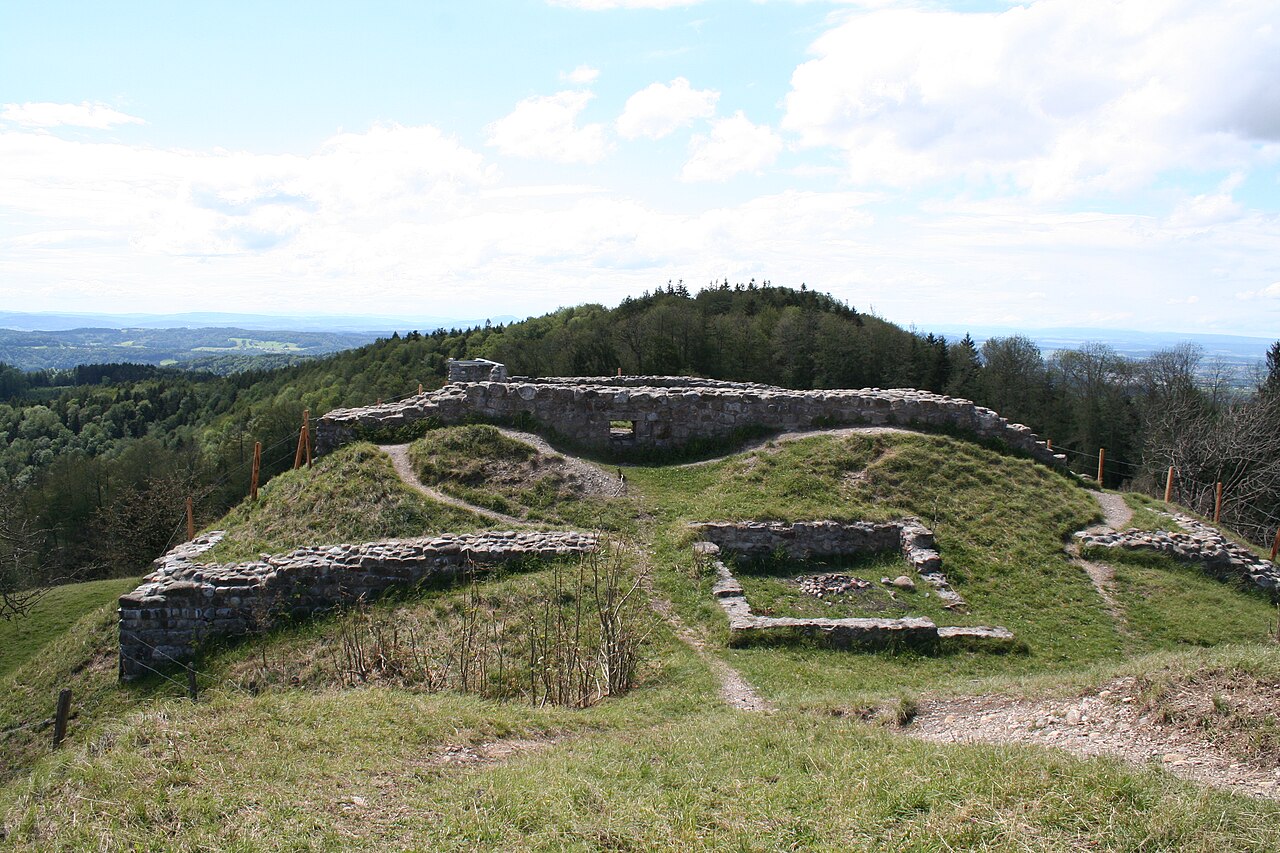
Hegi Castle, located east of Winterthur in Switzerland, is a remarkable example of a High Medieval fortress dating back to the 13th century. This well-preserved castle complex features walls that are approximately 1.6 meters thick and a prominent tower rising to 10 meters, making it a visible landmark from a distance. The castle's strategic position and robust construction reflect the military and residential needs of the medieval nobility during this period.

Architectural features and layout

The castle complex comprises several key structures that illustrate its evolution over time. The oldest part is the residential tower, built around 1200, which served as the main living quarters for the castle's lord. This tower is an excellent example of medieval defensive architecture, combining thick stone walls with narrow windows designed for protection.

Later additions include the knights’ house, which expanded the residential and administrative functions of the castle. This building provided accommodation for knights and retainers, reflecting the castle's role as a feudal center. Adjacent to these is a farm building, indicating the castle’s self-sufficiency and its role in managing surrounding agricultural lands.

The castle's layout is typical of hill castles of the medieval period, designed to maximize defense while providing comfortable living spaces. The 10-meter tall tower served not only as a lookout but also as a symbol of the lord's power and status.

Interior and historical artifacts

Visitors to Hegi Castle step back into the Late Middle Ages through its richly furnished interiors. The castle houses an impressive collection of period furniture, stoves, ceramic items, glass paintings, and weapons that date from the 15th to the 18th centuries. These artifacts provide insight into the daily life and culture of the castle’s inhabitants over several centuries.

The preservation of these items allows a unique glimpse into the domestic and martial aspects of medieval and early modern noble life. The stoves and ceramics, for example, illustrate the technological and artistic developments of the time, while the glass paintings add a decorative and spiritual dimension to the interiors.

Historical significance and usage

Hegi Castle has played various roles throughout its history. Originally built as a fortified residence, it later adapted to changing social and military circumstances. Since 1947, the castle has been open to the public, serving as a museum that showcases its architectural and historical heritage.

Between 1947 and 2000, the castle also functioned as a youth hostel, providing accommodation and educational opportunities for visitors. Today, it operates as a museum and a venue for cultural events, including exhibitions, concerts, and medieval-themed activities that engage the local community and tourists alike.

Gardens and surrounding landscape

Historical photographs reveal that Hegi Castle once had an extensive kitchen garden on its eastern side. Inspired by these images, a new garden was established in 2012, cultivating old vegetable varieties that reflect the castle’s agricultural past.

The produce from this garden is served on weekends in the Schloss Schenke, a former stable converted into a restaurant. This integration of historical agriculture and modern hospitality offers visitors a unique experience that connects them directly with the castle’s heritage.

Visiting and cultural events

Today, Hegi Castle welcomes visitors interested in medieval architecture, history, and culture. The castle’s museum exhibits and cultural programming provide educational and recreational opportunities throughout the year. The combination of well-preserved structures, authentic interiors, and active use as a cultural venue makes it a significant heritage site in the Zurich region.

Its accessibility from Winterthur and the surrounding area makes it a popular destination for day trips and educational tours. The castle’s preserved medieval atmosphere, enhanced by its authentic furnishings and gardens, offers a vivid window into Switzerland’s medieval past.

Frequently asked questions (FAQ)

What is the historical significance of Hegi Castle?
Hegi Castle, located in Winterthur, Switzerland, dates back to the 13th century and showcases the rich history of the region. It served as a fortification and residence for various noble families over the centuries, playing a key role in local governance and defense.
When was Hegi Castle built?
Hegi Castle was originally constructed in the early 13th century, with significant modifications and expansions occurring in subsequent centuries. Its architectural evolution reflects the changing styles and needs of its inhabitants throughout history.
Can I visit Hegi Castle?
Yes, Hegi Castle is open to the public for visits. Guests can explore the castle grounds and learn about its history through guided tours, which are available on specific days.
What are the opening hours for Hegi Castle?
Hegi Castle typically opens its doors to visitors from 10 AM to 5 PM, but it's advisable to check the official website for any seasonal variations or special events that might affect these hours.
Is it possible to take a guided tour of Hegi Castle?
Yes, guided tours of Hegi Castle are available and highly recommended for a more in-depth understanding of its history and architecture. These tours are usually conducted by knowledgeable guides who can share fascinating stories about the castle's past.
What are the ticket prices for Hegi Castle?
Ticket prices for Hegi Castle are generally affordable, with discounts available for students and seniors. It's best to consult the castle's official website for the most current pricing and any special promotions.
When is the best time to visit Hegi Castle?
The best time to visit Hegi Castle is during the spring and fall when the weather is mild, and the surrounding gardens are in full bloom. Additionally, visiting during weekdays can help avoid larger crowds.
Is Hegi Castle accessible for visitors with disabilities?
Hegi Castle is committed to making its facilities accessible to all visitors. There are provisions in place to assist those with mobility challenges, including ramps and designated paths throughout the grounds.
What nearby attractions can I visit while at Hegi Castle?
While visiting Hegi Castle, you can also explore the beautiful parks and museums in Winterthur, such as the Swiss National Museum and the Kunstmuseum. The charming Old Town area is also nearby, offering a variety of shops and cafes to enjoy.

Information

Hill Castle

Loading map...

Visitor reviews

No reviews yet. Been here? Write the first review and help other travelers!

Write the first review

Visited this castle? Share your experience

Your review helps other travelers and adds first-hand knowledge to our encyclopedia.
Write a review

(5/5)

0/2000 characters

Your review will be visible after admin approval

Nearby castles

5.9 km
Kyburg Castle — Switzerland castle

Kyburg Castle

Canton of Zurich, Switzerland

Kyburg Castle, located in the Canton of Zurich, Switzerland, stands as a remarkable testament to medieval fortification and noble lineage in the Swiss plateau. Perched atop a rocky spur overlooking the River Töss, this hill castle has origins dating back to the early 11th century, with its first recorded mention in 1027 under the name "Chuigeburg," which translates to "cow castle," reflecting its initial role as a refuge for livestock during times of unrest. The castle's early history is intertwined with the powerful noble families of the region, notably the counts of Winterthur and later the House of Dillingen. Around the mid-11th century, ownership passed through marriage to the Dillingen family, who established the castle as a significant stronghold. The rise of the Kyburg family in the 12th and 13th centuries marked a period of territorial expansion and political influence, positioning them alongside the prominent Habsburgs and House of Savoy as key players in the region between the Rhine and the Alps. Historical significance and political role Following the extinction of the Kyburg line in 1264, the castle and its territories were inherited by Rudolf von Habsburg, who later became King of Germany. During the late 13th and early 14th centuries, Kyburg Castle held a prestigious role as the repository for the Imperial Regalia of the Holy Roman Empire, symbolizing its importance within the empire's power structure. The castle served as the administrative center of the County of Kyburg under Habsburg control. In the 15th century, the castle and county passed to the City of Zurich, which managed it as a bailiwick. Distinguished citizens served as bailiffs, administering justice and collecting taxes from the castle until the late 18th century. The castle's administrative function ended with the political upheavals of 1798, when local peasants ransacked the fortress during the establishment of the Helvetic Republic. Architectural evolution and features The extant structures of Kyburg Castle predominantly date from the 13th and 14th centuries, reflecting its development from an early wooden fortification to a substantial stone complex. The castle is among the largest surviving medieval castles in Switzerland, featuring a bergfried (a tall defensive tower), a palas (the main residential hall), a chapel, and multiple residential and economic buildings, all enclosed within a formidable ring wall that surrounds a spacious courtyard. Defensive structures Key defensive elements include a thick shield wall constructed in the 13th century between the bergfried and palas, designed to reinforce the castle's core defenses. The castle's entrance is fortified with a northern ring wall and a gate adorned with the lordly coat of arms and the Imperial eagle, symbolizing its noble and imperial affiliations. The upper bergfried was rebuilt in durable tuff stone during the 15th century, featuring a high entrance approximately 11 meters above ground level for added security. Residential and religious buildings The palas is notable for its impressive size, with approximately 290 square meters of living space per floor, making it one of the largest hall buildings in the German-speaking world of its time. The castle chapel, likely built around 1200, retains its original nave, choir, and side choir. It houses significant late Gothic frescoes commissioned by the city of Zurich in the 15th century, depicting religious scenes and the life of the city's patron saint, Saint Regula. These murals were concealed during the Reformation and rediscovered in the 19th century, undergoing careful restoration and conservation in the late 20th century. Later history and preservation After its administrative use ended in the early 19th century, the castle faced potential destruction when it was auctioned and purchased by Franz Heinrich Hirzel, who intended to dismantle it for building materials. Preservation efforts by local citizens and the acquisition by the Polish Count Alexander Sobansky in 1835 saved the castle from ruin. Sobansky and subsequent owners maintained the castle as a residence and cultural site. In the late 19th and early 20th centuries, the castle underwent restorations inspired by medieval romanticism, with efforts to open it as a museum. The Canton of Zurich repurchased Kyburg Castle in 1917 and invested in significant renovations during the 1920s. Since 1999, the castle has been operated by the Verein Museum Schloss Kyburg society, which manages its museum exhibitions and preservation. Notable artifacts and cultural heritage Among the castle's unique features is the so-called "Iron Maiden", a 2.37-meter-tall wooden structure covered with iron spikes. Although displayed historically as a torture device, it is not a genuine medieval artifact but rather a symbolic piece acquired in the 19th century. The castle's courtyard has hosted various cultural events, and its well-preserved medieval architecture offers valuable insights into the evolution of castle construction and noble life in medieval Switzerland. Today, Kyburg Castle stands as a significant cultural and historical landmark, illustrating the complex history of noble families, imperial power, and urban administration in the Swiss plateau. Its architectural grandeur and rich collection of art and artifacts continue to attract scholars, tourists, and history enthusiasts alike.

High Medieval (11th–13th c.)
Details
6.3 km

Alt-Wülflingen Castle

Winterthur, Switzerland

Alt-Wülflingen Castle stands as a significant medieval hilltop fortress located in the municipality of Winterthur, Switzerland. Perched on a wooded hill at an elevation of 541 meters above sea level, this castle offers commanding views over the Totentäli valley and the surrounding landscape, including the nearby Töss river and Brüelberg hill. Its origins trace back to the early medieval period, with the site initially fortified by the Alemannic people, a Germanic tribe that settled the region. The nearby village of Wülflingen was first documented in 897 as "Wulfilinga," reflecting its foundation by this tribe, establishing the area's early historical significance. The castle itself likely emerged by the mid-11th century, possibly evolving from an earlier refuge castle used for defense during turbulent times. From at least the 10th century, the site served as the residence of a local comital family, marking it as a regional power center. The noble lineage of Wülflingen played a prominent role in the castle's history, with notable figures such as Willebirg von Wülflingen and her descendants. Among them was Hunfried, who held important ecclesiastical and imperial positions, including serving as chancellor to Emperor Henry III and later as archbishop of Ravenna. This connection underscores the castle’s historical importance beyond its military function. Medieval origins and strategic importance The castle gained historical prominence in 1055–56 when Count Kuno of Achalm, residing at Alt-Wülflingen, detained the Bishop of Regensburg under imperial orders. This event highlights the fortress's strategic role in regional power struggles. In 1089, the castle and its lands were donated to Zwiefalten Abbey, reflecting the common medieval practice of transferring properties to religious institutions. However, disputes eventually led to the castle returning to secular control. Throughout the following centuries, ownership of Alt-Wülflingen Castle passed through several noble families, including the counts of Horburg. By 1239, the site was under the control of the Habsburg-Kyburg line, a powerful dynasty that shaped much of Central European history. It was during this period, likely in the 13th century, that the castle’s main tower, or bergfried, was constructed. This tower remains the most prominent surviving feature of the castle today. Architectural features and the bergfried tower The bergfried of Alt-Wülflingen Castle is a quintessential example of medieval military architecture. Measuring approximately 7.3 by 7.3 meters at its base, the tower’s walls are constructed from large sandstone blocks with a distinctive rusticated finish known as buckelquader. These walls, up to 2.25 meters thick, provided formidable defense against siege weapons and attackers. The tower rises to about 18 meters in height and contains two internal spiral staircases that facilitate movement between floors and access to the upper levels. Visitors today can ascend 76 steps to reach a viewing platform situated 15 meters above ground level. This platform once served as a lookout point, offering wide-ranging surveillance essential for early warning against approaching enemies. The original entrance to the bergfried was located above ground level, a defensive feature common in medieval keeps designed to impede attackers. This elevated doorway was restored and reopened during renovations in the 1980s, while a later ground-level door added in subsequent centuries was sealed off in 1936 to maintain historical authenticity. Ownership transitions and historical events After the Habsburg period, the castle was held by various noble families as a fief, including the von Wülflingen, von Hettlingen, and von Seen dynasties. In 1376, the lordship was pledged to Hartmann von Seen, and later inherited by Ulrich VIII von Landenberg-Greifensee, who made the castle his residence. Toward the end of the 15th century, ownership passed by marriage to the von Rümlang family. Their tenure was marked by financial difficulties and political conflicts, culminating in the execution of Hans Konrad von Rümlang in 1529, a dramatic event reflecting the instability of the era. The early 16th century brought further change when Hans Steiner acquired the castle and lordship in 1528. The region suffered a devastating plague outbreak in 1596, which severely affected the local population and claimed the life of the then-lord, Sebastian Steiner. Attempts to sell the castle to the nearby city of Winterthur in 1634 initially failed, but later that year, the families Escher and Meiss purchased the property. They built a new residence in the village below, utilizing stones from the castle ruins in the construction, which contributed to the castle’s gradual physical decline. Decline, restoration, and preservation efforts The castle’s judicial authority persisted until 1760 when sovereignty transferred to the canton of Zurich. The bergfried was used as a prison until at least 1764, after which the castle fell into disrepair. Outbuildings were removed in 1834, and stones were repurposed locally, accelerating the ruin. A significant earthquake in 1911 caused further damage to the already fragile structure. Restoration efforts began in 1895, focusing initially on stabilizing the bergfried. These included adding a tiled roof and repairing the walls during the 20th century to prevent further deterioration. In the 2010s, concerns about weather damage led to the installation of protective coverings over the ruin. The most recent extensive masonry restoration was completed in 2018, preserving the bergfried as a prominent medieval landmark in the region. Castle layout and remaining structures Alt-Wülflingen Castle’s layout reflects the typical features of a medieval hill castle, with a central fortified tower surrounded by residential and ancillary buildings. While the bergfried remains the dominant surviving structure, only faint traces of the residential wing, inner courtyard, and outbuildings are visible today. Historically, barns and stables were situated near the hill’s base by the Töss river, supporting the castle’s agricultural and logistical needs. The reuse of castle stones in the 17th century for constructing Schloss Wülflingen in the village below significantly contributed to the castle’s ruinous state. Modern conservation measures have included stabilizing the wall tops with metal straps and installing roofing to shield the masonry from weather erosion, ensuring the site’s preservation for future generations. Cultural significance and visitor experience Today, Alt-Wülflingen Castle stands as a well-documented and protected medieval monument that offers visitors insight into the region’s feudal past and architectural heritage. The bergfried tower provides a tangible connection to medieval defensive strategies and noble residence life. Its elevated viewing platform allows visitors to appreciate the strategic location chosen by its builders and enjoy panoramic views of the surrounding Swiss landscape. The castle’s layered history, from its early Alemannic roots through its association with powerful noble families and its role in regional conflicts, enriches its cultural significance. Preservation efforts have ensured that this historic site remains accessible and informative, making Alt-Wülflingen Castle a valuable destination for those interested in medieval architecture, Swiss history, and heritage conservation.

High Medieval (11th–13th c.)
Details
8.9 km
Schauenberg Castle — Switzerland castle

Schauenberg Castle

Hofstetten, Switzerland

Schauenberg Castle stands prominently near the municipality of Hofstetten in Switzerland, perched atop the Schauenberg hill at an elevation of approximately 892 meters above sea level. This hill castle is a remarkable historical site, showcasing layers of human activity spanning from prehistoric times through the medieval period and beyond. Its strategic location has made it a focal point for defense, habitation, and military signaling for millennia. The hilltop's earliest known fortifications date back to the Bronze and Iron Ages, roughly between 2200 and 15 BCE. Archaeological evidence reveals a complex system of wooden palisades and ditches encircling the summit, forming a protective enclosure likely used as a refuge or settlement. These early earthworks highlight the long-standing importance of the site as a defensible position in the region. The prehistoric and Roman heritage of Schauenberg hill Beyond the Bronze and Iron Age fortifications, the site bears traces of activity during the Roman era (circa 15 BCE to 400 CE). A significant find—a Roman key discovered within the medieval castle precinct—attests to the continued recognition and possible utilization of the hilltop during Roman times. While no major Roman structures have been identified, this artifact suggests the site remained strategically or symbolically important through successive cultural phases. Medieval construction and architectural evolution Early wooden fortifications and noble residence Circa 1200 CE, the first medieval fortification was established on the western side of the hilltop. This initial castle was primarily constructed of wood and featured a cellar hewn directly into the rock, serving as a foundation for the superstructure. Supplementary wooden buildings occupied other parts of the summit, collectively forming a modest but defensible noble residence. The site was further protected by surrounding ditches and walls, enhancing its defensive capabilities. Transition to stone architecture and defensive enhancements By approximately 1250 CE, the wooden structures were supplanted by a substantial stone residential tower, commonly known as a keep. This transformation marked a significant upgrade in the castle's defensive and residential stature. Key defensive features included a neck ditch cut through the bedrock, which restricted access to the keep, and a probable zwinger—an outer courtyard enclosed by a western stone wall designed to trap and expose attackers to defensive fire. Historical ownership and events The castle is first documented in 1260 under the name "castro Schowenberc" and is associated with the noble family of Rudolf von Schauenberg, mentioned in records dating to 1242. In 1302, the Abbey of St. Gallen granted the castle's fief to Walter von Kastell. Around 1330, control passed to Beringer von Hohenlandenberg, a figure noted in contemporary chronicles for acts of robbery and counterfeiting. In 1344, following breaches of peace agreements by Beringer, a coalition of Austrian authorities and citizens from Winterthur and Zürich launched a military campaign that culminated in the castle's destruction. Archaeological evidence, including limited movable objects and pottery, indicates the site was largely abandoned prior to this event. The castle was never rebuilt, marking the end of its medieval occupation. Post-medieval military use and preservation During the Thirty Years' War in the 17th century, the strategic value of Schauenberg hill was renewed. Zürich authorities constructed a high watchtower (Hochwacht) on the summit, integrating the site into a broader network of signal towers designed to provide early warning of military threats. This watchtower leveraged the hill's natural vantage point to maintain regional security through visual communication. Today, the castle ruins and the surrounding summit area, including a triangulation point near 894 meters elevation, are owned by the canton of Zürich. The adjacent alpine pasture lands are managed under lease agreements, preserving the natural landscape around the historic site. Archaeological remains and layout The archaeological remains at Schauenberg Castle reveal a multi-layered history. The prehistoric fortifications consist of remnants of wooden palisades and ditches, indicative of early defensive strategies. The medieval castle's footprint includes the rock-hewn cellar, the foundations of the stone keep, and surviving sections of the neck ditch and western defensive wall. Excavations conducted between 1976 and 1979 uncovered only small quantities of pottery shards and limited artifacts, supporting the conclusion that the castle was abandoned before its 14th-century destruction. The preserved ruins provide valuable insights into medieval construction techniques and the strategic adaptations made over time. Geographical context and strategic significance Schauenberg hill is situated within a landscape of rolling hills, with the notable peak of Schnebelhorn approximately 17 kilometers to the southeast. The hill's elevation and commanding views made it an ideal location for monitoring movement and controlling the surrounding territory. This strategic advantage was recognized and utilized from prehistoric times through the medieval period and into early modern military planning. The castle's ruins remain a testament to the site's enduring importance and the complex history of fortification in the region. Visitors today can explore the preserved stonework and earthworks, gaining a tangible connection to centuries of defensive architecture and local noble history.

High Medieval (11th–13th c.)
Details