Hay Castle — United Kingdom castle

Hay Castle

Hay castle: the kingdom of books in wales
Hay-on-Wye, Wales, United Kingdom
High Medieval (11th–13th c.)
Partially Restored

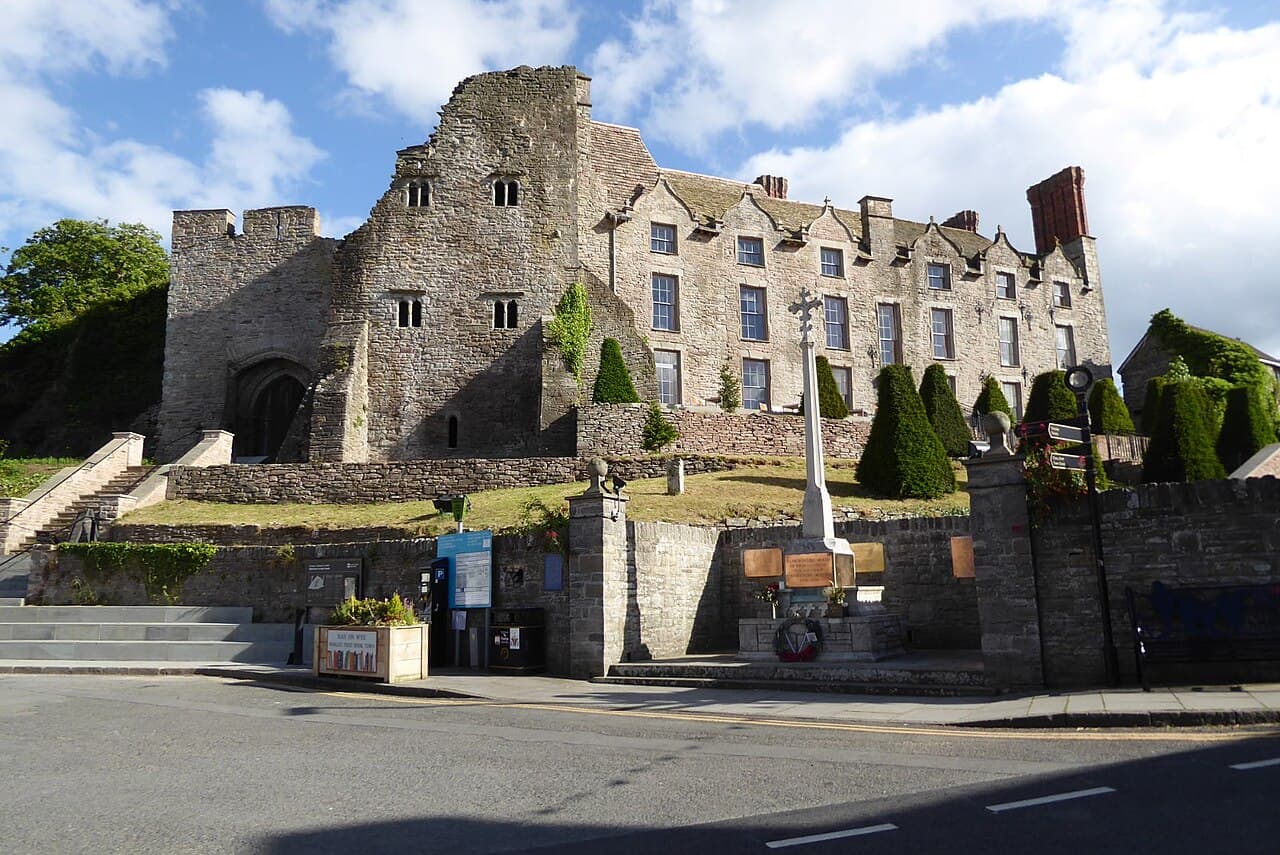
Hay Castle, located in the picturesque town of Hay-on-Wye on the edge of the Brecon Beacons National Park in Wales, is a remarkable example of a medieval fortress that has evolved through centuries into a cultural landmark known as the "Kingdom of Books." This hill castle boasts a rich history dating back to the late 11th or early 12th century, initially constructed as a defensive ringwork fortification by Norman invaders during their expansion into Wales. Its strategic position overlooking the town allowed it to play a significant role in the region's turbulent medieval conflicts.

The castle's early wooden defenses were replaced around 1200 by the powerful de Braose family, who rebuilt the structure in stone, adding a substantial stone keep and a protective curtain wall. This transformation marked Hay Castle's transition into a formidable stronghold. Throughout the High Medieval and Late Medieval periods, Hay Castle was repeatedly embroiled in conflicts including the First and Second Barons' Wars, Welsh uprisings led by princes such as Llywelyn ab Iorwerth, the rebellion of Owain Glyndŵr, and the Wars of the Roses. These events led to multiple attacks and burnings, reflecting the castle's strategic importance in both English and Welsh power struggles.

Architectural evolution and features

Medieval fortifications and the stone keep

The original ringwork earthworks, measuring approximately 85 by 70 metres, formed an oval-shaped defensive enclosure. The surviving curtain wall fragment, about 12 metres long and 1.8 metres thick, hints at the castle's once formidable fortifications. The stone keep, built adjacent to the gateway, measures roughly 10 by 8.3 metres and features a low basement beneath three residential floors. Notable Norman architectural elements survive, such as characteristic double windows, although the stonework is somewhat fragile compared to other keeps of the era.

Jacobean mansion and later additions

In the 17th century, a significant architectural shift occurred with the construction of a Jacobean mansion house adjoining the medieval keep. This mansion incorporated the upper floors of the old keep, blending medieval defensive architecture with more domestic, residential design. The mansion is distinguished by seven Dutch-style dormer gables, a grand central staircase, and a richly decorated roof with multiple gables, exemplifying the late Jacobean architectural style. The castle's original gateway remains intact, preserving two wooden doors from different periods: one dating from around 1300 and another from the early 17th century, illustrating the castle's continuous adaptation over centuries.

Historical significance and ownership

Hay Castle's history is deeply intertwined with the Norman conquest and subsequent English-Welsh conflicts. Its initial construction as a ringwork fortification was part of the Norman strategy to control newly conquered territories. The castle passed through the hands of several prominent noble families, including the de Braose, de Bohun, Earls of Stafford, and Dukes of Buckingham. Periods of forfeiture and royal control followed executions and political upheavals, reflecting the castle's importance in regional power dynamics.

During the 17th century, the castle transitioned from a military fortress to a private residence, with the addition of the Jacobean mansion and formal gardens. In the 19th century, industrialist Sir Joseph Bailey acquired the estate, enhancing it with a walled kitchen garden known as Castle Gardens. The castle served various roles, including a town gaol until 1812 and later a vicarage from 1825.

Modern history and cultural rebirth

The 20th century brought both restoration and tragedy to Hay Castle. Architect W. D. Caröe undertook restoration work in 1910, but serious fires in 1939 and 1977 caused extensive interior damage. In the early 1960s, local bookseller Richard Booth purchased the castle, transforming it into a renowned second-hand bookshop. Booth's passion for literature turned Hay-on-Wye into a celebrated "Town of Books," earning Guinness World Records recognition for the castle's vast collection of over a million books.

Booth's self-declaration as "King of Hay" in 1977 further cemented the town's unique cultural identity. Since 2011, the Hay Castle Trust has led a comprehensive restoration project funded by significant grants, aiming to preserve the castle's historical fabric while repurposing it as a centre for arts, literature, and education. The castle reopened in 2022, symbolizing a successful fusion of heritage conservation and contemporary cultural use.

Castle grounds and surrounding features

The castle grounds include remnants of formal gardens from the early 17th century, with traces of 18th-century layouts and 19th-century terracing. A 19th-century stable block remains on the estate, alongside the partially preserved walled kitchen garden. Nearby lies the earlier motte and bailey castle known as Hay Tump, now a low mound marking the site of the original Norman fortification outside the town.

Recent restoration efforts have focused on stabilising the medieval structures and refurbishing the Jacobean mansion to serve as a vibrant cultural hub. These works ensure that Hay Castle remains a testament to the layered history of Welsh and Norman architecture, as well as a beacon for literary and artistic communities.

Frequently asked questions (FAQ)

What is the historical significance of The Kingdom of Books?
The Kingdom of Books, located in Hay-on-Wye, is renowned for its rich literary heritage and is often referred to as the "town of books." It has become a cultural hub that celebrates literature, hosting the annual Hay Festival, which attracts authors and book lovers from around the globe.
When was The Kingdom of Books established?
The Kingdom of Books was established in the late 20th century, with the first second-hand bookshops opening in the 1960s. Over the years, it has grown into a beloved destination for bibliophiles, boasting numerous bookshops and literary events.
Can I visit The Kingdom of Books year-round?
Yes, The Kingdom of Books is open to visitors throughout the year, although individual bookshops may have varying hours. It is advisable to check specific shop hours before your visit to ensure you can explore the extensive collections available.
Is it possible to access The Kingdom of Books with limited mobility?
While some areas of The Kingdom of Books are accessible, certain bookshops may have narrow aisles and steps. It is recommended to contact individual shops in advance to inquire about their accessibility options and to ensure a comfortable visit.
What are the best times to visit The Kingdom of Books?
The best times to visit The Kingdom of Books are during the spring and summer months, particularly during the Hay Festival in late May. These seasons offer pleasant weather and a vibrant atmosphere, making it ideal for exploring the town's literary treasures.
What are the ticket prices for events at The Kingdom of Books?
Most bookshops in The Kingdom of Books do not charge an entry fee, but specific events, such as the Hay Festival, may require tickets. Prices for these events vary, so it is recommended to check the festival's official website for the most accurate information.
What are the opening hours for The Kingdom of Books?
The opening hours for The Kingdom of Books vary by shop, but generally, most bookshops open around 10 AM and close by 5 or 6 PM. Some shops may stay open later during peak seasons or special events, so it's best to verify individual store hours before planning your visit.
Are there nearby attractions to visit along with The Kingdom of Books?
Yes, Hay-on-Wye offers several nearby attractions, including the picturesque Hay Castle and the scenic Wye Valley. Visitors can enjoy beautiful walks along the river, explore charming cafes, and participate in various outdoor activities that showcase the region's natural beauty.

Photo gallery

Hay Castle
Click to view

Photo by Philip Halling•CC BY-SA 2.0

1 photo • Click any image to view in full screen

Information

Hill Castle

Sources & official resources

Verify the information above using these authoritative references.

Loading map...

Visitor reviews

No reviews yet. Been here? Write the first review and help other travelers!

Write the first review

Visited this castle? Share your experience

Your review helps other travelers and adds first-hand knowledge to our encyclopedia.
Write a review

(5/5)

0/2000 characters

Your review will be visible after admin approval

Nearby castles

3.7 km
Clifford Castle and Barbican — United Kingdom castle

Clifford Castle and Barbican

Clifford, United Kingdom

Clifford Castle is a significant hill castle located in the village of Clifford, approximately 2.5 miles north-east of Hay-on-Wye in the scenic Wye Valley of Herefordshire, England. This castle was the caput, or administrative center, of the feudal barony of Clifford, a notable Marcher Lordship which owed allegiance directly to the English king but was distinct from the rest of the kingdom. The castle's position on a prominent hill provided strategic oversight of the surrounding landscape, a typical feature of hill castles designed for defense and control during the medieval period. Historical background and significance The origins of Clifford Castle date back to the late 11th or early 12th century, shortly after the Norman Conquest of England. It was established as part of the Norman efforts to consolidate control over the Welsh borderlands, known as the Marches. The castle served as a stronghold for the Clifford family, powerful Marcher lords who played a critical role in the defense and administration of this volatile frontier region. As a Marcher Lordship, Clifford Castle held a unique legal status, allowing its lords considerable autonomy from the crown, including rights to build fortifications, administer justice, and wage private war. This autonomy was essential in managing the frequent conflicts and skirmishes along the border with Wales throughout the medieval period. Architectural features and layout Though now in ruins, Clifford Castle originally comprised a keep or donjon situated on a motte, a raised earthwork typical of Norman castle construction. The keep was the primary defensive and residential structure, designed to withstand sieges and provide a secure residence for the lord and his retinue. Surrounding the keep was a bailey, an enclosed courtyard protected by defensive walls and a barbican, a fortified outpost or gateway that enhanced the castle's defenses. The barbican at Clifford Castle was a notable feature, providing an additional layer of protection to the main entrance and controlling access to the interior. The castle's fortifications included thick stone walls, battlements, and possibly a moat or ditch, although the exact details of these features have been lost or obscured over time. The layout reflects typical Norman military architecture adapted to the rugged terrain of the Welsh Marches. The barbican's role and design The barbican at Clifford Castle was a crucial defensive structure, acting as a fortified gateway that protected the main entrance to the castle. It would have included arrow slits, murder holes, and possibly a portcullis to repel attackers. Barbicans were common in castles of this period as a means to delay or prevent enemy forces from breaching the inner defenses. Later history and decline Clifford Castle saw various phases of occupation and conflict throughout the medieval period, including involvement in the border wars between England and Wales. Its strategic importance diminished over time as political conditions stabilized and military technology evolved. By the post-medieval period, the castle had fallen into disuse and decay. Today, it survives as a ruined castle, with only fragments of the original structures visible. The site lies within the grounds of a private residence and is accessible to the public only on certain days, preserving its historic character. Visiting Clifford Castle Visitors to Clifford Castle can explore the ruins and appreciate the castle's commanding position overlooking the Wye Valley. The site offers insight into the Norman military architecture and the complex history of the Marcher Lordships. Due to its location on private land, access is limited, so prospective visitors should check opening times before planning a visit. The castle's cultural and heritage importance Clifford Castle remains an important heritage site in Herefordshire, representing the Norman conquest and the turbulent history of the Welsh border. Its ruins provide valuable archaeological and historical information about medieval fortifications and feudal lordship in the Marches. The castle's association with the Clifford family and its role in regional defense highlight its significance in English medieval history.

High Medieval (11th–13th c.)
Details
9.5 km

Snodhill Castle

Dorstone, United Kingdom

Snodhill Castle stands as a significant example of Norman military architecture in England, located near the village of Dorstone in Herefordshire. Constructed initially in the 11th century, this hill castle was strategically positioned along the volatile border with Wales, known historically as the Welsh Marches. Its primary role was to serve as a defensive stronghold controlling the frontier against Welsh incursions, reflecting the turbulent political landscape of medieval Britain. The earliest documentary evidence of Snodhill Castle dates from 1142, yet archaeological investigations suggest that its origins may reach back to around 1067, shortly after the Norman Conquest of England. The initial stone construction is widely attributed to William FitzOsbern, a trusted companion of William the Conqueror, making Snodhill among the earliest Norman castles in England to feature substantial stonework rather than timber. An alternative theory credits Roger de Chandos with founding the castle post-1127; however, physical evidence supports the earlier date. The land was initially granted to Hugh L’Asne before 1071, and by 1101, through marriage, it passed to Robert de Chandos I, initiating the long-standing association of the Chandos family with the site. Medieval history and ownership Throughout the 12th and 13th centuries, the Chandos family maintained and reinforced Snodhill Castle, adapting its fortifications to meet evolving military needs. A notable enhancement occurred in 1401 when John Chandos strengthened the defenses in response to the Welsh uprising led by Owain Glyndŵr. Following John Chandos's death without heirs in 1428, the castle transferred to the Beauchamp family, then briefly to Richard Neville, and later to Richard of York, who would become King Richard III. During this period, Snodhill transitioned from a private lordship to royal possession, reflecting its strategic importance. By the mid-16th century, the castle was described by the antiquarian John Leland as partly ruined but still in occasional use. Queen Elizabeth I granted the property to Robert Dudley, Earl of Leicester. The castle suffered damage during the English Civil Wars in the 17th century, including siege and partial dismantling. Subsequently, ownership passed through local families such as the Prossers and Powells before the estate was sold in the 20th century. Architectural features and layout Motte and stone keep Snodhill Castle exemplifies the motte-and-bailey design, situated atop a steep hill formed between two watercourses: the River Dore and Snodhill Stream. The motte is an artificial earth mound rising between 7.5 and 14 meters above the surrounding terrain, measuring approximately 44 meters across at its widest. This elevated position provided a commanding vantage point for surveillance and defense. At the summit of the motte are the ruins of a polygonal stone keep dating from circa 1160. The keep's base was originally thirteen-sided, but structural collapses and subsequent rebuilding have resulted in an irregular ten-sided upper structure. This polygonal design was advanced for its time, enhancing defensive capabilities. On the western side, the keep features a large drum-shaped tower on the southwest corner, with archaeological evidence suggesting a similar tower may have existed on the northwest side. Between these towers stood an arched gateway with an intact arch head and a groove for a portcullis, a heavy sliding gate used for defense. These gateway defenses likely date from the late 14th or early 15th century when the castle's fortifications were heightened. Inner bailey and curtain walls To the west of the motte lies the inner bailey, a courtyard enclosed by steep earthworks and terraces. Portions of the original stone curtain wall survive, along with remnants of a chapel tower on the southern side. Excavations have uncovered a large tower and traces of substantial buildings within the bailey, indicating a complex internal layout. A distinctive cross-wall divides the inner bailey, and a fortified postern gate in the northeast corner suggests multiple controlled access points, supplementing the main gate near the southwestern corner. Outer baileys and additional defenses Archaeological evidence hints at the existence of outer baileys to the east and west of the motte, which, if confirmed, would make Snodhill one of the largest early Norman castles in England. These additional enclosures would have expanded the defensive perimeter and accommodated auxiliary buildings and activities related to the castle's operation. Religious significance: the royal free chapel A unique feature of Snodhill Castle was its Royal Free Chapel, a rare example of a chapel within a lordship castle directly linked to the monarchy. Active from at least the 13th through the 16th centuries, this chapel had chaplains appointed by the monarch, underscoring the castle's status and royal connections. The chapel's remains were rediscovered in 2022 within the southeastern corner of the main bailey. Plans are underway to stabilize and restore this religious site, which offers valuable insights into the spiritual life and royal patronage associated with Snodhill. Later history and conservation efforts Approximately 200 meters west of the castle are the ruins of Snodhill Court, a 17th-century stone manor house constructed using salvaged stonework and carved corbels from the castle ruins. Excavations in 2021 uncovered matching carved fragments both at the manor and the castle site, illustrating the reuse of materials during this period. In the 20th and 21st centuries, Snodhill Castle's historical importance has been increasingly recognized. It was designated an ancient monument in 1933 and later listed on England’s Heritage at Risk Register. Since 2016, the Snodhill Castle Preservation Trust has overseen ongoing archaeological excavations and conservation work aimed at preserving this remarkable medieval fortress for future generations. Today, Snodhill Castle remains a compelling site for historians, archaeologists, and visitors interested in Norman military architecture, medieval frontier history, and castle conservation. Its combination of motte-and-bailey layout, early stone keep construction, and unique royal chapel make it a distinctive landmark in the Welsh Marches region.

High Medieval (11th–13th c.)
Details
11.1 km
Bronllys Castle — United Kingdom castle

Bronllys Castle

Talgarth, United Kingdom

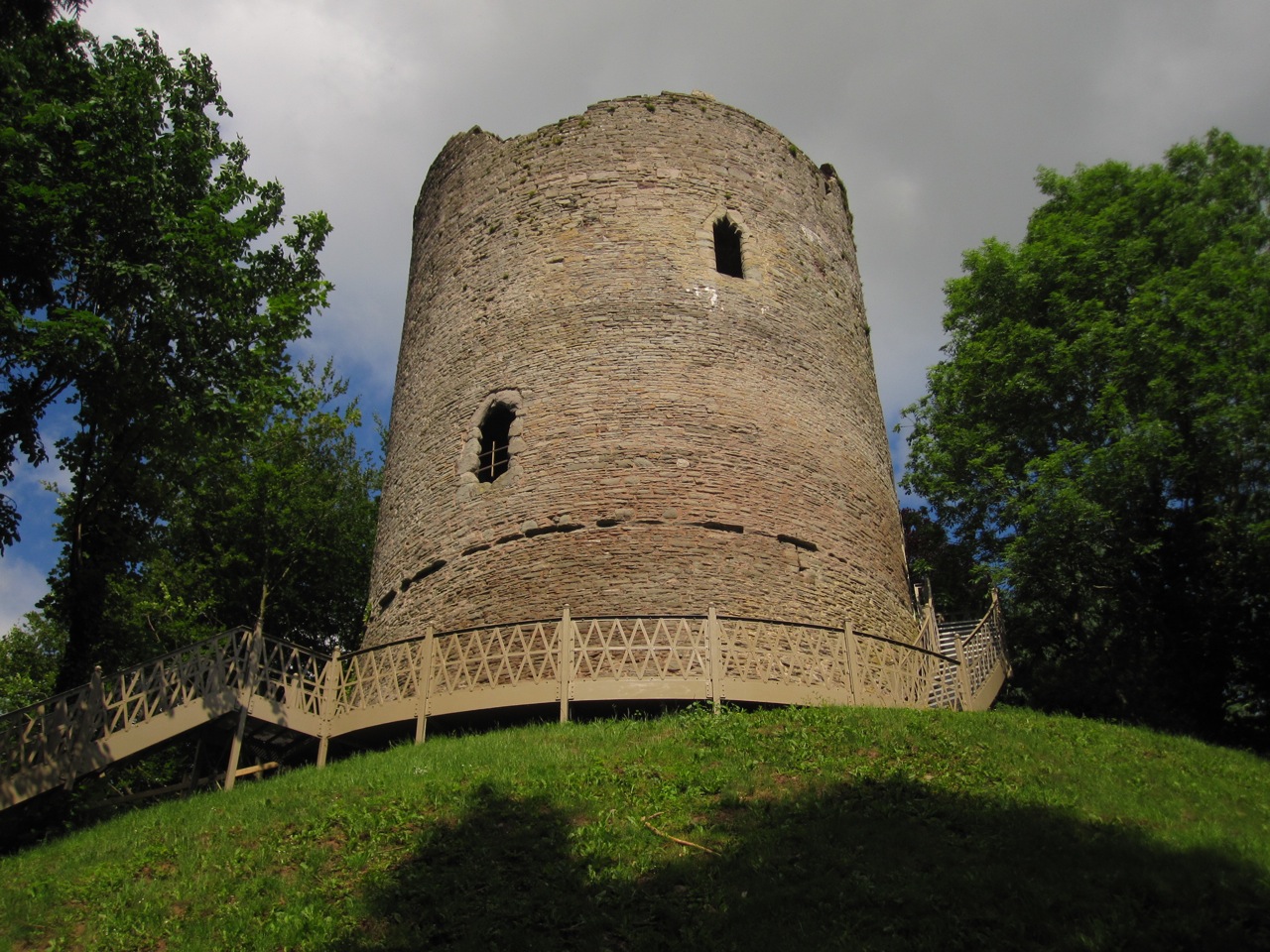
Bronllys Castle stands as a significant example of a high medieval motte and bailey fortress located near the village of Bronllys in Powys, Wales. Founded in the early 12th century, this castle played a pivotal role in the complex political and military landscape of the Welsh Marches. Its strategic position south of Bronllys, towards Talgarth, enabled it to serve as a defensive stronghold amid frequent conflicts between Norman lords and Welsh princes. The castle's origins trace back to around 1100 when Richard Fitz Pons, a Norman nobleman and supporter of Bernard of Neufmarché, established the initial wooden fortifications. This early structure typified the motte and bailey design, featuring a raised earthwork (motte) topped with a timber keep and an enclosed courtyard (bailey) surrounded by a protective ditch and palisade. The choice of location leveraged natural topography for defense, with the motte rising approximately 125 meters above sea level in a valley setting. Stone reconstruction and architectural evolution In 1144, the castle underwent a significant transformation when Roger Fitzmiles, Earl of Hereford, detached the land from the Lordship of Brecknock and granted it to Walter de Clifford, son of Richard Fitz Pons. Walter replaced the original wooden structures with stone fortifications, marking a critical evolution in the castle's defensive capabilities. Among the most prominent features from this phase is the round stone tower constructed atop the motte, a robust architectural element designed to withstand sieges and attacks. The round tower is historically notable, especially due to an incident in 1165 when it caught fire. During this event, a stone fell from the battlements, fatally injuring Mahel de Hereford, the last surviving brother of Earl Roger. This tragic episode is recorded by Gerald of Wales, who recounts Mahel's repentance for his persecution of the Bishop of St. Davids as he lay dying. Medieval ownership and political significance Bronllys Castle's ownership reflects the shifting allegiances and power struggles of the medieval Welsh Marches. Following the death of Earl Roger and his brothers, the castle passed through the hands of their sister's husband, Philip de Braose, and subsequently to Eleanor de Braose and her husband, Humphrey de Bohun. The castle was strategically important, evidenced by its defense in 1233 by Walter de Clifford's grandson against an assault led by the Welsh prince Llywelyn ab Iorwerth. Ownership continued to be contested and transferred through marriage and royal favor. In 1311, King Edward II granted the castle to Rhys ap Hywel for his loyalty, though it was later reclaimed by the crown. King Edward III subsequently awarded Bronllys to Humphrey de Bohun, reinforcing the castle's role as a prize of political allegiance. The death of Humphrey in 1373 led to disputes over the estate until Henry Bolinbroke (later King Henry IV) secured it through marriage in 1399. Military role during the glyndŵr rising and decline During the early 15th century, Bronllys Castle was fortified in response to the Glyndŵr Rising, a major Welsh rebellion against English rule led by Owain Glyndŵr. Despite these efforts to strengthen the castle's defenses, it was never again occupied after this turbulent period. The castle's military significance waned as political stability shifted and new forms of warfare emerged. The castle's decline accelerated in the early 16th century. Following the execution of Edward Stafford, 3rd Duke of Buckingham in 1521, Bronllys was forfeited to the crown. That same year, the antiquarian John Leland documented the castle's dilapidated state, noting its advanced disrepair. By 1583, the ruins had further deteriorated, reflecting centuries of neglect. Architectural remains and preservation Today, Bronllys Castle's remains offer a window into its medieval past. The site retains the classic motte and bailey layout, with the motte prominently rising above the surrounding landscape. The stone round tower on the motte remains the most significant surviving structure, illustrating the transition from timber to stone fortifications typical of the 12th century. The castle's location is characterized by a valley setting surrounded by hills, including a notable hill rising to 677 meters about 5.3 kilometers northeast. The nearby town of Brecon lies approximately 12 kilometers southwest. The physical remains, though fragmentary, clearly communicate the castle's defensive role and its architectural evolution over time. Bronllys Castle is currently under the care of Cadw, the historic environment service of the Welsh Government. It is open to the public seasonally, from April to October, allowing visitors to explore the ruins and appreciate the site's historical significance. Despite its ruinous condition, the castle remains a vital cultural landmark, reflecting the rich medieval heritage of the Welsh borderlands.

High Medieval (11th–13th c.)
Details