Bronllys Castle
Bronllys Castle stands as a significant example of a high medieval motte and bailey fortress located near the village of Bronllys in Powys, Wales. Founded in the early 12th century, this castle played a pivotal role in the complex political and military landscape of the Welsh Marches. Its strategic position south of Bronllys, towards Talgarth, enabled it to serve as a defensive stronghold amid frequent conflicts between Norman lords and Welsh princes.
The castle's origins trace back to around 1100 when Richard Fitz Pons, a Norman nobleman and supporter of Bernard of Neufmarché, established the initial wooden fortifications. This early structure typified the motte and bailey design, featuring a raised earthwork (motte) topped with a timber keep and an enclosed courtyard (bailey) surrounded by a protective ditch and palisade. The choice of location leveraged natural topography for defense, with the motte rising approximately 125 meters above sea level in a valley setting.
Stone reconstruction and architectural evolution
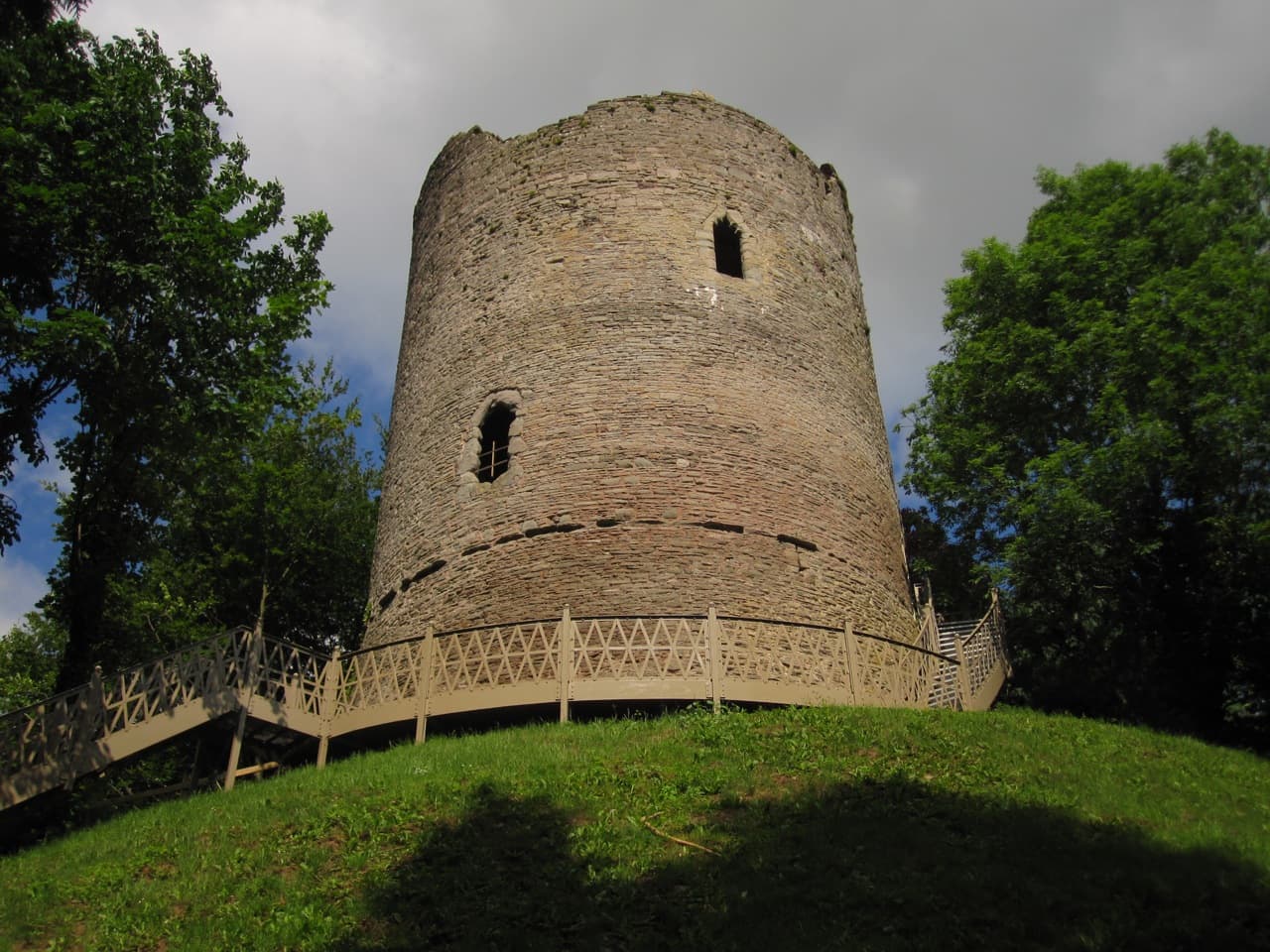
In 1144, the castle underwent a significant transformation when Roger Fitzmiles, Earl of Hereford, detached the land from the Lordship of Brecknock and granted it to Walter de Clifford, son of Richard Fitz Pons. Walter replaced the original wooden structures with stone fortifications, marking a critical evolution in the castle's defensive capabilities. Among the most prominent features from this phase is the round stone tower constructed atop the motte, a robust architectural element designed to withstand sieges and attacks.
The round tower is historically notable, especially due to an incident in 1165 when it caught fire. During this event, a stone fell from the battlements, fatally injuring Mahel de Hereford, the last surviving brother of Earl Roger. This tragic episode is recorded by Gerald of Wales, who recounts Mahel's repentance for his persecution of the Bishop of St. Davids as he lay dying.
Medieval ownership and political significance
Bronllys Castle's ownership reflects the shifting allegiances and power struggles of the medieval Welsh Marches. Following the death of Earl Roger and his brothers, the castle passed through the hands of their sister's husband, Philip de Braose, and subsequently to Eleanor de Braose and her husband, Humphrey de Bohun. The castle was strategically important, evidenced by its defense in 1233 by Walter de Clifford's grandson against an assault led by the Welsh prince Llywelyn ab Iorwerth.
Ownership continued to be contested and transferred through marriage and royal favor. In 1311, King Edward II granted the castle to Rhys ap Hywel for his loyalty, though it was later reclaimed by the crown. King Edward III subsequently awarded Bronllys to Humphrey de Bohun, reinforcing the castle's role as a prize of political allegiance. The death of Humphrey in 1373 led to disputes over the estate until Henry Bolinbroke (later King Henry IV) secured it through marriage in 1399.
Military role during the glyndŵr rising and decline
During the early 15th century, Bronllys Castle was fortified in response to the Glyndŵr Rising, a major Welsh rebellion against English rule led by Owain Glyndŵr. Despite these efforts to strengthen the castle's defenses, it was never again occupied after this turbulent period. The castle's military significance waned as political stability shifted and new forms of warfare emerged.
The castle's decline accelerated in the early 16th century. Following the execution of Edward Stafford, 3rd Duke of Buckingham in 1521, Bronllys was forfeited to the crown. That same year, the antiquarian John Leland documented the castle's dilapidated state, noting its advanced disrepair. By 1583, the ruins had further deteriorated, reflecting centuries of neglect.
Architectural remains and preservation
Today, Bronllys Castle's remains offer a window into its medieval past. The site retains the classic motte and bailey layout, with the motte prominently rising above the surrounding landscape. The stone round tower on the motte remains the most significant surviving structure, illustrating the transition from timber to stone fortifications typical of the 12th century.
The castle's location is characterized by a valley setting surrounded by hills, including a notable hill rising to 677 meters about 5.3 kilometers northeast. The nearby town of Brecon lies approximately 12 kilometers southwest. The physical remains, though fragmentary, clearly communicate the castle's defensive role and its architectural evolution over time.
Bronllys Castle is currently under the care of Cadw, the historic environment service of the Welsh Government. It is open to the public seasonally, from April to October, allowing visitors to explore the ruins and appreciate the site's historical significance. Despite its ruinous condition, the castle remains a vital cultural landmark, reflecting the rich medieval heritage of the Welsh borderlands.
Frequently asked questions (FAQ)
- How do I get to Bronllys Castle from Talgarth?
- Bronllys Castle is located a few miles south of Talgarth. Visitors can reach the castle by car or on foot via local roads and walking paths. There is parking available near the site, and signage guides visitors to the castle ruins.
- What are the opening hours for visiting Bronllys Castle?
- Bronllys Castle is open to the public seasonally, typically from April to October. Opening hours may vary, so it is recommended to check with Cadw or local tourist information before planning your visit.
- Is there an admission fee to visit Bronllys Castle?
- Admission to Bronllys Castle is generally free, as it is managed by Cadw. However, donations to support preservation efforts are appreciated.
- What architectural features can I expect to see at Bronllys Castle?
- Visitors can explore the remains of the classic motte and bailey layout, including the prominent stone round tower atop the motte. The ruins showcase medieval defensive structures typical of the 12th century.
- Why is Bronllys Castle historically significant?
- Bronllys Castle is significant for its role in the medieval Welsh Marches, reflecting the political and military struggles between Norman lords and Welsh princes. Its ownership history illustrates shifting allegiances and royal favor during the high medieval period.
Photo gallery

Information
Sources & official resources
Verify the information above using these authoritative references.
Loading map...
Visitor reviews
No reviews yet. Been here? Write the first review and help other travelers!
Write the first reviewVisited this castle? Share your experience
Your review helps other travelers and adds first-hand knowledge to our encyclopedia.