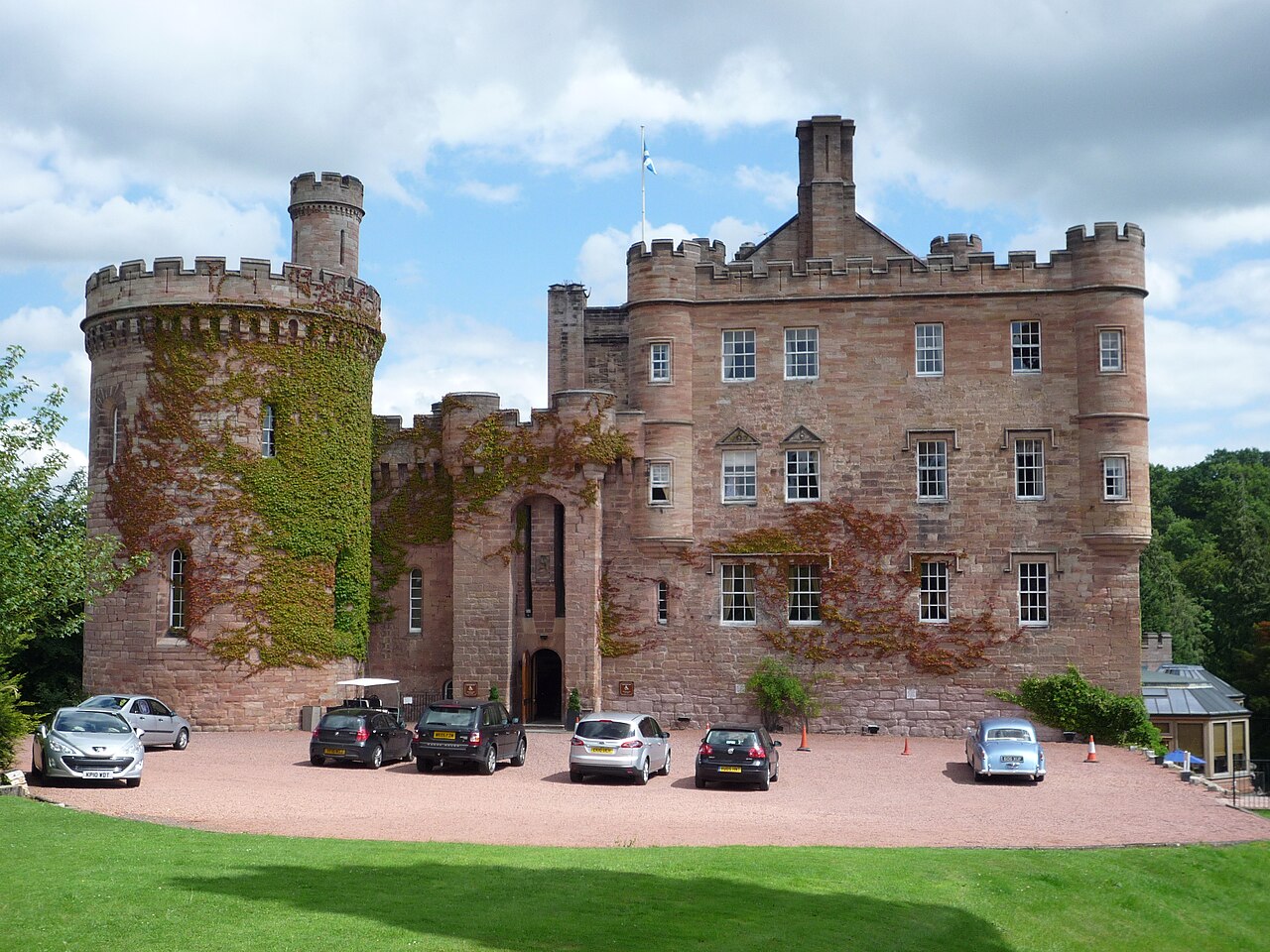
Melville Castle
Melville Castle stands as a significant example of post-Renaissance architecture in Dalkeith, Scotland. The current structure was designed and built between 1786 and 1791 by the renowned Scottish architect James Playfair for Henry Dundas, 1st Viscount Melville. This grand mansion replaced an earlier tower house that had occupied the site for centuries, reflecting the evolution of Scottish aristocratic residences from fortified medieval homes to elegant country houses.
The original tower house on the site was historically owned by the Melville family before passing in the 14th century to Sir John Ross. Over the centuries, the property and its associated lands changed hands multiple times, eventually being sold to David Rannie in 1705. The estate entered the Dundas family through the marriage of Henry Dundas to Elizabeth Rannie, David Rannie's daughter. The Dundas family retained ownership of the castle and estate until after the Second World War.
Architectural design and features
James Playfair's design for Melville Castle is characteristic of late 18th-century Scottish country houses, combining classical symmetry with a robust and imposing form. The building is constructed of stone with a balanced façade featuring sash windows and a central entrance adorned with classical detailing. The layout reflects the shift from defensive structures to comfortable, stately homes designed for social status and leisure.
The castle's interior originally included spacious reception rooms, private chambers, and service areas arranged to support the lifestyle of the aristocracy. Though the castle has undergone various changes in use and restoration, many of the original architectural elements have been preserved or sympathetically restored.
Historical ownership and uses
After its construction, Melville Castle remained the seat of the Dundas family, notable Scottish politicians and landowners, for over 150 years. Following the upheavals of the Second World War, the ninth Lord Melville moved to a smaller residence on the estate, and the castle was repurposed as an army rehabilitation centre. Later, it was converted into a hotel, serving visitors and guests seeking the charm of a historic Scottish mansion.
By the early 1980s, the hotel had fallen into disrepair and was left unoccupied. The estate and surrounding farms were sold in the late 1980s, but the castle remained closed. In 1993, the property was purchased by the Hay Trust, which undertook an extensive restoration project lasting eight years. This careful restoration preserved the castle's architectural integrity while adapting it for modern use.
Current status and visitor experience
Reopened as a hotel in June 2003, Melville Castle is now operated under lease and continues to function as a venue for weddings, conferences, and events. The castle combines its rich historical ambiance with modern amenities, offering guests a unique experience within a restored post-Renaissance mansion. Its grounds and surrounding estate provide a picturesque setting typical of Scottish country houses.
Visitors to Melville Castle can appreciate the architectural grandeur of the building, its historical significance tied to the Dundas family, and the transformation from a medieval tower house site to a refined 18th-century mansion. The castle remains a notable landmark in Dalkeith and an example of adaptive reuse of historic properties in Scotland.
Information
Loading map...
Visitor reviews
No reviews yet. Been here? Write the first review and help other travelers!
Write the first reviewVisited this castle? Share your experience
Your review helps other travelers and adds first-hand knowledge to our encyclopedia.