Hausneindorf Castle
Hausneindorf Castle stands as a significant medieval fortress located in the Selke-Aue municipality of Germany. Originally constructed in the 12th century by the rulers of the County of Blankenburg, specifically under the authority of Henry the Lion around 1140, this castle was strategically positioned on a hilltop overlooking the Selke River. Its location provided both a commanding view and a defensive advantage, essential for asserting control over the surrounding region during the turbulent Middle Ages.
The castle's early history is marked by conflict and reconstruction. Around 1168, it suffered destruction, likely due to regional disputes or military confrontations common in the era. However, its swift rebuilding by 1172 underscores the site's ongoing strategic and political importance. Through the subsequent centuries, Hausneindorf Castle played a pivotal role within the shifting allegiances and power dynamics of the region.
Historical context and ownership transitions
By 1310, Hausneindorf Castle was recorded as part of the holdings of the Prince-Bishopric of Halberstadt, although it was pledged to the County of Regenstein. This arrangement reflects the complex feudal relationships and territorial negotiations characteristic of medieval Germany, where castles often changed hands as collateral or through political agreements.
Between 1429 and 1573, the castle was held as a pledged estate by the Lords of Hoym, a noble family influential in the region. This period likely saw the castle functioning as a noble residence and administrative center, maintaining its relevance despite the gradual decline of purely military castle functions.
The early 18th century marked a significant transformation for Hausneindorf Castle. In 1711, it became a Prussian state domain, signaling a shift from a fortified stronghold to an agricultural estate. This transition reflects broader changes in the political and social landscape of the time, where many medieval castles were repurposed or fell into disuse as military needs evolved.
Architectural layout and defensive features
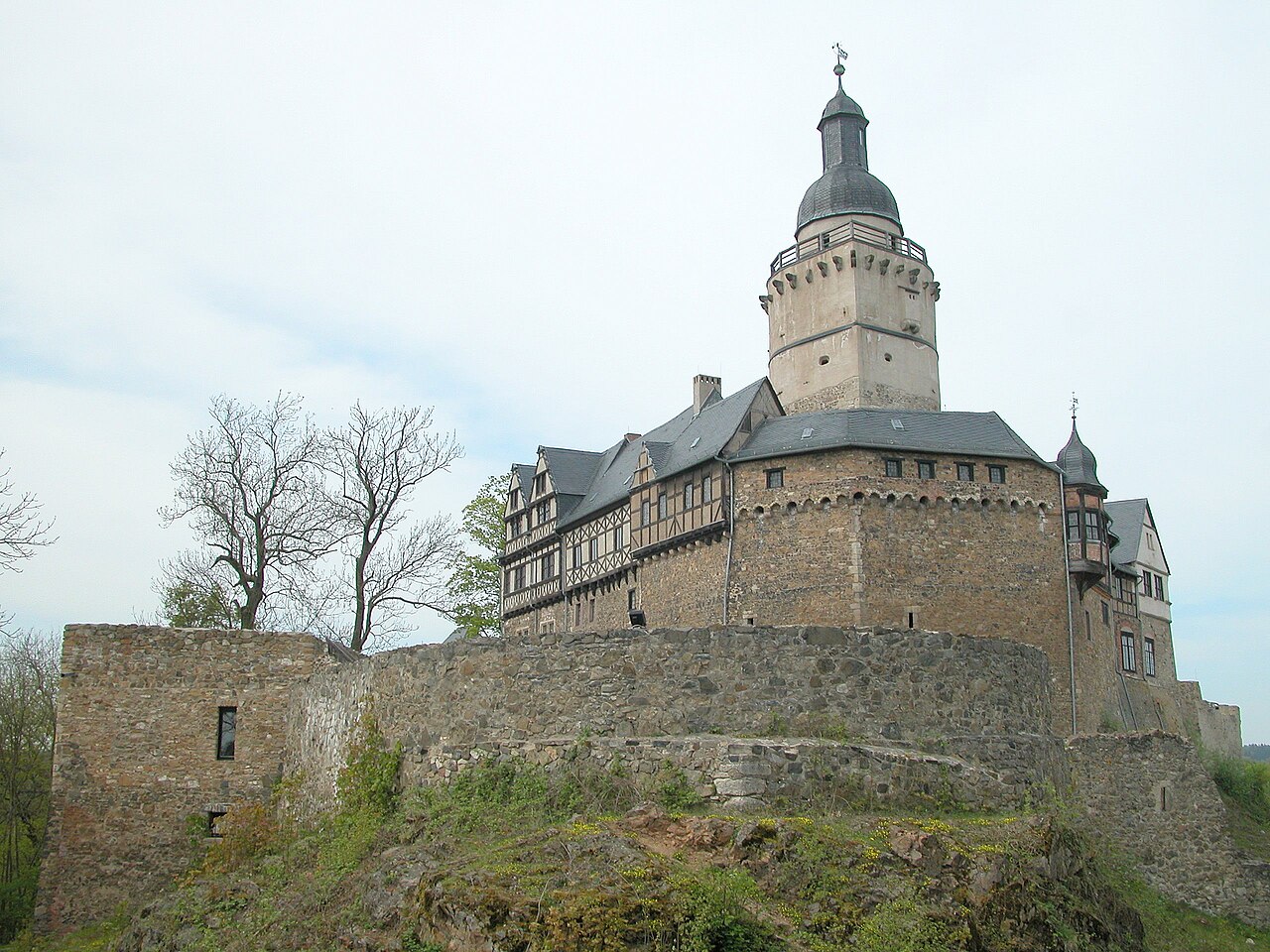
Hausneindorf Castle is situated on a roughly circular plateau approximately 175 meters in diameter. The castle's defensive system is notable for its extensive use of dry moats encircling the hilltop, which served as formidable obstacles against attackers. These moats define the outer limits of the castle complex and enhance its defensibility.
Inside the outer defenses lies the inner bailey, a large circular enclosure about 100 meters across. This inner bailey is surrounded by a substantial ring wall and further protected by a zwinger—an enclosed outer ward ranging between 10 and 15 meters in width. The zwinger provided an additional layer of defense, forcing attackers into a confined space where defenders could effectively repel assaults.
Access to the castle was carefully controlled from the lower lands adjacent to the Selke River. Two bridges spanned the moats, leading to the main entrance on the eastern side. This entrance featured a complex double gate system, which served to regulate and strengthen security at the gateway into the outer bailey.
Key structural elements: palas and bergfried tower
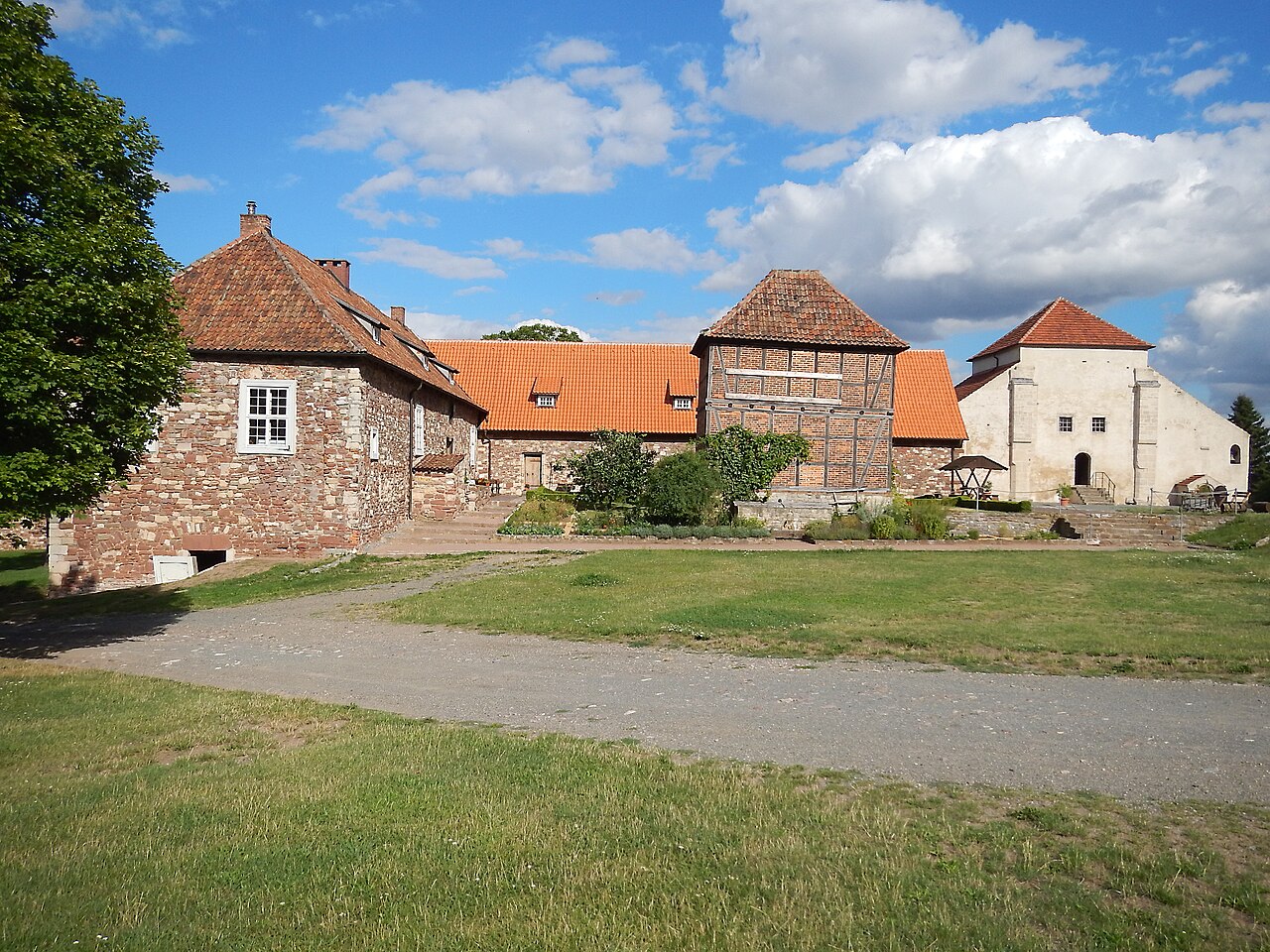
Within the northwest section of the inner bailey lies a smaller fortified enclosure known as a castellum, measuring approximately 40 by 40 meters. This area contains a prominently preserved Romanesque palas—a residential hall measuring 10 by 25 meters—located on the western side. The palas exemplifies medieval architectural style and functioned as the main living quarters for the castle's noble inhabitants.
In the southeast corner of the castellum stands a square bergfried, a tall defensive tower typical of medieval German castles. The bergfried measures 7.5 by 7.5 meters at its base and rises to a height of 27 meters. Originally constructed in the Romanesque style, it was later heightened during the Gothic period, illustrating the castle's architectural evolution over time. Inside the tower, remnants of a Renaissance-era spiral staircase remain visible, highlighting further adaptations and continued use through different historical periods.
Cultural and archaeological significance
Today, Hausneindorf Castle is recognized primarily for its archaeological value and is preserved as part of the local heritage record. The site offers valuable insights into medieval fortification techniques, residential architecture, and the socio-political history of the region. The surviving structures, including the palas and bergfried, provide a tangible connection to the castle's layered past, from its origins as a military fortress to its later role as a noble estate and agricultural domain.
The castle's preservation as an archaeological site allows historians and visitors alike to explore the physical layout and defensive strategies employed during the Middle Ages. Its combination of Romanesque and Gothic architectural elements makes it a noteworthy example of castle evolution in central Germany.
Visiting hausneindorf castle
While the castle is primarily an archaeological site today, its remains are accessible to visitors interested in medieval history and architecture. The location on a hilltop provides scenic views of the Selke River valley and surrounding landscape, enhancing the visitor experience. Interpretive signage and local heritage initiatives help contextualize the site's historical importance.
Visitors can explore the castle's defensive structures, including the dry moats, ring wall, and zwinger, as well as the inner bailey and castellum. The preserved palas and bergfried tower remain focal points, illustrating the blend of military and residential architecture that defined the castle's character.
Frequently asked questions (FAQ)
- How do I get to Hausneindorf Castle?
- Hausneindorf Castle is located in the municipality of Selke-Aue in Saxony-Anhalt, Germany. Visitors can reach the site by car or local transport, with parking available nearby. The castle is situated on a hilltop overlooking the Selke River, so some walking uphill is required.
- What architectural styles are visible at Hausneindorf Castle?
- The castle features prominent Romanesque architecture, especially in the palas and bergfried tower, with Gothic modifications visible in the later heightening of the bergfried. Renaissance elements are also present in the spiral staircase inside the tower.
- Is Hausneindorf Castle open to the public?
- Yes, Hausneindorf Castle is accessible as an archaeological site. While it is primarily ruins, visitors can explore the remains and learn about the castle's history through onsite information panels.
- What is the best time to visit Hausneindorf Castle?
- The best time to visit is during the warmer months, from late spring to early autumn, when the weather is pleasant for walking and outdoor exploration of the hilltop site.
- Are there guided tours available at Hausneindorf Castle?
- Currently, there are no regular guided tours at Hausneindorf Castle. Visitors can explore independently using informational signage that provides historical context and architectural details.
Information
Loading map...
Visitor reviews
No reviews yet. Been here? Write the first review and help other travelers!
Write the first reviewVisited this castle? Share your experience
Your review helps other travelers and adds first-hand knowledge to our encyclopedia.