Quedlinburg Abbey
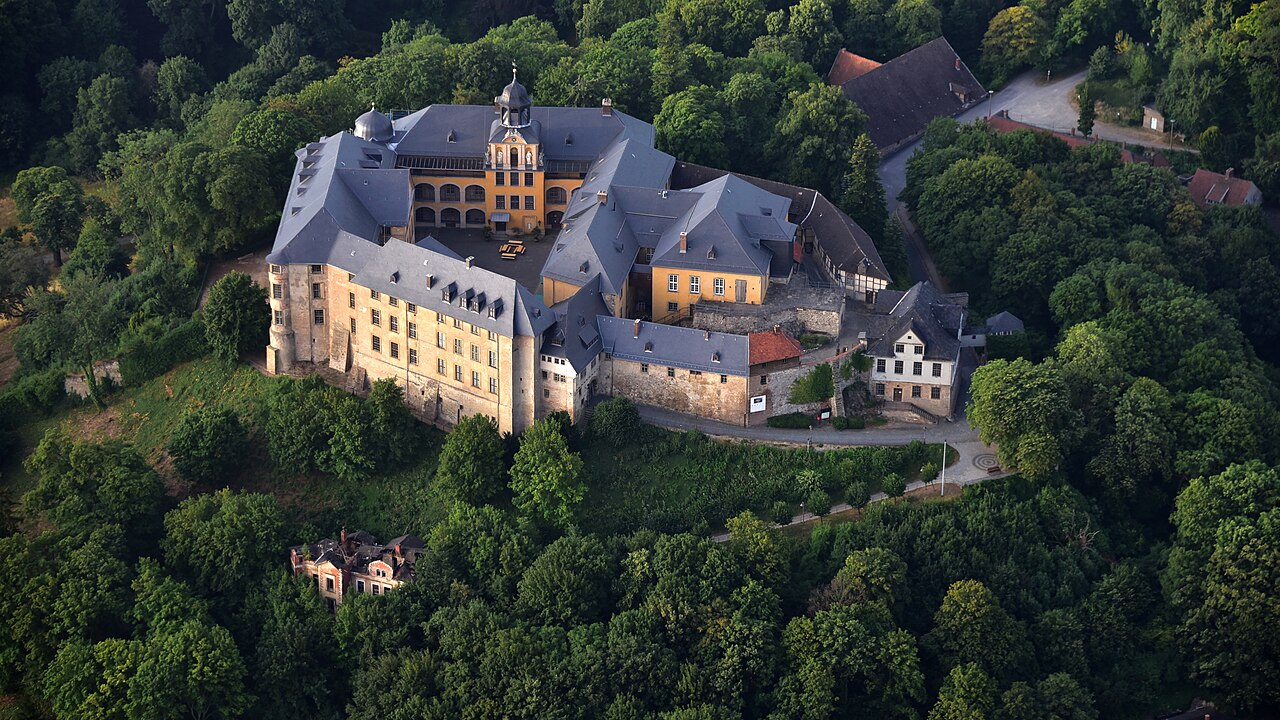
Quedlinburg Abbey stands as a significant medieval foundation on the castle hill of Quedlinburg in Saxony-Anhalt, Germany. Established in 936 AD by Otto I, Holy Roman Emperor, at the behest of his mother, Queen Matilda (later canonized as Saint Matilda), the abbey was created to honor her late husband, King Henry the Fowler, who was interred here alongside Matilda herself. This founding endowed the abbey with strong imperial connections that secured rich endowments, enabling it to flourish as a wealthy and influential community of secular canonesses.
The abbey's ecclesiastical status was unique: the abbess held exemption from the jurisdiction of the local Bishop of Halberstadt and answered only to the Pope. This autonomy led to frequent disputes with the bishops, who claimed spiritual authority over the abbey based on prevailing medieval gender norms. As the head of an Imperial Abbey, the abbess held a prestigious seat and voice at the Imperial Diet, participating in the Bench of the Prelates of the Rhineland within the Ecclesiastical Bench of the College of Ruling Princes.
Architectural significance and the church of St. Servatius
The abbey church, dedicated to Saint Servatius of Tongeren and Saint Denis, is one of the most important examples of Romanesque architecture in Germany. Construction of the current three-naved basilica began before 997 AD on the site of three earlier churches and was completed in 1021. The basilica is notable for its robust Romanesque features, including thick walls, rounded arches, and a clear, harmonious spatial arrangement.
A devastating fire in 1070 caused significant damage, but the church was restored faithfully to its original form and was rededicated in 1129 in the presence of Emperor Lothar III. The building houses an impressive collection of medieval art and liturgical objects, many of which were preserved in the abbey's treasury.
Historical role and cultural treasures
Quedlinburg Abbey played a central role in the religious and political life of the Holy Roman Empire. Its connections to the imperial family and proximity to the important city of Magdeburg made it a hub for gathering information on contemporary political affairs. The abbey is renowned for the Annals of Quedlinburg, a chronicle begun in 1008 and completed in 1030, likely authored by a female canoness. These annals provide a valuable contemporary account of the empire's history during the early medieval period.
During the Reformation, the abbey transitioned to Protestantism under Abbess Anna II, Countess of Stolberg. The abbey's status as an independent ecclesiastical principality ended with the German Mediatisation of 1803, when its territory was secularized and absorbed into the Kingdom of Prussia as the Principality of Quedlinburg. It briefly became part of the Kingdom of Westphalia between 1807 and 1813.
Preservation and modern significance
Quedlinburg Abbey's treasury once held numerous precious manuscripts and reliquaries, including the reliquary of Saint Servatius dating back to the time of Charles the Bald. Many of these treasures were looted at the end of World War II by an American soldier but were recovered and returned to the abbey in the early 1990s after extensive legal efforts.
Today, the abbey church of St. Servatius remains a well-preserved example of early medieval architecture and continues to attract scholars and visitors interested in medieval art, history, and architecture. The abbey's rich legacy as an imperial foundation, a center of religious and political power, and a repository of medieval culture makes it a vital monument in Germany's heritage.
Frequently asked questions (FAQ)
- What is the historical significance of Quedlinburg Abbey?
- Quedlinburg Abbey is a UNESCO World Heritage Site known for its rich history dating back to the 10th century. It served as an important cultural and religious center and was the burial place of numerous German kings and queens, making it a significant landmark in German history.
- When was Quedlinburg Abbey built?
- Construction of Quedlinburg Abbey began in the early 10th century, with the church being consecrated in 936 AD. The abbey has since undergone various renovations and expansions, reflecting different architectural styles through the centuries.
- Can I visit Quedlinburg Abbey, and are there any entry fees?
- Yes, visitors are welcome to explore Quedlinburg Abbey. There is an entry fee, which helps maintain the site, and tickets can be purchased at the entrance or online through the official website.
- What are the opening hours for Quedlinburg Abbey?
- Quedlinburg Abbey is generally open to visitors daily, with varying hours depending on the season. It's advisable to check the official website for the most current opening hours before your visit.
- Is Quedlinburg Abbey accessible for people with disabilities?
- Quedlinburg Abbey strives to be accessible to all visitors, with ramps and designated pathways. However, some historical areas may have limitations due to their age and structure, so it's best to inquire at the entrance for specific assistance.
- When is the best time to visit Quedlinburg Abbey?
- The best time to visit Quedlinburg Abbey is during the spring and early autumn when the weather is pleasant and the surrounding landscape is vibrant. Additionally, these seasons often have fewer tourists, allowing for a more enjoyable experience.
- What nearby attractions can I explore while visiting Quedlinburg Abbey?
- While visiting Quedlinburg Abbey, you can also explore the charming medieval town of Quedlinburg, known for its half-timbered houses and cobbled streets. Other nearby attractions include the St. Servatius Church and the historic marketplace, which are easily accessible within walking distance.
Information
Loading map...
Visitor reviews
No reviews yet. Been here? Write the first review and help other travelers!
Write the first reviewVisited this castle? Share your experience
Your review helps other travelers and adds first-hand knowledge to our encyclopedia.